7 Proven Cost Reduction Strategies for Healthcare Organizations

Hospital budgets can quickly spiral out of control when patient flow, scheduling, and vendor agreements are not working in sync. You might notice rising labor costs, frustrating delays, or missed savings that leave your organization under pressure and patients dissatisfied. Addressing these challenges calls for smart, actionable strategies that go beyond basic cost-cutting measures.
This list reveals proven solutions backed by respected research, including how integrating transport decisions and leveraging technology can drive real savings. You will discover ways to optimize resource allocation, improve labor efficiency through AI automation, and unlock cost reductions with better vendor management. Each insight is designed to help you make confident changes that protect your bottom line and improve patient care results. Keep reading to uncover the most effective methods for transforming your healthcare operations.
Table of Contents
- Analyze and Optimize Patient Transport Routing
- Automate Scheduling to Reduce Labor Costs
- Streamline Vendor Management for Better Pricing
- Implement Real-Time Communication to Lower Delays
- Leverage Data Insights for Operational Improvements
- Standardize Workflows with No-Code Tools
- Enhance Compliance to Avoid Costly Penalties
Quick Summary
| Takeaway | Explanation |
|---|---|
| 1. Optimize Patient Transport Routing | Utilize data analytics to enhance transport efficiency and reduce costs by significant margins. |
| 2. Implement Automated Scheduling | Use AI technologies to streamline scheduling, decreasing labor costs and enhancing operational efficiency. |
| 3. Streamline Vendor Management | Establish strategic vendor relationships to achieve substantial cost savings and improve supply chain efficiency. |
| 4. Leverage Real-Time Communication | Adopt advanced communication technologies to minimize delays and improve patient outcomes significantly. |
| 5. Enhance Compliance Strategies | Develop comprehensive compliance protocols to mitigate financial risks and promote ethical practice in healthcare. |
1. Analyze and Optimize Patient Transport Routing
Healthcare organizations can significantly reduce operational costs by implementing strategic patient transport routing analysis. By leveraging advanced data analytics and transportation optimization techniques, hospitals can dramatically improve resource allocation and reduce unnecessary expenses.
The key to effective patient transport routing lies in moving beyond traditional nearest-facility approaches. Research demonstrates that optimal routing policies can substantially enhance efficiency and patient outcomes.
Key strategies for analyzing and optimizing patient transport routing include:
- Collect comprehensive historical transportation data
- Use predictive analytics to forecast transport demand
- Integrate real-time traffic and congestion information
- Develop dynamic routing algorithms
- Implement centralized dispatch coordination
Understanding patient transport routing requires a multifaceted approach. Hospitals must consider multiple variables such as:
- Distance between facilities
- Patient medical needs
- Vehicle availability
- Traffic patterns
- Time of day
- Potential congestion zones
Strategic routing can reduce transportation costs by up to 30% while improving patient care response times.
Advanced mathematical models like those developed by MIT researchers exploring routing under uncertainty provide sophisticated frameworks for making these critical routing decisions. These models help healthcare administrators minimize risks and optimize resource allocation.
Implementing a data-driven transport routing strategy requires investment in technology and analytical capabilities. Healthcare organizations should prioritize integrated digital platforms that enable real-time tracking, predictive analytics, and dynamic routing adjustments.
Pro tip: Conduct quarterly reviews of transport routing data to continuously refine and improve your optimization strategies.
2. Automate Scheduling to Reduce Labor Costs
Healthcare organizations are increasingly turning to automation as a powerful strategy for reducing labor costs and improving operational efficiency. By leveraging technology to streamline scheduling processes, hospitals can dramatically cut administrative expenses and optimize workforce management.
Modern healthcare requires smart solutions that balance patient needs with staffing constraints. AI technologies for scheduling have emerged as game changers in this critical operational area.
Key benefits of automated scheduling include:
- Reduced manual administrative workload
- More accurate staff allocation
- Decreased scheduling errors
- Real-time shift management
- Improved employee and patient satisfaction
Implementing automated scheduling involves several strategic steps:
- Assess current scheduling processes
- Select appropriate scheduling software
- Integrate with existing healthcare management systems
- Train staff on new technologies
- Continuously monitor and optimize scheduling algorithms
Automated scheduling can reduce labor costs by up to 25% while improving overall operational efficiency.
The Institute of Medicine highlights that data-driven scheduling approaches enable healthcare providers to balance supply and demand more effectively. By using predictive analytics, organizations can anticipate staffing needs and prevent both overstaffing and understaffing scenarios.
Advanced scheduling systems now incorporate machine learning algorithms that can predict patient flow, recommend optimal staff assignments, and even account for individual employee preferences and skill sets.
Pro tip: Implement a pilot program with automated scheduling in one department before organization-wide rollout to identify and address potential challenges.
3. Streamline Vendor Management for Better Pricing
Effective vendor management represents a critical opportunity for healthcare organizations to reduce costs and improve operational efficiency. By implementing strategic approaches to vendor relationships healthcare providers can unlock significant financial savings and optimize their supply chain.
Healthcare distributors play a pivotal role in creating cost efficiencies through strategic procurement practices. These professionals leverage technology and expertise to consolidate orders and reduce administrative burdens.
Key strategies for streamlining vendor management include:
- Conduct comprehensive vendor performance evaluations
- Negotiate volume-based pricing contracts
- Implement standardized vendor selection criteria
- Utilize data analytics for vendor assessment
- Develop long-term strategic partnerships
Successful vendor management requires a systematic approach:
- Create detailed vendor qualification protocols
- Establish clear performance metrics
- Develop robust communication channels
- Regularly review and renegotiate contracts
- Monitor market trends and competitive pricing
Healthcare organizations can save up to $78 billion annually through strategic vendor management and supply chain optimization.
The procurement process demands rigorous compliance checks. Organizations like Duke University Health System demonstrate how thorough vendor registration and verification can lead to more cost-effective and reliable vendor relationships.
Advanced vendor management now incorporates sophisticated technologies that enable real-time performance tracking advanced contract negotiations and predictive cost modeling.
Pro tip: Develop a vendor scorecard system that objectively measures performance across multiple dimensions including cost quality reliability and technological capabilities.
4. Implement Real-Time Communication to Lower Delays
Healthcare organizations are increasingly recognizing the critical importance of real-time communication in reducing operational delays and improving patient outcomes. By implementing advanced communication technologies hospitals can significantly streamline information sharing and decision-making processes.
The Health Resources and Services Administration highlights telehealth trends that demonstrate how synchronous communication technologies can transform healthcare delivery. These technologies enable faster clinical coordination and more efficient resource allocation.
Key benefits of real-time communication include:
- Rapid information exchange
- Reduced patient transfer times
- Improved clinical decision-making
- Enhanced inter-hospital coordination
- Lower administrative overhead
Successful real-time communication implementation requires:
- Select robust communication platforms
- Train staff on new technologies
- Establish clear communication protocols
- Integrate systems across departments
- Continuously evaluate communication effectiveness
Real-time communication can reduce hospital transfer delays by up to 40% and improve patient outcomes significantly.
Research from Northwestern Medicine reveals that sharing critical information like clinical details radiology scans and estimated arrival times dramatically reduces transfer delays between healthcare facilities.
Modern healthcare communication technologies now incorporate advanced features such as secure messaging encrypted video consultations and integrated electronic health record systems that enable instant information sharing.
Pro tip: Conduct quarterly communication technology audits to identify potential bottlenecks and emerging communication tools that could further streamline your healthcare operations.
5. Leverage Data Insights for Operational Improvements
Data analytics has emerged as a transformative force in healthcare organizations seeking to optimize operational efficiency and reduce costs. By systematically analyzing clinical and administrative information healthcare providers can unlock powerful insights that drive strategic decision-making.
Healthcare data analytics enables predictive and prescriptive strategies that go beyond traditional reporting methods. These advanced analytical approaches help organizations forecast challenges and proactively design solutions.
Key benefits of data-driven operational improvements include:
- Precise resource allocation
- Enhanced patient risk prediction
- Reduced administrative inefficiencies
- More accurate financial forecasting
- Improved clinical outcomes
Effective data insight implementation requires:
- Invest in robust analytics platforms
- Train staff on data interpretation
- Establish clear data governance protocols
- Integrate data from multiple sources
- Continuously validate and refine analytical models
Advanced data analytics can reduce operational costs by up to 25% while improving overall organizational performance.
The Harvard Data Smart Initiative emphasizes that collecting accurate timely health data enables organizations to identify potential threats and manage resources more effectively.
Modern healthcare analytics now incorporate machine learning algorithms that can process complex datasets identifying patterns and recommending actionable strategies that human analysts might overlook.
Pro tip: Develop a cross-functional data analytics team that includes clinical operational and technological experts to ensure comprehensive insights and implementation.
6. Standardize Workflows with No-Code Tools
Healthcare organizations are increasingly turning to no-code tools as a powerful strategy for streamlining operational processes without requiring extensive technical expertise. These innovative platforms enable clinical and administrative staff to create custom workflow solutions quickly and efficiently.
No-code software development platforms democratize technology implementation by empowering non-technical users to build and adapt workflow tools easily.
Key advantages of no-code workflow tools include:
- Rapid deployment of custom applications
- Reduced dependency on IT departments
- Lower software development costs
- Increased operational flexibility
- Enhanced team collaboration
Successful no-code workflow implementation involves:
- Assess current workflow inefficiencies
- Select appropriate no-code platforms
- Identify cross-departmental collaboration opportunities
- Develop standardized process templates
- Train staff on platform utilization
No-code tools can reduce workflow development time by up to 80% while improving organizational adaptability.
The American Journal of Healthcare Computing emphasizes that these platforms support digital transformation by standardizing workflows and improving response agility to changing operational demands.
Modern no-code solutions now incorporate advanced features like drag-and-drop interfaces machine learning integrations and real-time performance analytics that make workflow optimization more accessible than ever.
Pro tip: Start with a small pilot project in one department to demonstrate no-code tool effectiveness before implementing across the entire organization.
7. Enhance Compliance to Avoid Costly Penalties
Healthcare organizations face significant financial and legal risks when compliance protocols are not rigorously maintained. Implementing comprehensive compliance strategies is crucial for protecting your organization from expensive penalties and maintaining operational integrity.
Healthcare compliance programs prevent fraud and minimize risks by establishing systematic approaches to ethical practice and regulatory adherence.
Key elements of an effective compliance strategy include:
- Develop clear written standards of conduct
- Implement robust training programs
- Create reporting mechanisms for potential violations
- Conduct regular internal audits
- Establish disciplinary guidelines
Successful compliance enhancement requires:
- Perform comprehensive risk assessments
- Document all compliance activities
- Maintain up-to-date regulatory knowledge
- Foster a culture of transparency
- Invest in compliance management technologies
Proactive compliance management can reduce penalty risks by up to 60% and protect organizational resources.
The Department of Health and Human Services emphasizes that effective compliance programs are not just about avoiding penalties but creating a culture of ethical and responsible healthcare delivery.
Advanced compliance strategies now incorporate artificial intelligence and machine learning technologies to identify potential risk areas before they become significant problems.
Pro tip: Designate a dedicated compliance officer with direct reporting lines to senior leadership to ensure comprehensive oversight and rapid response to potential issues.
Below is a comprehensive table summarizing the key operational strategies and advancements discussed in the article, highlighting their benefits, implementation steps, and expected results.
| Strategy | Steps for Implementation | Benefits and Outcomes |
|---|---|---|
| Analyze and Optimize Patient Transport Routing | Collect transportation data, leverage predictive analytics, integrate real-time traffic information, develop dynamic routing algorithms, establish centralized dispatch coordination. | Up to 30% cost reduction, improved patient response times, and enhanced efficiency. |
| Automate Scheduling Processes | Assess current scheduling, implement suitable software, integrate with existing systems, train staff, monitor and optimize algorithms. | Up to 25% labor cost reduction and decreased scheduling errors. |
| Streamline Vendor Management | Evaluate vendor performance, negotiate contracts, standardize selection criteria, employ analytics for assessments, forge strategic partnerships. | Significant annual cost savings (up to $78 billion) and improved supply chain efficiency. |
| Implement Real-Time Communication | Select advanced platforms, train staff, develop communication protocols, integrate systems, evaluate performance. | Up to 40% reduction in transfer delays and enhanced patient coordination. |
| Leverage Data Insights | Invest in analytics platforms, train staff, establish governance protocols, integrate data sources, validate models continuously. | Up to 25% cost reduction, precise resource allocation, and improved clinical outcomes. |
| Use No-Code Tools to Standardize Workflows | Evaluate workflow inefficiencies, select platforms, promote cross-department collaboration, create process templates, train staff. | Rapid deployment of solutions, enhanced team collaboration, and operational flexibility. |
| Enhance Compliance Protocols | Conduct risk assessments, archive activities, stay informed about regulations, advocate transparency, adopt compliance technologies. | Up to 60% reduction in penalty risks and fostered ethical healthcare delivery. |
Transform Healthcare Cost Reduction Into Real Operational Savings
The article highlights critical challenges healthcare organizations face in reducing operational costs while improving patient care outcomes. From optimizing patient transport routing and automating scheduling to streamlining vendor management and enhancing real-time communication, these cost reduction strategies demand integrated, data-driven solutions. Key pain points include inefficient manual workflows, delayed information exchange, and fragmented vendor coordination that increase labor and transportation expenses.
VectorCare offers a comprehensive digital platform purpose-built to address these exact challenges. With powerful features like AI-driven dispatching for patient transportation, automation of scheduling, secure communication across care teams, and advanced data analytics, VectorCare empowers healthcare providers to cut delays and lower operational costs effectively. The platform’s no-code workflow tools simplify process standardization without heavy IT reliance.
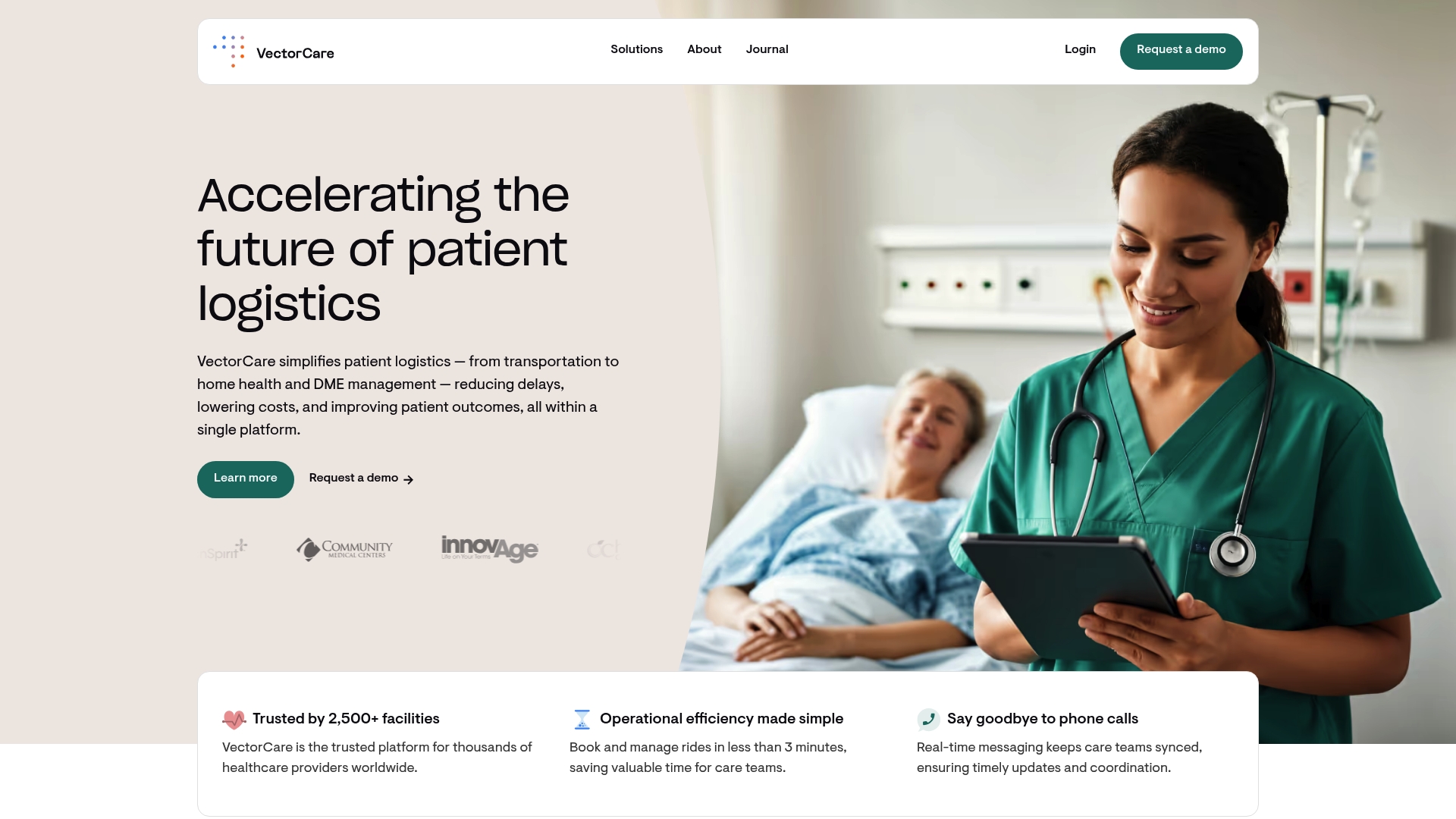
Experience how VectorCare can help your organization implement proven cost reduction strategies today. Visit VectorCare’s website to discover how you can enhance patient logistics, automate complex tasks, and improve vendor management with one integrated solution. Take the next step toward smarter healthcare operations by exploring VectorCare’s scheduling and dispatch solutions and unlock new levels of efficiency and cost savings now.
Frequently Asked Questions
How can optimizing patient transport routing reduce costs for my healthcare organization?
Optimizing patient transport routing can reduce transportation costs by up to 30% while improving service response times. To start, collect historical transportation data and integrate real-time traffic information to develop efficient routing strategies.
What steps should I take to implement automated scheduling to reduce labor costs?
To implement automated scheduling effectively, assess your current scheduling processes and select appropriate software that fits your needs. By doing this, you could potentially cut labor costs by up to 25% within a few months.
What are the key strategies for streamlining vendor management in healthcare?
Key strategies for streamlining vendor management include evaluating vendor performance, negotiating volume-based pricing, and using data analytics for vendor assessment. By adhering to these strategies, your organization could save significant amounts annually, potentially up to $78 billion.
How does real-time communication help lower operational delays?
Implementing real-time communication technologies can reduce hospital transfer delays by as much as 40%, leading to improved patient outcomes. Start by selecting a robust communication platform and training staff on its use to enhance information sharing.
What role does data analytics play in operational improvements for healthcare organizations?
Data analytics allows healthcare organizations to allocate resources more effectively and predict patient risks, potentially reducing operational costs by up to 25%. Invest in analytics platforms and ensure your staff is trained to interpret the data effectively.
How can no-code tools improve workflow standardization in my healthcare facility?
No-code tools can streamline workflow standardization by enabling staff to create custom applications without needing extensive technical skills. Begin with a pilot project to develop a specific workflow, which could drastically reduce development time by up to 80%.
Recommended
- 7 Key Healthcare Cost Containment Strategies
- 7 Key Benefits of Reducing Healthcare Costs
- 7 Tips for Reducing Administrative Costs in Healthcare
- How to Reduce Operational Costs in Healthcare Organizations
- CarehomesIT - Specialist IT Support for Care Homes
- Geld bei der Krankenkasse sparen: die Top 10 Tipps - Smolio
- Optimizacija procesa - Automatizacija radnih procesa | NULLBIT