Staff Scheduling Software for Healthcare Success

Nearly every American hospital faces significant staffing challenges, with healthcare administrators often spending up to 30 percent of their weekly hours managing staff schedules manually. Efficient coordination and fair shift assignments are critical for both operational budgets and quality patient care. This article offers clear insights on how modern staff scheduling software can help American hospitals cut unnecessary costs and improve collaboration among care teams.
Table of Contents
- Defining Staff Scheduling Software in Healthcare
- Major Types of Scheduling Solutions Available
- Essential Features for Healthcare Workflows
- Legal Compliance and Regulatory Considerations
- Operational Benefits and Efficiency Gains
- Cost Implications and Integration Challenges
Key Takeaways
| Point | Details |
|---|---|
| Healthcare Staff Scheduling Software Enhances Efficiency | Advanced scheduling solutions automate shift assignments, track employee availability, and ensure regulatory compliance, boosting overall operational productivity. |
| Multiple Scheduling Solution Types Exist | Organizations can choose from automated shift assignment, predictive scheduling, self-scheduling, and integrated healthcare IT solutions based on their specific needs. |
| Legal Compliance Is Crucial | Scheduling software must adhere to federal and state labor laws, manage credentialing, and enforce union agreements to avoid legal risks. |
| Integration Challenges and Costs Should Be Addressed | Organizations face significant costs and technical hurdles when implementing scheduling software, necessitating thorough planning and evaluation for successful integration. |
Defining Staff Scheduling Software in Healthcare
Healthcare staff scheduling software represents a sophisticated digital solution designed to streamline personnel management within medical institutions. Advanced systems help healthcare organizations automate complex scheduling processes, transforming traditional manual workforce allocation into a strategic, data-driven approach.
At its core, staff scheduling software provides healthcare administrators with powerful tools to manage employee shifts, track availability, and optimize workforce distribution. These intelligent platforms go beyond simple calendar management by incorporating sophisticated algorithms that consider multiple critical factors such as employee skills, patient volume, regulatory compliance, and individual staff preferences. Modern scheduling solutions help healthcare organizations reduce staffing imbalances and prevent employee burnout while maintaining high standards of patient care.
Key capabilities of healthcare staff scheduling software typically include:
- Automated shift assignment based on staff qualifications
- Real-time tracking of employee availability and time-off requests
- Compliance monitoring with labor regulations and work hour restrictions
- Intelligent workload balancing across departments
- Quick communication and schedule adjustment features
- Detailed reporting and analytics for workforce management
Pro-Tip: Always select a staff scheduling software that offers robust integration capabilities with your existing electronic health record (EHR) systems to maximize operational efficiency.
Major Types of Scheduling Solutions Available
Healthcare organizations have multiple types of scheduling solutions to address their complex workforce management needs. Advanced scheduling solutions utilize mixed-integer linear programming models to optimize staff and patient assignments, enabling more strategic and efficient operational planning.
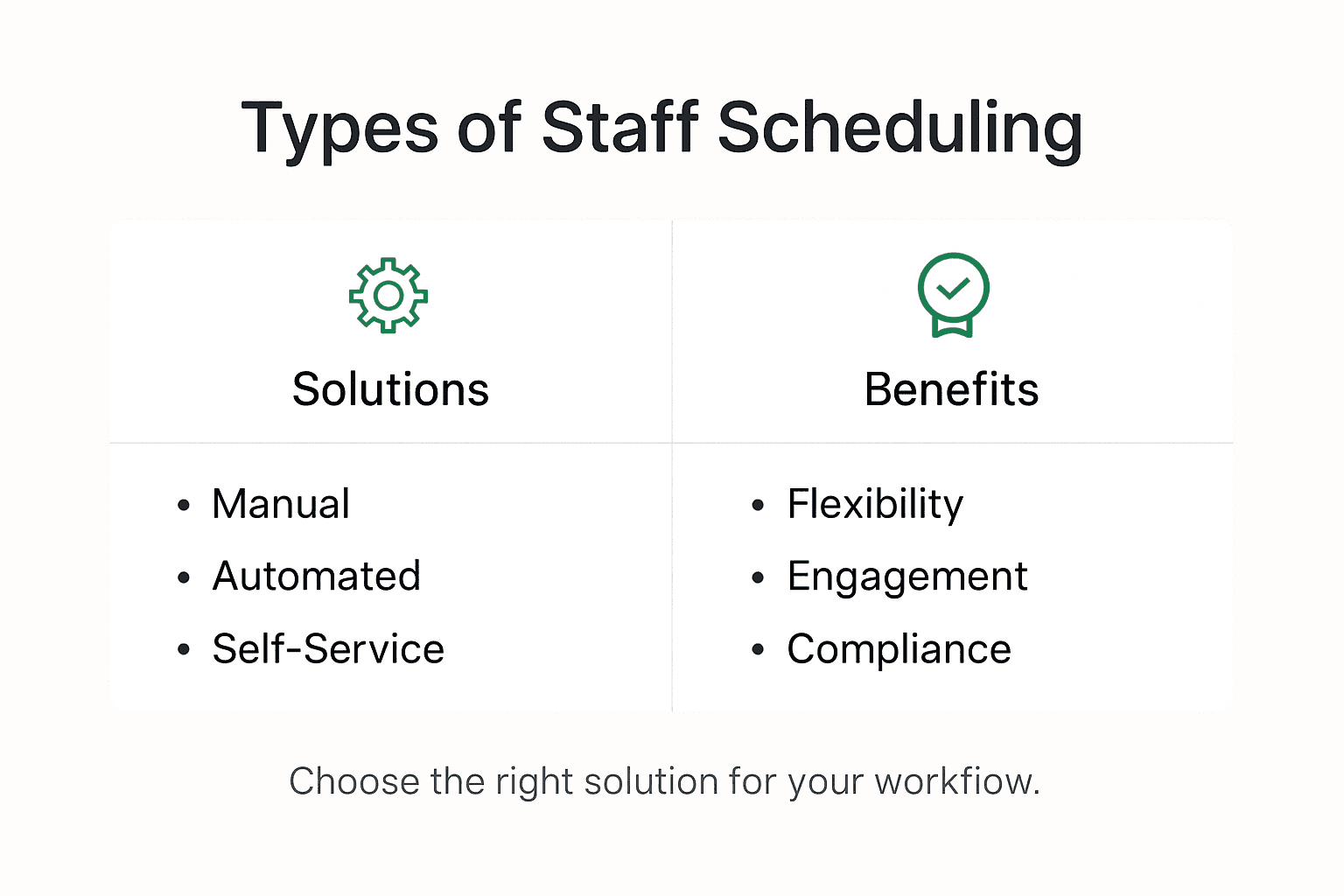
Cloud-based Scheduling Platforms represent one of the most prevalent solution types in modern healthcare settings. These systems offer real-time accessibility, seamless integration with existing healthcare information systems, and flexible configuration options that support dynamic staffing requirements. U.S. healthcare scheduling software markets now include sophisticated solutions like AI-driven predictive scheduling and self-scheduling features designed to address emerging workforce challenges.
The primary categories of healthcare scheduling solutions include:
- Automated Shift Assignment Systems
- Intelligent algorithms matching staff skills with patient needs
- Automatic compliance checks for work hour restrictions
- Dynamic workload distribution
- Predictive Scheduling Solutions
- Machine learning-powered demand forecasting
- Proactive staff allocation based on historical data
- Anticipatory resource management
- Self-Scheduling Platforms
- Employee-driven shift selection
- Transparent availability tracking
- Increased staff autonomy and satisfaction
- Integrated Healthcare IT Solutions
- Direct connection with electronic health records
- Comprehensive workforce management
- Centralized scheduling ecosystem
Pro-Tip: Select a scheduling solution that offers robust integration capabilities and supports multiple scheduling paradigms to maximize operational flexibility.
Here’s a summary of how each scheduling solution type supports key workforce goals in healthcare:
| Solution Type | Workforce Flexibility | Staff Engagement | Regulatory Compliance |
|---|---|---|---|
| Automated Shift Assignment | High | Moderate | Strong |
| Predictive Scheduling | Very High | Moderate | Strong |
| Self-Scheduling Platforms | Moderate | Very High | Moderate |
| Integrated Healthcare IT | High | High | Very Strong |
Essential Features for Healthcare Workflows
Healthcare scheduling software must provide robust features that address the complex and dynamic nature of medical workforce management. Comprehensive scheduling solutions now incorporate advanced features like automated conflict resolution and real-time availability tracking to streamline operational efficiency and reduce administrative burdens.

Intelligent Scheduling Capabilities have become critical for modern healthcare organizations. These sophisticated systems go beyond basic shift assignments by utilizing AI-powered reinforcement learning algorithms that optimize staff allocation and patient management. The goal is to create a flexible, responsive scheduling ecosystem that adapts to the unpredictable demands of healthcare environments.
Essential features for effective healthcare workflow management include:
- Workforce Optimization Tools
- Dynamic skill matching
- Intelligent shift distribution
- Workload balancing across departments
- Compliance and Regulatory Management
- Automatic labor law adherence checks
- Work hour restriction monitoring
- Certification and credential tracking
- Communication and Collaboration Features
- Real-time schedule modification
- Instant messaging and notifications
- Transparent shift trading mechanisms
- Advanced Analytic Capabilities
- Predictive staffing models
- Performance and productivity insights
- Cost optimization recommendations
- Integrated Health Technology
- Seamless EHR system connections
- Patient appointment synchronization
- Cross-platform accessibility
Pro-Tip: Prioritize scheduling solutions with robust API integration and customizable workflows to ensure maximum adaptability to your specific organizational needs.
Legal Compliance and Regulatory Considerations
Healthcare scheduling software must navigate a complex landscape of legal requirements that extend far beyond simple shift management. Comprehensive compliance features are critical for healthcare organizations to manage working hours, overtime limits, and regulatory documentation, ensuring both legal protection and operational efficiency.
Regulatory Compliance Frameworks demand meticulous attention to detail in workforce management. Healthcare scheduling systems must systematically enforce federal and state labor regulations, including precise tracking of shift durations, mandatory breaks, and credential verification. These automated compliance mechanisms protect healthcare organizations from potential legal risks and support industry accreditation processes.
Key Legal Compliance Considerations Include:
- Federal Labor Law Requirements
- Overtime hour tracking
- Mandatory rest period enforcement
- Accurate wage and hour documentation
- Professional Credentialing Management
- Automatic license expiration alerts
- Credential verification processes
- Ongoing professional certification tracking
- Union Agreement Adherence
- Shift allocation compliance
- Work hour distribution rules
- Contractual scheduling obligations
- Healthcare Accreditation Standards
- Patient safety staffing ratios
- Continuous quality improvement documentation
- Regulatory audit preparation
- Privacy and Data Protection
- HIPAA compliance protocols
- Secure employee information management
- Confidential scheduling practices
Pro-Tip: Implement a comprehensive compliance audit process that regularly reviews your scheduling software’s regulatory adherence and updates tracking mechanisms to minimize potential legal vulnerabilities.
Operational Benefits and Efficiency Gains
Healthcare scheduling software represents a transformative technological solution that dramatically reshapes workforce management strategies. AI-powered scheduling systems can reduce scheduling conflicts by 27% and improve resource utilization by 35%, delivering unprecedented operational efficiency for healthcare organizations.
Strategic Workforce Optimization goes far beyond simple shift management. These advanced systems leverage intelligent algorithms to dynamically allocate staff, balancing workload distribution while simultaneously addressing critical operational challenges. Automated scheduling tools help healthcare organizations minimize labor costs, prevent nurse fatigue, and maintain continuous shift coverage under increasingly complex staffing pressures.
Key Operational Benefits Include:
- Cost Management
- Reduced overtime expenses
- Optimized labor resource allocation
- Precise budget forecasting
- Staff Performance
- Enhanced workforce productivity
- Improved employee satisfaction
- Reduced burnout risks
- Operational Efficiency
- Streamlined communication channels
- Faster response to staffing needs
- Minimized scheduling administrative tasks
- Patient Care Quality
- Consistent staffing coverage
- Reduced patient wait times
- Improved care continuity
- Technological Integration
- Seamless system compatibility
- Real-time scheduling adjustments
- Advanced predictive modeling
Pro-Tip: Conduct a comprehensive workflow analysis before implementing new scheduling software to ensure maximum alignment with your organization’s unique operational requirements.
This table outlines major operational impacts of implementing healthcare staff scheduling software:
| Operational Area | Main Efficiency Gain | Common Challenge |
|---|---|---|
| Cost Management | Lower overtime and fewer errors | Initial investment costs |
| Staff Performance | Higher satisfaction, less burnout | Adapting to new workflows |
| Patient Care | Consistent coverage, less delays | Schedule changes and accuracy |
| Tech Integration | Seamless data, faster adjustments | EHR compatibility, data security |
Cost Implications and Integration Challenges
Healthcare organizations must carefully navigate the financial and technical landscape when implementing staff scheduling software. The rising adoption of these systems involves significant cost considerations, including software deployment, training, and ongoing maintenance expenses, requiring strategic financial planning and comprehensive evaluation.
Technical Integration Complexity represents a critical challenge for healthcare providers. Healthcare organizations encounter intricate integration obstacles when connecting scheduling platforms with existing health IT infrastructure, payroll, and credentialing systems, demanding sophisticated technological expertise and careful implementation strategies.
Key Cost and Integration Considerations Include:
- Initial Investment Factors
- Software licensing costs
- Implementation expenses
- Staff training requirements
- Hardware infrastructure upgrades
- Technical Integration Challenges
- Electronic Health Record (EHR) compatibility
- Data migration complexities
- Interoperability with existing systems
- Security and compliance requirements
- Ongoing Operational Expenses
- Maintenance and support fees
- Regular system updates
- Technical support subscriptions
- Continuous staff training
- Potential Hidden Costs
- Workflow disruption during implementation
- Productivity learning curve
- Potential temporary efficiency reduction
- Custom configuration expenses
- Long-Term Financial Benefits
- Reduced administrative overhead
- Optimized staff allocation
- Minimized scheduling errors
- Improved operational efficiency
Pro-Tip: Develop a comprehensive cost-benefit analysis that includes both quantitative financial metrics and qualitative operational improvements before selecting a scheduling software solution.
Transform Healthcare Staff Scheduling Into Seamless Success
Healthcare organizations face the critical challenge of managing complex staff scheduling while ensuring regulatory compliance and avoiding employee burnout. This article highlights how intelligent scheduling solutions must balance workload, reduce administrative burden, and optimize resources to deliver consistent patient care. If your healthcare operation struggles with these issues, it is vital to adopt technology that integrates AI-driven scheduling, real-time updates, and compliance monitoring into your workflow.
VectorCare’s comprehensive digital platform offers a powerful suite of tools specifically designed to streamline healthcare logistics including patient transportation, durable medical equipment delivery, and home health services. With features like scheduling optimization, secure communication, and vendor management, VectorCare helps you reduce delays, cut operational costs, and improve workforce coordination across departments. Explore how our solution aligns precisely with the need for automated scheduling and legal compliance discussed in the article by visiting VectorCare and see how intelligent automation drives better healthcare outcomes.
Take control of your healthcare staff scheduling challenges now. Visit VectorCare to learn how you can transform your workforce management, enhance patient care, and achieve operational efficiency through a unified, AI-powered platform built for modern healthcare demands.
Frequently Asked Questions
What is staff scheduling software in healthcare?
Staff scheduling software in healthcare is a digital solution that automates personnel management, helping organizations manage employee shifts, track availability, and optimize workforce distribution using intelligent algorithms.
What are the key features of healthcare staff scheduling software?
Key features include automated shift assignment, real-time availability tracking, compliance monitoring, intelligent workload balancing, communication tools, and advanced reporting capabilities.
How do different types of scheduling solutions support workforce goals?
Different types include automated shift assignment systems, predictive scheduling solutions, self-scheduling platforms, and integrated healthcare IT solutions, each offering varying levels of workforce flexibility, staff engagement, and regulatory compliance.
What are the operational benefits of implementing staff scheduling software?
Operational benefits include cost management, enhanced staff performance, improved operational efficiency, better patient care quality, and seamless technological integration.