Scheduling Optimization for Hospitals: Reduce Wait Times Fast

Busy hospital corridors across the United States can quickly become congested when scheduling systems fall short. For healthcare operations managers and schedulers, untangling inefficiencies means far more than saving time—it can directly improve patient care and satisfaction. Optimizing scheduling workflows with digital logistics solutions makes it possible to reduce wait times, enhance resource allocation, and create smoother processes that benefit staff and patients alike.
Table of Contents
- Step 1: Assess Hospital Scheduling Needs
- Step 2: Integrate Digital Logistics Platform
- Step 3: Automate and Centralize Scheduling Tasks
- Step 4: Monitor Performance with Real Time Data
- Step 5: Validate Improvements and Adjust Processes
Quick Summary
| Key Insight | Explanation |
|---|---|
| 1. Conduct Internal Audit | Analyze current scheduling workflows to identify inefficiencies and bottlenecks affecting patient care. |
| 2. Integrate Digital Platforms | Choose a logistics platform that integrates well with EHR for better patient flow and operational efficiency. |
| 3. Automate Scheduling Tasks | Implement automated features like self-scheduling to reduce administrative burdens and enhance coordination. |
| 4. Monitor Performance Metrics | Utilize real-time data tracking to analyze key indicators and improve scheduling processes continuously. |
| 5. Validate and Adjust Processes | Regularly review scheduling improvements and gather feedback to ensure sustainable operational enhancements. |
Step 1: Assess Hospital Scheduling Needs
Assessing your hospital’s scheduling requirements involves a comprehensive examination of current operational inefficiencies and patient flow challenges. The goal is to create a strategic roadmap for optimizing scheduling processes that reduce wait times and improve overall patient experience.
Begin by conducting a detailed internal audit of your current scheduling system. This means analyzing historical patient data, tracking average wait times, and identifying bottlenecks in your current workflow. Systemic scheduling barriers can significantly impact patient care and operational efficiency. Focus on understanding key metrics such as patient volume, appointment types, staff availability, and seasonal variations in healthcare demand.
Map out your current scheduling workflow by interviewing front desk staff, nurses, and administrators who interact directly with the scheduling process. They can provide critical insights into pain points and inefficiencies that data alone might not reveal. Pay special attention to how appointment types are categorized, how patient acuity is determined, and where communication breakdowns typically occur.
Pro tip: Create a visual workflow diagram to help stakeholders understand current scheduling complexities and identify potential improvement areas.
Here’s a summary of core hospital scheduling metrics to evaluate during your audit:
| Metric | Description | Example Analysis Insight |
|---|---|---|
| Patient Volume | Number of patients scheduled weekly | Identify peak appointment demand periods |
| Appointment Types | Categories of visits or consults | Reveal distribution between visit types |
| Staff Availability | Shift patterns and engagement levels | Detect understaffing or overscheduling |
| Wait Time Averages | Typical time to appointment or care | Pinpoint bottlenecks or process delays |
| Seasonal Variations | Changes in demand over time | Plan for flu season or holiday surges |
Step 2: Integrate Digital Logistics Platform
Integrating a digital logistics platform represents a critical transformation in hospital scheduling and patient management. Your goal is to seamlessly implement technology that streamlines patient flow and enhances operational efficiency across multiple hospital departments.

Advanced digital logistics technologies enable hospitals to create more intelligent and responsive scheduling systems. Begin by selecting a platform that offers robust integration capabilities with your existing electronic health record (EHR) system. Look for solutions that provide real time tracking, predictive analytics, and automated communication tools. Evaluate potential platforms based on their ability to handle complex scheduling requirements such as patient prioritization, resource allocation, and interdepartmental coordination.
Implement the platform through a phased approach, starting with a pilot program in one department to minimize disruption. Train key staff members on the new system and establish clear protocols for data entry, communication, and workflow management. Ensure that the platform can capture and analyze critical metrics like patient wait times, staff utilization, and appointment completion rates. Create feedback mechanisms that allow continuous improvement and system refinement based on actual user experiences.
Pro tip: Select a digital logistics platform with flexible configuration options that can adapt to your specific hospital workflow and evolve with changing healthcare technologies.
Step 3: Automate and Centralize Scheduling Tasks
Automate your hospital scheduling system to reduce administrative burden and improve overall operational efficiency. This crucial step will help you streamline patient management and optimize resource allocation across your healthcare organization.
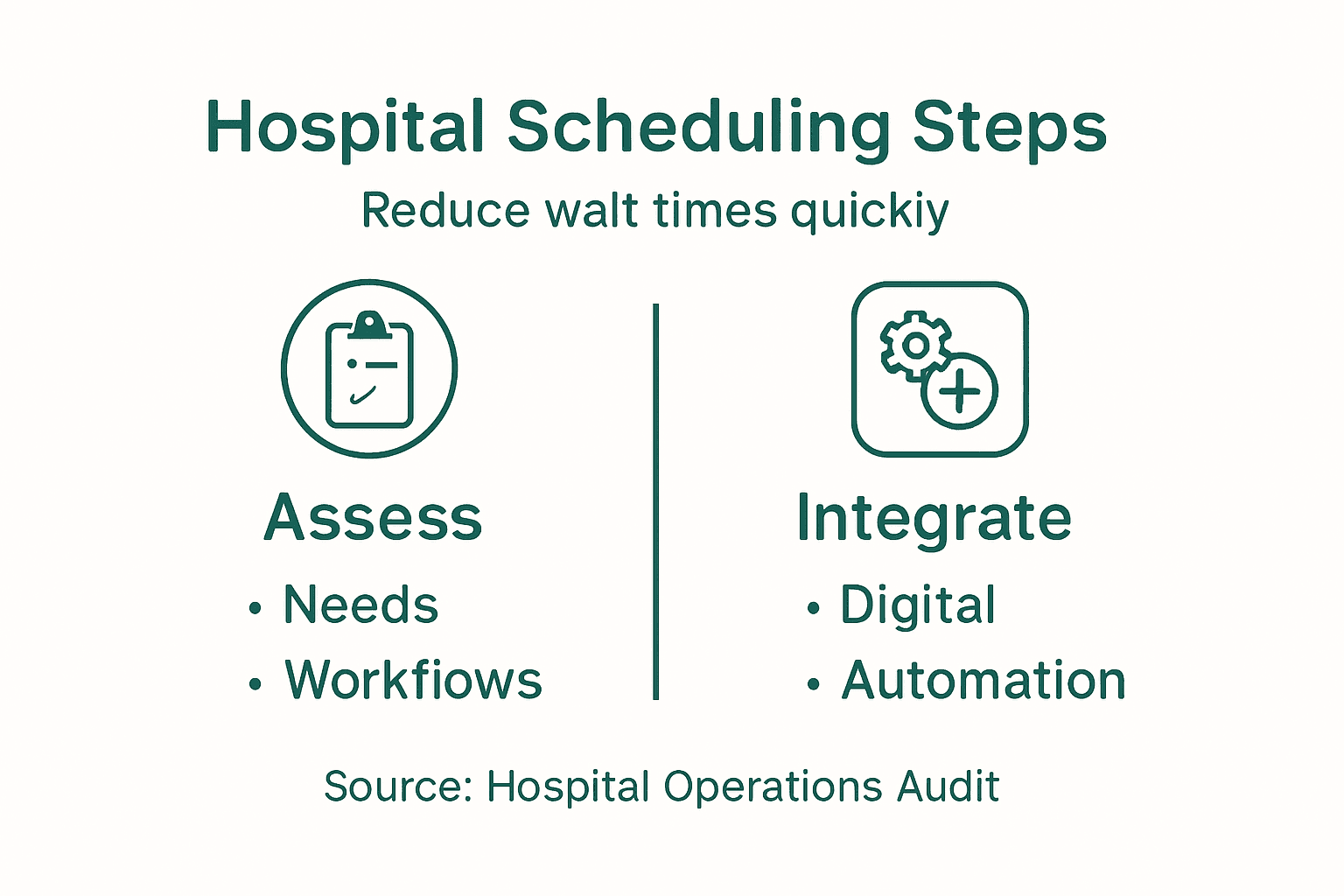
Scheduling automation best practices demonstrate significant improvements in patient flow and staff satisfaction. Start by selecting a comprehensive scheduling platform that integrates seamlessly with your existing electronic health record (EHR) system. Implement automated features such as patient self scheduling, intelligent appointment routing, and real time availability tracking. Focus on creating a centralized system that allows multiple departments to coordinate scheduling efforts while maintaining individual unit specific requirements.
Develop clear protocols for how automated scheduling will interact with manual oversight. Train staff on the new system and establish workflows that balance technological efficiency with human judgment. Create feedback loops that allow continuous monitoring and adjustment of the automated scheduling processes. Ensure that the system can handle complex scheduling scenarios such as urgent care appointments, specialist consultations, and emergency medical situations.
Pro tip: Configure your automated scheduling system with multiple override options to maintain flexibility and address unique patient care requirements.
Compare key benefits of digital logistics platforms and scheduling automation for hospitals:
| Approach | Main Benefit | Example Technology Feature | Impact on Hospital Operations |
|---|---|---|---|
| Digital Logistics Platform | Enhanced coordination | Real-time patient tracking | Faster patient flow between departments |
| Scheduling Automation | Reduced admin workload | Intelligent self-scheduling | Fewer manual errors and faster booking |
| Centralized Scheduling | Streamlined resource allocation | Unified system for multiple departments | Improved use of staff and equipment |
Step 4: Monitor Performance with Real Time Data
Tracking and analyzing hospital scheduling performance requires a strategic approach to real time data monitoring. Your goal is to create a comprehensive system that provides actionable insights into scheduling efficiency and patient flow.
AI powered performance monitoring enables hospitals to transform raw data into meaningful operational improvements. Implement a dashboard that captures key performance indicators such as average wait times, appointment completion rates, staff utilization, and patient satisfaction scores. Configure your monitoring system to generate automated alerts when scheduling metrics fall outside predefined acceptable ranges. Use visualization tools that allow administrators to quickly identify bottlenecks or inefficiencies in the scheduling process.
Establish a regular review protocol where key stakeholders analyze the collected performance data. Schedule weekly or monthly meetings to discuss insights, identify trends, and develop targeted strategies for continuous improvement. Encourage a culture of data driven decision making by sharing relevant metrics with department heads and frontline staff. Ensure that your monitoring system provides granular insights that can help individual units optimize their specific scheduling challenges.
Pro tip: Create custom performance benchmarks that reflect your hospital’s unique operational characteristics and patient demographics.
Step 5: Validate Improvements and Adjust Processes
Validating scheduling improvements requires a systematic approach to measuring and refining your hospital’s operational efficiency. Your goal is to transform initial scheduling changes into sustainable, long term performance enhancements.
Process mapping techniques help hospitals critically analyze scheduling workflows and identify improvement opportunities. Conduct comprehensive performance reviews by comparing key metrics before and after implementation of new scheduling processes. Gather feedback from staff across different departments to understand both quantitative performance data and qualitative user experiences. Create a structured assessment framework that evaluates scheduling effectiveness through multiple lenses including patient wait times, staff satisfaction, resource utilization, and overall operational efficiency.
Develop an iterative improvement cycle that allows for continuous refinement of scheduling processes. Establish quarterly review meetings where stakeholders can deeply analyze performance data, discuss challenges, and propose targeted adjustments. Encourage a culture of collaborative problem solving by creating channels for frontline staff to contribute insights and recommendations. Remain flexible and willing to make incremental changes that can progressively optimize your hospital scheduling system.
Pro tip: Document every process change and its specific impact to build a comprehensive knowledge base for future scheduling improvements.
Transform Your Hospital Scheduling with VectorCare’s Advanced Solutions
Hospitals face the constant challenge of reducing patient wait times while managing complex scheduling demands across departments. This article highlights key pain points like workflow inefficiencies, manual scheduling burdens, and the need for real-time data monitoring. VectorCare’s comprehensive digital platform directly addresses these issues by offering AI-driven scheduling optimization, automated patient logistics, and seamless integration with electronic health records. Our tools help you streamline patient flow, improve staff utilization, and gain actionable insights to continually enhance your operations.
Unlock the potential to revolutionize your hospital’s scheduling by visiting VectorCare. Explore how our platform’s scheduling optimization and real-time updates can reduce delays and administrative workload. Take control of patient logistics today and create a more efficient, compassionate healthcare experience for all stakeholders.
Frequently Asked Questions
How can I assess my hospital’s scheduling needs effectively?
Assess your hospital’s scheduling needs by conducting a detailed internal audit of your current system. Analyze patient data, track wait times, and identify workflow bottlenecks to pinpoint areas for improvement within 30 days.
What are the key metrics to evaluate during a hospital scheduling audit?
Key metrics to evaluate include patient volume, appointment types, staff availability, wait time averages, and seasonal variations. Collect and analyze this data to identify critical scheduling efficiencies and areas needing attention.
How do I integrate a digital logistics platform for scheduling?
To integrate a digital logistics platform, begin by selecting a solution that can seamlessly connect with your existing electronic health record system. Implement the platform through a pilot program, ensuring staff is trained fully within the first few weeks for minimal disruption.
What are the benefits of automating hospital scheduling tasks?
Automating scheduling tasks significantly reduces administrative workload and increases operational efficiency. Implementing features like patient self-scheduling can help you streamline patient management and increase appointment availability by up to 30%.
How can I monitor my hospital’s scheduling performance in real time?
You can monitor scheduling performance by implementing a dashboard that tracks key performance indicators like average wait times and appointment completion rates. Set up automated alerts for metrics that fall outside acceptable ranges to react quickly to potential issues.
What steps should I take to validate improvements in hospital scheduling?
To validate improvements, compare key performance metrics before and after implementing scheduling changes. Conduct regular reviews to gather staff feedback and refine your processes continuously for optimal performance.