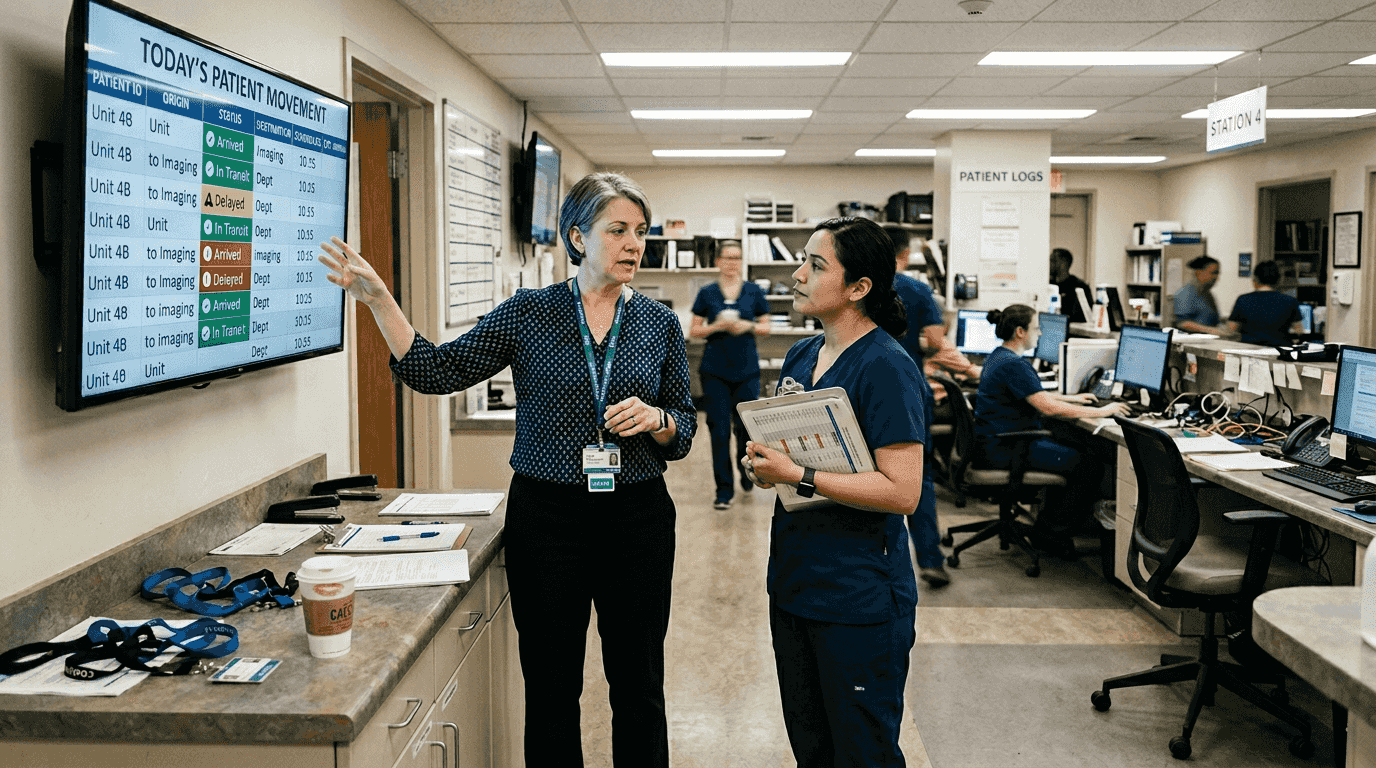
Patient Scheduling in Medical Billing: Improving Workflow Efficiency

Nearly half of American hospitals report that inefficient patient scheduling increases administrative costs every year. For healthcare administrators, juggling patient appointments with billing accuracy is more than a logistical challenge. Optimizing these workflows promises better financial outcomes and smoother patient experiences. This article breaks down scheduling definitions, technology models, and practical strategies to help hospitals simplify operations and control overhead.
Table of Contents
- Defining Patient Scheduling In Medical Billing
- Key Scheduling Models And Technologies
- Workflow Integration And Real-Time Coordination
- Compliance, Privacy, And Regulatory Standards
- Common Scheduling Challenges And Cost Pitfalls
Key Takeaways
| Point | Details |
|---|---|
| Effective Scheduling Is Essential | Streamlined patient scheduling enhances operational efficiency and improves patient experience by reducing wait times and managing no-show rates. |
| Technology Integration Boosts Efficiency | Leveraging advanced scheduling software and EHR systems helps healthcare organizations adapt to patient flow changes and optimize provider productivity. |
| Compliance Is Critical | Adhering to regulations like HIPAA is vital for protecting patient data and maintaining trust, requiring ongoing staff training and auditing. |
| Addressing Challenges Improves Outcomes | Identifying and mitigating scheduling challenges through data-driven strategies can lead to better financial performance and patient satisfaction. |
Defining Patient Scheduling in Medical Billing
Patient scheduling in medical billing represents a critical administrative workflow that directly impacts healthcare operational efficiency. At its core, scheduling involves strategically organizing patient appointments to maximize provider productivity while ensuring optimal patient care. Medical scheduling processes require balancing multiple complex variables including patient needs, provider availability, and critical privacy compliance requirements.
The scheduling process extends far beyond simply placing appointments on a calendar. It involves intricate coordination between administrative staff, healthcare providers, and patient communication systems. Effective scheduling requires understanding different appointment types, managing potential scheduling conflicts, and integrating seamlessly with electronic health record (EHR) systems. Healthcare organizations must design scheduling approaches that reduce wait times, minimize no-show rates, and maintain accurate patient information.
Successful patient scheduling demands a strategic approach that considers both financial and patient experience objectives. Practices must customize scheduling methods to meet specific organizational goals while maintaining flexibility. This includes developing protocols for different appointment lengths, managing potential bottlenecks in patient flow, and creating systems that support provider efficiency and patient satisfaction simultaneously.
Pro tip: Implement a standardized scheduling template with predefined time slots for different appointment types to streamline administrative workflows and reduce scheduling complexity.
Key Scheduling Models and Technologies
Healthcare organizations employ various patient scheduling models designed to optimize appointment management and patient access. These models range from traditional fixed appointment systems to more dynamic approaches like open access and modified wave scheduling. Each model addresses unique operational challenges by balancing provider availability, patient needs, and administrative efficiency.
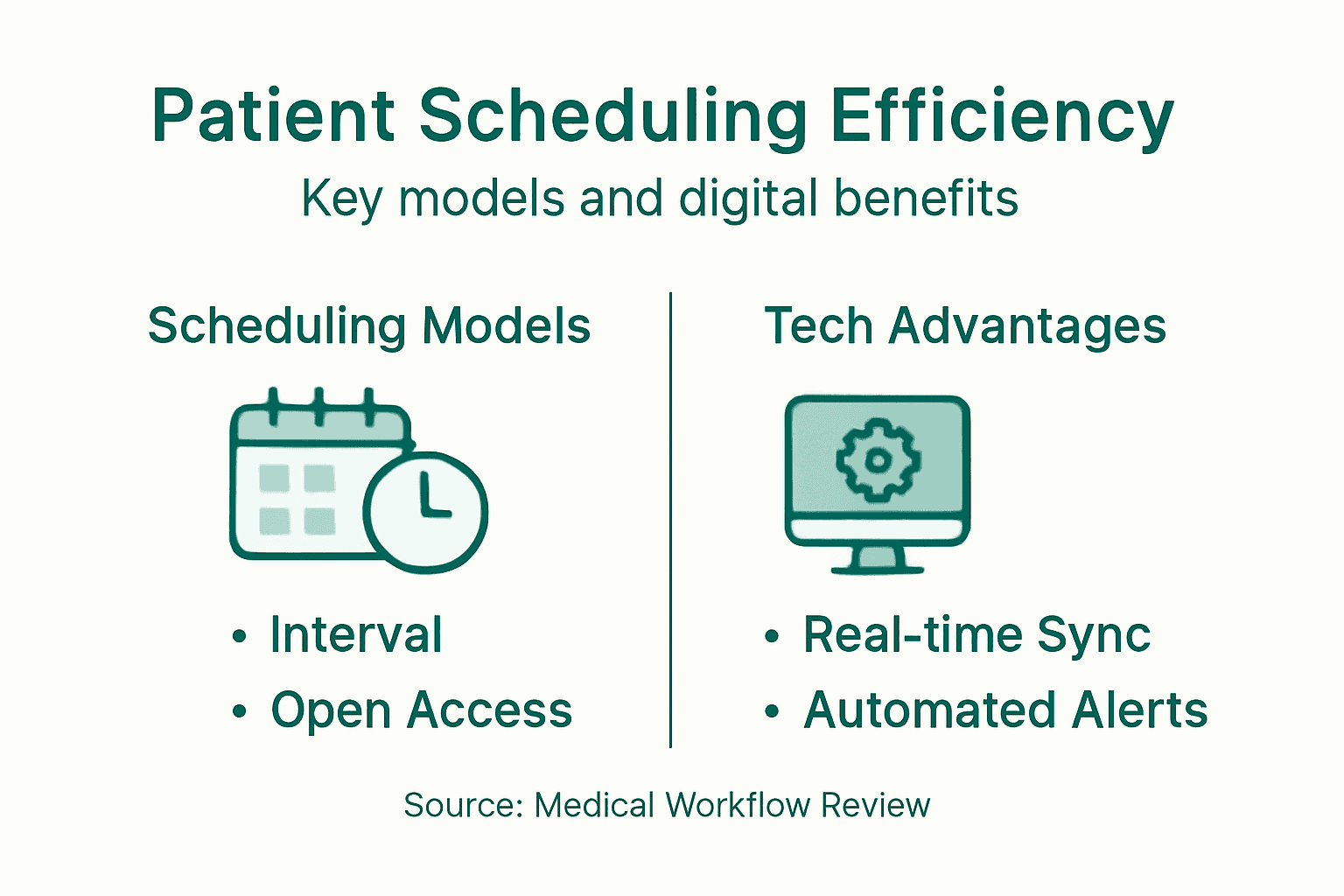
The primary scheduling models include interval scheduling and fixed interval scheduling, which determine how appointment slots are allocated. Interval scheduling allows for flexible appointment durations based on visit complexity, while fixed interval scheduling maintains consistent time slots across different appointment types. Modern healthcare practices increasingly leverage technology to enhance these scheduling approaches, integrating electronic health record (EHR) systems and telehealth platforms to create more responsive and adaptable scheduling workflows.
Technology plays a crucial role in transforming patient scheduling processes. Advanced scheduling software now incorporates intelligent features like automated patient reminders, real-time slot availability tracking, and predictive analytics to reduce no-show rates and optimize provider productivity. These technological solutions enable healthcare organizations to implement more sophisticated scheduling strategies that dynamically adjust to changing patient demand and provider availability.
Below is a summary of top technology enhancements in patient scheduling and their benefits:
| Technology Enhancement | Primary Benefit | Resulting Advantage |
|---|---|---|
| Automated Reminders | Reduces no-shows | Fewer gaps, higher revenue |
| Real-Time Slot Tracking | Instant appointment availability | Decreases patient wait time |
| Predictive Analytics | Smarter resource allocation | Improved provider efficiency |
| EHR & Telehealth Integration | Unified scheduling for all visits | Streamlined patient experience |
Here’s a comparison of common patient scheduling models and their operational impacts:
| Scheduling Model | Key Features | Operational Impact |
|---|---|---|
| Fixed Interval | Standardized time slots; predictable flow | Simplifies management, less flexible |
| Interval Scheduling | Slots vary by patient needs | Increases flexibility, adds complexity |
| Open Access | Same-day appointments available | Boosts access, may disrupt flow |
| Modified Wave | Mix of fixed and variable slots | Balances predictability and flexibility |
Pro tip: Implement a hybrid scheduling model that combines fixed and open access approaches to maximize flexibility and reduce appointment wait times.
Workflow Integration and Real-Time Coordination
Successful patient scheduling demands sophisticated clinical workflow integration that seamlessly connects multiple healthcare touchpoints. This integration involves mapping intricate task sequences, understanding provider roles, and creating communication pathways that enable smooth patient care coordination. By analyzing workflow patterns, healthcare organizations can design scheduling systems that minimize administrative overhead and optimize patient engagement.

Real-time coordination represents a critical component of modern scheduling approaches. Healthcare providers must develop systems that can dynamically adjust to patient flow variations, accounting for factors like unexpected delays, provider availability, and complex patient needs. Advanced scheduling technologies now incorporate intelligent buffer times and adaptive scheduling mechanisms that can respond instantaneously to changing clinical environments, ensuring continuous operational efficiency.
Technology plays a pivotal role in achieving comprehensive workflow integration. Digital platforms now enable real-time communication between administrative staff, healthcare providers, and patients, creating a synchronized ecosystem that supports rapid information exchange. These systems integrate multiple data sources, including electronic health records, patient communication channels, and provider scheduling databases, to create a holistic view of patient logistics and clinical workflow management.
Pro tip: Implement a centralized digital dashboard that provides real-time visibility into scheduling status, enabling instant communication and workflow adjustments across different healthcare teams.
Compliance, Privacy, and Regulatory Standards
Healthcare organizations must navigate complex healthcare billing compliance requirements that protect patient information and ensure legal integrity. These regulatory frameworks encompass multiple federal and state laws designed to safeguard patient data, prevent fraudulent activities, and maintain transparent medical billing practices. Compliance extends beyond simple record-keeping, requiring comprehensive strategies that integrate privacy protections into every aspect of patient scheduling and billing workflows.
The Health Insurance Portability and Accountability Act (HIPAA) serves as the cornerstone of patient privacy regulations. Its Privacy Rule establishes stringent national standards for protecting sensitive health information, mandating that covered entities implement robust security measures. These requirements include limiting information disclosure, ensuring minimum necessary data sharing, and establishing clear patient rights regarding their medical records and personal health information.
Effective compliance programs demand a multifaceted approach that combines technological safeguards, staff training, and continuous organizational vigilance. Healthcare providers must develop comprehensive policies that address potential vulnerabilities, implement regular auditing processes, and create clear corrective action protocols. This proactive approach not only mitigates legal risks but also builds patient trust by demonstrating a commitment to protecting their most sensitive personal information.
Pro tip: Conduct quarterly compliance audits and provide ongoing staff training to ensure your scheduling and billing processes remain aligned with current regulatory requirements.
Common Scheduling Challenges and Cost Pitfalls
Healthcare organizations face numerous scheduling challenges impacting operational efficiency. These challenges range from managing unpredictable patient visit lengths to addressing high no-show rates and navigating complex patient flow bottlenecks. The financial implications of inefficient scheduling can be substantial, with potential revenue losses and increased operational expenses directly linked to suboptimal appointment management strategies.
Patient billing complexity represents another significant challenge in healthcare scheduling. Multiple bills for a single care episode, unexpected charges, and limited transparency can create significant patient confusion and dissatisfaction. These issues not only impact patient experience but also create substantial administrative burdens for healthcare providers, requiring additional resources to resolve billing discrepancies and manage patient communications.
Technology and data-driven approaches offer promising solutions to these persistent scheduling challenges. By implementing advanced scheduling software that incorporates predictive analytics, healthcare organizations can optimize provider availability, reduce no-show rates, and create more flexible appointment systems. These technological interventions enable more precise demand forecasting, intelligent resource allocation, and streamlined patient communication strategies that address many traditional scheduling inefficiencies.
Pro tip: Develop a comprehensive data tracking system that monitors scheduling metrics, no-show rates, and patient flow to continuously identify and address potential operational bottlenecks.
Enhance Patient Scheduling Efficiency with VectorCare
Managing patient scheduling challenges like unpredictable appointment lengths, high no-show rates, and compliance risks requires a strategic, technology-driven solution. The article highlights the importance of integrated scheduling workflows, real-time coordination, and compliance safeguards to improve operational efficiency and patient satisfaction. VectorCare’s digital platform directly addresses these pain points by offering AI-driven scheduling optimization, secure communication tools, and real-time updates designed to reduce administrative burden and boost provider productivity.
Experience how our integrated suite supports seamless coordination across healthcare providers, payers, and services to streamline patient logistics for transportation, home health, and medical equipment delivery. With VectorCare, healthcare organizations can lower costs while enhancing patient outcomes by embracing automation and data insights tailored to meet complex scheduling needs.
Discover how VectorCare can transform your patient scheduling workflows today.
Ready to reduce delays and improve workflow efficiency? Visit VectorCare to explore our comprehensive digital platform. Learn more about how our solutions support smarter scheduling and logistics management by visiting VectorCare Scheduling Optimization and start improving your operations now.
Frequently Asked Questions
What is patient scheduling in medical billing?
Patient scheduling in medical billing refers to the process of organizing patient appointments to maximize healthcare provider productivity and ensure optimal patient care, balancing provider availability and patient needs.
How does technology improve patient scheduling processes?
Technology enhances patient scheduling by incorporating features like automated reminders, real-time slot tracking, and predictive analytics, which help reduce no-show rates and optimize provider productivity.
What are some common challenges in patient scheduling?
Common challenges in patient scheduling include managing unpredictable visit lengths, high no-show rates, complex patient flows, and billing transparency issues that can affect patient satisfaction and operational efficiency.
How can healthcare organizations ensure compliance in patient scheduling?
Healthcare organizations can ensure compliance in patient scheduling by implementing robust privacy protections in line with HIPAA regulations, conducting regular audits, and providing staff training on privacy and compliance requirements.