Non-Emergency Stretcher Transportation Impact

Managing non-emergency patient transportation often means solving complex challenges that go well beyond simply moving people from point A to point B. For healthcare logistics managers across the United States, understanding specialized stretcher transport can make a measurable difference in patient care and operational costs. This overview highlights how tailored non-emergency stretcher solutions support safe, comfortable journeys for patients with unique mobility needs—equipping you with practical insights for more reliable and cost-effective transportation choices.
Table of Contents
- What Non-Emergency Stretcher Transportation Means
- Stretcher Transport Service Types And Uses
- Essential Vehicle And Staff Requirements
- Key Regulations And Compliance Standards
- Cost Factors And Insurance Reimbursement
- Comparing Stretcher Transport With Alternatives
Key Takeaways
| Point | Details |
|---|---|
| Non-Emergency Stretcher Transportation | This service is essential for patients needing horizontal transport due to medical conditions or recovery needs, differing significantly from emergency ambulance services. |
| Types of Stretcher Transport Services | Services range from basic non-emergency to critical care transport and long-distance transportation, each catering to varying levels of medical needs. |
| Vehicle and Staff Requirements | Specialized vehicles and extensively trained staff are critical to ensure patient safety and comfort during non-emergency transports. |
| Regulatory and Compliance Standards | Adherence to federal and state regulations is vital for operational legitimacy and avoiding potential legal repercussions. |
What Non-Emergency Stretcher Transportation Means
Non-emergency stretcher transportation represents a specialized medical transport service designed to safely move patients who cannot sit upright or require horizontal positioning during transit, but do not face an immediate life-threatening situation. These transportation services bridge critical healthcare logistics gaps by providing safe, comfortable movement for patients with mobility challenges, chronic conditions, or post-surgical recovery needs.
Understanding the nuanced role of non-emergency stretcher transportation requires recognizing its distinct characteristics from emergency ambulance services. While emergency medical services prioritize urgent, time-sensitive patient transport, non-emergency stretcher transportation focuses on planned, scheduled movement with carefully managed patient comfort and medical stability. Non-emergency transport services typically support scenarios like transferring patients between medical facilities, returning patients home after treatment, or moving individuals with limited mobility who cannot use standard transportation methods.
The core objectives of non-emergency stretcher transportation include ensuring patient safety, maintaining medical continuity, and providing a dignified transport experience. Healthcare logistics managers must carefully coordinate these services, considering factors like patient medical requirements, transport duration, specialized equipment needs, and potential medical monitoring during transit. Stretcher transportation often involves specialized vehicles equipped with advanced stabilization systems, trained medical personnel, and customized infrastructure to accommodate diverse patient needs.
Pro tip: Always verify a non-emergency stretcher transportation provider’s credentials, medical equipment inventory, and staff training to ensure optimal patient safety and care during transit.
Stretcher Transport Service Types And Uses
Stretcher transport services encompass a diverse range of specialized medical transportation options designed to address unique patient mobility and medical care requirements. These services are categorized primarily by patient medical needs, transport complexity, and the level of medical intervention required during transit. Understanding medical transport companies reveals the critical role these specialized services play in healthcare logistics.
The primary types of stretcher transport services include basic non-emergency transport, critical care transport, and long-distance medical transport. Basic non-emergency transport serves patients who require horizontal positioning but do not need intensive medical monitoring, such as post-surgical patients, individuals with mobility limitations, or those recovering from minor procedures. Critical care transport, in contrast, involves advanced medical equipment, trained critical care personnel, and continuous medical monitoring for patients with more complex health conditions requiring immediate medical intervention during transportation.
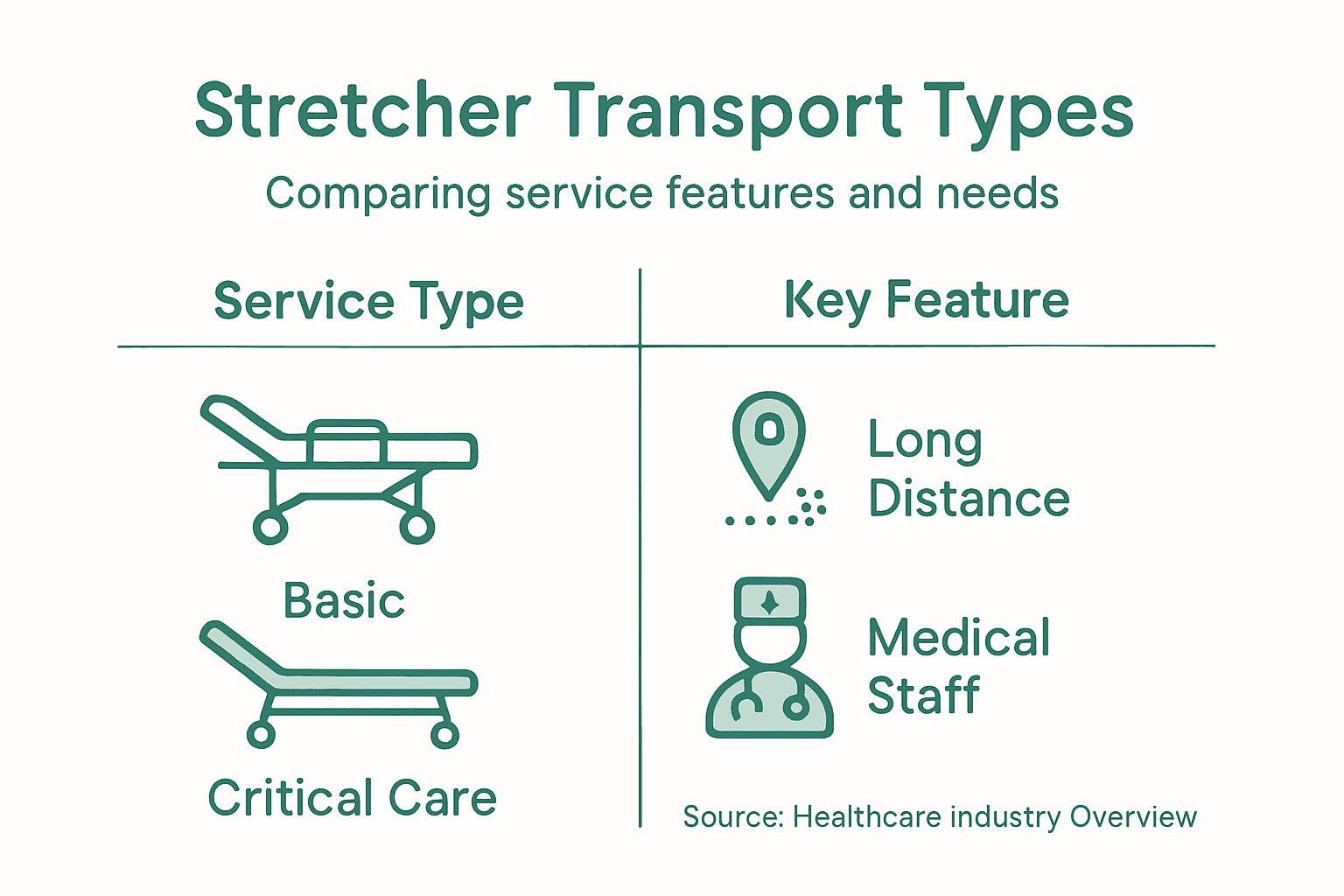
Long-distance medical transport represents a specialized service addressing complex patient movement needs across significant geographic distances. These services often involve specially equipped vehicles with advanced life support systems, trained medical teams, and carefully planned routes that accommodate patient medical requirements. Such transports might include moving patients between specialized treatment centers, transferring patients to rehabilitation facilities, or facilitating inter-hospital patient transfers that require sustained medical support throughout the journey.
Pro tip: When selecting a stretcher transport service, carefully evaluate the provider’s medical credentials, vehicle equipment, staff training, and specialization to ensure optimal patient safety and care during transportation.
Here’s a concise comparison of stretcher transport service types:
| Service Type | Level of Medical Support | Common Patient Needs | Typical Vehicle Features |
|---|---|---|---|
| Basic Non-Emergency | Minimal monitoring | Post-surgery, mobility issues | Standard stretcher, basic supplies |
| Critical Care | Continuous advanced care | Severe or unstable conditions | Life support equipment, ICU setup |
| Long-Distance | Ongoing monitoring, planning | Facility transfers, rehab journeys | Extra comfort, route optimization |
Essential Vehicle And Staff Requirements
Non-emergency stretcher transportation demands rigorous vehicle and staffing standards to ensure patient safety, comfort, and medical reliability. Non-emergency medical transportation businesses must meticulously design their operational infrastructure to meet stringent healthcare transportation protocols. Vehicle requirements extend far beyond standard transportation considerations, incorporating specialized medical equipment, patient safety features, and precise environmental control systems.
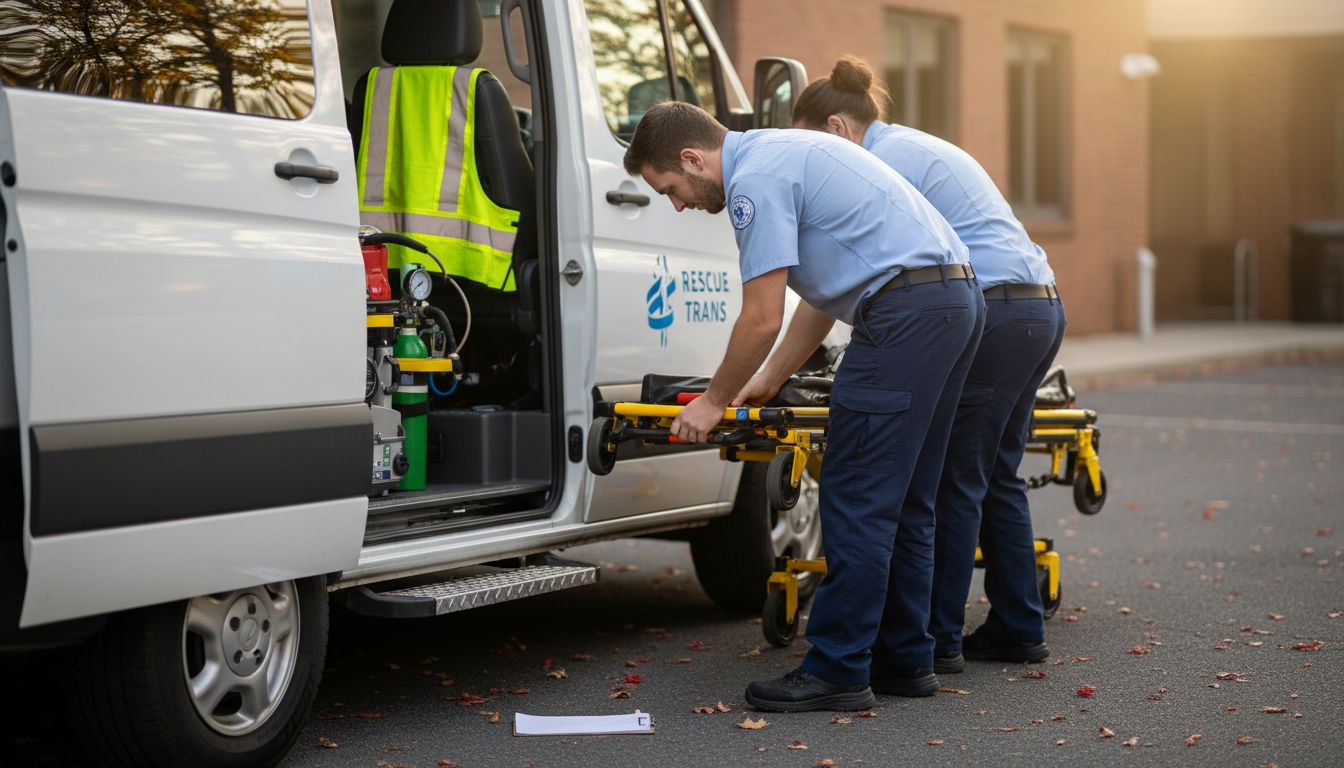
Vehicle specifications for stretcher transport services include multiple critical components. These vehicles must feature hydraulic lift systems capable of smooth, controlled patient loading and unloading, reinforced stretcher mounting mechanisms, advanced suspension technology to minimize patient movement, and climate control systems maintaining consistent temperature ranges. Additionally, vehicles require specialized medical storage compartments for emergency equipment, oxygen tanks, medical supplies, and communication systems that enable real-time coordination with medical professionals.
Staff requirements are equally comprehensive, demanding a multidimensional skill set that combines medical knowledge, patient care expertise, and transportation proficiency. Stretcher transport personnel typically include certified emergency medical technicians (EMTs), paramedics, or specially trained medical transport specialists who possess advanced patient handling certifications. These professionals must demonstrate expertise in patient assessment, medical equipment operation, emergency response protocols, and compassionate patient interaction. Background checks, ongoing medical training, and periodic skill recertification represent standard requirements for maintaining the highest standards of patient care and safety.
Pro tip: Implement a comprehensive staff training program that includes quarterly medical skill assessments, patient handling workshops, and scenario-based emergency response simulations to maintain peak operational readiness.
Key Regulations And Compliance Standards
Non-emergency stretcher transportation operates within a complex regulatory landscape that demands rigorous adherence to federal, state, and local healthcare transportation guidelines. Understanding regulatory compliance in healthcare reveals the intricate network of standards governing patient transport services. These regulations encompass multiple dimensions, including patient safety protocols, vehicle equipment specifications, staff certification requirements, and operational documentation standards.
Federal regulations primarily emerge from agencies like the Centers for Medicare and Medicaid Services (CMS), the Department of Transportation (DOT), and the Health Insurance Portability and Accountability Act (HIPAA). These regulatory frameworks establish comprehensive guidelines for patient privacy, medical equipment standards, staff training requirements, and vehicle safety specifications. Key compliance areas include maintaining accurate patient records, ensuring proper medical equipment maintenance, implementing strict patient confidentiality protocols, and documenting all transportation-related medical interactions with precise medical coding and reporting standards.
State-level regulations further augment federal guidelines, often introducing more specific requirements tailored to regional healthcare infrastructure. These state-specific standards may include additional certification processes for medical transport personnel, more stringent vehicle inspection protocols, and localized patient safety requirements. Transportation providers must maintain meticulous documentation demonstrating ongoing compliance, including staff training records, vehicle maintenance logs, patient transport documentation, and continuous quality assurance monitoring. Failure to meet these comprehensive regulatory standards can result in significant financial penalties, potential loss of operational licenses, and legal consequences that could permanently impact a non-emergency medical transport organization’s operational capacity.
Pro tip: Develop a comprehensive compliance management system that includes automated documentation tracking, regular staff training updates, and quarterly internal audits to proactively identify and address potential regulatory gaps.
Cost Factors And Insurance Reimbursement
Non-emergency stretcher transportation represents a complex financial ecosystem with multiple interconnected cost factors and intricate insurance reimbursement mechanisms. Healthcare compliance standards significantly influence the economic landscape of medical transportation services, determining pricing structures, insurance eligibility, and operational sustainability. Transportation providers must navigate a multilayered financial framework that involves patient classification, medical necessity documentation, and precise billing protocols.
Cost factors in non-emergency stretcher transportation are influenced by several critical variables, including distance traveled, patient medical complexity, required medical equipment, staffing levels, and vehicle operational expenses. Base transportation rates typically range from $200 to $800 per trip, with additional charges for specialized medical monitoring, advanced life support equipment, and extended transportation distances. Insurance reimbursement processes vary dramatically across different healthcare plans, with Medicare and Medicaid establishing specific guidelines for non-emergency medical transportation coverage. Private insurance providers often require comprehensive medical documentation demonstrating the medical necessity and appropriateness of stretcher-based transportation.
Reimbursement mechanisms involve intricate documentation requirements that demand precise medical coding, detailed patient assessment records, and explicit justification for transportation services. Healthcare providers must submit claims with extremely specific diagnostic codes, patient condition descriptions, and transportation rationale to secure full insurance compensation. Failure to meet these stringent documentation standards can result in claim denials, partial reimbursements, or significant administrative overhead associated with claims resolution. Transportation providers increasingly invest in advanced medical billing technologies and specialized compliance teams to optimize reimbursement processes and minimize financial risks associated with complex insurance submission requirements.
Pro tip: Develop a robust documentation and coding system that automates medical necessity verification and creates comprehensive claim packages to maximize insurance reimbursement success rates.
Comparing Stretcher Transport With Alternatives
Non-emergency patient transportation offers multiple service modalities, each designed to address specific patient mobility and medical care requirements. Non-emergency patient transport services demonstrate the nuanced landscape of medical mobility solutions that extend far beyond traditional ambulance transportation. Understanding the distinctive characteristics of stretcher transport compared to alternative transportation methods is crucial for healthcare logistics managers seeking optimal patient movement strategies.
Stretcher transport differs significantly from wheelchair transport, wheelchair van services, and standard ambulance alternatives. While wheelchair transportation suits patients with partial mobility who can safely transfer between seats, stretcher transport provides comprehensive horizontal positioning for patients requiring complete medical support. Critical care ambulances represent a more intensive alternative, typically reserved for acute medical emergencies, whereas stretcher transport focuses on planned, non-urgent medical transfers. Wheelchair van services offer more cost-effective transportation for patients with moderate mobility, but lack the medical monitoring and positioning capabilities inherent in stretcher-based transport.
The selection between stretcher transport and alternative mobility solutions depends on multiple factors, including patient medical condition, required medical intervention during transport, distance of travel, and insurance coverage considerations. Stretcher transport becomes the preferred option when patients cannot sit upright, require continuous medical monitoring, need specialized positioning, or have medical conditions that compromise their ability to maintain stable positioning during transportation. Advanced medical equipment, trained medical personnel, and specialized vehicle infrastructure distinguish stretcher transport as a comprehensive medical mobility solution that prioritizes patient safety and medical continuity.
Below is a comparison of common medical transport methods for non-emergency patients:
| Transport Mode | Patient Condition Required | Medical Monitoring Available | Cost Range |
|---|---|---|---|
| Stretcher Transport | Cannot sit upright | Continuous or intermittent | $200-$800/trip |
| Wheelchair Van | Partial self-mobility | None to limited | $50-$250/trip |
| Ambulance | Acute/emergency only | Full emergency capabilities | $500-$1500/trip |
Pro tip: Develop a standardized patient assessment protocol that objectively evaluates medical transport requirements, ensuring precise matching between patient needs and appropriate transportation modalities.
Transform Your Non-Emergency Stretcher Transportation Efficiency with VectorCare
Managing non-emergency stretcher transportation comes with challenges like coordinating specialized vehicles, ensuring staff compliance, and maintaining real-time communication to safeguard patient safety and comfort. The article highlights crucial pain points including regulatory compliance, complex scheduling, medical monitoring needs, and cost control that healthcare logistics managers face every day. VectorCare’s integrated platform offers a tailored solution that automates scheduling optimization, vendor management, and compliance tracking to help you reduce delays and operational costs while improving patient experiences.

Discover how VectorCare can revolutionize your non-emergency transport with AI-driven dispatching and seamless communication designed specifically to meet the demands of stretcher transport services. Visit VectorCare to explore solutions that support your healthcare operation’s growth and compliance. Start optimizing your patient logistics now to boost safety, reduce administrative burden, and deliver more efficient care with a comprehensive digital platform.
Frequently Asked Questions
What is non-emergency stretcher transportation?
Non-emergency stretcher transportation is a specialized service that safely moves patients who cannot sit upright or require horizontal positioning during transit, without being in an immediate life-threatening situation.
What types of patients benefit from stretcher transport services?
Patients who require stretcher transport often include those recovering from surgery, individuals with mobility challenges, and anyone needing safe, comfortable transport due to chronic conditions.
How does stretcher transport differ from wheelchair transport?
Stretcher transport is designed for patients who cannot sit upright and require continuous medical monitoring, while wheelchair transport is suitable for patients with partial mobility who can transfer safely between seats.
What should I consider when selecting a stretcher transport service?
When selecting a stretcher transport service, consider the provider’s medical credentials, the medical equipment available, staff training, and their specialization in handling the specific needs of patients requiring such transportation.
Recommended
- Understanding Non Emergency Transport Ambulance Services
- Emergency Medical Transportation: Complete U.S. Guide
- Non Emergency Wheelchair Transportation Guide
- 7 Key Factors Influencing Non Emergency Medical Transportation Cost
- Why a Chiropractor Might Be Better Than the Emergency Room to Solve Your Post-Accident Pain