What Is Non Emergency Ambulance Service? Explained

Every year, millions of American patients rely on non emergency ambulance services for safe medical transportation. For those coping with limited mobility, chronic illness, or physical disabilities, securing reliable transit is just as crucial as receiving treatment. With over 20 million non emergency medical transports completed across the United States annually, understanding how these services work helps families ensure comfort, safety, and peace of mind throughout every medical journey.
Table of Contents
- Defining Non Emergency Ambulance Service
- Types of Non Emergency Transport Options
- How Non Emergency Ambulances Operate
- Regulatory Standards And Compliance Factors
- Cost Structures And Payment Responsibilities
Key Takeaways
| Point | Details |
|---|---|
| Definition of Non-Emergency Ambulance Services | Non-emergency ambulance services provide medical transportation for patients needing supervision without urgent care, focusing on comfort and scheduled transit. |
| Types of Transport Options | Various options exist, including Wheelchair Accessible Vehicles, Stretcher Vehicles, and Medical Escort Services, each catering to specific patient needs. |
| Operational Framework | Non-emergency services operate on pre-planned schedules, ensuring coordination among healthcare providers for patient safety and logistics. |
| Cost and Payment Structure | Transportation costs are influenced by multiple factors such as service type, medical complexity, and insurance, prompting patients to verify coverage in advance. |
Defining Non Emergency Ambulance Service
Non-emergency ambulance services provide critical medical transportation for patients who require supervised medical transit without urgent medical intervention. These specialized transportation services support patient mobility for individuals with stable medical conditions who cannot independently travel to medical appointments.
The primary purpose of non-emergency ambulance services is facilitating safe, scheduled transportation for patients who do not need immediate emergency care. These services typically involve transporting patients between healthcare facilities, from home to medical appointments, or between different care settings. Unlike emergency ambulance services that respond to acute medical crises, non-emergency ambulance services operate on pre-planned schedules and focus on patient comfort and controlled medical supervision.
Patient populations utilizing non-emergency ambulance services often include:
- Elderly individuals with limited mobility
- Patients requiring dialysis or ongoing treatment
- Individuals with chronic conditions needing regular medical appointments
- Patients recovering from surgeries or medical procedures
- Individuals with physical disabilities requiring specialized medical transportation
These specialized transport services ensure that patients receive professional medical assistance during transit, with trained medical personnel monitoring their condition and providing necessary support throughout the journey. The goal is not just transportation, but maintaining patient safety, comfort, and continuity of medical care.
Types of Non Emergency Transport Options
Non-emergency medical transportation encompasses a diverse range of specialized patient transport services designed to meet various medical mobility needs. These transportation options provide critical support for patients who require medical supervision during transit but do not need emergency medical intervention.
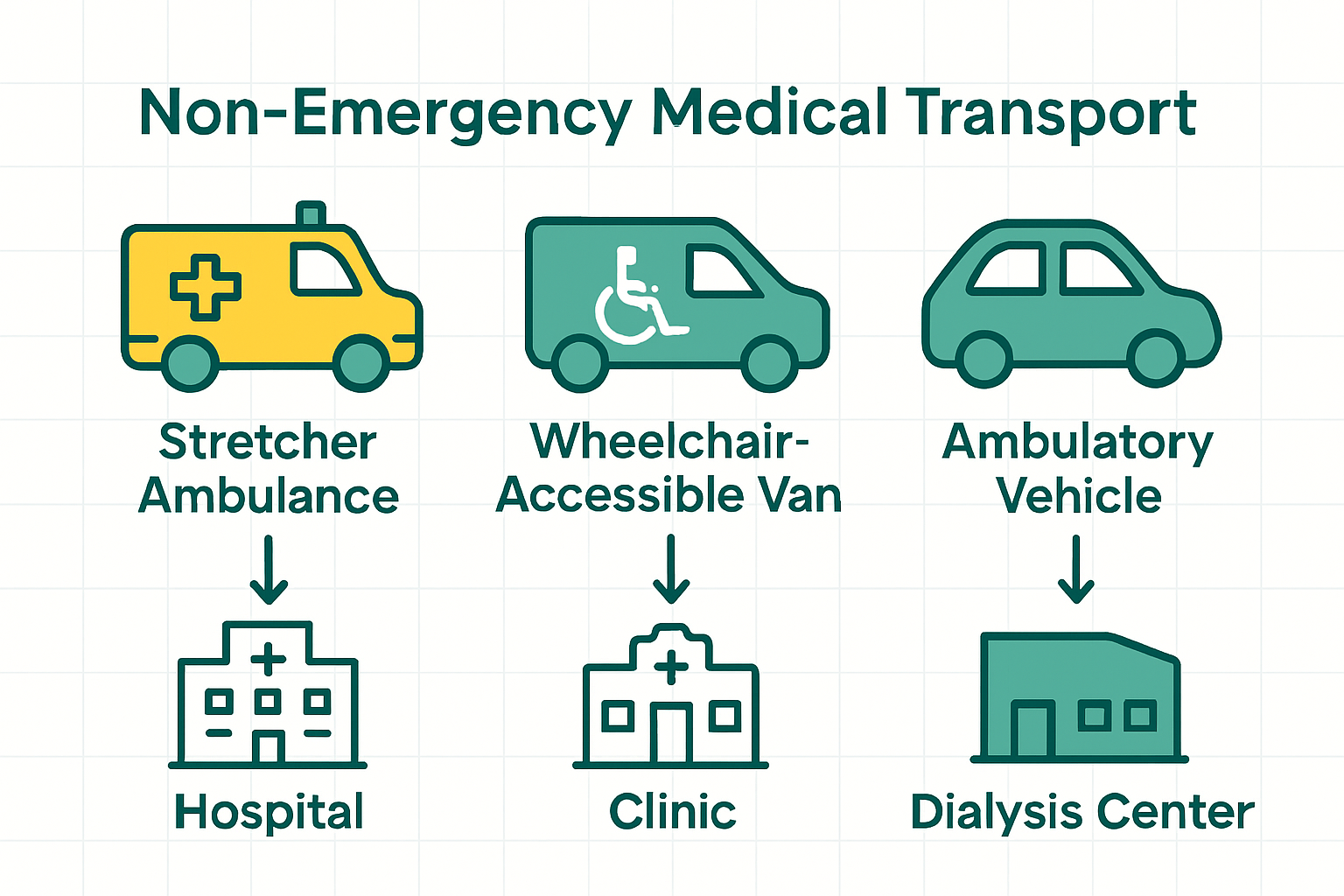
Medical Escort Services represent one important category of non-emergency transport. Medical escorts accompany patients during travel, providing professional assistance on commercial flights or other transportation modes for individuals who need medical monitoring or specialized care during their journey. These services are particularly valuable for patients with chronic conditions, mobility limitations, or those requiring continuous medical attention.
The primary types of non-emergency transport options include:
- Wheelchair Accessible Vehicles: Specially equipped transportation for patients with mobility challenges
- Stretcher Vehicles: Designed for patients who must remain lying down during transport
- Basic Life Support (BLS) Ambulances: Provide medical supervision for stable patients
- Medical Taxi Services: Offer transportation for patients with minor medical needs
- Non-Transporting EMS Vehicles: Provide on-site medical support without full patient transport
Additionally, some specialized transport services offer advanced features like real-time medical monitoring, oxygen support, and trained medical personnel who can address potential health complications during transit. These options ensure patients receive comprehensive care throughout their medical transportation experience, prioritizing safety, comfort, and medical continuity.
How Non Emergency Ambulances Operate
Non-emergency ambulance services function through a carefully coordinated system of scheduled medical transportation designed to meet patients’ specific mobility and medical support requirements. Unlike emergency ambulances that respond to urgent situations, these services operate on pre-planned schedules with meticulous attention to patient care and logistical planning.
Healthcare providers collaborate to coordinate patient transports, ensuring that each transport meets the patient’s unique medical needs. The operational process typically involves several key steps:
- Initial medical assessment and transport requirement evaluation
- Scheduling and route planning
- Vehicle and medical equipment preparation
- Patient pickup and medical monitoring during transit
- Safe patient delivery to destination
The billing for these services is typically structured based on the level of medical support required. Ambulance services bill standard fees for different levels of medical intervention, ranging from basic life support to more advanced medical supervision. Factors influencing the service level include the patient’s medical condition, required medical equipment, and the complexity of care needed during transportation.

Modern non-emergency ambulance operations integrate advanced technologies to enhance patient care and operational efficiency. These include real-time GPS tracking, electronic medical record integration, and sophisticated dispatch systems that optimize routes and ensure timely, safe patient transportation. By prioritizing patient comfort, medical safety, and logistical precision, non-emergency ambulance services provide a critical healthcare support system for patients with diverse medical transportation needs.
Regulatory Standards and Compliance Factors
Non-emergency ambulance services operate within a complex landscape of regulatory compliance requirements designed to ensure patient safety, operational excellence, and consistent healthcare delivery. These regulations encompass multiple dimensions of service provision, from licensing and staffing to vehicle maintenance and medical standards.
State-specific regulations govern ambulance service operations, with each jurisdiction establishing unique standards for non-emergency medical transportation. Key regulatory components typically include:
- Mandatory professional licensing for medical personnel
- Specific vehicle equipment and maintenance requirements
- Comprehensive patient care documentation standards
- Background check protocols for transport personnel
- Regular vehicle and operational inspections
- Specific medical training and certification requirements
Fee structures and compliance mechanisms play a critical role in ensuring accountability and standardization across non-emergency ambulance services. These regulations establish clear guidelines for billing, patient care protocols, and operational transparency, protecting both healthcare providers and patients from potential administrative or medical complications.
Modern regulatory frameworks increasingly emphasize technology integration, data privacy, and patient-centered care standards. This approach ensures that non-emergency ambulance services maintain high-quality medical supervision, operational efficiency, and consistent adherence to evolving healthcare compliance requirements. By implementing rigorous standards, these regulations help maintain the integrity and reliability of non-emergency medical transportation systems across various healthcare settings.
Cost Structures and Payment Responsibilities
Non-emergency ambulance services operate within a complex financial ecosystem where patient transportation costs can vary significantly based on multiple factors. These expenses are influenced by service type, patient medical complexity, insurance coverage, and regional healthcare regulations.
Medicare’s standardized ambulance fee schedule provides a fundamental framework for understanding non-emergency medical transport pricing. Key components of cost structures typically include:
- Base transportation fee
- Mileage charges
- Level of medical intervention required
- Advanced life support supplemental fees
- Equipment and personnel costs
- Geographical location adjustments
Payment responsibilities are distributed across multiple stakeholders, including patients, private insurance providers, government healthcare programs, and healthcare institutions. Patient out-of-pocket expenses can range dramatically, with factors like deductibles, co-payments, and specific insurance plan provisions significantly impacting final costs.
Modern healthcare financing increasingly emphasizes transparency and predictability in non-emergency ambulance service pricing. Patients are encouraged to verify coverage details, understand potential financial responsibilities beforehand, and explore available payment assistance programs. By proactively managing these financial considerations, individuals can navigate the complex landscape of medical transportation expenses more effectively.
Enhance Non Emergency Ambulance Service Coordination with VectorCare
Navigating the complexities of non emergency ambulance services demands precise coordination, real-time updates, and efficient scheduling to ensure patient safety and comfort throughout their journey. The challenges highlighted in the article such as managing scheduled medical transportation, medical supervision levels, and regulatory compliance can create operational burdens and risks for healthcare providers. VectorCare’s integrated platform is designed to tackle these pain points by offering AI-driven dispatching, advanced scheduling optimization, and secure communication tools that streamline patient logistics and reduce costly delays.

Discover how VectorCare transforms non emergency medical transportation by reducing administrative workload, enhancing vendor management, and providing critical data insights for continuous improvement. If your goal is to improve patient outcomes while lowering operational costs, now is the time to explore a comprehensive solution. Take the first step toward smarter, safer, and more efficient patient transport management by visiting VectorCare. Learn more about how VectorCare supports scheduled medical transportation and empowers healthcare organizations to meet evolving regulatory standards with confidence.
Frequently Asked Questions
What is a non-emergency ambulance service?
Non-emergency ambulance services provide medical transportation for patients who require assistance but do not need immediate emergency care. They transport patients between healthcare facilities, to medical appointments, or between different care settings with an emphasis on safety and comfort.
Who typically uses non-emergency ambulance services?
Patients who often utilize non-emergency ambulance services include elderly individuals with limited mobility, patients needing regular treatment like dialysis, those recovering from surgery, and individuals with chronic conditions that require ongoing medical appointments.
What types of vehicles are used for non-emergency ambulance services?
Non-emergency ambulance services use various types of vehicles including wheelchair accessible vans, stretcher vehicles, basic life support ambulances, medical taxi services, and non-transporting EMS vehicles to cater to different patient mobility needs.
How do non-emergency ambulance services determine costs?
Costs for non-emergency ambulance services are determined by several factors including the type of service provided, the level of medical supervision required, mileage charges, and geographical location. Insurance coverage and patient out-of-pocket expenses can also significantly impact overall costs.