Master healthcare transportation management in 2026

Patient transportation delays cost the U.S. healthcare system over $3.6 billion annually, yet most organizations still rely on outdated manual scheduling and fragmented vendor networks. While hospitals invest millions in cutting-edge medical equipment, patient logistics often remains trapped in spreadsheets and phone calls. This disconnect creates missed appointments, billing errors, and frustrated patients who can’t access the care they need. The solution lies in AI-powered transportation management systems that integrate seamlessly with existing healthcare infrastructure. This article explores proven methodologies, performance benchmarks, edge case challenges, and practical implementation strategies to transform your patient transportation operations and deliver measurable improvements in care coordination.
Table of Contents
- Innovative Methodologies Transforming Healthcare Transportation Management
- Empirical Benchmarks And Performance Metrics For Healthcare Transport
- Navigating Challenges And Edge Cases In Patient Transportation
- Practical Strategies For Implementing Efficient Transportation Management Systems
- Discover VectorCare’s Healthcare Transportation Solutions
- Frequently Asked Questions
Key takeaways
| Point | Details |
|---|---|
| AI scheduling efficiency | Machine learning algorithms improve trip routing by 34% and reduce operational costs through predictive demand forecasting. |
| EHR integration benefits | Seamless connection with electronic health records accelerates billing from 60 days to 15 days and improves care coordination. |
| Rural transport solutions | Hybrid broker-direct models and value-based contracts reduce readmissions by 31% in underserved areas. |
| Critical KPIs to monitor | Target denial rates below 5%, maintain 100% compliance, and achieve 95-98% on-time performance for optimal outcomes. |
| No-show reduction impact | Automated eligibility verification and reminder systems decrease patient no-shows from 18% to as low as 3%. |
Innovative methodologies transforming healthcare transportation management
Modern healthcare transportation management has evolved far beyond simple dispatch operations. AI-powered scheduling and routing, real-time GPS tracking, eligibility verification, and EHR integration reduce no-shows and improve coordination across the entire patient journey. These digital tools fundamentally reshape how healthcare organizations deliver timely, cost-effective transportation services.
Machine learning algorithms analyze historical trip data, traffic patterns, weather conditions, and patient preferences to optimize routes dynamically. This intelligent scheduling approach reduces empty miles, minimizes wait times, and increases vehicle utilization rates. Organizations implementing AI-driven systems report efficiency gains of 34% compared to manual dispatch methods.
Real-time GPS tracking provides unprecedented visibility into fleet operations. Dispatchers can monitor vehicle locations, adjust routes on the fly, and provide accurate arrival time estimates to patients and facilities. This transparency eliminates the communication gaps that plague traditional transportation models. When combined with automated patient notifications, GPS tracking reduces anxiety and improves the overall care experience.

Integration with electronic health records represents a game-changing advancement. When transportation platforms connect directly to EHR systems, schedulers access critical patient information instantly. Medical necessity documentation, mobility requirements, and insurance eligibility flow automatically into trip requests. This seamless data exchange accelerates billing from 60 to 15 days while reducing administrative burden on clinical staff.
Eligibility verification tools prevent costly service denials before trips occur. Automated systems check insurance coverage, prior authorization requirements, and benefit limits in real time. This proactive approach eliminates the financial waste associated with transporting patients who lack proper coverage. Organizations can redirect resources toward eligible patients who genuinely need assistance.
Pro Tip: When evaluating top healthcare transportation software comparison options, prioritize platforms offering both AI-driven routing and native EHR integration to maximize return on investment and operational efficiency.
The convergence of these technologies creates a powerful ecosystem for managing patient logistics. Transportation becomes a coordinated component of the care continuum rather than an isolated service. This integration supports advanced patient flow strategies that reduce hospital congestion and improve discharge planning. Automated audit trails and compliance monitoring also strengthen NEMT fraud prevention efforts across the organization.
Empirical benchmarks and performance metrics for healthcare transport
Understanding industry benchmarks helps healthcare administrators set realistic goals and identify improvement opportunities. On-time performance rates typically range from 95-98%, with no-show reductions from 18% to 3% when organizations implement comprehensive digital management systems. These metrics vary significantly based on geography, patient populations, and service models.
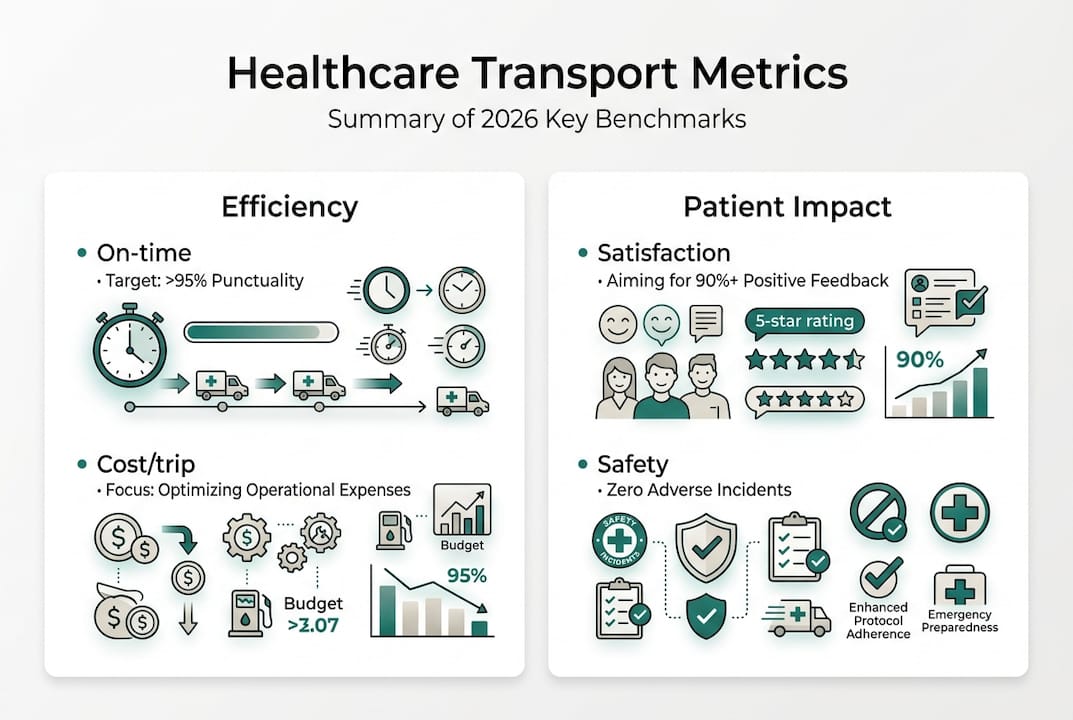
Cost per trip represents another critical benchmark with substantial regional variation. Average transportation costs range from $13 for basic sedan service to $46 for wheelchair-accessible vehicles. Rural areas often experience higher costs due to longer distances and limited provider networks. Urban markets benefit from economies of scale but face traffic congestion challenges that impact efficiency.
| Metric | Industry Average | Best-in-Class | Impact Area | | — | — | — | | On-time performance | 95% | 98% | Patient satisfaction | | No-show rate | 8-12% | 3% | Resource utilization | | Cost per trip (sedan) | $25-35 | $13-20 | Operational efficiency | | Billing cycle time | 45-60 days | 15 days | Cash flow | | Denial rate | 8-15% | <5% | Revenue integrity |
For patients with chronic conditions requiring frequent transportation, efficient logistics generate substantial cost savings. Dialysis patients alone account for over 4 million trips annually. Reducing no-shows and optimizing routes for this population directly impacts both healthcare outcomes and program sustainability. Organizations should track condition-specific metrics to identify high-value improvement opportunities.
Key performance indicators extend beyond basic operational metrics. Healthcare administrators should monitor these essential KPIs:
- Trip completion rate measuring successful pickups and deliveries
- Average wait time from scheduled pickup to actual departure
- Patient satisfaction scores collected through post-trip surveys
- Vendor performance ratings tracking reliability and service quality
- Compliance adherence rates for regulatory and accreditation standards
- Cost per mile calculations identifying efficiency opportunities
These benchmarks provide actionable insights for continuous improvement. Organizations achieving best-in-class performance typically invest in integrated technology platforms, maintain strong vendor partnerships, and prioritize data-driven decision making. Regular performance reviews identify trends and enable proactive adjustments before problems escalate.
Implementing NEMT cost reduction tactics requires baseline measurement and ongoing monitoring. Without clear metrics, improvement efforts lack direction and accountability. Establishing dashboards that track these KPIs in real time empowers managers to respond quickly to emerging issues. The correlation between transportation efficiency and patient transport satisfaction scores demonstrates the broader impact of operational excellence on care quality.
Navigating challenges and edge cases in patient transportation
While standardized transportation processes work well for routine cases, complex scenarios demand adaptive strategies and specialized expertise. Rural transport faces 40% delays caused by multi-state compliance and scheduling errors, presenting unique challenges for healthcare organizations serving geographically dispersed populations. Distance alone doesn’t fully explain these difficulties.
Multi-state regulatory compliance creates administrative complexity when patients cross jurisdictional boundaries. Each state maintains distinct licensing requirements, insurance regulations, and service standards. Transportation providers must navigate this patchwork of rules while maintaining continuity of care. Scheduling errors compound when coordination involves multiple agencies and approval processes. Digital platforms with built-in compliance checking help organizations manage these intricacies more effectively.
Same-day ride requests represent another common challenge with significant operational impact. Emergency department discharges, urgent specialist appointments, and unexpected care needs generate last-minute transportation demands. Traditional scheduling systems struggle to accommodate these requests, leading to high denial rates and patient frustration. Real-time dispatch capabilities and flexible vendor networks provide the agility needed to handle urgent situations.
Special medical needs transportation requires vehicles equipped with specific accommodations and drivers trained in specialized care protocols. Wheelchair accessibility, bariatric equipment, oxygen support, and behavioral health considerations all demand tailored solutions. Organizations must maintain diverse fleet options or cultivate vendor relationships spanning the full spectrum of patient requirements. Failure to match appropriate resources to patient needs compromises both safety and satisfaction.
Weather events and seasonal demand fluctuations stress transportation systems in predictable yet challenging ways. Winter storms, hurricane evacuations, and extreme heat waves disrupt normal operations and spike service requests simultaneously. Vendor capacity constraints become acute during these periods. Proactive planning, backup provider agreements, and surge pricing mechanisms help organizations maintain service continuity during peak demand.
Pro Tip: Implement hybrid broker-direct models that combine the flexibility of transportation network companies with the reliability of dedicated providers, then closely monitor denial rates to optimize resource allocation for complex cases.
Additional edge cases requiring specialized attention include:
- Pediatric transportation with appropriate child safety restraints and trained attendants
- Infectious disease protocols requiring vehicle sanitization between trips
- Language barriers necessitating interpreter services or multilingual drivers
- Cognitive impairment cases needing door-through-door assistance
- Time-sensitive treatments like dialysis with strict scheduling windows
These scenarios highlight why one-size-fits-all approaches fail in healthcare transportation. Organizations serving diverse patient populations must build operational flexibility into their systems. Technology platforms that support multiple service tiers, custom workflows, and exception handling provide the foundation for managing complexity effectively.
Successful patient transportation for SNFs often involves coordinating discharge timing, medication handoffs, and family notifications alongside the physical transport. Similarly, CMS dialysis transportation reimbursement rules create specific documentation and scheduling requirements that differ from other service categories. Understanding these nuances separates high-performing programs from those struggling with denials and patient complaints.
Practical strategies for implementing efficient transportation management systems
Transforming transportation operations requires systematic planning and phased implementation. Healthcare administrators can follow this proven roadmap to achieve sustainable improvements and measurable results.
- Select an AI and machine learning-powered transportation management system designed specifically for healthcare applications. Evaluate platforms based on routing optimization capabilities, demand forecasting accuracy, and scalability to support organizational growth. Prioritize vendors offering proven track records in similar healthcare settings.
- Integrate the transportation platform with existing electronic health record systems to enable seamless data flow. Configure automated interfaces that pull patient demographics, medical necessity documentation, and insurance information directly into trip requests. This integration accelerates billing from 60 to 15 days while reducing manual data entry errors.
- Establish key performance indicator targets aligned with industry benchmarks and organizational goals. Set denial rates below 5%, maintain 100% compliance with regulatory requirements, and achieve 98% on-time performance. Implement real-time dashboards providing visibility into these metrics across all stakeholder groups.
- Develop value-based contracts with transportation providers that reward quality outcomes rather than simply trip volume. Structure agreements with performance incentives tied to on-time rates, patient satisfaction scores, and no-show reductions. This approach lowers readmissions by 31% in rural and underserved populations.
Comparing service delivery models helps organizations choose the optimal approach for their specific circumstances:
| Model | Best For | Advantages | Limitations |
|---|---|---|---|
| Direct fleet | High-volume urban facilities | Maximum control, consistent quality | High capital investment, fixed costs |
| Broker network | Variable demand, wide geography | Flexibility, lower overhead | Less direct oversight, quality variation |
| Hybrid approach | Complex patient populations | Balanced cost and control | Requires sophisticated management |
| Technology platform | Multi-facility health systems | Scalability, data integration | Implementation complexity |
Ongoing optimization requires continuous monitoring and data analysis. Review performance metrics weekly to identify emerging trends before they become systemic problems. Conduct quarterly business reviews with transportation vendors to address service gaps and explore improvement opportunities. Solicit patient feedback through post-trip surveys and incorporate insights into operational refinements.
Pro Tip: Set clear baseline measurements before implementing new systems, then track progress monthly using consistent methodologies to demonstrate return on investment and justify continued technology spending.
Organizations exploring healthcare scheduling software options should prioritize solutions offering transportation-specific functionality rather than generic scheduling tools. Purpose-built platforms understand the unique requirements of patient logistics, including multi-leg trips, medical equipment coordination, and insurance verification workflows.
Comprehensive healthcare logistics solutions comparison reveals significant capability differences across vendors. Evaluate not just current features but also product roadmaps and integration ecosystems. The most valuable platforms connect transportation with broader patient logistics functions, creating unified visibility across the care continuum.
Successful implementation ultimately depends on organizational commitment to maximizing efficiencies through better patient logistics. Technology provides the tools, but leadership must drive cultural change, allocate sufficient resources, and maintain focus on continuous improvement. Organizations treating transportation as a strategic care coordination function rather than a commodity service achieve the most dramatic results.
Discover VectorCare’s healthcare transportation solutions
Transforming patient transportation from operational burden to strategic advantage requires the right technology partner. VectorCare delivers comprehensive digital logistics solutions specifically designed for healthcare organizations seeking to improve efficiency, reduce costs, and enhance patient outcomes. Our AI-powered platform integrates seamlessly with existing EHR systems, automates complex scheduling workflows, and provides real-time visibility across your entire transportation network.
Healthcare administrators using VectorCare report significant improvements in key performance metrics, including reduced no-shows, faster billing cycles, and higher patient satisfaction scores. Our platform supports diverse service models from direct fleet management to broker network coordination, adapting to your organization’s unique requirements. Compliance monitoring, automated eligibility verification, and comprehensive analytics empower you to make data-driven decisions that optimize resource allocation.
Explore our non emergency transportation guide to understand how modern digital tools reshape patient logistics. Learn about the proven impact of NEMT on satisfaction scores and discover strategies your organization can implement immediately. Visit the VectorCare patient logistics platform to schedule a demonstration and see how we help healthcare organizations nationwide deliver exceptional transportation services.
Frequently asked questions
What is healthcare transportation management?
Healthcare transportation management encompasses the systematic coordination of patient transport services across the care continuum. It includes scheduling, dispatch, vendor management, compliance monitoring, and billing for non-emergency medical transportation. Effective management integrates these functions with clinical workflows and electronic health records to optimize efficiency and patient outcomes.
How can AI improve patient transportation scheduling?
Artificial intelligence optimizes routes to reduce delays and operational costs by analyzing traffic patterns, historical data, and real-time conditions. Machine learning algorithms predict demand fluctuations, enabling proactive resource allocation and reducing vehicle idle time. AI also automates routine booking tasks, accelerating request processing from hours to minutes while minimizing human error.
What challenges exist in rural and special needs transportation?
Rural transportation faces 40% delays from multi-state compliance requirements and extended travel distances that strain provider networks. Special needs cases require wheelchair-accessible vehicles, bariatric equipment, or behavioral health-trained drivers that aren’t universally available. Hybrid broker-direct models and value-based contracts help overcome these obstacles by creating flexible service options and incentivizing quality outcomes.
Which KPIs should healthcare administrators monitor?
Track denial rates with targets below 5% to minimize revenue leakage and ensure patients receive needed services. Maintain 100% compliance with state and federal regulations through automated monitoring and audit trails. Target 95-98% on-time performance to reduce patient anxiety and facility disruptions. Monitor no-show percentages and patient satisfaction scores as leading indicators of service quality and operational efficiency.
Recommended
- Top Healthcare Transportation Software – Expert Comparison 2025
- Streamlining Non Emergency Patient Transport Services in 2025
- Top Takeaways: Deloitte’s Healthcare Outlook Review | VectorCare
- 7 Ways to Lower NEMT costs for Medicare Advantage plans | VectorCare
- PCI HIPAA Compliance – Avoiding Costly Mistakes in 2026