Integrated Care Manager: Transforming Healthcare Logistics

Complex patient journeys often challenge American hospital logistics teams to connect every piece of care efficiently. Effective coordination is not just about moving patients between departments or homes, but about creating a seamless, supportive experience across the entire healthcare network. By focusing on integrated care management, logistics professionals gain practical strategies that address fragmentation, improve communication, and enhance patient outcomes within the United States healthcare system.
Table of Contents
- Defining Integrated Care Manager Role
- Types of Integrated Care Management Models
- Core Functions and Key Processes
- Technology Integration and Compliance
- Responsibilities, Risks, and Cost Implications
- Comparisons With Traditional Logistics Approaches
Key Takeaways
| Point | Details |
|---|---|
| Role of Integrated Care Manager | Integrated Care Managers bridge healthcare systems and patient needs, focusing on seamless delivery across providers. |
| Core Competencies | Essential skills include advanced clinical knowledge, strong communication, and cultural competence, which are vital for effective care management. |
| Integrated Care Models | Different models like Fully Integrated and Partially Integrated address specific healthcare challenges and patient populations, enhancing care delivery. |
| Technology and Compliance | Adopting advanced technologies, like EHR and telemedicine, ensures efficient healthcare delivery and compliance with regulations. |
Defining Integrated Care Manager Role
The Integrated Care Manager represents a critical professional bridging complex healthcare systems and patient needs. This specialized role goes far beyond traditional care coordination, serving as a strategic navigator who ensures seamless, holistic healthcare delivery across multiple service lines and provider networks.
In modern healthcare environments, these professionals coordinate care across multiple providers with extraordinary precision. Their responsibilities encompass several key domains:
- Managing individualized patient care plans
- Facilitating communication between healthcare providers
- Addressing fragmentation in healthcare delivery systems
- Supporting patients through complex medical journeys
- Reducing overall systemic healthcare costs
Integrated Care Managers operate at the intersection of clinical expertise and administrative coordination. Clinical leadership and programmatic management are fundamental to their approach, which involves:
- Promoting team-based care models
- Ensuring trauma-informed service delivery
- Addressing behavioral, primary, and social health needs
- Creating collaborative care strategies
The role demands a unique blend of skills that transcend traditional healthcare boundaries. These professionals must navigate complex interpersonal dynamics while maintaining a laser focus on patient outcomes. They are simultaneously case managers, communication specialists, and strategic healthcare coordinators.
Integrated Care Managers transform fragmented healthcare experiences into streamlined, patient-centered journeys.
Key Professional Competencies include:
- Advanced clinical knowledge
- Strong communication skills
- Strategic problem-solving abilities
- Cultural competence
- Data analysis and interpretation
Pro tip: Develop comprehensive communication protocols that connect different healthcare providers and create transparent, collaborative care pathways.
Types of Integrated Care Management Models
Integrated Care Management encompasses a diverse range of models designed to address complex healthcare delivery challenges. Integrated care models vary widely across healthcare systems, offering tailored approaches to patient care and service coordination.
These models can be broadly categorized into several key types:
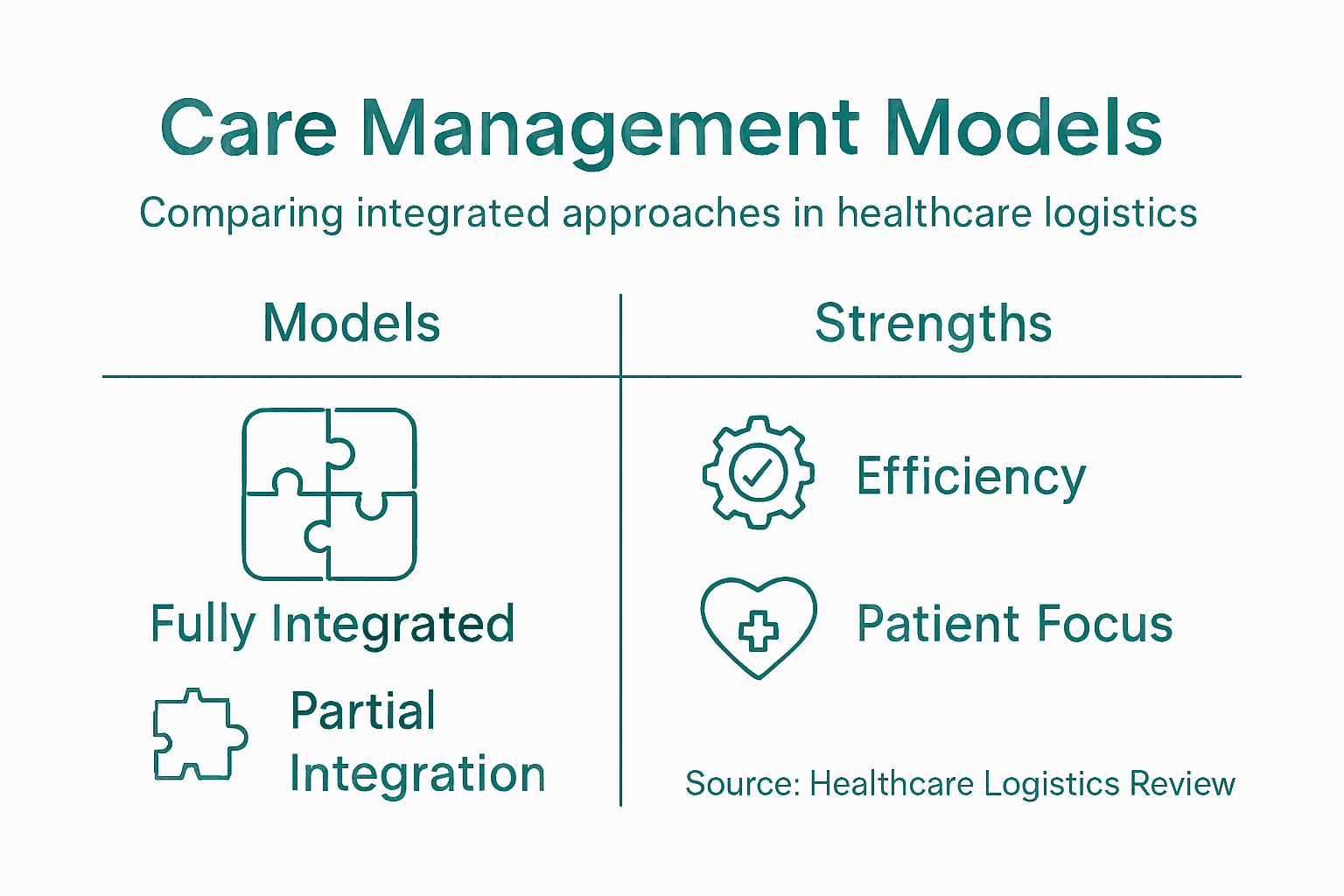
- Fully Integrated Models
- One-stop comprehensive service delivery
- Complete patient journey management
- Unified healthcare team approach
- Partially Integrated Models
- Targeted care coordination
- Specific patient population focus
- Modular service integration
The Development Model for Integrated Care highlights critical dimensions that define these approaches:
- Person-centered care strategies
- Community engagement frameworks
- Proactive healthcare interventions
- Digital service integration
- Ethical collaboration principles
Effective integrated care models transform fragmented healthcare systems into cohesive, patient-focused networks.
Prominent Integrated Care Management Models include:
- Collaborative Care Model
- Accountable Care Organizations (ACOs)
- Community-Based Integrated Programs
- Patient-Centered Medical Homes (PCMHs)
- Chronic Care Management Models
Each model offers unique advantages, addressing specific healthcare challenges by creating more responsive, efficient, and patient-centered care delivery systems. The selection depends on organizational goals, patient demographics, and systemic healthcare infrastructure.
The following table summarizes how different integrated care management models address key healthcare goals:
| Model Type | Care Coordination Focus | Patient Population | Primary Strength |
|---|---|---|---|
| Fully Integrated | End-to-end journey management | Broad, all patients | Complete system integration |
| Partially Integrated | Selective service integration | High-risk or specific needs | Targeted flexibility |
| Collaborative Care Model | Behavioral and primary care | Patients with behavioral health needs | Interdisciplinary teamwork |
| ACOs | Contract-based coordination | Medicare, commercial plans | Outcome-driven efficiency |
| PCMHs | Primary care hub | Family and chronic care patients | Long-term relationship building |
| Community Programs | Social and health services linkages | Vulnerable and underserved groups | Community engagement and outreach |
Pro tip: Conduct comprehensive organizational assessments to identify the most appropriate integrated care management model that aligns with your specific healthcare ecosystem and patient needs.
Core Functions and Key Processes
Integrated Care Management requires a comprehensive approach to healthcare delivery, focusing on coordinated processes that address complex patient needs through systematic workflows and collaborative strategies.
The core functions of integrated care management encompass several critical dimensions:
- Care Coordination
- Aligning health and social services
- Managing patient transitions
- Facilitating multidisciplinary communication
- Patient-Centered Planning
- Individualized care strategy development
- Holistic assessment of patient requirements
- Personalized intervention design
Key processes that define effective integrated care management include:
- Comprehensive patient assessment
- Collaborative care planning
- Continuous monitoring and evaluation
- Systematic performance tracking
- Dynamic care plan adjustment
Successful integrated care management transforms fragmented healthcare interactions into seamless, patient-centered experiences.
Strategic Workflow Components include:
- Standardized documentation protocols
- Cross-disciplinary communication frameworks
- Real-time data sharing mechanisms
- Continuous quality improvement systems
- Adaptive care transition strategies
The implementation of these core functions requires robust governance structures, technological infrastructure, and a commitment to collaborative, patient-focused healthcare delivery.

Pro tip: Develop integrated digital platforms that enable real-time information sharing and seamless communication across different healthcare service providers.
Technology Integration and Compliance
Healthcare organizations are increasingly adopting advanced digital technologies to enhance patient safety and operational efficiency. Technology integration in integrated care management represents a critical strategy for streamlining healthcare delivery and ensuring regulatory compliance.
Key technological components include:
- Electronic Health Records (EHR)
- Centralized patient information management
- Secure data sharing across platforms
- Real-time medical history tracking
- Telemedicine Solutions
- Remote patient consultation
- Expanded healthcare access
- Reduced geographical barriers
The technology integration framework encompasses several critical dimensions:
- Data standardization protocols
- Privacy and security measures
- Interoperability infrastructure
- Compliance monitoring systems
- Continuous technological adaptation
Successful technology integration transforms fragmented healthcare systems into seamless, intelligent networks.
Compliance Considerations include:
- HIPAA regulatory alignment
- Patient data protection mechanisms
- Audit trail documentation
- Secure communication channels
- Continuous regulatory updates
Implementing robust technological solutions requires a strategic approach that balances innovation with stringent regulatory requirements, ensuring patient safety and operational excellence.
Pro tip: Develop a comprehensive technology governance framework that proactively addresses compliance requirements and enables scalable digital transformation.
Responsibilities, Risks, and Cost Implications
Integrated Care Managers play a pivotal role in navigating complex healthcare system challenges, balancing multiple responsibilities while managing inherent risks and cost considerations.
Key Responsibilities include:
- Overseeing multidisciplinary healthcare teams
- Developing comprehensive clinical strategies
- Facilitating cross-organizational information sharing
- Coordinating patient care across different service lines
- Ensuring continuous quality improvement
Critical Risk Management Areas:
- Organizational change management
- Data integration challenges
- Regulatory compliance complexity
- Financial resource allocation
- Technology implementation barriers
Effective integrated care management requires a delicate balance between innovation, cost control, and patient-centered care.
Cost Implications for healthcare organizations involve:
- Initial technology investment expenses
- Staff training and development costs
- Potential productivity transition periods
- Long-term operational efficiency gains
- Risk mitigation financial strategies
Successful integrated care management demands a strategic approach that proactively addresses systemic challenges while maintaining financial sustainability and high-quality patient care.
Pro tip: Develop comprehensive financial modeling tools that simulate potential cost impacts and ROI for integrated care management initiatives before full-scale implementation.
Comparisons With Traditional Logistics Approaches
Healthcare logistics have undergone a transformative shift, moving beyond fragmented care models toward more integrated and comprehensive service delivery strategies.
Traditional Logistics Characteristics:
- Episodic and disconnected care approaches
- Siloed organizational structures
- Limited inter-provider communication
- Inefficient resource allocation
- Reactive service delivery model
Integrated Logistics Advantages:
- Comprehensive patient-centered services
- Unified network coordination
- Proactive healthcare interventions
- Enhanced resource utilization
- Streamlined communication channels
Integrated logistics transform healthcare from a reactive system to a proactive, patient-focused ecosystem.
Key Comparative Dimensions:
- Efficiency
- Traditional: Fragmented processes
- Integrated: Seamless workflows
- Cost Management
- Traditional: Higher operational expenses
- Integrated: Optimized resource allocation
- Patient Outcomes
- Traditional: Inconsistent care quality
- Integrated: Improved health trajectories
The transition requires strategic technological investment, organizational culture shifts, and commitment to continuous improvement in healthcare service delivery.
Here’s a side-by-side comparison of traditional versus integrated healthcare logistics:
| Attribute | Traditional Logistics | Integrated Logistics |
|---|---|---|
| Communication | Siloed, infrequent | Real-time, seamless |
| Decision Making | Reactive adjustments | Proactive planning |
| Resource Use | Duplicative, wasteful | Coordinated, optimized |
| Patient Experience | Fragmented episodes | Continuity and support |
| Compliance | Patchwork initiatives | Systemwide adherence |
Pro tip: Develop cross-functional teams that can bridge traditional organizational silos and implement integrated logistics strategies.
Revolutionize Your Integrated Care Management with VectorCare
Healthcare organizations face immense challenges in coordinating complex patient logistics, managing communication across multiple providers, and ensuring seamless transitions in care. This article highlights the critical need for streamlined, real-time coordination and strategic technology integration to overcome fragmentation and improve patient outcomes. VectorCare directly addresses these pain points by offering an advanced digital platform that automates scheduling, enhances vendor management, and supports secure communication across healthcare networks.
By leveraging AI-driven dispatching and no-code workflows, VectorCare empowers Integrated Care Managers to execute end-to-end patient logistics with precision while reducing operational costs. Optimize your care coordination efforts with features designed to meet the demanding needs of multidisciplinary teams and complex health systems. Explore how you can transform fragmented care journeys into cohesive, efficient experiences at VectorCare’s website.
Experience the future of healthcare logistics today
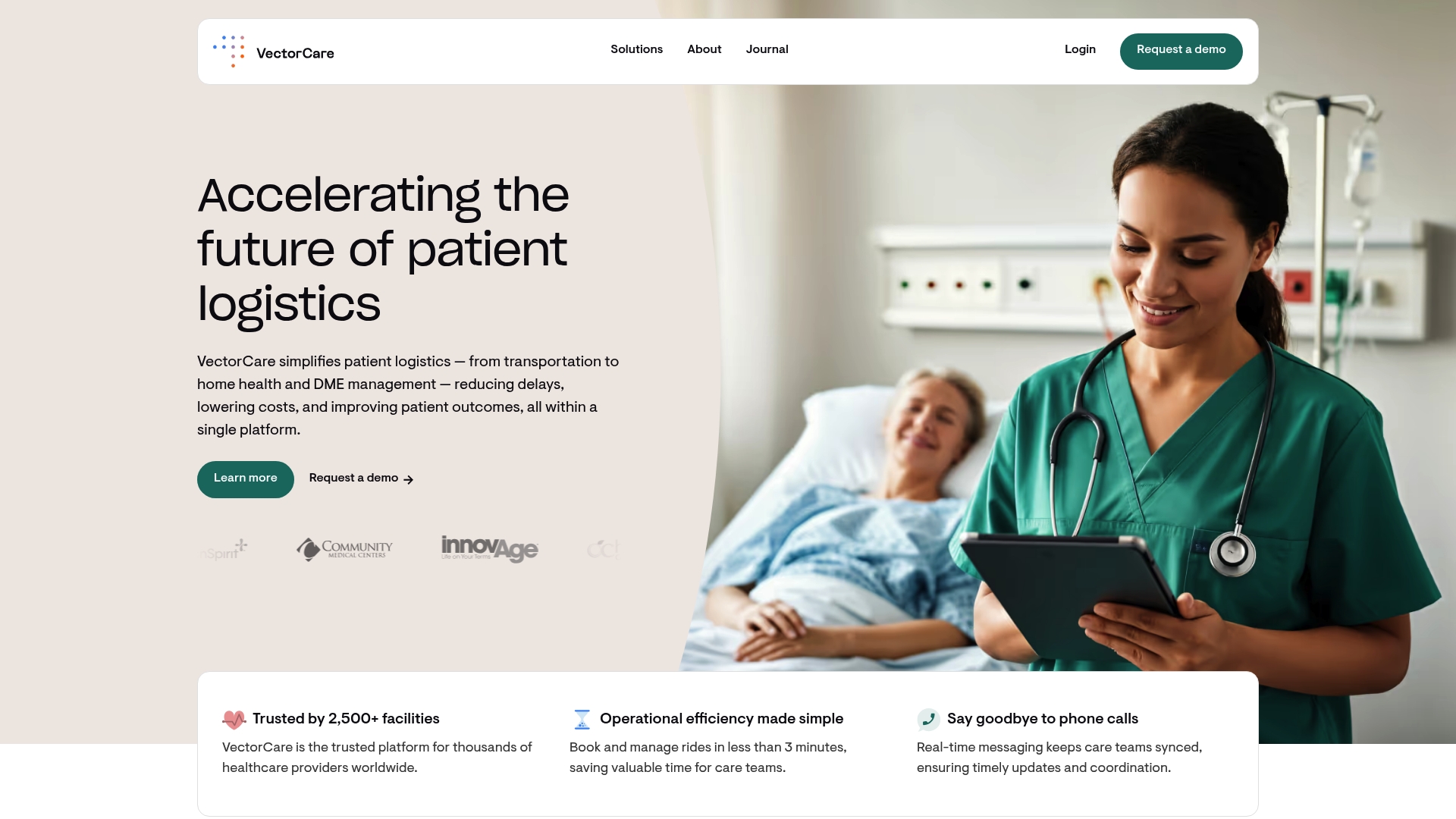
Discover how VectorCare can elevate your integrated care strategies by streamlining transportation and home health services management. Visit VectorCare now and begin transforming your healthcare logistics into a competitive advantage. Don’t wait to reduce delays, cut costs, and improve patient-centered care with our comprehensive platform.
Frequently Asked Questions
What is the role of an Integrated Care Manager?
The Integrated Care Manager is a healthcare professional responsible for bridging complex systems and patient needs, coordinating care across various providers, managing individualized care plans, and facilitating communication to ensure seamless and holistic care delivery.
What are the different types of Integrated Care Management models?
Integrated Care Management models include Fully Integrated Models, which offer comprehensive service delivery, and Partially Integrated Models, which focus on targeted care coordination for specific patient populations. Prominent models include Collaborative Care Models and Patient-Centered Medical Homes (PCMHs).
What core functions does Integrated Care Management encompass?
The core functions of Integrated Care Management include care coordination, patient-centered planning, comprehensive patient assessment, collaborative care planning, and continuous monitoring of patient outcomes to ensure high-quality care delivery.
How does technology integration impact Integrated Care Management?
Technology integration enhances Integrated Care Management by streamlining operations through electronic health records (EHRs), telemedicine solutions, and improved data sharing mechanisms, ensuring better patient safety and operational efficiency while helping organizations maintain compliance with regulations.