7 Innovative Ways to Reduce Healthcare Costs Efficiently

Hospital operational costs keep climbing every year, but finding reliable ways to cut expenses without risking patient care can feel overwhelming. It’s easy to get stuck in old routines, juggling complicated scheduling, vendor issues, and endless paperwork that drain your budget and staff time. The reality is, smarter resource management, innovative scheduling, and clear communication can unlock meaningful cost savings across your healthcare organization.
This list reveals actionable methods proven to reduce healthcare costs by tackling patient flow bottlenecks, optimizing vendor partnerships, and automating time-consuming tasks. Each strategy is rooted in solutions already improving outcomes and lowering expenses at leading hospitals. Get ready to discover practical steps you can implement right away to keep quality high while controlling costs.
Table of Contents
- 1. Optimize Patient Transportation Scheduling
- 2. Streamline Vendor Management for Services
- 3. Automate Home Health Service Coordination
- 4. Implement AI-Driven Dispatching Tools
- 5. Use Real-Time Communication for Stakeholders
- 6. Leverage Data Insights to Identify Cost Drivers
- 7. Adopt No-Code Workflows for Administrative Tasks
Quick Summary
| Takeaway | Explanation |
|---|---|
| 1. Optimize scheduling for transportation | Streamlined scheduling reduces costs and improves patient outcomes by ensuring timely arrivals and resource efficiency. |
| 2. Centralize vendor management | Consolidating vendor relationships enhances negotiation power, lowers costs, and improves service quality across providers. |
| 3. Implement automation in home health | Automating home health coordination minimizes administrative burdens, enhancing efficiency and patient care delivery while reducing labor costs. |
| 4. Utilize AI for dispatch optimization | AI-driven dispatching improves decision-making and resource allocation, leading to reduced costs and better patient outcomes through timely service delivery. |
| 5. Leverage data insights for cost reduction | Integrating and analyzing operational data reveals key cost drivers, enabling targeted interventions for improved financial performance. |
1. Optimize Patient Transportation Scheduling
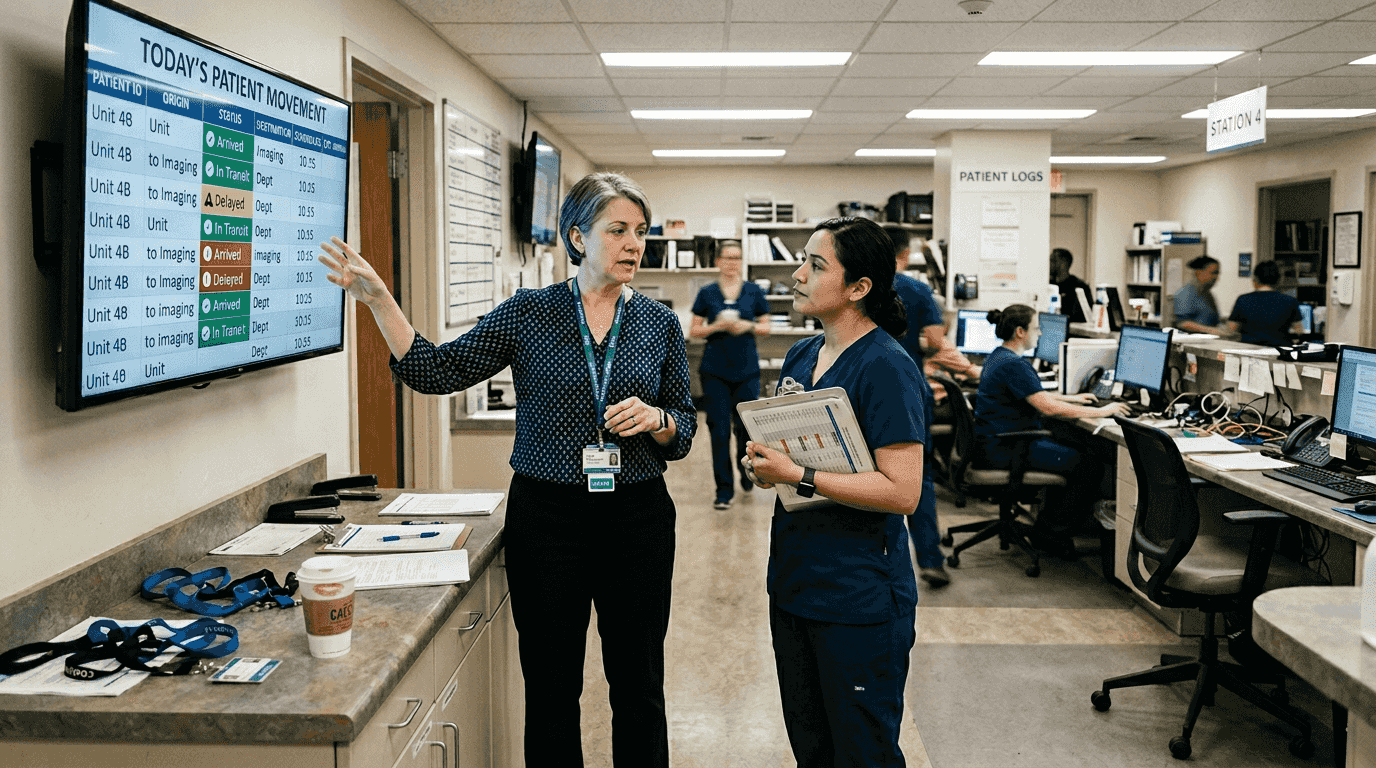
Patient transportation scheduling sits at the intersection of healthcare operations and patient outcomes. When your hospital struggles with late arrivals, missed appointments, or inefficient routing, you’re not just wasting time—you’re creating cascading costs that ripple through your entire system.
Optimizing how you schedule patient transportation means coordinating when and how patients move between locations. This includes dialysis appointments, physical therapy sessions, imaging studies, specialist visits, and post-discharge home health services. The goal is simple: get the right patient to the right place at the right time with minimal delays, wasted resources, or safety compromises.
Why does this matter so much? Healthcare costs explode when transportation breaks down. Missed appointments force rescheduling, which delays diagnoses and treatments. Late arrivals throw off your entire clinical schedule, creating bottlenecks in operating rooms and imaging centers. Inefficient routes mean your transportation vendors charge higher fees because they’re spending more time on the road. Studies on optimizing patient flow systems show that coordinated scheduling can reduce administrative delays and improve resource utilization across your entire operation.
The practical implementation starts with visibility. You need to see all transportation requests in one place, understand which patients require what kind of transport, and identify potential conflicts before they happen. Modern scheduling systems use real-time data to match patients with available transportation vendors based on location, time windows, medical needs, and cost efficiency. Instead of your case managers spending 30 to 60 minutes per day on phone calls coordinating rides, an optimized system handles this automatically.
Consider a typical scenario at your hospital. A patient needs dialysis three times weekly. Under fragmented scheduling, each appointment might get booked with different vendors, different pickup times, and different routes. With optimization, that patient’s recurring appointments follow a predictable pattern that works for the vendor, the patient, and your budget. When vendors know they have consistent, predictable work, they offer better pricing and reliability.
The financial impact becomes measurable quickly. Hospitals that improve patient transportation scheduling efficiency typically see reduced no-show rates, lower per-trip costs, and fewer administrative hours spent on logistics. You’re not just cutting costs—you’re improving care continuity because patients actually arrive on time for their treatments.
Pro tip: Start by auditing your current transportation costs and no-show rates for the past 90 days, then identify your top 10 high-frequency patients or appointments. Focus your optimization efforts on these first, since they represent disproportionate costs and create the biggest scheduling conflicts.
2. Streamline Vendor Management for Services
Your hospital likely works with dozens of vendors, from transportation companies to medical equipment suppliers to home health agencies. Each vendor relationship represents an opportunity to either save money or hemorrhage it. Streamlining vendor management means taking control of these relationships so you get better service at lower costs.
When vendor management sprawls across your organization, chaos follows. Your case managers negotiate independently with different transportation companies, your supply chain team works with equipment vendors separately, and your home health coordinator has yet another set of preferred partners. Nobody talks to anybody. You end up paying different prices for identical services, missing volume discounts, and losing leverage in contract negotiations. Meanwhile, vendors struggle because they never know what volume to expect from you, so they price defensively.
Streamlined vendor management fixes this by centralizing how you select, contract with, and manage service providers. This means establishing clear criteria for vendor selection, negotiating standardized contracts that protect your interests, and monitoring vendor performance consistently. When you consolidate your business with fewer vendors and hold them accountable, you gain negotiating power. Vendors competing for your volume will offer better rates. Those you already work with will recognize the stability of consistent business and improve their service quality.
The financial impact is substantial. Healthcare organizations that implement collaborative vendor management strategies report reduced procurement costs and improved supply continuity. For patient transportation specifically, consolidating your vendors might mean you work with two to three reliable partners instead of six or seven mediocre ones. These primary vendors learn your patterns, understand your peak demand times, and can offer volume discounts that wouldn’t be available if you fragmented your business.
Practically, this requires establishing vendor management standards. Define what you need from each category of service. For transportation vendors, that might include response time requirements, vehicle condition standards, driver training expectations, and insurance coverage. For equipment suppliers, specify delivery timeframes, quality standards, and support availability. Then, conduct structured vendor evaluations based on these criteria rather than choosing based on whoever answers the phone first.
Contract negotiation becomes far more effective when you’re consolidating volume. Instead of each department negotiating separate contracts, your procurement team negotiates once with clear, consistent terms. This includes pricing structures, performance metrics, service level agreements, and dispute resolution processes. A well-written contract protects you from unexpected cost increases and gives you leverage if vendors underperform.
Ongoing performance monitoring keeps vendors accountable. Track metrics like on-time delivery, service quality, cost per transaction, and customer satisfaction. Monthly vendor reviews let you identify problems early and course-correct before they become expensive. Vendors who consistently meet your standards get your continued business and potentially increased volume. Those who don’t improve will be replaced.
One additional benefit often overlooked: streamlined vendor management reduces your administrative burden. Your staff spends less time managing multiple vendor relationships and more time on patient care. That alone saves money in reduced staff hours spent on logistics coordination.
Pro tip: Create a vendor scorecard that tracks three to five key metrics for each vendor category, review it monthly, and use these objective scores to drive contract renewal discussions and negotiate rate adjustments based on actual performance data rather than general inflation.
3. Automate Home Health Service Coordination
Home health services represent one of the fastest-growing segments of healthcare delivery, and they’re also one of the most administratively complex. Automating home health service coordination transforms what currently consumes hours of manual scheduling, phone calls, and paperwork into a streamlined, intelligent process that runs almost on its own.
Right now, your home health coordinators spend their days juggling dozens of tasks. They receive referrals for new patients, assess what type of care each one needs, schedule nurses and therapists, arrange transportation, confirm appointments, handle cancellations, and track whether services were actually delivered. Each step involves phone calls, email chains, spreadsheets, and manual documentation. When a nurse calls in sick, the coordinator scrambles to find coverage. When a patient cancels at the last minute, the coordinator tries to fill the gap with another patient. When transportation falls through, the entire day unravels.
Automation eliminates this chaos. An intelligent system receives the referral, automatically determines the type of care needed based on diagnosis and patient data, identifies available caregivers with the right skills and geographic proximity, schedules the visit, arranges transportation, sends confirmations to the patient and provider, and tracks completion. All of this happens in minutes instead of hours. When changes occur, the system automatically adjusts and notifies everyone affected.
The cost savings are dramatic because automation addresses multiple expense categories simultaneously. Your coordinators stop spending four to six hours daily on administrative tasks, which immediately reduces labor costs. Intelligent automation reduces time spent on documentation and scheduling, freeing your team to focus on patient care quality rather than logistics. Patients miss fewer appointments because automated confirmations and reminders work reliably. Nurses and therapists spend less time driving between visits because routes optimize automatically. Transportation vendors know exactly when and where they need to be, reducing wasted time and fuel costs.
Consider what this looks like in practice. A hospital discharges a patient who needs physical therapy three times weekly for six weeks plus nursing visits twice weekly. Your coordinator would traditionally spend 45 minutes entering all this information into multiple systems, calling the therapy agency, calling the nursing agency, arranging transportation, and following up to confirm everything is scheduled. With automation, the discharge planner enters the care plan once, and the system coordinates everything automatically. The patient receives a welcome message with their first appointment, transportation is arranged, and both providers get their schedules updated instantly. Your coordinator spends zero time on this patient’s logistics.
Automation also improves care quality in unexpected ways. When visits are always on time, patients complete their therapy courses instead of dropping out due to missed appointments. When nurses know their routes in advance, they can prepare better and spend more time actually treating patients. When transportation is reliable, patients take their medications at the right times and attend specialist appointments they might otherwise skip.
The data insights automation provides are valuable too. You gain visibility into which patients consume the most home health resources, which services are most frequently needed, which agencies perform best, and where your biggest cost drivers exist. This intelligence lets you make strategic decisions about staffing, partnerships, and care protocols.
Implementing this doesn’t require replacing your entire team. Your coordinators shift from tactical scheduling work to strategic care management. They review care plans, identify patients at risk of poor outcomes, coordinate complex cases, and build relationships with providers and patients. They become care managers instead of logistics coordinators.
Pro tip: Start by automating your most repetitive home health referrals (those with standard, predictable care plans like routine post-surgical therapy or chronic disease management) and measure the time saved and cost reduction, then use those results to justify expanding automation to more complex scenarios.
4. Implement AI-Driven Dispatching Tools
AI-driven dispatching represents a quantum leap beyond traditional scheduling systems. Instead of your coordinators manually assigning requests to available resources, artificial intelligence analyzes dozens of variables simultaneously to make optimal assignments that reduce costs and improve outcomes.
Traditional dispatching is reactive and human-limited. A coordinator receives a request and makes the best decision they can based on incomplete information and time pressure. They might assign a nurse to a patient based on geography without considering the nurse’s specific skill set or current workload. They might schedule a transport without optimizing the route against other pending pickups. Each decision made in isolation may be reasonable, but collectively these decisions are suboptimal.
AI-driven dispatching works fundamentally differently. The system ingests real-time data about patient needs, available resources, traffic patterns, skill requirements, and cost factors. It then uses machine learning algorithms to identify the optimal assignment that minimizes travel time, reduces wait times, ensures appropriate skill matching, and keeps costs as low as possible. The system learns from historical data to get smarter over time.
Consider a practical example. You have five transport requests pending and three vehicles available. A human coordinator might assign them sequentially based on whoever called first. An AI system evaluates all possible combinations, considering traffic patterns, vehicle capacity, equipment requirements, and driver expertise. It identifies the sequence that gets all five patients to their destinations fastest while minimizing fuel costs and driver overtime. The AI solution might save 45 minutes of total travel time and reduce your transportation costs by 12 percent on that single day.
The financial impact scales dramatically. AI-driven dispatching tools optimize resource allocation in healthcare settings, ensuring timely response and reducing operational costs through smarter scheduling. Hospitals implementing these tools report reductions in unnecessary transport, faster response times to urgent requests, and lower per-unit costs because resources are used more efficiently.
Beyond immediate cost reduction, AI dispatching improves patient outcomes. When dispatch is optimized, patients arrive on time for appointments, nurses aren’t rushing between visits, and emergencies get faster response. This translates to better care quality and fewer complications that lead to expensive readmissions.
Implementation requires integrating the AI system with your existing infrastructure. The system needs access to your EHR data, your scheduling systems, your transportation vendor platforms, and real-time location data from vehicles. It needs to understand your business rules, like which patients require specific types of providers and which services have priority. This integration isn’t trivial, but modern platforms handle it increasingly smoothly.
One critical success factor is data quality. AI systems are only as good as the data they analyze. If your patient information is incomplete or inaccurate, if your vendor data is outdated, or if your cost information is wrong, the AI system will make suboptimal decisions. Cleaning up your data before implementation is worthwhile investment.
Another consideration is change management. Your coordinators and vendors may initially resist AI-driven assignments, worrying that a computer can’t understand the nuances of their work. Successful implementations involve training, transparency about how the AI makes decisions, and demonstrating results through metrics. Most resistance disappears once people see the system working and experience less stress from their jobs.
The learning curve is real but manageable. Most AI dispatching systems work better over their first 90 days as they accumulate data about your specific operations. Give the system time to learn before expecting maximum efficiency.
Pro tip: Start with AI dispatching for your most routine, high-volume request types first (like routine patient transport or standard home health visits), measure the cost savings and performance metrics rigorously, then expand to more complex dispatch scenarios as the system learns your operations.
5. Use Real-Time Communication for Stakeholders
Breakdowns in healthcare logistics rarely stem from a single failure. They stem from miscommunication, delayed information, and stakeholders operating with incomplete or outdated data. Real-time communication platforms eliminate these gaps by keeping everyone synchronized and informed as situations evolve.
Think about what happens when communication breaks down during a patient discharge. The case manager arranges home health services but doesn’t tell the transportation coordinator. The transportation coordinator schedules a ride but doesn’t know the patient needs oxygen equipment delivery. The equipment vendor arrives at the wrong time. The home health nurse shows up to find the patient hasn’t arrived home yet. Now you have three frustrated stakeholders, an unhappy patient, and wasted resources because nobody was talking to each other in real time.
Real-time communication platforms solve this by creating a shared information space where all stakeholders see the same data simultaneously. When the case manager updates a discharge plan, the transportation coordinator, home health agency, and equipment vendor all see the update instantly. When transportation is running 20 minutes late, the home health nurse gets notified automatically. When a patient cancels, everyone knows within seconds rather than finding out when they show up for an appointment.
The cost implications are significant. Wasted trips from miscommunication are expensive. A nurse driving to a patient’s home only to find they’re not there yet is lost productivity. A vendor making two trips because they didn’t know about a change is double the cost. A patient missing a scheduled service because they didn’t get the appointment confirmation is a delayed treatment that might result in complications. Real-time communication fosters collaboration and efficiency in healthcare projects, supporting efficient resource use and cost containment.
Implementing real-time communication requires more than just installing new technology. It requires selecting platforms that integrate with your existing systems, training staff to use them consistently, and establishing protocols for when and how communication happens. A successful platform should connect patients, case managers, transportation vendors, home health agencies, equipment suppliers, and clinical staff all on one system.
The platform needs to handle multiple communication types. Status updates about patient location and estimated arrival times matter. Notifications about changes to schedules or plans matter. Secure messaging between providers matters. Patient confirmations and reminders matter. A comprehensive platform handles all of these without requiring staff to switch between multiple apps.
Automation within the communication system amplifies its value. Automated reminders reduce no-shows because patients receive multiple touches about upcoming appointments. Automated status updates keep stakeholders informed without requiring anyone to manually send messages. Automated notifications about conflicts or issues alert the right people immediately so they can respond. This automation reduces manual communication work while increasing information quality.
One often overlooked benefit is the audit trail. When all communication happens within a single platform, you have a complete record of who knew what and when. This protects your organization from liability and helps with quality improvement because you can see exactly what happened in each case. If a patient missed a service, you can see whether the notification was sent and delivered.
Patient satisfaction improves because real-time communication means they experience fewer delays and cancellations. They get appointment reminders, receive updates about transportation status, and know exactly when to expect services. This reduces anxiety and improves compliance with care plans.
Staff satisfaction improves too. Nurses and therapists experience fewer wasted trips and cancelled appointments, which means they can see more patients and feel less frustrated. Coordinators spend less time playing phone tag and hunting down information. Vendors know their schedules early and can plan efficiently.
Starting implementation, begin with your most complex patient populations. These are people with multiple services, frequent transitions between settings, and greatest need for coordination. Measure improvements in on-time delivery rates, no-show rates, and staff time spent on communication. These metrics demonstrate value and build support for expanding the system.
Pro tip: Implement real-time communication first for one high-touch patient population or one type of service (like post-discharge home health coordination), measure the improvements in efficiency and cost, then expand to other areas with clear evidence of success to drive organizational buy-in.
6. Leverage Data Insights to Identify Cost Drivers
You cannot reduce costs you do not understand. Data insights reveal exactly where your healthcare organization bleeds money, allowing you to target interventions where they will have the greatest impact. Without this visibility, you’re making cost reduction decisions based on assumptions rather than facts.
Most hospitals have massive amounts of operational data scattered across multiple systems. Your EHR contains clinical information. Your billing system contains financial data. Your transportation system tracks logistics costs. Your vendor contracts list pricing. Your supply chain database tracks inventory. But these systems rarely talk to each other, leaving you unable to see the complete cost picture. A patient’s total cost of care spans clinical treatment, transportation, home health services, equipment, and follow-up care. Understanding their true cost requires connecting all these data streams.
When you integrate this data and apply analytics, patterns emerge that were invisible before. You discover that certain patient populations consume disproportionate resources. You identify which services generate the highest costs. You see which vendors are most expensive. You uncover inefficient processes that waste time and money. These insights become the foundation for strategic cost reduction.
Consider a concrete example. Your data might reveal that patients with a specific diagnosis consume 40 percent more home health hours than similar patients at comparable facilities. This insight prompts investigation. Are these patients sicker? Are they receiving unnecessary services? Are your home health providers less efficient? Once you identify the root cause, you can address it through protocol changes, vendor performance management, or clinical optimization. Without the data, you never knew this problem existed.
Another example involves transportation costs. Your data might show that 18 percent of scheduled transports never happen because patients cancel. Each cancelled transport still generates a charge if you pay vendors a minimum fee for showing up. Your data identifies which patient populations cancel most frequently. This triggers interventions like improved appointment reminders, better scheduling coordination, or changes to how you handle last-minute cancellations.
Advanced analytics enables hospitals to optimize resource utilization and reduce unnecessary expenses. Data-driven organizations make better decisions faster and invest money where it will have measurable impact on both cost and quality.
Implementing data analytics requires three components. First, you need data integration that pulls information from all relevant systems into a single analytical platform. This means connecting your EHR, financial systems, logistics platforms, vendor databases, and quality reporting systems. Second, you need analytics expertise to ask the right questions and interpret the data accurately. Third, you need organizational commitment to act on the insights, even when they require difficult changes.
Starting smaller is often smarter than attempting enterprise-wide analytics immediately. Focus first on your highest-cost services or your highest-cost patient populations. Build expertise and demonstrate value with these initial projects. Success creates organizational appetite for broader analytics implementation.
One critical success factor is data quality. If your underlying data is incomplete, inaccurate, or inconsistent, your analytics conclusions will be wrong. Investing in data quality upfront saves you from making costly decisions based on bad information. This might mean reconciling duplicate patient records, cleaning up outdated vendor information, or standardizing how costs are categorized.
Another key factor is translating insights into action. Data analysis means nothing if you do not act on what you learn. Organizations that succeed with data-driven cost reduction establish clear accountability for acting on insights, allocate resources to implement changes, and measure whether interventions actually achieve the expected savings.
The competitive advantage belongs to hospitals that understand their cost structure better than competitors. When you know your numbers, you can negotiate smarter contracts, optimize operations more effectively, and make strategic investments confidently. Hospitals that operate blind to their cost drivers will eventually lose the cost reduction competition.
Pro tip: Start with a single high-cost service or patient population, perform a thorough cost analysis including all direct and indirect expenses, identify the top three cost drivers, and prioritize interventions on those drivers with the greatest potential for improvement.
7. Adopt No-Code Workflows for Administrative Tasks
Your administrative staff spends countless hours on repetitive tasks that computers could handle perfectly well. No-code workflow platforms eliminate this waste by letting non-technical staff automate routine processes without writing a single line of code. The result is faster operations, fewer errors, and lower administrative costs.
Traditionally, workflow automation required hiring developers, waiting months for custom software development, and spending thousands of dollars. This made automation accessible only to large organizations with substantial budgets. No-code platforms democratized automation. Your case managers, coordinators, and administrative assistants can now build automated workflows themselves using visual interfaces and pre-built components. If a task involves moving data between systems, checking conditions, sending notifications, or generating reports, it can likely be automated with no-code tools.
Consider what your administrative staff actually does all day. They receive a referral and manually enter it into multiple systems. They check whether all required information is present and send emails asking for missing pieces. They assign the patient to a provider and notify them. They schedule appointments and send confirmations. They update records when services are completed. They generate monthly reports. They manage exceptions when something goes wrong. Most of this is repetitive, rule-based work that varies little from case to case.
No-code workflows automate these processes. When a referral arrives, the system automatically extracts the relevant information and populates your scheduling system, your documentation system, and your billing system simultaneously. The system checks whether required information is present and automatically sends templated requests for missing data. When information is complete, the system assigns the patient to an appropriate provider based on geographic location and specialty, and automatically notifies that provider. The system schedules the appointment and sends the patient a confirmation and reminder. When the provider completes the service, they mark it in the system, and the automated workflow updates your billing records and generates the invoice.
Now your case manager, instead of spending six hours daily on data entry and coordination, spends that time on complex cases requiring human judgment. Cases with unusual circumstances, patients with multiple complicating factors, or situations requiring clinical decision-making still need people. But the routine cases flow through automatically.
No-code platforms reduce administrative burdens by enabling faster workflow automation without requiring programming expertise, freeing healthcare staff to focus on patient care rather than administrative tasks.
Implementation starts with identifying which administrative processes consume the most time and involve the most routine, repetitive steps. Patient intake workflows are excellent first targets because they follow predictable patterns. Discharge coordination workflows work well too. Referral processing, scheduling, and documentation are all candidates for no-code automation.
Next, you map the current process. Document every step, every decision point, and every notification. Identify which steps are truly necessary and which exist only because that’s how things have always been done. Automation is a great time to eliminate unnecessary steps. Then you build the workflow in your no-code platform, configuring it to follow the process you’ve designed.
The implementation timeline is dramatically faster than traditional software development. A case that might take three months and a developer to build in custom code can be built in days by your own staff using a no-code platform. This means you can iterate quickly. If the first version isn’t perfect, you adjust it immediately rather than waiting for a software update.
One critical consideration is data security and compliance. No-code platforms used in healthcare must meet HIPAA requirements and protect patient privacy. Choose platforms specifically designed for healthcare that include built-in security, audit trails, and compliance features.
Another consideration is integration. Your no-code workflows need to connect with your existing systems. Choose platforms with strong integration capabilities that can connect to your EHR, scheduling system, billing system, and communication platforms.
Training requirements are minimal because no-code tools use visual interfaces that non-technical people can understand. Your staff can learn to build basic workflows within days. More complex workflows may require some support from your IT team, but the barrier to entry is far lower than traditional programming.
The financial impact accumulates quickly. If automation saves your administrative staff an average of two hours daily, and you have ten administrative staff members, that’s 20 hours daily or 5,200 hours annually. At an average administrative salary of $35 per hour, you’re saving $182,000 yearly. That’s before you account for improved accuracy reducing billing errors, faster processing improving cash flow, or better patient experience reducing no-shows.
Pro tip: Start with your most common, highest-volume administrative workflow (like patient intake or discharge coordination), automate it completely with a no-code platform, measure the time saved and errors eliminated, then use these results to justify automating additional workflows.
Below is a comprehensive table summarizing the key strategies and actions discussed in the article for improving logistics and cost efficiency in healthcare operations.
| Topic | Description | Benefits |
|---|---|---|
| Optimize Patient Transportation Scheduling | Implement centralized scheduling systems to coordinate patient movements and appointments, leveraging real-time data and predictable patterns. | Reduces missed appointments, improves resource utilization, and lowers transportation costs. |
| Streamline Vendor Management | Consolidate vendor relationships, establish performance criteria, and negotiate volume-based contracts for services. | Achieves cost savings, increases service reliability, and simplifies administrative processes. |
| Automate Home Health Service Coordination | Utilize automated systems to schedule and coordinate home health services efficiently, minimizing manual effort and operational complexity. | Decreases labor costs, improves scheduling accuracy, and enhances patient experience. |
| Implement AI-Driven Dispatch Tools | Deploy AI-based systems for optimizing resource allocation by evaluating criteria such as location, time requirements, and skill levels. | Reduces operational costs, accelerates response times, and enhances care coordination. |
| Use Real-Time Communication Platforms | Integrate stakeholders with a shared information infrastructure enabling instant updates, notifications, and messaging. | Improves communication, minimizes delays, and reduces resource wastage. |
| Leverage Data Insights | Analyze integrated data from various operational systems to identify high-cost areas and inefficiencies. | Enables prioritized interventions, supports cost-effective decisions, and enhances workflow. |
| Adopt No-Code Administrative Workflows | Implement non-code-enabled platforms to automate repetitive administrative tasks quickly and efficiently by general staff without requiring complex programming. | Reduces administrative workload, lowers operational expenses, and improves process accuracy. |
Transform Healthcare Cost Reduction with VectorCare’s Integrated Platform
The article highlights critical challenges like inefficient patient transportation scheduling, fragmented vendor management, and the heavy administrative burden that drive up healthcare costs. You want to reduce delays, lower operational expenses, and improve patient outcomes by leveraging automation, real-time communication, and AI-driven dispatching. These goals can feel overwhelming without a unified solution designed specifically for complex healthcare logistics.
VectorCare offers a comprehensive digital platform that precisely addresses these pain points by streamlining patient transportation, home health coordination, and durable medical equipment delivery. With features such as scheduling optimization, vendor consolidation, no-code workflows, and actionable data insights, VectorCare empowers healthcare organizations to reduce administrative workload, minimize no-shows, and negotiate smarter contracts. See how intelligent automation and integrated real-time updates make healthcare logistics simpler and more cost-effective.
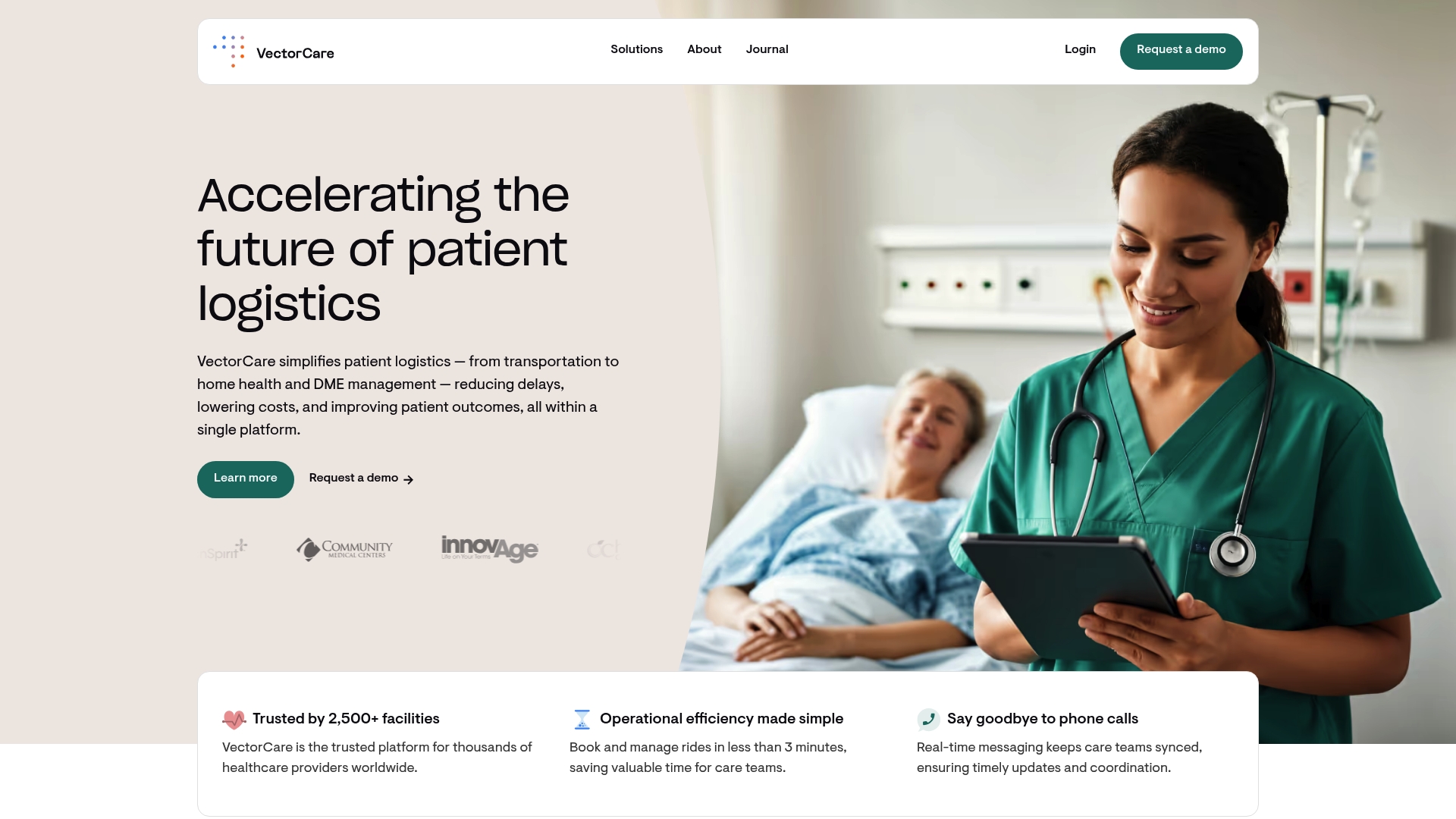
Take the next step in reducing your healthcare organization’s costs today by exploring VectorCare’s innovative solutions. Discover how our platform can transform your operations by visiting VectorCare. Learn more about seamless patient transportation scheduling, and improve your vendor management strategies with tools designed for measurable savings and better patient care.
Frequently Asked Questions
What are some effective strategies to optimize patient transportation scheduling?
Optimizing patient transportation scheduling involves coordinating when and how patients move between locations to reduce delays and resource waste. Start by auditing your current scheduling practices and identify high-frequency appointments to focus your optimization efforts, aiming to improve on-time arrival rates by 20%.
How can I streamline vendor management to reduce healthcare costs?
To streamline vendor management, centralize your vendor selection and establish standardized contracts to ensure better service and lower costs. Evaluate your current vendor relationships and consolidate them to a few reliable partners, which can lead to cost reductions of 15% to 25% in procurement expenses.
What steps should I take to automate home health service coordination effectively?
To automate home health service coordination, implement an intelligent system that can handle referrals, scheduling, and communications automatically. Begin by targeting your most repetitive and predictable home health referrals to automate within 30 days, freeing up your coordinators to focus on more complex cases.
How does AI-driven dispatching improve efficiency in healthcare logistics?
AI-driven dispatching enhances efficiency by analyzing real-time data to optimize resource allocation and reduce operational costs. Start integrating AI tools with your existing systems to boost your service response times and potentially lower transportation costs by around 12%.
Why is real-time communication important in healthcare logistics?
Real-time communication is crucial because it prevents miscommunication and ensures all stakeholders are synchronized regarding patient care. Implement a comprehensive platform to facilitate real-time updates, which can improve on-time service delivery rates by more than 30%.
How can I utilize data insights to identify and target cost drivers in my healthcare organization?
Utilizing data insights starts with integrating all relevant data sources to analyze cost patterns across your operations. Focus first on your highest-cost services or patient populations, which can lead to actionable insights and a targeted cost reduction of 10% or more within a quarter.