Improving rural healthcare access with logistics tech 2026
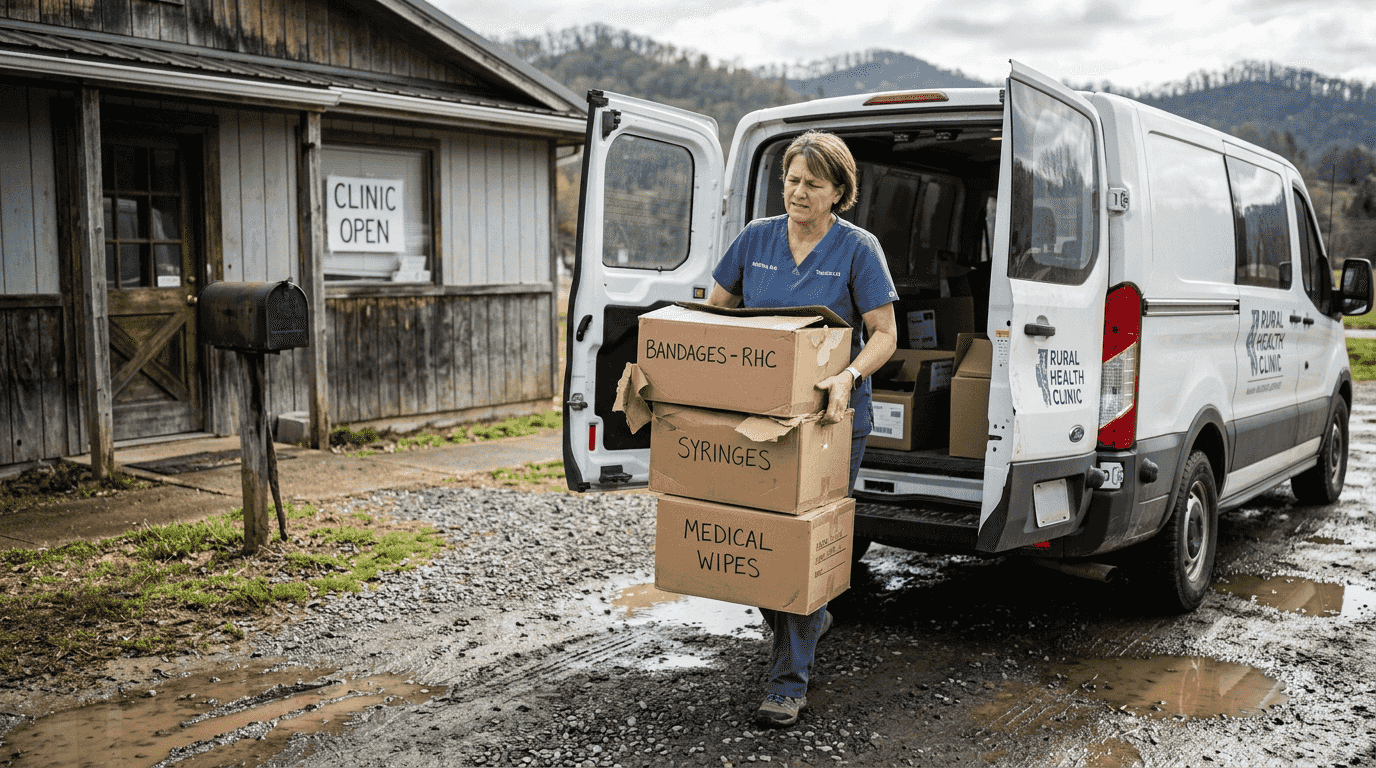
Rural healthcare administrators face a daily struggle: patients who cannot reach care when they need it most. Distance, limited transportation, and aging infrastructure create gaps that compromise outcomes and inflate costs. Yet innovative logistics solutions, from hybrid drone delivery to telemedicine integration, are transforming how rural communities access essential healthcare services. This guide walks you through understanding barriers, preparing resources, executing cutting-edge strategies, and sustaining improvements that enhance patient access and operational efficiency in your rural healthcare setting.
Table of Contents
- Understanding Challenges In Rural Healthcare Access
- Preparing To Improve Rural Healthcare Access: Resources And Stakeholders
- Executing Innovative Solutions: Hybrid Logistics, Telemedicine, And Technology
- Verifying And Sustaining Improved Healthcare Access Outcomes
- Enhance Rural Healthcare Logistics With Vectorcare Solutions
- Frequently Asked Questions About Improving Rural Healthcare Access
Key takeaways
| Point | Details |
|---|---|
| Hybrid logistics expand reach | Drone and truck systems cut delivery times and costs in remote areas |
| PACE programs need investment | Rural expansion requires upfront funding for infrastructure and operations |
| Telemedicine reduces strain | Low-energy AI and green routing lower costs while expanding access |
| Custom solutions win | Tailored rural models outperform adapted urban approaches |
Understanding challenges in rural healthcare access
Rural healthcare administrators know the reality: patients living 50 miles from the nearest clinic often skip appointments or delay care until emergencies arise. Transportation gaps create the first barrier. Many rural residents lack reliable personal vehicles, and public transit options are sparse or nonexistent. This forces healthcare facilities to either arrange costly transportation or watch patients miss critical appointments.
Limited infrastructure compounds the problem. Roads may be unpaved or poorly maintained, especially in winter months. Internet connectivity lags behind urban areas, making telehealth adoption difficult. Facilities often operate with outdated technology systems that cannot support modern logistics coordination. These infrastructure deficits translate directly into higher operational costs per patient served.
Rural PACE programs require meaningful upfront investment to support start-up costs, infrastructure, and early operating losses. Unlike urban programs that can leverage existing transportation networks and vendor pools, rural PACE initiatives must build these capabilities from scratch. The initial capital hurdle discourages many organizations from pursuing expansion, even when community need is clear.
Several specific challenges emerge when you examine rural healthcare logistics:
- Patient transportation requires longer trips with higher per-mile costs
- Vendor networks are thin, limiting competition and service options
- Staff recruitment and retention prove difficult in isolated locations
- Equipment delivery faces delays due to distance from distribution centers
- Emergency response times stretch beyond acceptable standards
These barriers do not exist in isolation. They interact and amplify each other, creating a compounding effect that makes rural healthcare delivery fundamentally different from urban models. Technology transforming patient logistics offers pathways forward, but only when adapted thoughtfully to rural contexts rather than copied wholesale from city-based programs.
Preparing to improve rural healthcare access: resources and stakeholders
Before launching any logistics improvement initiative, you need to map your resource landscape and identify key partners. Start by cataloging existing assets: vehicles, technology systems, staff with logistics expertise, and physical infrastructure like loading docks or storage facilities. This baseline assessment reveals gaps you must address before implementing new solutions.
Funding sources for rural healthcare logistics improvements include federal grants, state programs, foundation support, and private investment. States including Kansas, Rhode Island, West Virginia, South Dakota, Connecticut, and others have plans to expand PACE through RHTP programs, creating new funding streams specifically designed for rural contexts. Research what your state offers and align your proposal with existing priorities.
Stakeholder engagement determines success or failure. You cannot improve logistics in isolation. Engage these groups early:
- Local healthcare providers who will refer patients or coordinate care
- Transportation vendors willing to serve rural routes
- Community organizations that understand local needs and barriers
- Technology partners who can customize solutions for your infrastructure
- Regulatory bodies that oversee healthcare transportation in your state
Assess your technology infrastructure honestly. Many rural facilities operate legacy systems that cannot integrate with modern logistics platforms. You may need to upgrade internet connectivity, invest in mobile devices for drivers, or implement cloud-based scheduling tools. The benefits of patient care logistics technology extend beyond immediate efficiency gains to long-term competitive advantage.
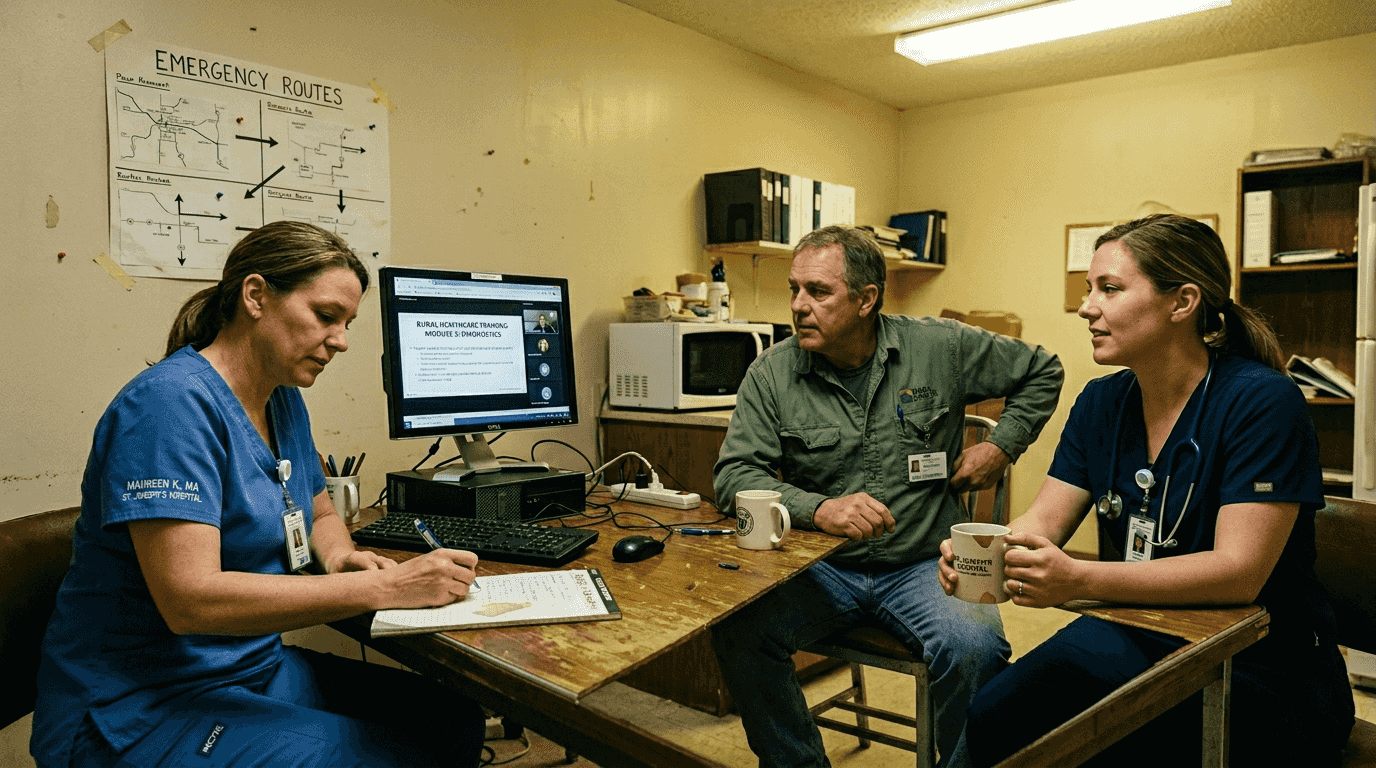
Pro Tip: Create a stakeholder advisory committee that meets quarterly to review logistics performance and identify emerging needs. Include patient representatives who can speak to real-world access barriers and help you prioritize improvements that matter most to the community you serve.
Consider how ambulance providers as logistics centers can extend your reach. Many rural EMS services have downtime between emergency calls that could be leveraged for non-emergency medical transportation or supply delivery. This partnership model maximizes existing assets while creating new revenue streams for ambulance services.
Executing innovative solutions: hybrid logistics, telemedicine, and technology
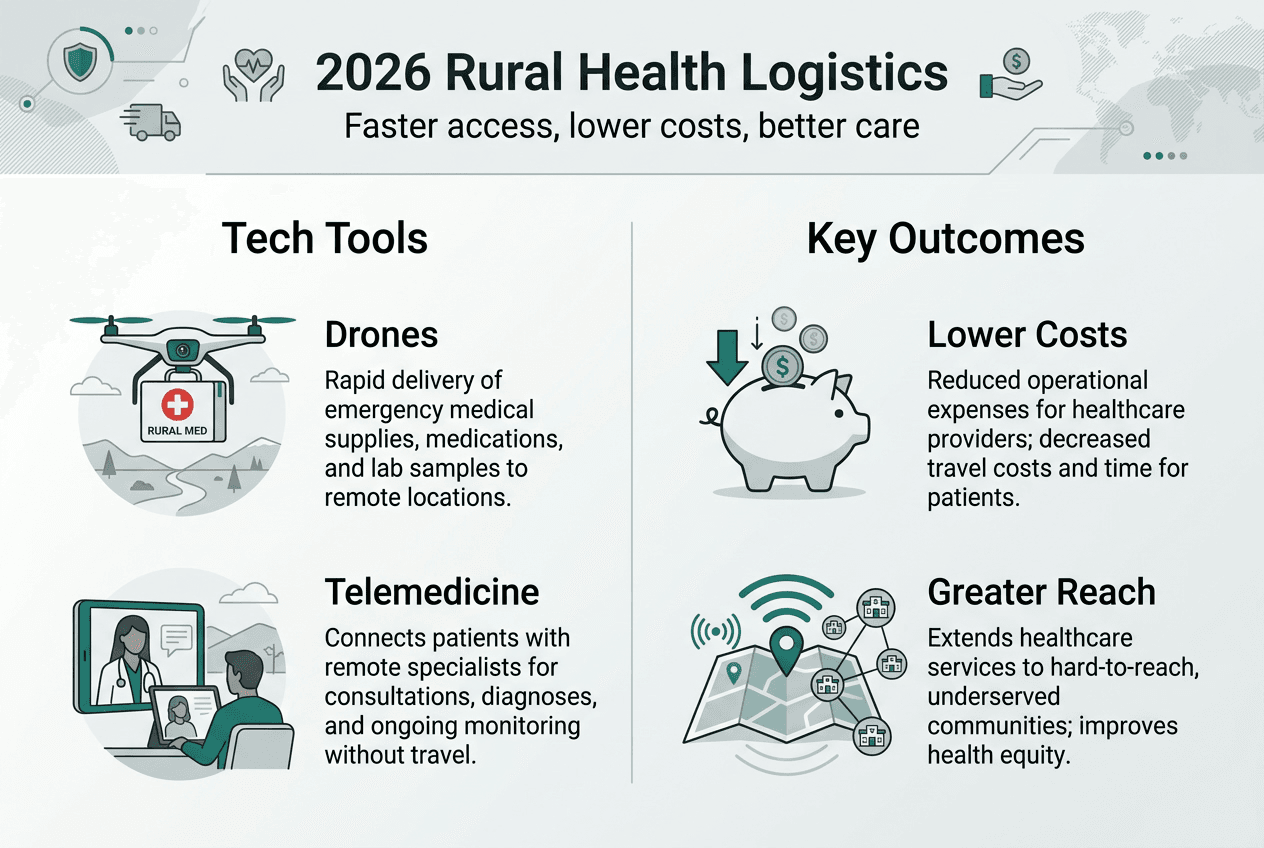
Once preparation is complete, execution begins with selecting and implementing solutions matched to your specific rural context. Hybrid drone and truck delivery optimization can improve healthcare access in remote areas by combining the speed of aerial delivery with the capacity of ground transportation. This approach works particularly well for time-sensitive items like lab samples, medications, or medical supplies.
Implementing hybrid logistics requires these steps:
- Map delivery zones by analyzing distance, terrain, and urgency requirements
- Identify items suitable for drone delivery based on weight, size, and regulatory approval
- Establish ground hubs where drones can transfer items to trucks for final delivery
- Train staff on drone operation, maintenance, and safety protocols
- Monitor performance metrics and adjust routes based on real-world results
Telemedicine expansion addresses access gaps without requiring patient travel. Sustainable telemedicine using low-energy edge AI and green data center routing reduces both environmental impact and operational costs. Edge computing processes video consultations locally rather than routing all data through distant servers, cutting latency and energy consumption. This matters in rural areas where internet bandwidth is limited.
| Technology Solution | Primary Benefit | Implementation Timeline | Estimated Cost Reduction |
|---|---|---|---|
| Hybrid drone delivery | Speed for urgent items | 6 to 9 months | 15 to 25 percent |
| Telemedicine platform | Eliminates travel barriers | 3 to 6 months | 20 to 35 percent |
| AI-driven scheduling | Optimizes routes and capacity | 4 to 8 months | 10 to 20 percent |
| Green data routing | Lowers energy costs | 2 to 4 months | 5 to 12 percent |
Green technology adoption serves dual purposes: reducing environmental footprint while lowering operational expenses. Solar panels on facility roofs can power electric vehicle charging stations. LED lighting cuts electricity costs. Energy-efficient HVAC systems reduce utility bills. These investments pay for themselves over time while demonstrating community commitment to sustainability.
Technology integration demands staff training and change management. Your team must understand not just how to use new systems, but why they matter for patient outcomes. Create training programs that connect daily tasks to larger goals. Show drivers how optimized routing means more patients served. Demonstrate to schedulers how AI recommendations improve capacity utilization. Maximizing efficiencies in patient logistics requires everyone to embrace new workflows.
Pro Tip: Pilot new logistics technologies in a limited geographic area before full deployment. This contained approach lets you identify problems, refine processes, and build staff confidence without risking system-wide disruption. Document lessons learned and share them across your organization.
Remember that technology empowering healthcare professionals works best when it removes administrative burden rather than adding complexity. Choose platforms with intuitive interfaces that require minimal training. Prioritize solutions that automate repetitive tasks so your team can focus on patient care and relationship building.
Verifying and sustaining improved healthcare access outcomes
Implementation means nothing without measurement. Establish baseline metrics before launching improvements, then track progress consistently. Key performance indicators for rural healthcare logistics include appointment attendance rates, average travel time to care, cost per patient transported, emergency response times, and patient satisfaction scores. These metrics tell you whether your investments are delivering real value.
Cost-effectiveness analysis of aerial logistics for maternal and newborn health shows real-world benefits in Ghana, demonstrating that innovative logistics can be both clinically effective and financially sustainable. Apply similar analytical rigor to your rural programs. Calculate cost per outcome achieved, not just cost per service delivered.
Compare different logistics approaches using data, not assumptions. Your initial hypothesis about which solution works best may prove wrong once real-world results come in. Consider this comparison framework:
| Approach | Access Improvement | Cost Per Patient | Scalability | Patient Satisfaction |
|---|---|---|---|---|
| Traditional van service | Moderate | High | Limited | Good |
| Hybrid drone-truck | High | Moderate | Excellent | Very good |
| Telemedicine only | High | Low | Excellent | Variable |
| Combined model | Very high | Moderate | Good | Excellent |
Adjust programs based on feedback loops. Create mechanisms for patients, providers, and staff to report problems and suggest improvements. Monthly review meetings should examine both quantitative metrics and qualitative insights. When data shows a particular route consistently runs late, investigate whether scheduling, traffic patterns, or vehicle capacity is the root cause.
Sustainability requires ongoing investment in infrastructure and partnerships. Technology platforms need regular updates. Vehicles require maintenance and eventual replacement. Staff need continuing education as systems evolve. Budget for these recurring costs from the beginning rather than treating them as unexpected expenses. Understanding patient logistics overview helps you anticipate long-term needs.
Build redundancy into critical systems. Rural healthcare cannot afford single points of failure. If your primary transportation vendor cannot service a route, you need backup options. If internet connectivity drops, you need offline capabilities for essential functions. Discharge delay reduction technology demonstrates how systematic approaches to common problems create resilient operations.
Key sustainability practices include:
- Annual technology audits to identify obsolete systems needing replacement
- Diversified vendor relationships to maintain competitive pricing and service quality
- Staff retention programs that reduce turnover and preserve institutional knowledge
- Community engagement initiatives that build support for continued investment
- Financial reserves to cover unexpected equipment failures or service disruptions
Celebrate wins and share success stories. When a patient attends their first cardiology appointment in two years because transportation became available, tell that story. When drone delivery gets insulin to a diabetic patient during a snowstorm, document the impact. These narratives build stakeholder support and justify continued investment in logistics innovation.
Enhance rural healthcare logistics with VectorCare solutions
Your rural healthcare organization deserves logistics technology designed for your unique challenges, not urban solutions awkwardly adapted to rural contexts. VectorCare’s patient logistics platform offers the tools you need to coordinate transportation, manage appointments, and optimize resource utilization across dispersed service areas. Our AI-driven scheduling accounts for rural realities like longer distances, weather impacts, and limited vendor availability.
Discover how the VectorCare patient logistics platform streamlines operations for healthcare providers, payers, and emergency services in rural settings. From automated dispatch to real-time tracking, our integrated suite reduces administrative burden while improving patient access. Explore specialized solutions for healthcare logistics for payers that help you manage PACE programs, home health coordination, and medical equipment delivery efficiently. Learn more about patient logistics insights that can transform your rural healthcare delivery model and position your organization for sustainable growth.
Frequently asked questions about improving rural healthcare access
How can technology reduce rural healthcare costs?
Technology reduces costs by optimizing routes to minimize fuel consumption, automating scheduling to reduce administrative labor, and enabling telemedicine visits that eliminate transportation expenses entirely. AI-driven platforms can consolidate multiple patient trips into efficient routes, cutting per-patient transportation costs by 15 to 30 percent while improving service quality.
What funding options exist to start rural PACE programs?
Federal grants through CMS, state-specific RHTP initiatives, foundation funding focused on rural health equity, and private investment from healthcare systems seeking to expand market presence all provide capital for rural PACE programs. Many states offer technical assistance and startup funding specifically designed to overcome the initial investment barriers that discourage rural PACE expansion.
How to measure success of logistics improvements?
Track appointment attendance rates, average patient travel time, cost per transport, emergency response times, and patient satisfaction scores before and after implementing improvements. Compare actual outcomes against baseline metrics quarterly, and calculate return on investment by dividing cost savings and revenue gains by total implementation expenses.
What role do drones play in healthcare delivery?
Drones deliver time-sensitive items like lab samples, medications, and medical supplies to remote locations faster than ground transportation, especially in areas with poor road infrastructure. They work best as part of hybrid systems where drones handle urgent lightweight items while trucks manage larger shipments and final-mile delivery to patients without suitable landing zones.
How to sustain improvements long-term?
Sustainability requires ongoing investment in technology updates, vehicle maintenance, staff training, and vendor relationship management. Build financial reserves for unexpected costs, diversify your vendor network to avoid dependency on single providers, and maintain community engagement to ensure continued stakeholder support for logistics innovation initiatives.