How to Manage Medical Transport for Streamlined Operations

Most American healthcare facilities face persistent delays in patient transport, with studies showing that inefficient workflows can increase wait times by up to 45 percent. These delays not only frustrate staff but also impact patient safety and satisfaction. By addressing workflow bottlenecks and adopting advanced digital platforms, operations managers in American hospitals can discover practical steps to redesign transport systems for better efficiency and improved outcomes.
Table of Contents
- Step 1: Assess Current Medical Transport Workflows
- Step 2: Implement Advanced Digital Management Platforms
- Step 3: Configure Automated Scheduling and Dispatch Options
- Step 4: Integrate Secure Communication and Data Insights
- Step 5: Verify Transport Efficiency and Patient Outcomes
Quick Summary
| Key Insight | Explanation |
|---|---|
| 1. Assess workflows thoroughly | Conduct detailed assessments of medical transport processes to identify inefficiencies and areas for improvement. |
| 2. Implement digital management tools | Choose advanced platforms that enable real-time coordination, automation, and integrate with existing systems. |
| 3. Optimize automated scheduling | Use intelligent dispatch algorithms to enhance resource allocation and minimize patient response times. |
| 4. Ensure secure communication | Integrate encrypted communication methods to protect sensitive patient data while enabling effective information exchange. |
| 5. Regularly verify transport outcomes | Use both quantitative metrics and patient feedback to continuously evaluate and improve transport efficiency and care quality. |
Step 1: Assess current medical transport workflows
To optimize medical transport operations, you must first conduct a comprehensive workflow assessment that identifies existing processes, bottlenecks, and potential improvement areas. This critical first step provides a foundational understanding of your current patient logistics landscape.
Begin by mapping out each stage of your medical transport process systematically. This involves tracking patient transport requests from initial contact through final delivery, documenting every handoff, communication point, and operational checkpoint. Analyzing clinical workflow components enables you to pinpoint inefficiencies and design targeted interventions. Focus on capturing granular details such as average response times, communication protocols, vehicle allocation strategies, and coordination mechanisms between healthcare facilities.
To ensure a thorough assessment, gather input from multiple stakeholders including transport coordinators, medical staff, dispatchers, and drivers. Use structured interviews, direct observation, and documentation reviews to develop a comprehensive picture. Pay special attention to potential safety gaps, communication delays, and resource allocation challenges that might compromise patient care during medical transports.
Pro tip: Create a visual workflow diagram that maps each step of the medical transport process, which will help you quickly identify potential bottlenecks and improvement opportunities.
Step 2: Implement advanced digital management platforms
Advanced digital management platforms are transformative tools that can revolutionize medical transport operations by introducing intelligent automation and real-time coordination capabilities. Your goal is to select and implement a platform that seamlessly integrates with your existing healthcare infrastructure while providing comprehensive operational insights.
Digital twin technology leveraging real-time data integration enables healthcare organizations to optimize medical transport logistics through predictive analytics and advanced simulation capabilities. When implementing these platforms, focus on solutions that offer comprehensive features such as automated scheduling, real-time vehicle tracking, dynamic route optimization, and integrated communication channels. Prioritize platforms that can synchronize data across multiple stakeholders including dispatchers, medical facilities, transport teams, and patient support systems.
Successful implementation requires a strategic approach that considers technical compatibility, user experience, and organizational workflow requirements. Conduct thorough vendor evaluations, request detailed demonstrations, and perform pilot tests to ensure the chosen platform meets your specific operational needs. Consider factors like system integration capabilities, data security protocols, scalability, and the platform’s ability to adapt to evolving healthcare regulations and technological standards.
Pro tip: Select a digital management platform with robust training resources and responsive technical support to ensure smooth organizational adoption and minimize potential implementation challenges.
Here is a summary of key digital management platform features and their impact on medical transport operations:
| Feature | Operational Benefit | Organizational Impact |
|---|---|---|
| Automated Scheduling | Reduces manual effort | Increases service consistency |
| Real-Time Vehicle Tracking | Improves visibility for dispatchers | Enables faster response times |
| Dynamic Route Optimization | Minimizes transit delays | Reduces operational costs |
| Integrated Communication | Streamlines staff coordination | Enhances patient safety |
| Predictive Analytics | Anticipates logistical challenges | Supports proactive resource use |
Step 3: Configure automated scheduling and dispatch options
Automated scheduling and dispatch options are critical for transforming medical transport operations from reactive to proactive systems. Your primary objective is to implement intelligent dispatch mechanisms that optimize resource allocation, reduce response times, and enhance overall patient care efficiency.

The Medical Priority Dispatch System provides standardized protocol driven dispatch prioritization that enables healthcare organizations to rapidly identify appropriate response strategies. When configuring your automated scheduling platform, prioritize systems that can dynamically assess patient conditions, vehicle availability, and transport urgency. Look for features that support real-time decision making, such as intelligent routing algorithms, automatic vehicle assignment based on proximity and specialization, and integrated communication tools that facilitate seamless coordination between dispatchers, medical teams, and transport personnel.
Successful configuration requires careful customization to match your specific operational requirements. This involves mapping existing workflows, identifying potential bottlenecks, and developing rules that align with your organization’s clinical protocols and patient care standards. Implement comprehensive training programs to ensure staff can effectively utilize the new automated dispatch system, and establish continuous feedback mechanisms to refine and improve scheduling processes over time.
Pro tip: Design your automated scheduling system with built-in flexibility that allows manual override capabilities, ensuring human judgment can intervene during complex or exceptional medical transport scenarios.
Step 4: Integrate secure communication and data insights
Secure communication and data insights are foundational elements for creating a robust medical transport management system. Your objective is to establish a comprehensive communication infrastructure that protects sensitive information while enabling real-time data exchange across multiple healthcare stakeholders.
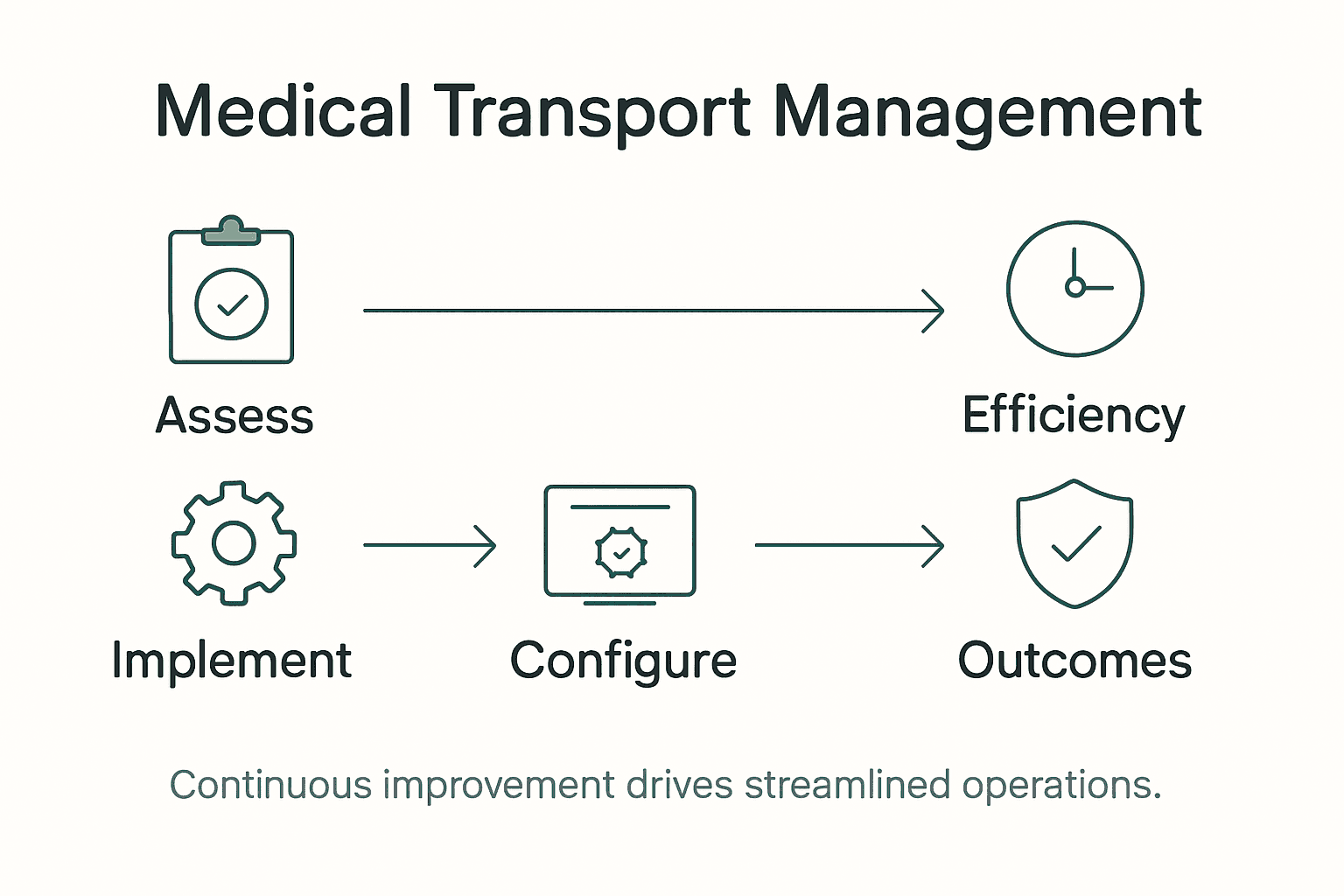
Direct Secure Messaging provides a widely adopted communication protocol using encryption and digital certificates that ensures confidential information transmission during medical transport operations. When integrating communication platforms, prioritize solutions that offer end-to-end encryption, multi factor authentication, and comprehensive access controls. Implement systems that can seamlessly capture and distribute critical patient transport data, including vehicle location, estimated arrival times, patient condition updates, and transport team communications. Look for platforms that support interoperability between different healthcare information systems, allowing smooth data transfer without compromising security standards.
Successful integration requires a strategic approach that balances technological capabilities with regulatory compliance. Develop clear protocols for data access, establish granular permission levels for different user roles, and create comprehensive audit trails that track all communication and data interactions. Train your team on secure communication best practices, emphasizing the importance of maintaining patient privacy and adhering to healthcare information protection regulations. Regularly review and update your communication and data insights strategies to address emerging technological challenges and evolving security threats.
Pro tip: Implement a periodic security review process that involves simulated communication breach scenarios to identify and address potential vulnerabilities in your medical transport data exchange systems.
Step 5: Verify transport efficiency and patient outcomes
Verifying medical transport efficiency requires a comprehensive approach that combines quantitative metrics with qualitative patient experience data. Your goal is to develop a robust evaluation framework that provides meaningful insights into your medical transport operations and their impact on patient care.
Systematic reviews of non-emergency medical transportation interventions reveal complex effectiveness patterns that demand nuanced performance measurement strategies. Implement a multifaceted evaluation process that tracks key performance indicators such as average transport response times, patient arrival punctuality, medical equipment readiness, and communication quality. Create standardized assessment protocols that capture both objective operational metrics and subjective patient satisfaction indicators. Focus on collecting granular data points including total transit duration, patient comfort levels, medical staff interaction quality, and any potential service gaps or interruptions during the transport process.
Develop a continuous improvement cycle that integrates feedback from multiple stakeholders including patients, transport teams, medical staff, and administrative personnel. Utilize advanced analytics tools to transform raw data into actionable insights, identifying trends, potential bottlenecks, and opportunities for operational optimization. Establish regular review meetings to discuss performance metrics, share best practices, and implement targeted improvements based on your comprehensive transport efficiency assessment.
Pro tip: Create a standardized patient feedback mechanism with quick digital surveys immediately following transport services to capture real-time insights and demonstrate your commitment to continuous improvement.
The table below highlights essential performance metrics for evaluating transport efficiency and outcomes:
| Metric | Measurement Method | Value to Organization |
|---|---|---|
| Average Response Time | Time logs analysis | Identifies service delays |
| Patient Satisfaction Score | Post-transport surveys | Gauges quality of experience |
| Arrival Punctuality Rate | Journey tracking records | Measures scheduling accuracy |
| Equipment Readiness | Staff checklists | Ensures readiness for care |
Elevate Your Medical Transport Operations with VectorCare
Managing medical transport workflows to achieve seamless coordination and improved patient outcomes is a complex challenge many healthcare organizations face. This article highlights key pain points such as inefficient scheduling, communication delays, and the need for secure data exchange. VectorCare’s comprehensive digital platform addresses these challenges with powerful tools designed for automation, real-time updates, and AI-driven dispatching—helping you reduce delays and operational costs while enhancing service quality.
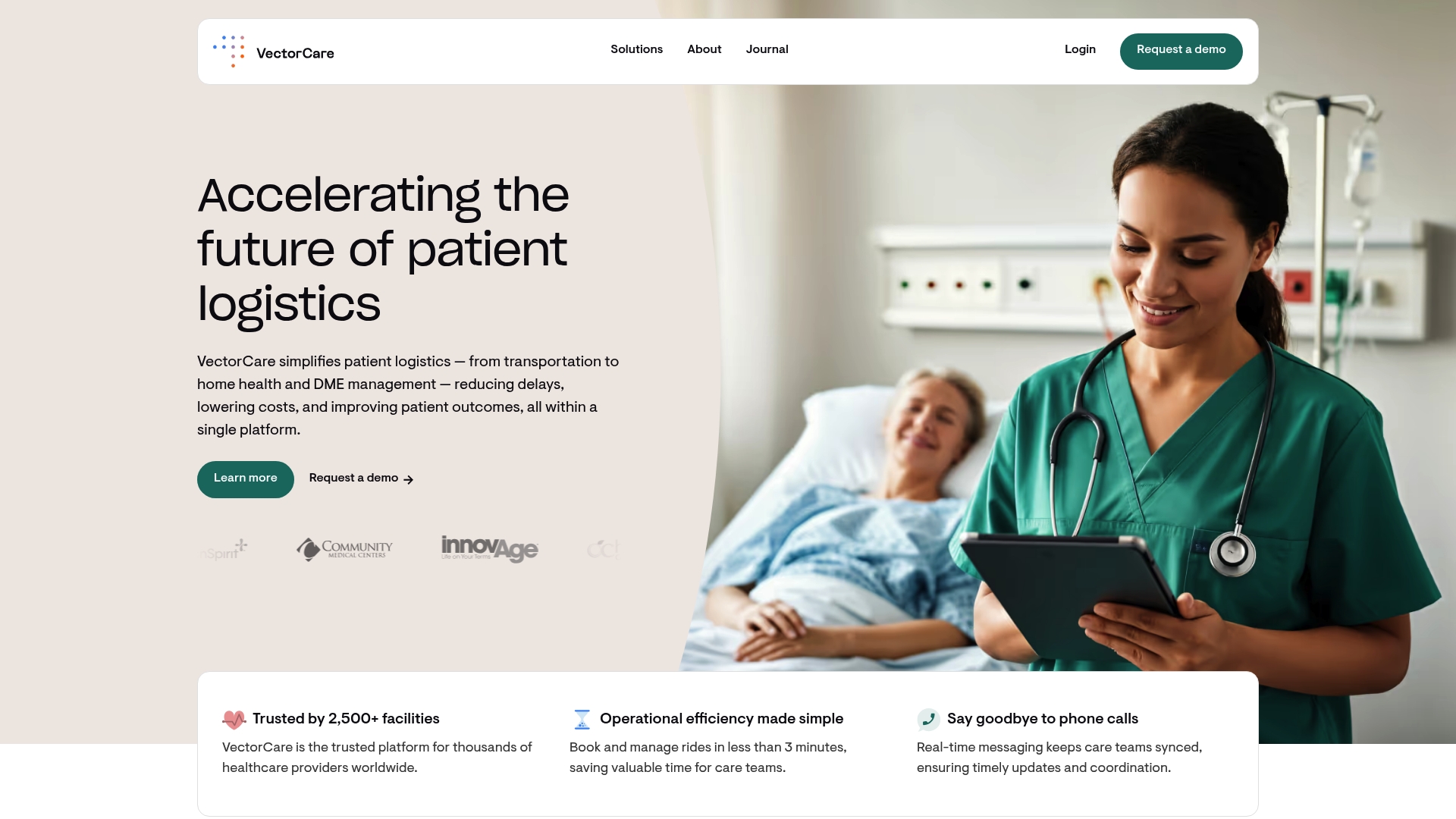
Discover how VectorCare can transform your medical transport management through features like intelligent scheduling optimization, vendor management, and secure communication channels. Start streamlining your patient logistics today by exploring our integrated platform solutions. Act now to ensure your organization keeps pace with healthcare innovation and delivers the timely patient care the community deserves.
Frequently Asked Questions
How can I assess current medical transport workflows effectively?
Begin by mapping out each stage of your medical transport process, tracking patient transport requests from initial contact to final delivery. Use structured interviews and documentation reviews to identify bottlenecks and potential areas for improvement within 30 days.
What features should I look for in a digital management platform for medical transport?
Select a platform that includes automated scheduling, real-time vehicle tracking, and integrated communication channels. Ensure it can synchronize data across dispatchers, medical facilities, and transport teams to enhance operational efficiency.
How do I configure automated scheduling and dispatch options for medical transport?
Focus on systems that support intelligent routing and real-time decision-making based on patient conditions and vehicle availability. Customize the platform to match existing workflows within 60 days and provide comprehensive training to your team for optimal use.
What are the best practices for secure communication in medical transport operations?
Implement secure communication platforms that utilize end-to-end encryption and access controls to protect sensitive information. Train your staff on secure messaging best practices to maintain patient privacy and comply with healthcare regulations.
How can I verify transport efficiency and improve patient outcomes?
Develop a framework to track key performance indicators such as average response times, patient satisfaction scores, and equipment readiness. Utilize feedback from multiple stakeholders to implement targeted improvements and conduct regular review meetings to assess performance metrics.