Healthcare Transportation Coordination for Streamlined Patient Logistics
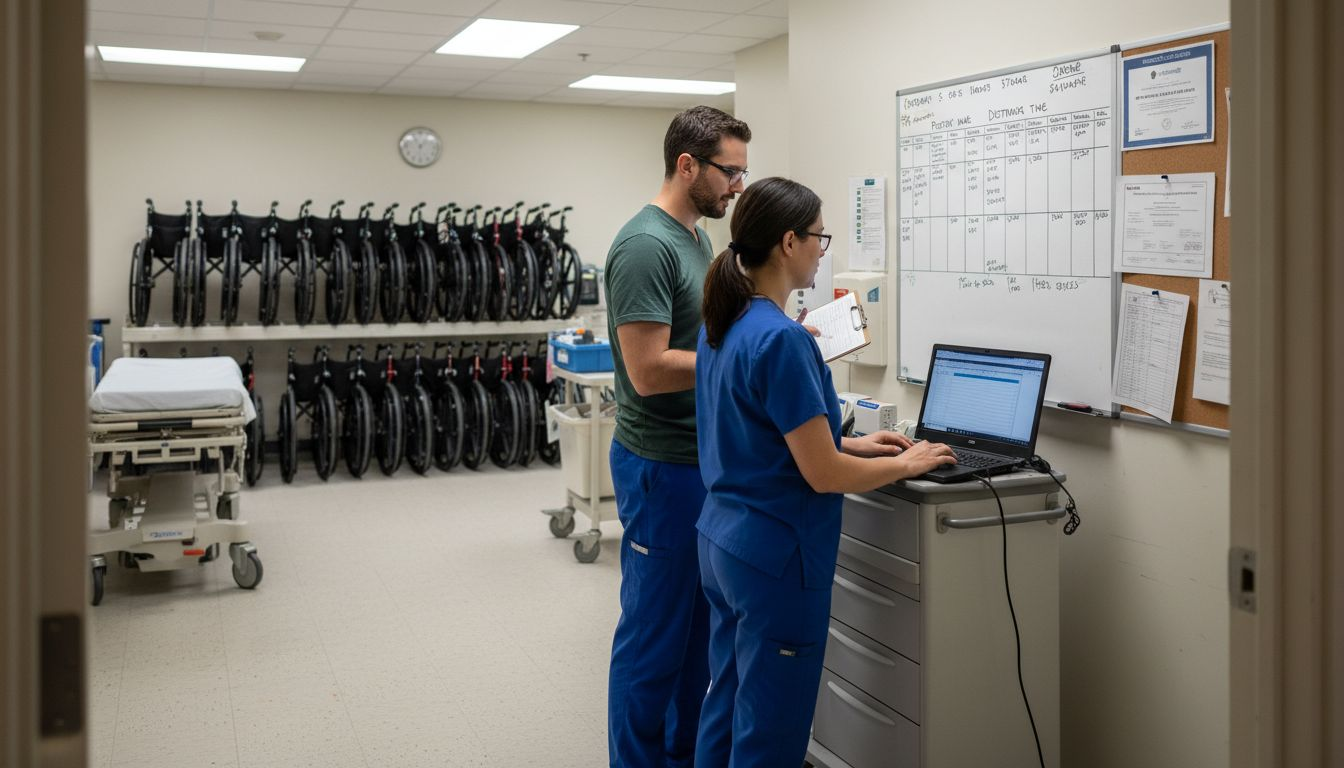
Over 5 million American patients miss medical appointments each year because of transportation barriers. This challenge has a real impact on patient health outcomes and adds costs for providers across the United States. Understanding and improving the logistics behind patient transportation is essential for any American healthcare organization aiming to deliver timely, efficient, and reliable care. Discover key steps that address both transport gaps and critical communication issues, creating smoother workflows and better patient results.
Table of Contents
- Step 1: Assess Current Transportation and Communication Needs
- Step 2: Implement Integrated Scheduling and Vendor Management
- Step 3: Automate Dispatch and Routing with Digital Tools
- Step 4: Track Real-Time Progress and Communicate Securely
- Step 5: Verify Outcomes and Analyze Performance Data
Quick Summary
| Key Insight | Explanation |
|---|---|
| 1. Assess Current Needs | Evaluate existing patient transportation workflows to identify gaps and inefficiencies. This will guide improvement strategies. |
| 2. Implement Integrated Scheduling | Develop a centralized scheduling system to streamline vendor management and communication among stakeholders for enhanced operations. |
| 3. Automate Dispatch and Routing | Use digital tools for real-time dispatch and routing optimization to improve efficiency and reduce response times for patient transport. |
| 4. Track Real-Time Progress | Establish secure tracking systems that provide real-time updates, ensuring transparency and compliance during patient transport. |
| 5. Analyze Performance Data | Conduct regular performance analyses to identify trends and potential areas for improvement in transportation logistics. |
Step 1: Assess Current Transportation and Communication Needs
Assessing transportation and communication infrastructure is critical for healthcare providers seeking to optimize patient logistics. This comprehensive evaluation will help identify existing gaps, inefficiencies, and opportunities for improvement in your patient transportation ecosystem.
To conduct a thorough assessment, start by mapping your current patient transportation workflows. Statistical analysis from healthcare research reveals significant transportation barriers that can impede patient care. Begin by documenting each step of your current patient transportation process including scheduling, dispatch, vehicle assignment, communication protocols, and tracking mechanisms. Collect data on wait times, communication delays, patient no-show rates, and transportation resource utilization.
Focus on understanding the communication channels between healthcare providers, transportation vendors, patients, and support staff. Review existing communication technologies, assess their interoperability, and identify potential bottlenecks that might disrupt smooth patient movement. Examine your current communication tools tracking patient pickups, real-time location updates, and status reporting. Pay special attention to how information flows between different stakeholders and where potential breakdowns might occur.
Pro Tip: Create a detailed visual workflow map that highlights each touchpoint in your patient transportation process, enabling your team to quickly identify inefficiencies and potential areas for technological intervention.
Step 2: Implement Integrated Scheduling and Vendor Management
Implementing integrated scheduling and vendor management is a critical strategy for healthcare organizations seeking to optimize patient transportation logistics. This process will help streamline operations, reduce administrative overhead, and improve overall service delivery.
Cross sector research on healthcare supply chain management highlights the importance of developing a comprehensive vendor management approach. Begin by conducting a thorough inventory of your current transportation vendors, documenting their capabilities, reliability, service areas, and performance metrics. Create a standardized evaluation framework that allows you to compare and rank vendors based on key performance indicators such as on time pickup rates, patient satisfaction scores, response times, and compliance with healthcare regulations.
Develop a centralized scheduling system that integrates multiple vendor capabilities and allows for real time tracking and dynamic resource allocation. This system should enable seamless communication between healthcare providers, transportation vendors, and patients. Implement robust technology platforms that can automatically match patient transportation needs with the most appropriate vendor based on predefined criteria like vehicle type, patient mobility requirements, geographic coverage, and specialized medical transport needs. Establish clear communication protocols and develop automated notification systems that keep all stakeholders informed about transportation status, potential delays, and critical updates.
Pro Tip: Create a vendor scorecard that tracks performance metrics quarterly and use this data to continuously refine your vendor selection and management strategy, ensuring ongoing improvement in patient transportation services.
Step 3: Automate Dispatch and Routing with Digital Tools
Automating dispatch and routing represents a transformative approach to streamlining patient transportation logistics. This critical step will help healthcare organizations dramatically improve efficiency, reduce response times, and enhance overall patient experience through sophisticated digital technologies.

Real-time tracking technologies for hospital patient transport demonstrate significant potential for revolutionizing healthcare logistics. Begin by implementing an integrated digital dispatch platform that can automatically match patient transportation needs with the most appropriate vehicle and driver. Your digital system should incorporate advanced features like real-time GPS tracking, dynamic route optimization, and automated communication protocols. This technology enables intelligent routing that considers factors such as patient mobility requirements, medical urgency, geographic constraints, and current traffic conditions.
Integrate your digital dispatch system with existing healthcare information platforms to create a seamless data exchange ecosystem. Configure the system to automatically generate transportation assignments based on predefined criteria, such as patient medical needs, transportation type, and vendor availability. Implement intelligent algorithms that can rapidly recalculate routes in response to unexpected changes like traffic delays, vehicle maintenance issues, or sudden patient scheduling modifications. Ensure your digital tools provide comprehensive visibility into the entire transportation process, allowing healthcare administrators to monitor performance metrics, track vehicle locations, and quickly respond to any potential service disruptions.
Pro Tip: Conduct regular system audits and performance reviews of your digital dispatch platform, using data driven insights to continuously refine routing algorithms and improve overall transportation efficiency.
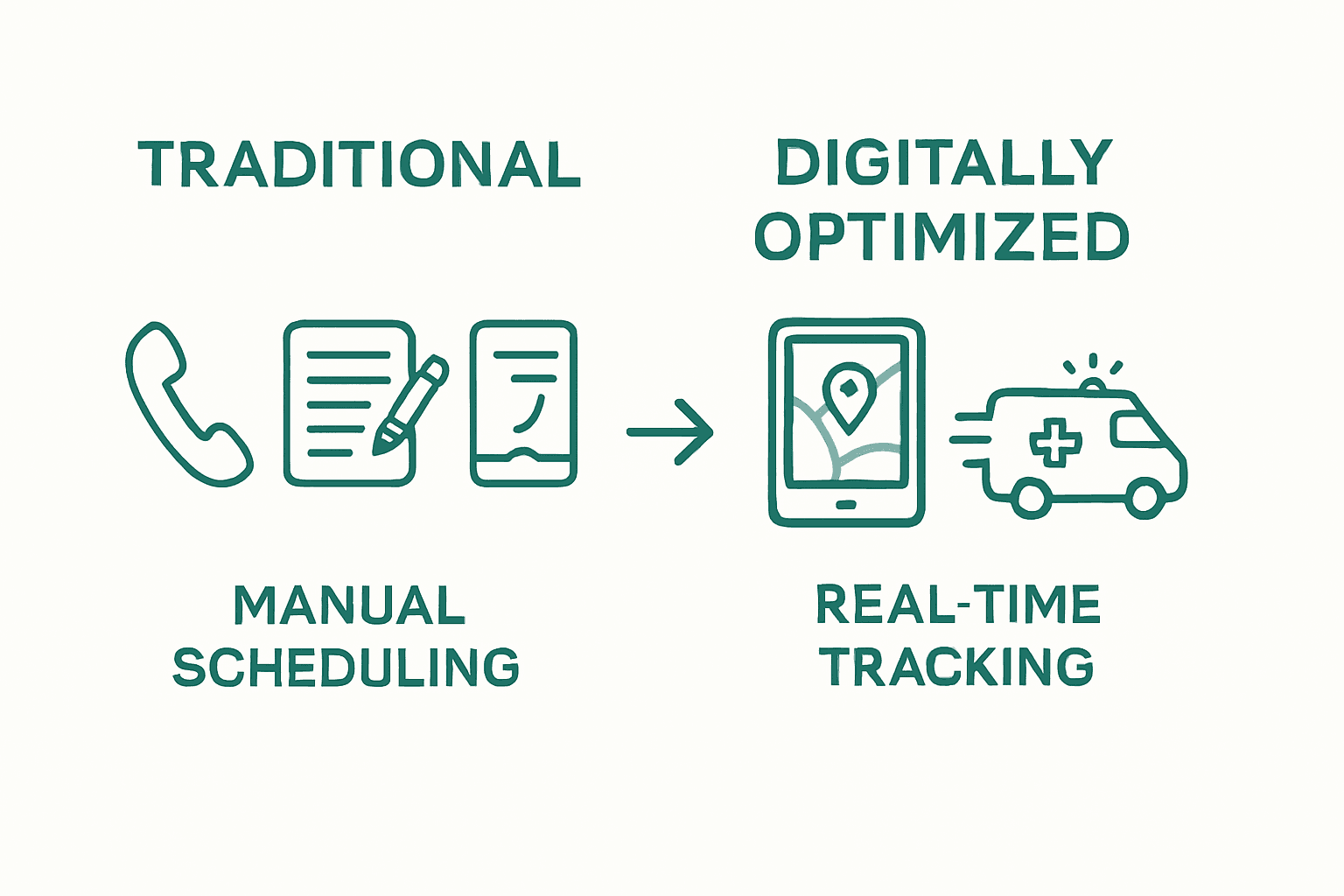
The following table compares traditional versus digitally optimized patient transport systems:
| Aspect | Traditional System | Digitally Optimized System |
|---|---|---|
| Scheduling | Manual, fragmented | Automated, centralized |
| Tracking | Limited visibility | Real-time GPS updates |
| Communication | Phone calls, paper logs | Secure mobile/web platforms |
| Data Analysis | Retrospective, basic | Real-time, predictive insights |
Step 4: Track Real-Time Progress and Communicate Securely
Tracking real-time patient transportation progress and establishing secure communication channels are critical components of modern healthcare logistics. This step will help you create a transparent, efficient, and compliant information exchange system that protects patient data while providing immediate visibility into transportation status.
Real-time tracking technologies for hospital patient transport demonstrate the transformative potential of advanced monitoring systems. Implement a secure digital platform that provides end to end encryption and HIPAA compliant communication protocols. Your tracking system should offer granular real time updates including precise vehicle location, estimated arrival times, patient pickup and dropoff confirmations, and driver identification. Configure the system to generate automatic notifications for healthcare providers, patients, and relevant stakeholders through secure mobile applications or web interfaces that require multi factor authentication.
Develop comprehensive communication workflows that integrate multiple communication channels while maintaining strict security standards. Establish clear guidelines for information sharing that specify exactly what data can be transmitted, who can access it, and under what circumstances. Create role based access controls that limit sensitive information to authorized personnel only. Implement advanced logging and audit trail mechanisms that record every interaction within the system, providing a complete trail of communication and transportation events. These robust security measures will help your organization maintain patient confidentiality while enabling seamless real time information exchange.
Pro Tip: Conduct quarterly security assessments and penetration testing of your communication platforms to identify and address potential vulnerabilities before they can be exploited.
Step 5: Verify Outcomes and Analyze Performance Data
Verifying transportation logistics outcomes and conducting comprehensive performance analysis are essential for continuously improving patient transportation services. This critical step will help your organization transform raw data into actionable insights that drive strategic decision making and enhance overall patient care efficiency.
National healthcare transportation performance research reveals the importance of systematic outcome verification. Develop a robust data collection framework that captures key performance indicators such as on time pickup rates, patient satisfaction scores, transportation response times, cost per transport, and vehicle utilization metrics. Configure your analytics platform to generate comprehensive dashboards that provide real time visibility into transportation performance across multiple dimensions. Implement automated reporting mechanisms that can quickly identify trends, anomalies, and potential areas for improvement.
Establish a structured approach to performance data analysis that goes beyond surface level metrics. Create comparative benchmarks that allow you to evaluate your transportation logistics against industry standards and your own historical performance. Utilize advanced statistical techniques like regression analysis, predictive modeling, and machine learning algorithms to uncover nuanced insights about transportation efficiency. Develop a continuous improvement protocol where performance data directly informs strategic adjustments to your transportation workflows, vendor selection, routing strategies, and resource allocation.
Pro Tip: Schedule monthly performance review meetings where key stakeholders collaboratively examine transportation data, discuss emerging trends, and develop targeted improvement strategies based on empirical evidence.
Here is a summary of the core benefits of each step in optimizing patient transportation logistics:
| Step | Primary Benefit | Key Outcome |
|---|---|---|
| Assess Needs | Identifies process gaps | Improved workflow clarity |
| Integrated Scheduling | Centralizes coordination | Increased operational efficiency |
| Digital Dispatch | Automates assignments | Reduced delays and errors |
| Real-Time Tracking | Monitors progress securely | Enhanced visibility and security |
| Performance Analysis | Drives ongoing improvements | Higher patient care quality |
Elevate Patient Transportation Coordination with Integrated Digital Solutions
Healthcare providers know how challenging it can be to manage patient logistics efficiently while maintaining secure communication and minimizing delays. This article highlights critical pain points like fragmented scheduling, lack of real-time tracking, and ineffective vendor management—all factors that create bottlenecks and increase operational costs. VectorCare offers an all-in-one digital platform designed specifically to address these issues by automating dispatch, optimizing scheduling, and enabling secure, real-time updates that keep every stakeholder informed. The platform’s AI-driven tools ensure your transportation workflows are seamless and adaptable to unexpected changes, directly improving patient outcomes and operational clarity.
Ready to transform your healthcare transportation coordination? Discover how VectorCare’s integrated solutions can reduce administrative burdens and enhance patient care with powerful features tailored for providers, payers, and emergency services. Visit VectorCare’s platform today for a personalized demo and start optimizing your patient logistics now.
Frequently Asked Questions
How can I assess our current patient transportation needs effectively?
To assess your current patient transportation needs, start by mapping out your existing workflows. Document each step, from scheduling to vehicle assignment, and collect data on wait times and resource utilization. This evaluation will help you identify gaps and improve your overall logistics.
What steps should I take to implement integrated scheduling for patient transportation?
To implement integrated scheduling, conduct an inventory of your current transportation vendors and create a standardized evaluation framework. Develop a centralized scheduling system that allows for real-time tracking and effective communication, improving operational efficiency within 30 days.
How can automated dispatch and routing improve patient transportation services?
Automated dispatch and routing can significantly streamline patient transportation by matching needs with appropriate vehicles and drivers. Implement a digital dispatch platform that utilizes real-time GPS tracking and dynamic route optimization to reduce response times and enhance patient experience.
What measures can I take to ensure secure communication in patient transportation?
To ensure secure communication, implement a digital platform with end-to-end encryption and HIPAA-compliant protocols. Develop clear guidelines for information sharing and establish role-based access controls to protect sensitive data while maintaining efficient communication during transport.
How do I analyze transportation performance data for continuous improvement?
To analyze transportation performance data, collect key metrics such as on-time pickup rates and patient satisfaction scores. Use comparative benchmarks and advanced statistical techniques to uncover insights and schedule monthly review meetings to discuss trends and develop improvement strategies.