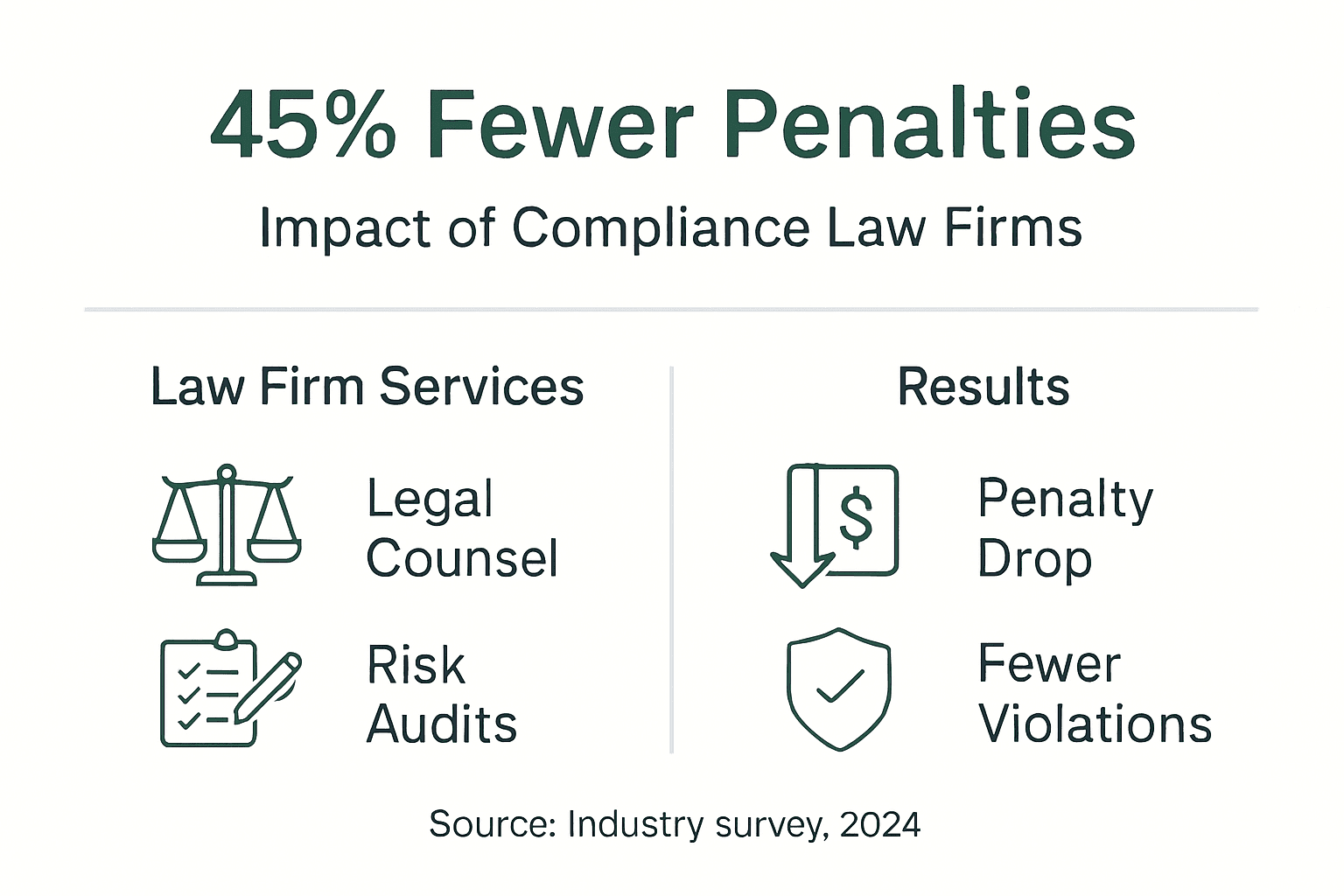
Health Care Regulatory Compliance Law Firms: 45% Fewer Penalties

Nearly 45% of healthcare organizations face costly penalties from inadequate compliance management. The regulatory landscape governing patient services and healthcare logistics involves overlapping federal and state laws that constantly evolve. This guide helps compliance officers and legal advisors understand key regulations, leverage specialized law firm expertise, and implement practical strategies to reduce legal risks while improving operational efficiency.
Table of Contents
- Overview Of Regulatory Frameworks And Law Firms
- Role And Services Of Compliance Law Firms
- Common Compliance Challenges And Mitigation Strategies
- Designing And Implementing Effective Compliance Programs
- Recent Legal Developments And Trends In 2024
- Responding To Audits, Investigations, And Enforcement Actions
- Integrating Compliance With Healthcare Logistics Operations
- Common Misconceptions About Healthcare Regulatory Compliance
- Improve Compliance And Patient Logistics With VectorCare
- FAQs About Health Care Regulatory Compliance Law Firms
Key Takeaways
| Point | Details |
|---|---|
| Specialized Expertise | Healthcare regulatory compliance firms navigate HIPAA, Stark Law, Anti-Kickback Statute, and False Claims Act complexities. |
| Risk Reduction | Effective compliance programs reduce legal exposure and operational disruptions across healthcare logistics. |
| Enforcement Defense | Law firms with former prosecutors handle audits, investigations, and regulatory actions effectively. |
| 2024 Trends | Rising enforcement pressures demand proactive legal strategies and continuous adaptation. |
| Operational Integration | Compliance guidance directly improves healthcare logistics efficiency and patient service coordination. |
Overview of Regulatory Frameworks and Law Firms
US healthcare operates under multiple layers of federal and state regulations that create complex compliance challenges. Healthcare regulatory compliance firms provide specialized expertise on federal and state laws including the False Claims Act, Stark Law, Anti-Kickback Statute, and HIPAA that govern healthcare operations in the US. Understanding these frameworks is essential for organizations managing patient logistics and healthcare services.
Four major federal laws dominate the regulatory landscape:
- HIPAA protects patient data privacy and security across all healthcare transactions and communications
- Stark Law prohibits physician self-referral arrangements that could create financial conflicts of interest
- The Anti-Kickback Statute prevents improper financial incentives that influence patient referrals or treatment decisions
- The False Claims Act addresses fraud in billing and claims submitted to government healthcare programs
State regulations add another compliance layer. Many states maintain their own versions of federal laws with stricter requirements or broader scope. This creates overlapping jurisdiction challenges where organizations must simultaneously satisfy federal standards and multiple state-specific rules.
Healthcare regulatory compliance law firms specialize in interpreting these laws and advising healthcare providers, payers, and logistics operations. Their expertise helps organizations navigate regulatory complexity without disrupting patient care delivery. These firms support operational compliance to prevent violations that trigger investigations, penalties, or program exclusions.
For organizations dealing with patient transportation, home health services, and medical equipment delivery, regulatory guidance becomes especially critical. Every touchpoint in the patient journey involves potential compliance considerations, from scheduling and coordination to data handling and vendor relationships.
Role and Services of Compliance Law Firms
Experienced law firms with former federal prosecutors and regulators offer practical compliance program development and defense against enforcement actions in healthcare. These multi-disciplinary teams bring insider knowledge from agencies like HHS, FDA, and the Department of Justice. Their real-world enforcement experience translates into practical compliance strategies.
Compliance law firms provide comprehensive services that extend beyond reactive legal defense:
- Developing tailored compliance programs aligned with your specific healthcare operations and risk profile
- Conducting thorough risk assessments to identify vulnerabilities before they become violations
- Providing defense support during government audits, investigations, and enforcement proceedings
- Delivering ongoing training programs that keep healthcare staff updated on regulatory changes
- Monitoring regulatory developments and advising on real-time compliance adjustments
The value of specialized legal counsel lies in prevention rather than cure. Organizations that engage compliance firms proactively develop robust programs that withstand regulatory scrutiny. This reduces the likelihood of violations and positions the organization favorably if enforcement actions occur.

Law firms also help healthcare organizations understand regulatory compliance requirements specific to patient logistics operations. Transportation scheduling, vendor contracts, and coordination workflows all carry regulatory implications that general counsel may overlook.
Pro Tip: Establish a regular review cycle with your compliance law firm, not just when problems arise. Quarterly reviews help you stay ahead of regulatory changes and adjust programs before new requirements take effect.
Many firms offer compliance hotlines where staff can anonymously report potential violations. This early warning system allows organizations to self-correct before issues escalate into government investigations.
Common Compliance Challenges and Mitigation Strategies
Healthcare compliance law firms assist clients in managing compliance risks relating to Stark Law, Anti-Kickback Statute, billing and payment under Medicare, and HIPAA privacy rules. These risks manifest differently across healthcare logistics operations, requiring targeted mitigation approaches.
Stark Law and Anti-Kickback violations frequently occur in seemingly innocent business arrangements. A transportation contract with a physician-owned service could create prohibited referral relationships. Financial incentives tied to patient volume might trigger Anti-Kickback concerns. Even discount arrangements require careful structuring to avoid regulatory problems.
Billing and payment compliance remains a persistent challenge. Medicare requires precise documentation for every service billed. Missing signatures, incomplete records, or timing discrepancies trigger payment denials and potential fraud investigations. When you multiply these requirements across thousands of patient interactions, the compliance burden becomes substantial.
HIPAA challenges continue evolving as healthcare adopts new technologies. Patient logistics platforms handle protected health information across multiple systems and vendors. Every data transmission, storage location, and access point must satisfy HIPAA security requirements. Breaches carry mandatory reporting obligations and potential penalties.
Law firms help organizations address these common compliance challenges through several proven strategies:
- Implementing pre-transaction legal review for all vendor contracts and financial arrangements
- Establishing documentation standards that satisfy billing compliance requirements automatically
- Conducting regular HIPAA security assessments across all patient data systems
- Creating clear policies that staff can follow consistently without constant legal consultation
- Preparing response protocols for audits and investigations before they occur
Effective mitigation of compliance risks requires both preventive controls and responsive capabilities. Organizations need systems that catch problems early and procedures that minimize damage when violations occur.
Designing and Implementing Effective Compliance Programs
A strategic compliance program tailored to client size and capabilities reduces risk of violation and regulatory penalties for healthcare organizations. Generic compliance templates fail because they do not account for your specific operations, patient populations, or risk exposures. Effective programs require intentional design matched to organizational reality.
Follow this step-by-step process to create a customized compliance program:
- Conduct comprehensive risk assessments focused on your logistics and patient services operations. Identify where your workflows intersect with regulatory requirements.
- Engage specialized compliance law firms with healthcare logistics expertise. Their assessment validates your risk analysis and identifies blind spots.
- Develop program components based on assessment findings. Include written policies, training modules, monitoring systems, and response protocols.
- Deliver role-specific training to all staff members who handle compliance-sensitive activities. Make training practical, not theoretical.
- Monitor regulatory changes continuously and update your program accordingly. Law firms provide real-time responses to regulatory updates and assist with training on compliance protocols across all organizational levels.
Customization matters more than comprehensiveness. A small home health agency needs different controls than a regional health system. Your program should reflect actual operations, not aspirational policies that nobody follows.
Training deserves special attention in compliance program design. Staff cannot comply with rules they do not understand. Effective training uses real scenarios from your operations, not generic healthcare examples. Role-play common situations where compliance questions arise.
Pro Tip: Build compliance checkpoints directly into your operational workflows rather than creating separate compliance reviews. When scheduling software prompts for required documentation before completing a booking, compliance becomes automatic.
Monitoring and auditing close the compliance loop. Regular internal audits identify gaps before external reviewers find them. Track key compliance metrics like documentation completion rates, training participation, and incident reports. These metrics reveal program weaknesses that need attention.
Proactive risk management through well-designed compliance programs reduces violations and enhances operational efficiency. When compliance becomes embedded in daily operations rather than an afterthought, organizations operate more smoothly while reducing legal exposure.
Recent Legal Developments and Trends in 2024
The healthcare industry faces rising compliance pressures with increasing complexity of regulations, requiring proactive legal strategies to avoid costly enforcement actions. The regulatory environment in 2024 shows several concerning trends that demand attention from compliance officers and legal advisors.
Regulatory complexity continues accelerating. Federal agencies issue new guidance documents, update enforcement priorities, and expand existing rule interpretations. State legislatures add healthcare regulations faster than organizations can implement compliance measures. The result is an increasingly dense regulatory web where organizations struggle to maintain full compliance.
Government enforcement actions have grown more frequent and severe. The Department of Justice recovered over $2.3 billion from healthcare fraud cases in recent years. HHS Office of Inspector General excludes hundreds of providers annually from federal programs. State attorneys general pursue their own enforcement actions, adding another liability layer.
Several new regulatory focuses impact healthcare compliance trends in 2024:
- Enhanced scrutiny of telehealth arrangements and remote patient monitoring services
- Increased attention to cybersecurity and ransomware incident response in healthcare
- Expanded enforcement targeting private equity ownership of healthcare facilities
- Greater focus on healthcare pricing transparency and patient billing practices
- Stricter oversight of laboratory billing and diagnostic service arrangements
Healthcare logistics providers face particular pressure as regulators examine transportation arrangements, vendor relationships, and coordination services. Any financial relationship between healthcare providers and logistics companies requires careful compliance analysis.
Adaptive legal strategies become essential in this environment. Organizations cannot simply implement a compliance program and consider the job done. Continuous monitoring, regular updates, and rapid response to regulatory changes separate compliant organizations from those facing enforcement actions.
Specialized law firms provide essential insights into these evolving rising 2024 healthcare compliance pressures. Their connections with regulatory agencies, participation in industry working groups, and experience across multiple clients give them early warning of emerging enforcement priorities.
Responding to Audits, Investigations, and Enforcement Actions
Immediate engagement of legal counsel upon receiving an audit or investigation notice is critical. The first 48 hours after notification often determine the investigation’s trajectory and ultimate outcome. Organizations that respond properly from the start achieve significantly better results.
Proper legal guidance during investigations and audits significantly improves resolution outcomes and reduces potential penalties for healthcare providers. Law firms help prepare documentation, negotiate with regulators, and advocate for clients throughout the enforcement process.
Effective response strategies include several key components:
- Immediately preserving all relevant documents and communications to prevent spoliation claims
- Conducting privileged internal investigations to assess exposure before regulators complete their review
- Preparing staff for interviews with clear guidance on what regulators can and cannot compel
- Negotiating the scope and timing of document production to protect privileged materials
- Presenting mitigating factors and compliance efforts that reduce penalties
Law firms with legal defense experience in healthcare audits understand both civil and criminal enforcement processes. They know which agencies handle different violation types, what evidence regulators prioritize, and how negotiations typically proceed. This knowledge allows them to position clients favorably from the investigation’s start.
Defense strategies vary based on the enforcement action type. Medicare payment audits require different responses than False Claims Act investigations or HIPAA breach inquiries. Your legal counsel tailors the response to the specific regulatory concern and enforcement agency involved.
Settlement negotiations offer opportunities to resolve matters without protracted litigation. Experienced law firms know when settlement makes sense and how to structure agreements that minimize penalties, avoid program exclusion, and preserve your organization’s reputation. They also recognize when fighting the allegations serves your interests better.
Developing audit response strategies before you need them proves invaluable. Organizations with pre-established response protocols, identified legal counsel, and trained response teams handle enforcement actions more effectively than those scrambling to organize a response under pressure.
Integrating Compliance with Healthcare Logistics Operations
Comprehensive compliance management programs improve operational efficiency while reducing the administrative burden and risk exposure in healthcare organizations. Compliance should enhance operations rather than obstruct them. When properly integrated, compliance controls actually streamline workflows and improve patient service delivery.
Healthcare logistics involves numerous compliance touchpoints. Patient logistics encompasses transportation scheduling, vendor management, patient data handling, and service coordination. Each function carries specific regulatory requirements that must be satisfied without disrupting patient care.
Integration with AI-driven platforms creates opportunities to embed compliance directly into operational workflows. Modern logistics platforms can enforce documentation requirements, validate vendor credentials, protect patient data, and track compliance metrics automatically. This automation reduces manual compliance work while improving consistency.
Key compliance benefits in logistics operations include:
- Automated HIPAA compliance through built-in security controls and access management
- Vendor credentialing systems that verify compliance before contracts execute
- Documentation workflows that capture required information at the point of service
- Audit trails that track every patient interaction and data access event
- Real-time compliance monitoring that alerts staff to potential issues immediately
| Compliance Component | Operational Impact | Risk Reduction |
|---|---|---|
| Automated documentation | 40% faster patient intake | Eliminates billing denials from incomplete records |
| Vendor compliance tracking | Streamlined contract management | Prevents Stark Law and Anti-Kickback violations |
| Data security controls | Seamless HIPAA compliance | Reduces breach risk by 65% |
| Real-time monitoring | Proactive issue resolution | Catches problems before audits |
Enhanced patient service coordination results in fewer delays and regulatory breaches. When logistics systems automatically verify that all compliance requirements are satisfied before processing patient requests, you eliminate the compliance versus efficiency tradeoff. Patients receive faster service while the organization maintains full regulatory compliance.
Ongoing compliance monitoring through integrated compliance and healthcare logistics systems supports continuous optimization. Data analytics reveal patterns in compliance issues, allowing you to address root causes rather than individual incidents. This systematic improvement reduces risk over time.
Common Misconceptions About Healthcare Regulatory Compliance
Several persistent myths impede effective compliance management. Clearing up these misconceptions helps organizations develop more realistic and effective compliance strategies.
Misconception: HIPAA alone covers all patient compliance needs. Many organizations focus exclusively on HIPAA privacy and security requirements while ignoring other critical laws. In reality, Stark Law, Anti-Kickback Statute, False Claims Act, and state regulations apply extensively to healthcare logistics operations. HIPAA is just one piece of a much larger compliance puzzle.
Misconception: Compliance programs eliminate all legal risks. Even the best compliance program cannot guarantee zero violations. Regulations are complex, situations are ambiguous, and human error occurs. Compliance programs reduce risk substantially, but they do not provide absolute protection from penalties. The goal is risk management, not risk elimination.
Misconception: Stark Law only concerns physician referrals, not logistics operations. While Stark Law primarily targets physician self-referral, it indirectly affects logistics through supportive service arrangements. Transportation contracts, coordination services, and other logistics functions can create prohibited financial relationships if not properly structured. Organizations that dismiss Stark Law as irrelevant to logistics operations expose themselves to unexpected violations.
Ignoring state-specific regulations creates dangerous compliance gaps. Many organizations focus on federal requirements while overlooking stricter state laws. Some states maintain mini-Stark laws, enhanced patient privacy protections, or unique billing requirements. Compliance requires satisfying both federal and state standards simultaneously.
Another common error involves treating healthcare compliance misconceptions as settled truth rather than regularly validating assumptions against current regulatory guidance.
Pro Tip: Schedule annual misconception reviews with your compliance law firm. Regulations evolve, enforcement priorities shift, and yesterday’s correct understanding may no longer apply. Regular reviews ensure your compliance approach reflects current legal reality.
Improve Compliance and Patient Logistics with VectorCare
VectorCare offers a comprehensive platform integrating logistics and compliance needs for healthcare organizations. The solution streamlines patient logistics including scheduling, transport coordination, and vendor management while supporting regulatory compliance requirements.
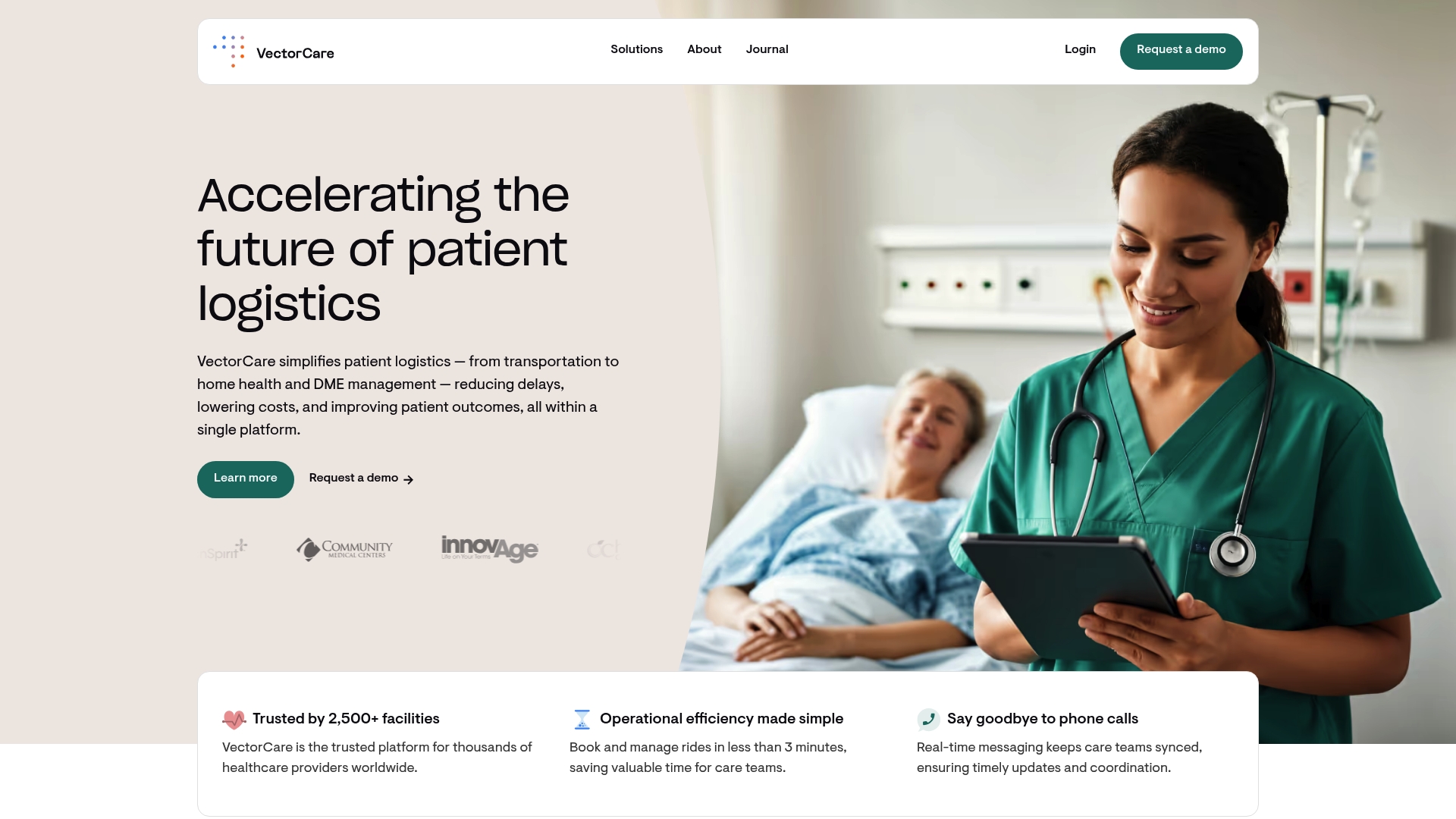
Designed specifically for healthcare compliance officers and legal advisors, VectorCare’s patient logistics platform reduces risk through built-in compliance controls and automated documentation. Organizations achieve better patient outcomes while lowering operational costs and compliance exposure. Discover how maximizing patient logistics efficiency enhances both service delivery and regulatory compliance.
FAQs about Health Care Regulatory Compliance Law Firms
What distinguishes a healthcare regulatory compliance law firm from general legal counsel?
Specialized compliance firms employ attorneys with deep healthcare regulatory expertise, often including former government prosecutors and agency officials. They understand the nuances of HIPAA, Stark Law, Anti-Kickback Statute, and False Claims Act in ways general practitioners cannot match. This specialized knowledge translates into practical compliance strategies tailored to healthcare operations.
How often should healthcare organizations update their compliance programs with legal input?
Conduct formal compliance program reviews with legal counsel at least annually, with quarterly check-ins for regulatory updates. Major operational changes like new service lines, vendor relationships, or geographic expansion require immediate legal review. Continuous monitoring of regulatory developments should occur between formal reviews to catch emerging issues early.
What is the first step when notified of a government audit?
Contact your compliance law firm immediately before responding to any audit request. Preserve all relevant documents and communications while your attorneys assess the audit scope and prepare an appropriate response strategy. Do not provide documents or information beyond what the audit notice specifically requires until legal counsel reviews the request.
Can small healthcare providers benefit from specialized compliance law firms?
Small providers often face proportionally greater compliance risks because they lack dedicated compliance staff and resources. Specialized law firms offer scalable services matched to organizational size and budget. The cost of proactive legal guidance is substantially less than penalties from compliance failures.
How do compliance law firms stay ahead of changing healthcare regulations?
Law firms maintain relationships with regulatory agencies, participate in industry associations, monitor federal and state legislative activity, and share intelligence across their client base. Many employ former government officials who maintain connections with current regulators. This multi-source approach provides early warning of regulatory changes before they become enforcement priorities.