Coordinator Home Care: Enhancing Patient Outcomes Efficiently

More than 12 million American patients rely on home health each year, and every delay in coordination impacts their recovery. For home care coordinators juggling patient logistics across dynamic American healthcare networks, the pressure to improve efficiency never rests. This guide offers practical insights that help you define coordinator roles, compare care models, and adopt technology for smoother, faster service at every step.
Table of Contents
- Defining Coordinator Home Care Roles
- Types of Home Care Coordination Models
- Core Responsibilities and Daily Workflows
- Qualification Requirements and Legal Compliance
- Leveraging Technology for Efficiency
- Mitigating Risks and Common Challenges
Key Takeaways
| Point | Details |
|---|---|
| Critical Role of Home Care Coordinators | Home care coordinators connect patients with providers and manage comprehensive care strategies, improving health outcomes and service efficiency. |
| Core Coordination Models | Models like Patient-Centered Medical Home, Case Management, and Integrated Care Systems offer tailored solutions for different patient needs. |
| Importance of Technology | Leveraging technology, such as electronic health records and AI, enhances coordination efficiency and patient care quality. |
| Risk Management Challenges | Coordinators face challenges such as patient non-compliance and communication barriers, necessitating robust risk mitigation strategies. |
Defining Coordinator Home Care Roles
Home care coordinators play a critical strategic role in patient healthcare delivery, serving as essential connectors between patients, healthcare providers, and support services. These professionals develop comprehensive care strategies designed to optimize patient wellness and streamline medical interactions. Care coordinators support high-risk clients through a multifaceted approach that addresses medical, logistical, and personal patient needs.
The core responsibilities of home care coordinators encompass several key areas. They conduct thorough patient assessments, create personalized care plans, coordinate communication between multiple healthcare providers, and manage complex logistical challenges. Coordinators must possess advanced communication skills, deep medical system knowledge, and the ability to navigate intricate healthcare networks. Their work involves constructing patient-centered health action plans, facilitating service access, and providing critical transition support for patients moving between different care settings.
Specifically, home care coordinators handle tasks such as scheduling medical appointments, tracking patient progress, managing medication protocols, coordinating specialist referrals, and advocating for patients’ comprehensive healthcare needs. Senior care coordination requires strong organizational skills to effectively bridge communication between seniors, families, healthcare providers, and support services. This role demands exceptional interpersonal abilities, medical system understanding, and a compassionate approach to patient care.
Pro tip: Develop a comprehensive digital tracking system to monitor patient care plans, medication schedules, and communication logs to enhance coordination efficiency.
Types of Home Care Coordination Models
Home care coordination models represent sophisticated approaches to delivering comprehensive patient care, each designed to address unique healthcare challenges and patient needs. Care coordination models systematically organize patient care activities across multiple participants, focusing on improving overall health outcomes and service efficiency. These frameworks are critical in ensuring patients receive holistic, integrated medical support tailored to their specific requirements.
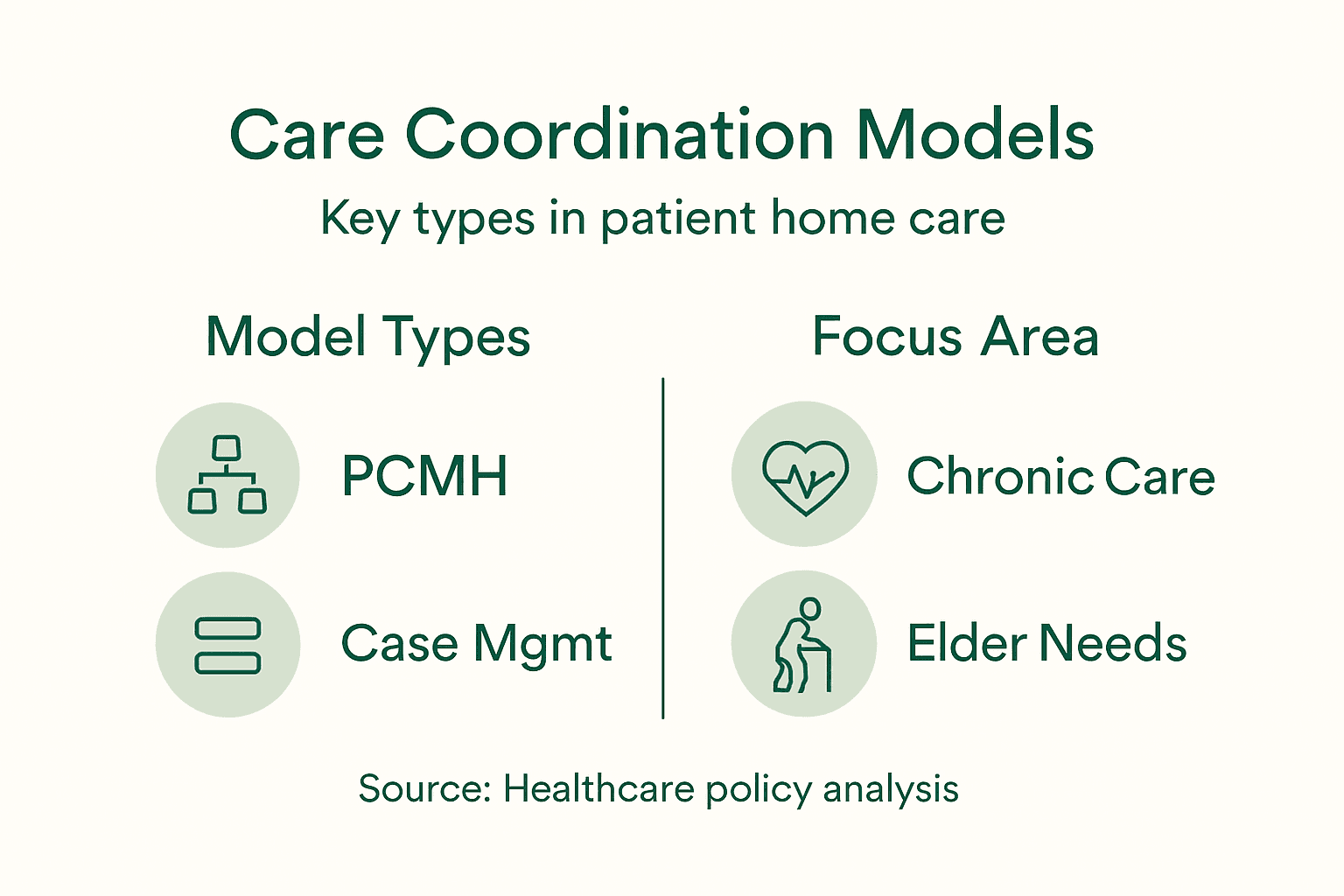
Several key home care coordination models have emerged in contemporary healthcare practice. The Patient-Centered Medical Home (PCMH) model places patients and their families at the center of care delivery, emphasizing personalized, continuous healthcare management. Another significant approach is the Case Management Model, which provides comprehensive health education, navigation services, and individualized support for patients with complex medical needs. Integrated care systems coordinate multiple healthcare disciplines to create seamless communication and comprehensive treatment strategies.
Each care coordination model offers distinct advantages and targets specific patient populations. The PCMH model is particularly effective for managing chronic conditions, while case management programs excel in supporting seniors and patients with multiple healthcare requirements. Integrated care systems prove especially valuable for patients needing multidisciplinary interventions, ensuring that medical, social, and familial support elements are comprehensively addressed. These models share core principles of collaboration, personalized care, and patient-centered approaches that prioritize individual health outcomes.
Here is a comparison of key home care coordination models and their primary focus areas:
| Model | Main Focus | Ideal Patient Group |
|---|---|---|
| Patient-Centered Medical Home | Personalized, ongoing care | Chronic illness management |
| Case Management | Comprehensive navigation | Seniors & complex needs |
| Integrated Care System | Multidisciplinary coordination | Multidisciplinary interventions |
Pro tip: Develop a standardized assessment framework to match patients with the most appropriate care coordination model based on their unique medical, social, and personal needs.
Core Responsibilities and Daily Workflows
Home care coordinators navigate a complex landscape of patient care management, with responsibilities that extend far beyond traditional medical support. Core responsibilities include client engagement and healthcare utilization strategies designed to optimize patient outcomes and remove barriers to effective treatment. These professionals serve as critical connectors between patients, healthcare providers, families, and community resources, ensuring comprehensive and holistic care delivery.
The daily workflow of a home care coordinator involves a sophisticated array of tasks that require exceptional organizational and interpersonal skills. Key responsibilities include conducting comprehensive health assessments, developing personalized care plans, and monitoring patient progress across multiple dimensions. Workflow coordination involves managing referrals and appointments while maintaining meticulous documentation in specialized care management software. Coordinators must also navigate complex communication channels, interfacing with medical professionals, insurance providers, and support networks to ensure seamless patient care.
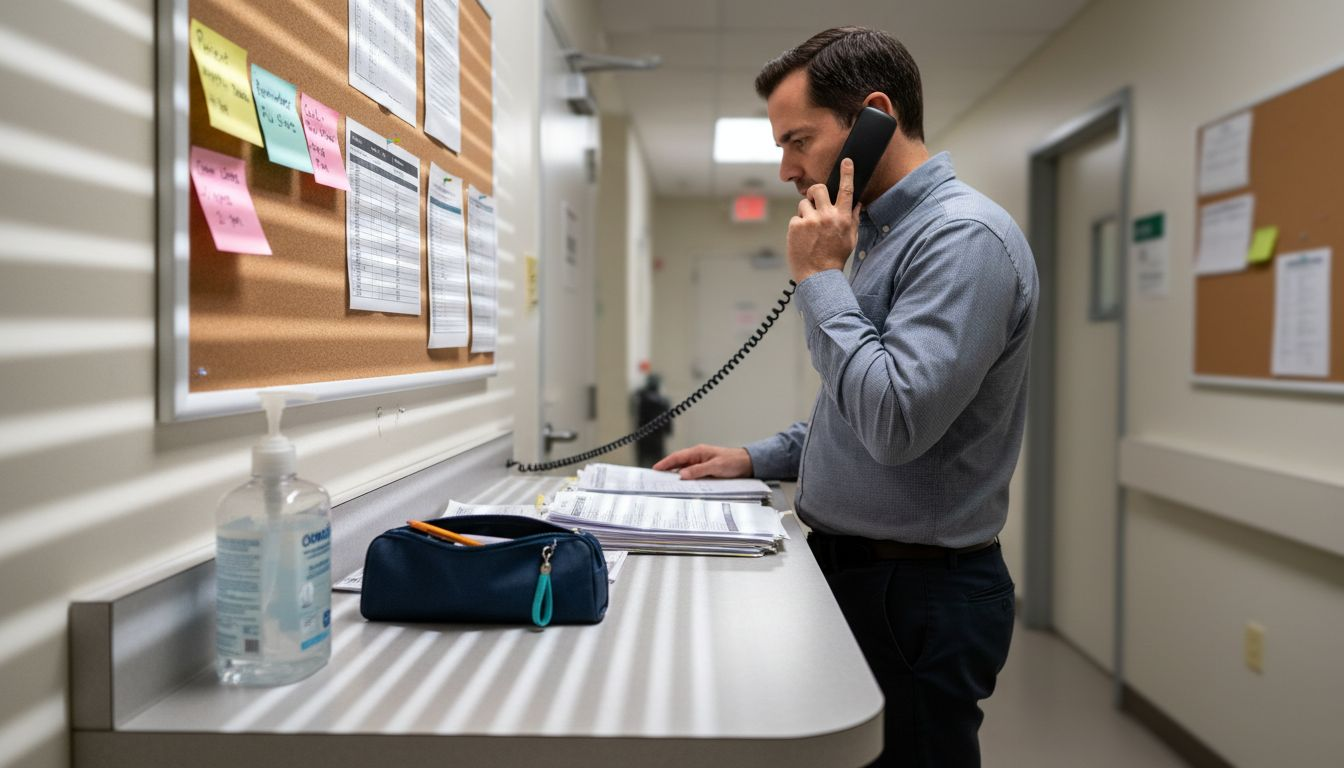
Critical components of the coordinator’s role include barrier identification, patient advocacy, and proactive problem-solving. This involves identifying potential obstacles to patient care, developing strategic interventions, and creating supportive mechanisms that address both medical and social determinants of health. Coordinators must maintain a holistic perspective, understanding that effective care extends beyond medical treatments to encompass emotional support, resource navigation, and personalized guidance through complex healthcare systems.
Pro tip: Implement a digital tracking system that centralizes patient information, communication logs, and care plan updates to streamline workflow efficiency and reduce communication gaps.
Qualification Requirements and Legal Compliance
Home care coordinators must navigate a complex landscape of professional qualifications and stringent legal requirements that demand extensive education, specialized training, and deep understanding of healthcare regulations. Resident Care Coordinators typically require undergraduate and graduate degrees in healthcare administration, emphasizing the critical importance of advanced academic preparation for this multifaceted role. These professionals must demonstrate comprehensive knowledge of healthcare systems, patient management protocols, and intricate legal frameworks governing patient care.
Legal compliance represents a fundamental aspect of home care coordination, requiring meticulous attention to local, state, and federal healthcare regulations. Coordinators must maintain precise documentation, ensure adherence to privacy laws like HIPAA, and implement robust compliance mechanisms that protect patient rights and organizational integrity. Personal Care Agreements require careful documentation to prevent potential legal complications, particularly concerning Medicaid eligibility and compensation structures for caregiving services.
Beyond formal educational requirements, successful home care coordinators must possess a sophisticated skill set that combines clinical knowledge, administrative expertise, and exceptional interpersonal capabilities. Key qualifications include professional certifications in care management, demonstrated experience in healthcare leadership, and proven ability to navigate complex interdisciplinary healthcare environments. Proficiency in electronic health record systems, understanding of healthcare billing processes, and strong communication skills are essential for effectively managing patient care and meeting rigorous legal and professional standards.
Pro tip: Develop a comprehensive professional development plan that includes regular compliance training, certification renewals, and continuous learning to stay current with evolving healthcare regulations and best practices.
Leveraging Technology for Efficiency
Technology has become a transformative force in home care coordination, enabling unprecedented levels of patient care and operational efficiency. Digital tools support patient-centered care coordination by integrating complex medical, social, developmental, and financial management systems. These technological platforms create seamless communication channels that connect patients, healthcare providers, and support networks with remarkable precision and speed.
Artificial Intelligence (AI) represents a groundbreaking advancement in healthcare technology, offering sophisticated capabilities for optimizing patient care workflows. AI enhances care management through intelligent data exchange and personalized intervention strategies. By analyzing patient-reported outcomes and supporting provider workflows, AI technologies can predict potential health risks, recommend proactive interventions, and streamline administrative processes that traditionally consumed significant time and resources.
Modern home care coordination technologies encompass a wide range of digital solutions designed to improve patient outcomes and operational efficiency. These include comprehensive electronic health record systems, telehealth platforms, real-time communication tools, predictive analytics software, and integrated care management applications. Such technologies enable home care coordinators to monitor patient progress remotely, track medication adherence, facilitate virtual consultations, and create dynamic, responsive care plans that adapt to changing patient needs with unprecedented agility and precision.
Below is a summary highlighting technology tools that elevate home care coordination efficiency:
| Technology Type | Main Benefit | Example Application |
|---|---|---|
| Electronic Health Records | Centralizes medical information | Patient treatment history |
| Telehealth Platforms | Enables remote consultations | Virtual doctor appointments |
| Predictive Analytics | Anticipates health risks | Early intervention alerts |
| Care Management Software | Streamlines care plan updates | Coordinated care documentation |
Pro tip: Implement a comprehensive technology assessment framework that regularly evaluates digital tools for interoperability, user-friendliness, and potential impact on patient care outcomes.
Mitigating Risks and Common Challenges
Home care coordination involves navigating a complex landscape of potential risks and challenges that require strategic anticipation and proactive management. Home healthcare workers face significant occupational challenges including patient non-compliance, limited resource availability, and complex communication dynamics in decentralized care environments. Successful coordinators must develop comprehensive risk mitigation strategies that address both patient care quality and professional safety.
Key challenges in home care coordination include maintaining consistent patient engagement, managing medical complexity across diverse home environments, and ensuring comprehensive communication between multiple healthcare stakeholders. These challenges are compounded by potential risks such as medication management errors, inadequate emergency response protocols, and difficulties in monitoring patient progress outside traditional clinical settings. Home care coordinators must develop sophisticated assessment skills, leverage technology for remote monitoring, and create adaptive care plans that can respond quickly to changing patient conditions.
Occupational safety represents another critical dimension of risk management in home care coordination. Healthcare professionals must be prepared for potential workplace violence risks, unpredictable home environments, and the unique psychological challenges of providing personalized care in private residential settings. Comprehensive training programs, robust communication protocols, and strategic safety planning are essential to protecting both patient and provider well-being while maintaining high-quality care delivery.
Pro tip: Develop a comprehensive risk assessment template that systematically evaluates patient environments, potential safety challenges, and communication protocols before initiating home care services.
Transform Your Home Care Coordination with VectorCare
The article highlights the complex challenges home care coordinators face such as managing patient logistics, coordinating multidisciplinary teams, and ensuring seamless communication. These pain points can lead to delays, higher costs, and fragmented patient outcomes. VectorCare’s innovative platform addresses these exact hurdles by providing an integrated, AI-driven solution that automates scheduling, enhances vendor management, and delivers real-time updates to keep all stakeholders in sync.
Experience clear benefits like
- Optimized patient transportation and home health service scheduling
- Streamlined communication across healthcare providers and payers
- Reduced administrative burdens that drain valuable time and resources
Ready to elevate your patient care coordination and minimize risk? Discover how VectorCare’s intuitive digital platform can empower your team to deliver smarter, faster, and more compassionate home care support. Visit VectorCare now and take the first step toward transforming your healthcare logistics for better patient outcomes.
Frequently Asked Questions
What are the primary responsibilities of a home care coordinator?
Home care coordinators are responsible for conducting patient assessments, developing personalized care plans, managing communication between healthcare providers, scheduling appointments, tracking patient progress, and advocating for patients’ healthcare needs.
How do home care coordination models improve patient outcomes?
Home care coordination models, such as the Patient-Centered Medical Home and Case Management Model, focus on personalized care and multidisciplinary support, leading to improved health outcomes by addressing patients’ comprehensive medical and social needs.
What qualifications are necessary to become a home care coordinator?
Home care coordinators typically require educational backgrounds in healthcare administration, along with certifications in care management, knowledge of healthcare regulations, and strong interpersonal skills to effectively navigate complex healthcare systems.
How can technology enhance the efficiency of home care coordination?
Technology improves home care coordination by integrating patient information through electronic health records, facilitating remote consultations via telehealth platforms, and utilizing predictive analytics for early intervention, streamlining communication, and enhancing patient care management.