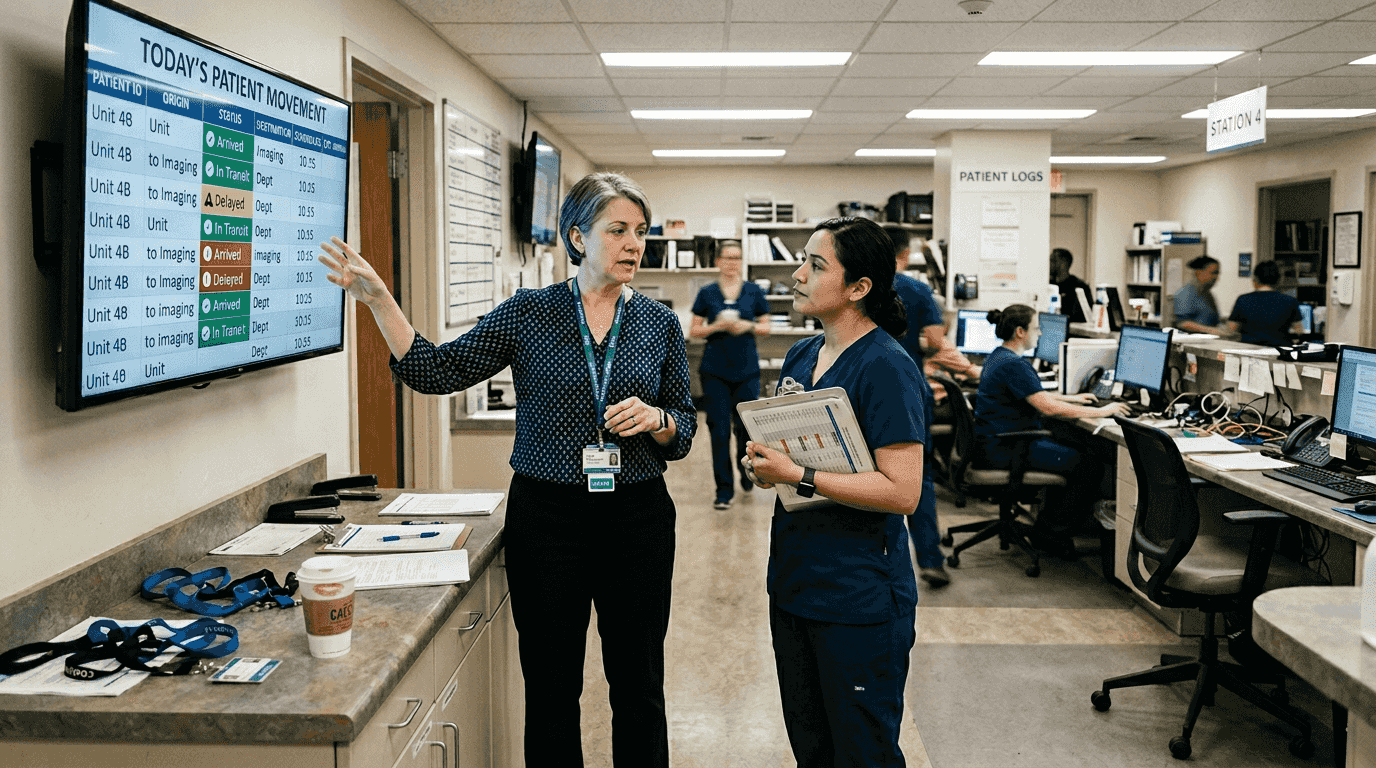
7 Key Healthcare Transportation Trends 2025 for Logistics Managers

Managing patient transportation logistics can quickly become overwhelming when your team juggles changing schedules, urgent requests, and multiple vendors. Miscommunication and outdated tracking often lead to delays and frustrated patients. The pressure grows when safety, compliance, and personalized patient needs are at stake.
You need solutions that give you more control and clarity at every step. The good news? Advances in real-time tracking, AI-powered dispatching, and continuous data streaming are creating smarter systems that work for you. These practical strategies will help you simplify daily operations, optimize scheduling, and safeguard patient information without sacrificing efficiency.
Get ready to discover actionable insights designed to transform your transportation management. Each tip will show you how to harness technology, improve collaboration, and turn your complex workflow into a smooth, reliable process for patients and staff alike.
Table of Contents
- 1. Embracing Real-Time Transportation Tracking
- 2. Leveraging AI for Smarter Dispatching
- 3. Optimizing Scheduling for Patient Needs
- 4. Integrating Seamless Vendor Management
- 5. Improving Compliance and Data Security
- 6. Automating Communication and Status Updates
- 7. Utilizing Data Insights to Drive Efficiency
Quick Summary
| Key Message | Explanation |
|---|---|
| 1. Real-Time Tracking Enhances Efficiency | Continuous visibility of patient transports reduces delays and improves coordination with receiving facilities, leading to better patient experiences. |
| 2. AI Improves Dispatch Decisions | AI dispatch systems analyze multiple factors to optimize transport assignments automatically, reducing time and improving operational efficiency. |
| 3. Patient-Centered Scheduling Increases Satisfaction | Understanding individual patient needs allows for flexible scheduling, improving attendance rates and enhancing overall patient experience. |
| 4. Seamless Vendor Integration Streamlines Operations | Coordinated communication with vendors reduces delays and errors, creating a more efficient transportation ecosystem in healthcare. |
| 5. Automated Communication Saves Time | Automation of updates ensures consistent, timely messaging to patients and facilities, eliminating bottlenecks in communication and improving operational capacity. |
1. Embracing Real-Time Transportation Tracking
Real-time transportation tracking represents a fundamental shift in how you manage patient logistics. Instead of receiving updates in batches or waiting for manual check-ins, you gain continuous visibility into every vehicle, every patient, and every transport in motion. This capability transforms your operational control from reactive to proactive.
The core idea is simple but powerful: you need to know exactly where your patient transports are at any moment. Real-time visibility throughout supply chains means accurate information about shipment location, time, and origin across all transport modes. In healthcare logistics, this translates directly to reduced delays, better coordination with receiving facilities, and eliminated last-minute scrambling when a transport runs behind schedule.
What makes real-time tracking essential for your role is the human element. A patient waiting for transport to dialysis, physical therapy, or a specialist appointment needs reliable timing. Your staff needs to communicate confidently with patients about arrival windows. Receiving departments need adequate notice to prepare. When you lack real-time data, you default to estimates and hope, which inevitably leads to patient frustration and operational inefficiency.
Real-time data streaming technologies enable continuous monitoring of healthcare transportation data to improve responsiveness and operational efficiency. This means your dispatching team can identify problems instantly. A vehicle delayed by traffic? You see it immediately and can reroute or notify the receiving facility. A driver taking an unplanned detour? You catch it in seconds rather than discovering it after the fact. Alert systems integrated into your platform flag issues before they cascade into missed appointments or patient safety concerns.
Implementing real-time tracking requires infrastructure that captures location data continuously and presents it through an accessible interface. Your team needs visibility dashboards showing active transports, estimated arrival times, and any deviations from planned routes. This doesn’t mean overwhelming your staff with unnecessary alerts. Instead, intelligent alerting systems notify you only when something matters: significant delays, route deviations, or scheduled appointments at risk.
The practical benefit extends beyond day-to-day operations. Real-time tracking data accumulates into valuable insights about your transportation patterns. You can identify which routes consistently run late, which vehicles need maintenance attention, which time slots genuinely work for your patient population. This intelligence allows you to optimize your scheduling, improve resource allocation, and ultimately reduce costs while improving patient satisfaction.
Consider a scenario where you manage transports across multiple facilities in a region. Without real-time tracking, coordinating transfers between hospitals or connecting patients to home health services becomes a coordination nightmare. With it, you orchestrate complex logistical chains with confidence, knowing exactly where each patient is and when they’ll arrive at their next destination.
Pro tip: Start with tracking your highest-volume or longest-distance routes first, then expand system wide once your team builds confidence with the technology and understands how to act on real-time alerts effectively.
2. Leveraging AI for Smarter Dispatching
AI powered dispatching represents one of the most impactful operational shifts you can make in healthcare transportation. Rather than relying on manual routing decisions or basic algorithms, artificial intelligence systems analyze countless variables simultaneously to optimize every dispatch decision in real time.
Traditional dispatching relies on human judgment, experience, and rules of thumb. A dispatcher receives a transport request and mentally considers available vehicles, driver locations, traffic conditions, and patient needs before making an assignment. This approach works reasonably well for simple scenarios, but it crumbles under complexity. When you manage dozens of concurrent transports across a region, juggling multiple priorities and constraints, human dispatchers inevitably make suboptimal decisions simply because the cognitive load exceeds human capacity.
AI solves this by processing information at machine speed and scale. AI transforms logistics by solving vehicle routing challenges and adapting to real time conditions through advanced operations research models. In your healthcare context, this means AI evaluates not just which vehicle is closest to a pickup location, but which assignment minimizes total system delay, reduces fuel costs, respects driver regulations, maintains appointment windows across multiple destinations, and accounts for patient specific requirements like wheelchair accessibility or specialized medical equipment.
The practical benefit becomes immediately obvious. When AI handles dispatching, your team wastes less time on manual optimization. A driver receives a pickup and destination through their app with turn by turn routing. A patient gets accurate arrival time estimates. A receiving facility receives advance notification of incoming transports. All of this happens automatically, freeing your dispatchers to handle exceptions and manage the human elements that still require personal attention.
What makes AI dispatching particularly powerful in healthcare is its ability to learn and adapt. Predictive and prescriptive models optimize vehicle routing and network design by analyzing historical patterns and real time data. An AI system trained on months of your transportation data understands your seasonal variations, your peak demand periods, which routes consistently face delays, and where bottlenecks occur. It doesn’t just react to today’s conditions, it anticipates tomorrow’s problems and suggests preventive adjustments to your fleet deployment.
Consider a practical scenario. It’s 3 PM on a Wednesday afternoon. Your system receives six new transport requests from different facilities across your service area. An AI dispatcher instantly evaluates all possible combinations of assignments, factoring in current vehicle locations, driver availability, patient requirements, traffic predictions, and facility receiving capacity. Within seconds, it recommends an assignment that reduces total drive time by 23 percent compared to manual dispatch while ensuring every patient reaches their destination within the required window. Your dispatchers approve the recommendations, and transports move forward optimized automatically.
Implementing AI dispatching does require initial effort. Your system needs accurate data about vehicle capabilities, driver credentials, patient requirements, and traffic patterns. But that investment pays immediate dividends through reduced overtime, fewer missed appointments, improved driver satisfaction from better routing, and measurable cost savings. Many organizations see 15 to 25 percent efficiency gains within the first few months of AI assisted dispatching.
The technology also handles complexity that would overwhelm manual systems. Multi leg transports where one patient visits three different facilities. Coordinating pickups from nursing homes with deliveries to hospitals. Managing specialty vehicle requirements. Balancing between shortest routes and driver fatigue regulations. AI juggles all these constraints simultaneously and continuously optimizes as conditions change throughout the day.
Pro tip: Begin by measuring your current dispatch efficiency baseline including average response times, appointment adherence rates, and cost per transport, then track these same metrics after implementing AI to quantify your improvement and build internal support for expanded adoption.
3. Optimizing Scheduling for Patient Needs
Effective scheduling goes far beyond simply filling empty time slots. Patient centered scheduling means designing your transportation system around the realities of patient life, medical necessity, and operational efficiency simultaneously.
The challenge you face as a logistics manager is that patients are not interchangeable units. A dialysis patient needs consistent three times weekly transportation on specific days. A post surgery patient might need flexible scheduling for unexpected complications or early discharge. A patient with cognitive impairment needs predictable routines. An elderly patient may have limited mobility windows during the day when they feel most capable. Traditional rigid scheduling treats all transports identically, which creates friction and patient dissatisfaction.
Patient centered scheduling begins with understanding that one size does not fit all. Different patient populations have different constraints and preferences. Working with your clinical teams to understand these nuances transforms your scheduling from a logistics problem into a care coordination tool. A patient on multiple weekly appointments benefits from bundling them into single day trips when medically appropriate. A homebound patient with mobility limitations needs morning scheduling when they have energy. A working patient needs evening or weekend options.
Adaptive scheduling with continuous data streaming enables dynamic optimization that responds to individual patient needs and real time changes. This approach means your system doesn’t lock patients into rigid slots months in advance. Instead, you maintain flexibility to accommodate urgent needs, medical changes, and genuine patient preferences while still maintaining operational efficiency.
The practical implementation requires you to segment your patient population by transportation needs and preferences. Chronic disease patients on regular schedules form one category. Acute care patients needing urgent or semi urgent transport form another. Post discharge patients requiring temporary transport assistance form a third. Each segment benefits from different scheduling strategies. Your chronic disease patients appreciate predictable standing appointments. Your acute care patients need rapid response capability. Your post discharge patients need flexibility as their situation evolves.
Data becomes your scheduling partner. By tracking which appointments patients keep, which they miss, which times work best for different populations, you build intelligence about what scheduling actually works. A patient who consistently misses 9 AM appointments might succeed with 10 AM slots. A patient who skips transportation to a Friday afternoon appointment might attend better on Thursday morning. These patterns inform better scheduling decisions.
Consider how scheduling impacts your operational efficiency simultaneously. Clustering appointments by geography reduces driving distance. Scheduling multiple patients at the same facility during overlapping windows creates efficiency. Knowing your vehicle capacity lets you bundle compatible passengers. But all of this optimization becomes counterproductive if patients don’t actually use the transportation because the schedule doesn’t work for their lives.
The sweet spot is when you optimize for both patient needs and operational efficiency. This means using software that allows some patient choice within parameters you set. A patient might select from three available weekly time windows rather than getting assigned one slot. You maintain geographic clustering and vehicle efficiency. The patient feels agency over their transportation. Attendance improves. Your vehicles run fuller. Everyone benefits.
Another critical element is addressing the communication gap that often exists between scheduling and reality. A transportation department schedules pickups based on appointment times. But if the clinic runs 30 minutes behind, the patient still waits. If the patient is not ready at the scheduled pickup time because they misunderstood, the transport gets disrupted. Modern scheduling systems address this with two way patient communication, appointment confirmations, real time updates if things change, and flexibility to adjust without penalty.
Pro tip: Implement a patient feedback mechanism where patients can rate their scheduled time windows and provide comments about what works or doesn’t, then review this feedback monthly to continuously refine your scheduling patterns toward better alignment with actual patient needs.
4. Integrating Seamless Vendor Management
Seamless vendor management transforms how you coordinate transportation with external partners. Instead of managing vendors through fragmented systems, emails, and phone calls, integration means all your vendors operate within a connected ecosystem where information flows automatically and expectations align perfectly.
The reality of healthcare transportation is that you rarely operate alone. You work with transport companies, home health agencies, durable medical equipment providers, contracted specialists, and facility networks. Each of these vendors has their own operations, their own schedules, their own systems. When these operate in silos, communication breaks down. A vendor doesn’t know about schedule changes. A facility doesn’t receive advance notice of incoming transports. A transport company operates based on outdated information. These disconnects create delays, missed appointments, and frustrated patients.
Seamless vendor integration means your partners access the same real time information you do. When you schedule a transport, your contracted vendors see it immediately in their systems. When a transport is delayed, they receive automatic notifications. When patient information changes, they know about it without you having to call them individually. When a vendor completes a transport, that confirmation flows back to your system automatically.
Coordinated vendor collaboration and integration mitigates disruptions and optimizes operations by ensuring all stakeholders work from the same information and adapt to changes simultaneously. This coordinated approach dramatically reduces the friction that typically exists in healthcare logistics where multiple independent parties need to function as one system.
The practical foundation for seamless integration is standardized communication. When every vendor uses different formats, systems, and protocols, integration becomes nearly impossible. Standardized communication and asset tracking enable smooth coordination across the healthcare supply chain, ensuring vendors operate with compatible systems and shared visibility. This means adopting standards that your vendors also support, creating a common language across your entire transportation network.
Consider what seamless vendor management looks like in action. You work with three contracted transport companies. Rather than calling each one separately to update information, you post the update once in your central platform. All three vendors see it immediately. A patient calls to reschedule. You change it in your system. The transport vendor sees the change within seconds. The facility sees the updated arrival time and prepares accordingly. No one makes special calls. No one misses information. Everyone adapts to the reality automatically.
This integration also creates accountability and transparency that benefits everyone. Vendors see the same performance metrics you do. They understand exactly how you measure their performance because everyone uses the same definitions and data sources. A vendor knows precisely what on time delivery means in your system, what acceptable no shows look like, what communication standards you expect. There is no ambiguity. Performance becomes data driven rather than opinion based.
Implementing seamless vendor management requires you to establish clear technical standards first. What systems can vendors connect to? What data formats do you use? What communication protocols are required? What security standards must they meet? These technical specifications need to be clearly documented and feasible for your vendors to implement. You cannot demand integration from vendors without providing them with the specifications and support they need.
Relationship management becomes easier with integration. Rather than vendors being mysterious black boxes, you have transparency into their operations. You see which transports they typically handle, how they perform, where they struggle. You can proactively work with underperforming vendors to improve rather than discovering problems after patients are affected. You can reward high performing vendors with preferred status. You can make better vendor selection decisions based on actual performance data rather than conversations and reputation.
The business case for seamless vendor integration is compelling. Communication costs drop dramatically when information flows automatically. Errors decrease when everyone works from the same accurate data. Response times improve when updates reach vendors instantly. Patient satisfaction improves when transports run on schedule and facilities receive reliable information. Your vendors’ costs decrease too when they receive clear, timely information and don’t waste time on communication and coordination.
Pro tip: Start your vendor integration with your top three or four most critical partners where the volume justifies the investment and their systems are most compatible, then expand to additional vendors once you have proven the integration model works and both you and your vendors understand the benefits.
5. Improving Compliance and Data Security
Compliance and data security are not obstacles to efficient transportation logistics. They are foundational requirements that protect your organization, your patients, and your operational credibility. In healthcare transportation, you handle sensitive patient information daily, which makes security and regulatory compliance non negotiable priorities.
The stakes of poor compliance and security are genuinely high. A data breach exposing patient information damages your reputation irreparably. Regulatory violations result in fines that impact your budget and operational capacity. Security failures can compromise patient safety if medical information gets lost or altered. Non compliance creates liability that extends beyond your immediate team to your entire organization. This is why forward thinking logistics managers treat compliance and security as operational imperatives, not administrative burdens.
Healthcare transportation operates under multiple regulatory frameworks. HIPAA protects patient privacy and medical information. State regulations govern transportation of specific patient populations. Medicare and Medicaid have their own compliance requirements. ADA regulations affect accessibility of transportation services. Each of these frameworks establishes rules you must follow. When you transport a patient, you are accountable for compliance with all applicable regulations simultaneously.
Data security in healthcare transportation means protecting patient information throughout its lifecycle. From the moment a patient schedules transport through completion and billing, data moves through multiple systems and touchpoints. Each of these touchpoints represents a potential security vulnerability. Secure data streaming and encrypted communication protocols ensure data privacy and regulatory compliance in healthcare logistics systems. This means your transportation platform must use encryption, secure authentication, access controls, and audit logging to protect information at every stage.
The practical reality is that your transportation system likely contains some of the most sensitive information in your healthcare organization. Patient names, addresses, phone numbers, medical conditions, medication lists, appointment locations, insurance information. All of this data could be valuable to bad actors. All of it is protected under healthcare privacy laws. Your responsibility is ensuring this information is secured properly.
Implementing compliance and security requires a multi layered approach. First, understand your specific compliance obligations. What regulations apply to your transportation operations? What specific requirements does each regulation impose? Conduct a compliance audit to identify gaps between your current systems and regulatory requirements. Second, implement technical security controls. Encrypt data in transit and at rest. Use strong authentication protocols. Implement access controls so only authorized personnel can view sensitive information. Maintain audit logs so you can trace who accessed what information and when.
Third, establish operational security practices. Train your team on data handling requirements. Create clear policies about what constitutes appropriate access and use of patient information. Implement regular security training so your staff understands their role in protecting data. Establish incident response procedures so if a security issue does occur, you respond quickly and appropriately.
Fourth, work with your technology partners to ensure your systems meet compliance requirements. Robust governance and privacy frameworks ensure secure and compliant transportation of sensitive patient information. Your transportation platform vendor should provide evidence that their systems comply with applicable regulations. They should have data security certifications, undergo regular security audits, and maintain compliance documentation. Ask them detailed questions about their security practices. Don’t accept vague assurances. Require documentation.
Compliance also extends to documentation and reporting. Regulatory agencies expect you to maintain records demonstrating compliance. You need documentation of security measures, staff training, incident responses, and compliance audits. When regulators conduct compliance reviews, they want evidence. Develop systems to track and document your compliance activities continuously rather than scrambling to gather records during an audit.
A critical aspect many logistics managers overlook is vendor compliance. If you work with contracted transport companies, they also handle patient information and must comply with the same regulations you do. Your contracts should require them to meet specified security standards. You should audit their compliance periodically. If a vendor has a data breach, that breach reflects on your organization too. You cannot outsource compliance responsibility. You remain accountable for ensuring all parties handling patient information do so securely and compliantly.
The business case for robust compliance and security is strong beyond just regulatory obligation. Organizations with strong security practices experience fewer incidents and associated costs. Staff confidence is higher when they know systems are secure. Patient trust is stronger. Audits go more smoothly when compliance is built into operations rather than added reactively. You actually reduce operational friction by making compliance seamless rather than viewing it as a constraint.
Pro tip: Conduct a compliance and security assessment with your IT and compliance teams today to identify your specific obligations and current gaps, then create a prioritized implementation plan with specific timelines and resource requirements so compliance improvements happen systematically rather than in crisis response mode.
6. Automating Communication and Status Updates
Automated communication is the difference between managing dozens of active transports and managing hundreds. When your team manually sends status updates, coordinates with facilities, and communicates with patients about delays, you create bottlenecks that limit your operational capacity. Automation removes these bottlenecks by handling routine communication intelligently and consistently.
Think about what happens today when a transport runs late. Your dispatcher realizes the delay, then manually calls the patient to notify them, calls the facility to adjust expectations, possibly calls the driver to confirm the new timeline. Each call takes time. Some calls go unanswered and require followup. Information gets communicated inconsistently. A patient hears one timeline while a facility hears another. When automated communication handles this instead, the updates happen instantly and consistently across all parties simultaneously.
Intelligent automation enables real time notifications and seamless information flow between healthcare providers, transportation managers, and patients. This means your system automatically detects when a transport deviates from its planned timeline and immediately notifies all relevant parties. A patient waiting for pickup gets a message about the updated arrival window. The facility receives notification so they can adjust staff schedules. Your dispatchers see the alert and can take corrective action if needed. All of this happens through automated workflows without anyone typing messages or making phone calls.
Automated communication also ensures consistency that manual processes cannot match. Every patient receives status updates in the same format at the same intervals. Every facility gets the information they need presented consistently. Your drivers receive instructions clearly without ambiguity. This consistency reduces misunderstandings, mistakes, and the back and forth clarification that consumes so much time in manual systems.
The practical implementation starts with identifying your routine communication needs. What messages do you send repeatedly? Appointment confirmations. Pickup time windows. Arrival notifications. Delay alerts. Completion confirmations. Billing notifications. Each of these is a candidate for automation. When you automate these, your team’s capacity to handle exceptions and complex situations increases dramatically.
Consider the impact on your dispatch team specifically. Without automation, a dispatcher managing 40 active transports spends significant time communicating status to patients and facilities. With automation, that same dispatcher can manage 60 or 80 transports because routine communication is handled by the system. This is pure operational leverage. Your team size does not need to grow proportionally with your transport volume.
Standardized data formats and electronic messaging facilitate automated tracking status updates that improve transparency and reduce manual processes. This technical approach means your system uses industry standard formats so different systems can communicate automatically without custom development. A transport company’s system can automatically exchange updates with your system. A facility’s system can automatically receive incoming transport notifications. Your patient communication system can automatically send alerts. All these integrations work through standardized protocols rather than requiring manual intervention or custom interfaces.
Another critical benefit is that automated communication reduces errors. Manual communication relies on someone remembering to send a message, typing it correctly, sending it to the right recipient, at the right time. Automation handles all of this according to predefined rules that never forget, never misspell, never miss a recipient. A patient always receives their appointment confirmation. A facility always gets notified of incoming transports. A driver always receives their pickup instructions. The reliability improves dramatically.
Automated communication also creates better data trails. When communication is automated, every message is logged in your system. You have records of what was communicated to whom at what time. This creates accountability and provides documentation if questions arise later. A patient disputes what time they were told to be ready. You have the automated message showing exactly what was communicated and when. A facility questions whether they received advance notice. You have documentation proving notification was sent automatically.
The patient experience improves too. Rather than waiting for a phone call or wondering about their transport status, patients receive automatic notifications at key milestones. They know their pickup is scheduled for a specific time window. They receive a reminder the day before. They get notified when the driver is 15 minutes away. They receive confirmation that the transport completed. This transparency reduces anxiety and improves satisfaction.
Implementing automation requires you to think through your communication workflows carefully. What should patients know and when? What notifications do facilities need? What alerts matter to your dispatch team? Create clear rules about what triggers what communication. Then configure your system to execute those rules automatically. Start with your highest volume, most routine communications first. Once those are running smoothly, expand to more complex scenarios.
Pro tip: Begin automation with your most time consuming, highest volume communication type like appointment confirmations or pickup window notifications, measure the time your team saves, then use that data to justify expanding automation to additional communication workflows.
7. Utilizing Data Insights to Drive Efficiency
Data is the hidden asset in your transportation operations. Every transport generates data about timing, distance, costs, patient outcomes, and operational patterns. Most logistics managers never look at this data systematically. Those who do unlock efficiency gains that transform their operations.
The challenge is that transportation data by itself is just numbers. A spreadsheet showing pickup times, travel distances, and costs tells you what happened, but not why it happened or what to do differently. Data insights require analysis that transforms raw operational data into actionable intelligence. This is where the real value lives.
Consider a simple example. Your system shows that morning transports to a specific facility average 23 minutes travel time while afternoon transports to the same facility average 31 minutes. Raw data shows the difference. Insight requires asking why. Traffic patterns? Driver behavior? Route variations? Vehicle types? Once you understand the why, you can take action. Perhaps morning traffic justifies a different route for afternoon runs. Perhaps a vehicle swap improves consistency. Perhaps driver training addresses inconsistency. The data revealed the problem, but insight revealed the solution.
Data analytics and predictive models optimize routing and enable forecasting by leveraging transport data to improve resource allocation and operational efficiency. This means your data is not just a record of what happened. It becomes a tool for predicting what will happen and planning accordingly. If your data shows demand for transports spikes 40 percent on Mondays, you can staff and schedule vehicles accordingly rather than being caught short every Monday morning.
Predictive intelligence generated from your historical data helps you forecast future needs. How many transports will you need next month? Which times of day create bottlenecks? Which patient populations have specific transportation patterns? Which routes consistently underperform? By analyzing historical patterns, you can predict these dynamics and plan proactively. This is dramatically better than reacting to problems after they occur.
Prescriptive intelligence goes further by recommending specific actions to address forecasted situations. Your data predicts that dialysis patients on Tuesday and Thursday mornings will create scheduling conflicts. Rather than just knowing this conflict exists, prescriptive analytics suggests solutions. Perhaps adjusting pickup windows by 15 minutes solves the conflict. Perhaps adding one vehicle on those days handles the volume. Perhaps combining certain patients into shared transports improves efficiency. The system analyzes possible solutions and recommends the best one based on your priorities.
Machine learning methodologies generate actionable insights that improve logistics efficiency by analyzing complex patterns in operational data that humans cannot perceive manually. A human dispatcher might notice that morning rush hour affects some routes more than others. Machine learning identifies that traffic impacts do not follow simple patterns but vary by day of week, weather, construction projects, and special events. It learns these nuances and recommends routing decisions that account for them automatically.
The practical implementation starts with deciding what questions your data should answer. What are your biggest operational challenges? Where do delays occur most frequently? Which transports have the highest no show rates? Where do cost overruns happen? These questions guide what data you collect and how you analyze it. Once you know what you want to learn, you can design reporting and analysis to answer those questions systematically.
Consider cost as an example. Your transportation costs per patient vary significantly. Some transports cost 40 dollars while others cost 120 dollars for similar distances. Why the variation? Data analysis might reveal that certain vehicles are less fuel efficient. Certain routes consistently take longer than expected. Certain drivers have different cost profiles. Some facilities require longer wait times that increase costs. Once you understand these variations, you can act. Replace inefficient vehicles. Optimize problematic routes. Provide coaching to high cost drivers. Reduce wait times through better coordination. Each insight-driven action reduces costs.
Another powerful application is patient outcome analysis. Which transportation arrangements lead to better patient outcomes? Which scheduling patterns minimize no shows? Which communication methods improve compliance? By correlating transportation patterns with patient outcomes, you identify what works. Then you replicate what works and eliminate what does not. Over time, your transportation system becomes increasingly effective at supporting patient care rather than just moving patients around.
Your data also tells you about efficiency trends. Are you improving or declining? How do your metrics compare to benchmarks in similar organizations? Where are your biggest opportunities for improvement? Systematic analysis answers these questions and guides resource allocation. You invest improvement efforts where they have the highest impact.
Implementing data driven operations requires discipline. You need consistent data collection. Your system should capture relevant metrics automatically rather than requiring manual logging. You need regular analysis. Monthly or quarterly reviews identify patterns and trends. You need action. Insights are worthless if you do not act on them. Create a process where analysis leads to decisions and decisions lead to implementation.
Pro tip: Start by selecting one specific operational problem you want to solve with data, define the metrics that measure that problem, collect that data consistently for 90 days, then analyze patterns and implement changes based on what the data reveals.
Below is a comprehensive table summarizing the key concepts, strategies, and suggestions for optimizing healthcare transportation logistics as discussed in the article.
| Main Topic | Key Strategies | Benefits/Impacts |
|---|---|---|
| Real-Time Transportation Tracking | Implement tracking systems for constant vehicle and patient monitoring. Use dashboards for operational visibility and actionable alerts. | Reduced delays, proactive incident management, improved patient and staff communication, enhanced scheduling accuracy. |
| AI-Powered Dispatching | Employ artificial intelligence for transport assignments considering numerous variables in real time. Utilize predictive and prescriptive analytics for evaluations and decisions. | Enhanced optimization of dispatching, reduced costs, adherence to schedules, improved patient satisfaction. |
| Scheduling for Patient Needs | Develop flexible scheduling systems based on patient preferences and medical necessities while considering operational efficiency. Implement dynamic scheduling solutions supported by patient data insights. | Increased patient satisfaction, reduction in missed appointments, optimized use of resources and transportation assets. |
| Vendor Integration | Centralize vendor communication via connected platforms with uniform standards for data exchange and logistics management. Adopt systems that provide transparency and accountability among partners. | Enhanced collaboration, decreased communication overhead, more accurate updates and deliveries, streamlined operations. |
| Compliance and Data Security | Enforce adherence to regulations such as HIPAA. Utilize secure data handling processes and regularly train staff. Conduct bi-annual reviews of security measures and partner compliance. | Protection of sensitive patient data, adherence to legal requirements, prevention of data breaches, increased organizational trust and credibility. |
| Automated Communication | Integrate intelligent automation workflows to manage patient notifications, transport schedules, and operational alerts. Provide real-time updates to all stakeholders automatically. | Consistency and speed in communication, decreased dispatcher workload, improved overall transparency, measurable enhancements in transport reliability and punctuality. |
| Data Insights Usage | Analyze transportation operation data to uncover patterns, inefficiencies, and predictive benchmarks for proactive decision-making. Develop machine learning models for adaptive operations. | Elevation in efficiency metrics, cost reduction, informed resource allocation, ability to foresee challenges and strategically address them before escalation. |
This compilation highlights practical actions and outcomes associated with each identified topic, facilitating an understanding of their contributions to efficient healthcare transportation management.
Transform Your Healthcare Transportation with VectorCare’s Advanced Platform
Managing patient transportation comes with challenges like unpredictable delays, complex scheduling, and ensuring compliance. This article highlights key trends such as real-time tracking, AI-powered dispatching, and seamless vendor management that are shaping efficient healthcare logistics. If your goal is to reduce operational costs, minimize patient wait times, and improve coordination between providers and facilities, adopting a digital solution made for these demands is critical.
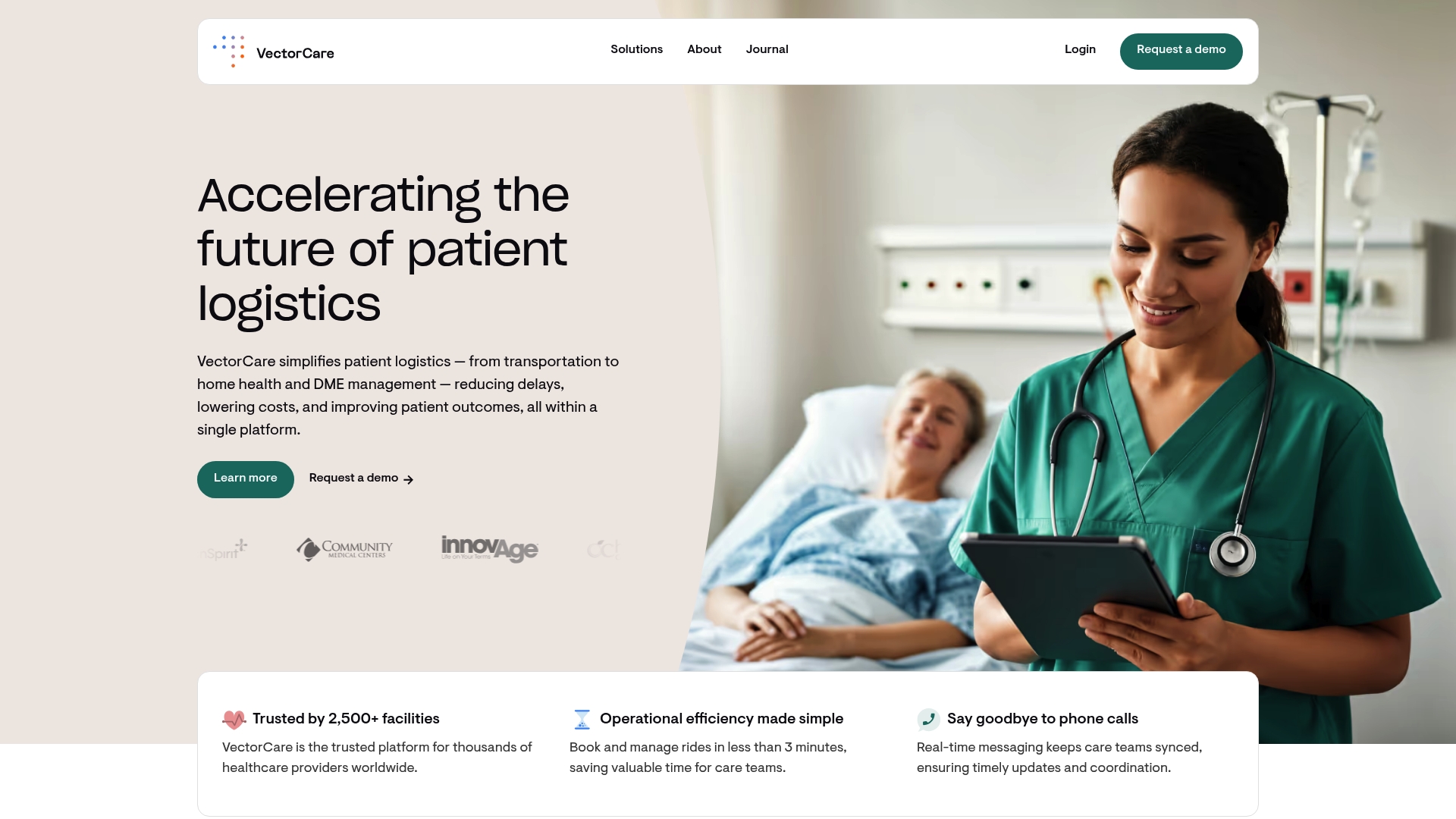
Take control of your transportation operations today with VectorCare’s comprehensive platform. Our suite of tools integrates real-time updates, AI-driven dispatching, and secure communication to streamline scheduling and vendor collaboration all while maintaining compliance and data security. Don’t wait for inefficiencies to cost you more—explore how VectorCare can help you deliver better patient experiences and measurable efficiency gains now. Learn more at https://vectorcare.com and start transforming your logistics workflow.
Frequently Asked Questions
How can real-time transportation tracking improve healthcare logistics?
Real-time transportation tracking enhances operational control by providing continuous visibility of patient transports. Implement systems that capture location data continuously to reduce delays, improve coordination, and increase patient satisfaction within 30 days.
What are the benefits of using AI for dispatching in healthcare transportation?
AI optimizes dispatching by analyzing multiple variables simultaneously, leading to improved efficiency and reduced costs. Start implementing AI solutions to increase dispatch efficiency by 15–25% within the first few months.
How can I implement patient-centered scheduling effectively?
Effective patient-centered scheduling involves understanding patient needs and preferences to create flexible transport options. Analyze appointment data to cluster transports by geography and optimize scheduling patterns, aiming for a 20% reduction in missed appointments within 60 days.
What does seamless vendor management look like in healthcare transportation?
Seamless vendor management means integrating all transportation partners into a connected ecosystem for automatic communication and coordination. Establish standardized communication protocols and begin integration with your top vendors to improve operational transparency within 30 days.
How can I ensure compliance and data security in transportation logistics?
Ensuring compliance and data security involves implementing robust security measures and familiarizing your team with regulatory obligations. Conduct a compliance assessment and establish a plan to address gaps, aiming for full compliance within the next audit cycle.
What role does automated communication play in healthcare transportation?
Automated communication significantly streamlines routine updates, ensuring timely information flow between all parties involved. Identify your most time-consuming communications and implement automation to save your team an estimated 30% of time managing transport statuses.