What Patient Transport Does for Healthcare Efficiency

Managing patient movement across busy hospital departments can quickly become a logistical puzzle for healthcare administrators and logistics managers in United States facilities. With each transfer, patient safety and continuity of care are at stake, making the choice of transport solutions more than just a matter of convenience. From transferring individuals between clinical units to coordinating non-emergency appointments, understanding the essentials of patient transport empowers teams to enhance care coordination while controlling operational costs.
Table of Contents
- Defining Patient Transport In Healthcare
- Types Of Patient Transport Services Explained
- How Patient Transport Improves Care Coordination
- Regulatory Requirements And Safety Standards
- Operational Challenges And Cost Considerations
Key Takeaways
| Point | Details |
|---|---|
| Importance of Patient Transport | Patient transport is essential in healthcare for safe and timely patient transfers, ensuring medical stability and comfort during transitions. |
| Types of Transport Services | Emergency and non-emergency medical transport serve different needs, from urgent care to routine visits, highlighting the diversity in patient mobility solutions. |
| Role in Care Coordination | Effective patient transport enhances care coordination by improving communication, minimizing treatment delays, and streamlining patient transitions across healthcare settings. |
| Operational Challenges | Healthcare institutions face various logistical challenges in patient transport that impact operational efficiency and financial performance, requiring strategic planning and management. |
Defining Patient Transport in Healthcare
Patient transport is a critical healthcare logistics function involving the safe, strategic movement of patients between medical environments. This specialized service ensures patients receive timely, secure transfers while maintaining their medical stability and comfort.
Healthcare facilities rely on patient transport for multiple essential purposes, including:
- Transferring patients between hospital departments
- Moving patients to diagnostic imaging centers
- Facilitating transfers between different medical facilities
- Supporting patient transitions during treatment sequences
- Enabling specialized medical interventions requiring patient relocation
The core objective of patient transport goes beyond simple movement. Safe patient transfer requires careful medical assessment that considers multiple critical factors such as the patient’s physical condition, mobility limitations, and specific medical requirements.
Professional patient transport involves sophisticated logistics that prioritize patient safety through:
- Selecting appropriate transportation equipment
- Evaluating individual patient medical needs
- Ensuring continuous medical monitoring during transfer
- Maintaining patient comfort and physiological stability
- Preventing potential injury during transportation
Patient transport is not merely moving a person from one location to another, but a carefully orchestrated medical intervention requiring specialized skills and protocols.
Healthcare professionals must meticulously plan each transport scenario, understanding that critically ill patients require advanced medical support during transfer. This includes preparing specialized equipment, ensuring continuous medical monitoring, and having trained personnel ready to manage potential complications.
Pro tip: Always conduct a comprehensive patient assessment before initiating any transport to identify potential risks and necessary medical interventions.
Types of Patient Transport Services Explained
Patient transport services represent a diverse and critical network of medical logistics designed to address various patient mobility needs. These services encompass multiple transportation approaches tailored to specific medical requirements and patient conditions.
The primary categories of patient transport services include:
- Emergency Medical Transportation
- Rapid response ambulances
- Advanced life support vehicle teams
- Immediate critical care transport
- Non-Emergency Medical Transportation (NEMT)
- Scheduled healthcare appointments
- Routine medical visits
- Specialized patient mobility assistance
Emergency medical transportation focuses on life-threatening scenarios, dispatching trained medical personnel equipped to stabilize and transport critically ill patients. These services operate with high-urgency protocols, ensuring rapid medical intervention during transit.
Here’s a comparison of Emergency vs. Non-Emergency Patient Transport services for quick reference:
| Aspect | Emergency Transport | Non-Emergency Transport |
|---|---|---|
| Response Speed | Immediate, rapid | Scheduled, routine |
| Personnel Training | Advanced life support staff | Basic medical or support staff |
| Equipment Level | High-tech medical gear | Accessibility aids, basic monitors |
| Patient Condition | Critically ill or unstable | Stable but mobility impaired |
| Medical Intervention | On-the-spot treatment | Minimal intervention |
| Typical Use Cases | Trauma, life-threatening emergencies | Routine appointments, therapy visits |
Non-emergency medical transportation services accommodate diverse patient mobility needs, offering specialized vehicle options such as:
- Ambulatory transport for mobile patients
- Wheelchair-accessible vehicles
- Stretcher transportation
- Specialized sedans for patients with limited mobility
Patient transport services are more than just transportation - they are mobile healthcare extensions ensuring patient safety and medical continuity.
These transportation services play a crucial role in healthcare accessibility, particularly for elderly, disabled, and chronically ill patients who require specialized mobility support. Providers meticulously equip vehicles with safety features like ramps, handrails, and medical monitoring capabilities.
Pro tip: Always verify a patient transport service’s medical training, vehicle safety standards, and specialized equipment before scheduling transportation.
How Patient Transport Improves Care Coordination
Care coordination represents a complex healthcare challenge that requires seamless communication and strategic logistics. Intelligent transportation systems play a critical role in enhancing healthcare efficiency by creating smooth patient transfer mechanisms across different medical environments.
Patient transport contributes to care coordination through several key mechanisms:
- Reducing communication gaps between medical departments
- Enabling faster patient transitions
- Supporting real-time medical information exchange
- Minimizing treatment delays
- Creating transparent patient movement tracking
Medical logistics transform care coordination by providing structured pathways for patient movement. Care coordination depends on effective patient transport strategies that connect different healthcare providers and treatment settings.
The primary benefits of improved patient transport in care coordination include:
- Streamlined referral processes
- Reduced hospitalization rates
- Enhanced treatment continuity
- Improved patient safety
- More efficient resource allocation
Effective patient transport is not just about moving patients - it’s about creating a connected healthcare ecosystem.
Healthcare providers increasingly recognize that sophisticated transport systems can bridge communication gaps, ensuring patients receive consistent, comprehensive care across multiple medical touchpoints. This approach minimizes information fragmentation and supports more holistic treatment strategies.

Pro tip: Implement digital tracking and communication protocols to enhance patient transport coordination and reduce potential information gaps.
Regulatory Requirements and Safety Standards
Patient transport safety involves a complex framework of regulatory oversight designed to protect patient well-being during medical transfers. The Commission on Accreditation of Medical Transport Systems (CAMTS) establishes comprehensive standards that govern medical transportation protocols across ground, air, and mobile integrated healthcare platforms.
Key regulatory requirements for patient transport services include:
- Staff qualification and training standards
- Vehicle equipment and maintenance protocols
- Patient identification verification processes
- Medical equipment preparation and inspection
- Emergency response and contingency planning
- Infection control and prevention measures
Safety compliance demands rigorous adherence to multiple regulatory frameworks. The Joint Commission’s National Patient Safety Goals provide critical guidelines that healthcare organizations must implement to ensure consistent patient protection during transport scenarios.
Specific safety standard requirements encompass:
- Accurate patient identification protocols
- Clear communication handoff procedures
- Medical equipment safety checks
- Staff training and credential verification
- Continuous risk management assessments
Patient transport safety is not about meeting minimum requirements, but creating a culture of comprehensive medical care.
Healthcare organizations must develop comprehensive safety management systems that integrate regulatory compliance with proactive risk mitigation strategies. This approach ensures not just legal adherence but genuine patient protection throughout transportation processes.
Pro tip: Conduct regular internal audits and staff training to maintain ongoing compliance with evolving patient transport safety standards.
Operational Challenges and Cost Considerations
Patient transport logistics represent a complex operational challenge for healthcare institutions, with significant financial and strategic implications. Inefficient patient transport services create substantial operational disruptions that can dramatically impact hospital productivity and patient care quality.
Key operational challenges in patient transport include:
- Scheduling and coordination complexity
- Staff time management
- Equipment availability and maintenance
- Interdepartmental communication gaps
- Patient flow optimization
- Resource allocation inefficiencies
Financial implications of patient transport extend beyond direct transportation costs. Poorly managed transport systems can lead to cascading inefficiencies such as:
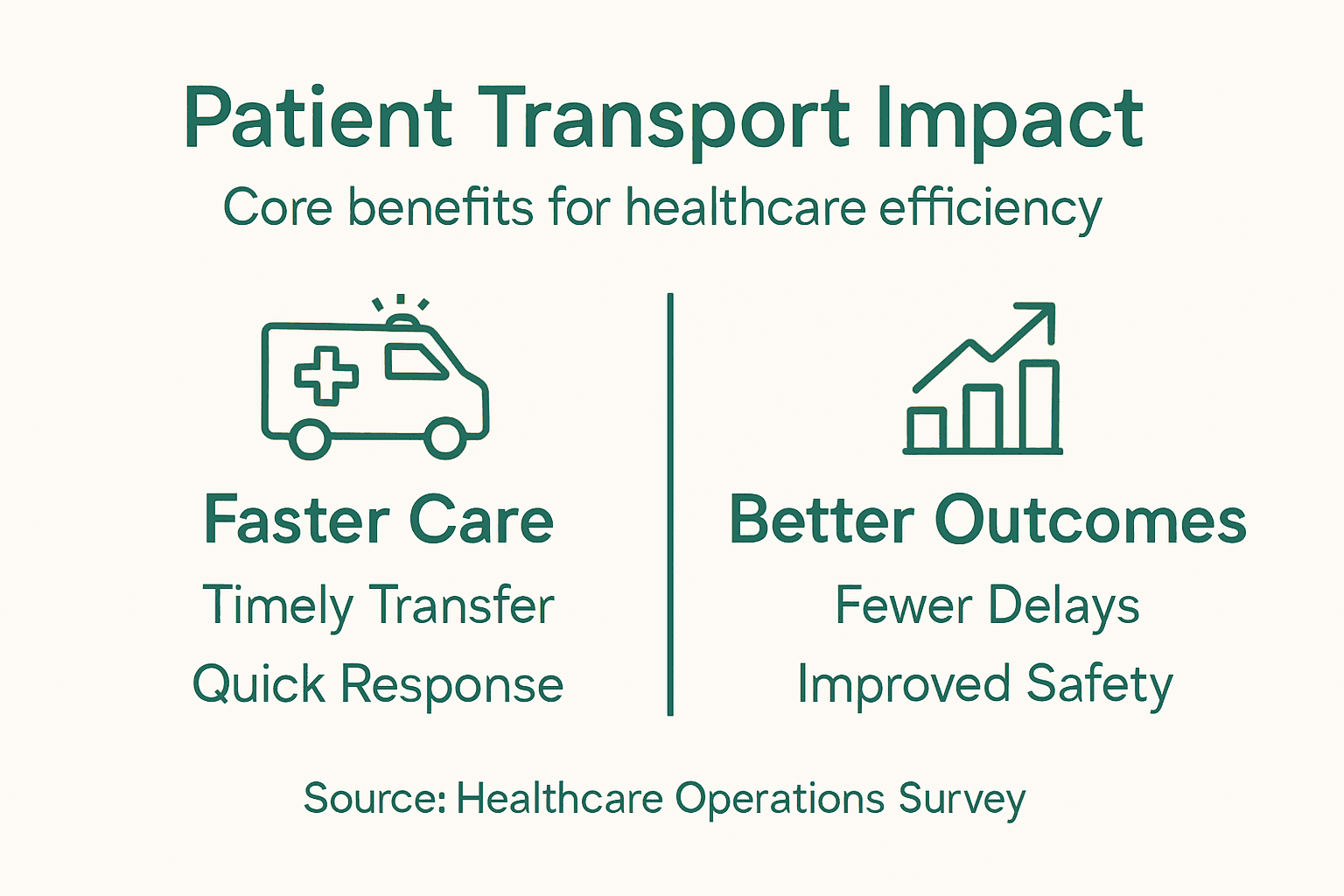
The table below summarizes key operational challenges in patient transport and their potential impacts:
| Challenge | Impact on Operations | Patient Outcome Effect |
|---|---|---|
| Poor Scheduling | Workflow bottlenecks | Longer wait times |
| Equipment Delays | Missed appointments | Increased frustration |
| Inadequate Staff | Task overload | Higher risk of injury |
| Communication Gaps | Misdirected resources | Possible treatment mistakes |
| Inefficient Routing | Increased costs | Transport discomfort |
- Extended patient wait times
- Delayed medical procedures
- Increased staff overtime
- Reduced operational capacity
- Potential patient satisfaction decline
Effective patient transport is not an expense, but a strategic investment in healthcare operational excellence.
Healthcare organizations must develop comprehensive transport strategies that balance cost management with patient care quality. This requires sophisticated logistics planning, technology integration, and continuous performance monitoring to minimize operational friction and maximize resource utilization.
Pro tip: Implement data-driven transport management systems that provide real-time tracking and predictive optimization of patient movement workflows.
Elevate Healthcare Efficiency with Smarter Patient Transport Solutions
The article highlights the critical challenges in patient transport such as scheduling complexity, communication gaps, and operational inefficiencies that directly impact patient safety and care coordination. If your healthcare organization struggles with workflow bottlenecks, delayed transfers, or resource mismanagement, VectorCare’s integrated platform can transform your patient logistics by optimizing scheduling, enabling real-time updates, and ensuring seamless communication across all stakeholders.

Discover how VectorCare’s AI-driven dispatching and automation tools help reduce delays, lower operational costs, and improve patient outcomes. Don’t let inefficient patient transport slow down your healthcare operations. Visit VectorCare now to learn more and take the first step toward a streamlined, connected healthcare logistics system. Explore our comprehensive solutions designed to support providers, payers, emergency services, and health agencies through improved care coordination and transparency.
Frequently Asked Questions
What is patient transport in healthcare?
Patient transport refers to the safe and strategic movement of patients between medical environments, ensuring timely transfers while maintaining their medical stability and comfort.
What are the types of patient transport services?
Patient transport services include emergency medical transportation (for life-threatening scenarios) and non-emergency medical transportation (for scheduled healthcare appointments and routine visits).
How does patient transport improve care coordination in healthcare?
Patient transport enhances care coordination by reducing communication gaps, enabling faster patient transitions, supporting real-time medical information exchange, and minimizing treatment delays.
What are the safety standards for patient transport services?
Safety standards for patient transport services include staff qualification and training, vehicle equipment and maintenance protocols, patient identification verification, and emergency response planning.
Recommended
- What is Patient Transport? Understanding Its Importance
- How NEMT Affects Patient Satisfaction Scores | VectorCare
- Streamlining Non Emergency Patient Transport Services in 2025
- Mastering Non Emergency Hospital Transport: A Step-by-Step Guide
- Wheelchair Taxi Near Me: The Essential Guide for 2026 - Capital Cars