What Is Patient Transport Service and Its Impact

Across American hospitals, inefficient patient transport can account for up to twenty percent of total operational delays, driving up costs and disrupting care coordination. For logistics managers, improving these services is vital to control spending and support timely treatment. This guide reveals how modern patient transport systems deliver significant value through advanced technology, regulatory compliance, and smarter workflows to help managers reduce risk and optimize resources throughout their facilities.
Table of Contents
- Defining Patient Transport Service In Healthcare
- Types Of Patient Transport: Emergency Vs Non-Emergency
- How Patient Transport Services Operate
- Technology And Innovations In Patient Transport
- Compliance, Safety, And Legal Responsibilities
- Cost Considerations And Efficiency Benefits
Key Takeaways
| Point | Details |
|---|---|
| Importance of Patient Transport Services | These services are essential for ensuring safe and continuous care during patient transfers between medical facilities. |
| Emergency vs Non-Emergency Transport | Understanding the different needs and protocols of emergency and non-emergency transport is crucial for effective patient care. |
| Role of Technology | Implementing advanced technologies enhances communication, monitoring, and overall patient safety during transport. |
| Compliance and Safety | Adhering to legal and ethical standards is vital in maintaining patient privacy and safety throughout the transport process. |
Defining Patient Transport Service in Healthcare
Patient transport service represents a critical healthcare logistics function designed to safely and efficiently move patients between medical facilities. This specialized service ensures patients receive continuous medical care during transfers, whether for diagnostic procedures, specialized treatment, or critical care management. Patient transport systems incorporate sophisticated medical teams and transportation methods tailored to each patient’s unique clinical requirements.
The core function of patient transport services involves coordinating multi-disciplinary medical professionals who can maintain patient stability during movement. These teams typically include emergency medical technicians (EMTs), specialized nurses, and physicians trained in mobile medical care. Depending on patient needs and distance, transport methods range from ground ambulances to helicopters and specialized medical aircraft. The primary objectives remain consistent: minimize medical risks, provide uninterrupted monitoring, and ensure safe transit between healthcare facilities.
Transport decisions are guided by rigorous medical protocols that assess patient condition, required interventions, and potential risks. Medical transport providers evaluate factors like patient stability, necessary medical equipment, potential treatment needs during transit, and the most appropriate transportation mode. Emergency systems like 911 can be activated when immediate transport becomes critical, demonstrating the service’s ability to respond rapidly to urgent medical scenarios.
Pro tip: When arranging patient transport, always request a comprehensive medical handoff document detailing the patient’s current condition, medications, and specific transit requirements to ensure seamless care continuity.
Types of Patient Transport: Emergency vs Non-Emergency
Patient transport services are fundamentally categorized into two distinct types: emergency and non-emergency transportation, each serving critical but different medical needs. Emergency medical transport involves immediate, life-saving interventions using advanced medical equipment and highly trained professionals who can provide critical care during transit. These services are characterized by rapid response times, advanced life support capabilities, and the ability to stabilize patients in urgent medical situations.
Non-emergency patient transport represents a more routine but equally important medical logistics function. These services are designed for patients requiring medical supervision without immediate critical intervention. Typical scenarios include scheduled transfers between medical facilities, transportation for ongoing treatments, diagnostic appointments, or rehabilitation services. Non-emergency transport vehicles are typically equipped with basic medical monitoring capabilities and staffed by personnel with lower-level medical certifications compared to emergency response teams.
The key distinctions between emergency and non-emergency transport extend beyond vehicle equipment and staffing. Emergency transport prioritizes speed, immediate medical intervention, and life-saving protocols. Non-emergency transport focuses on patient comfort, consistent medical monitoring, and planned, predictable movement. Resource allocation, operational protocols, and staffing requirements differ significantly between these two transport modes, reflecting their unique medical service objectives and patient care needs.
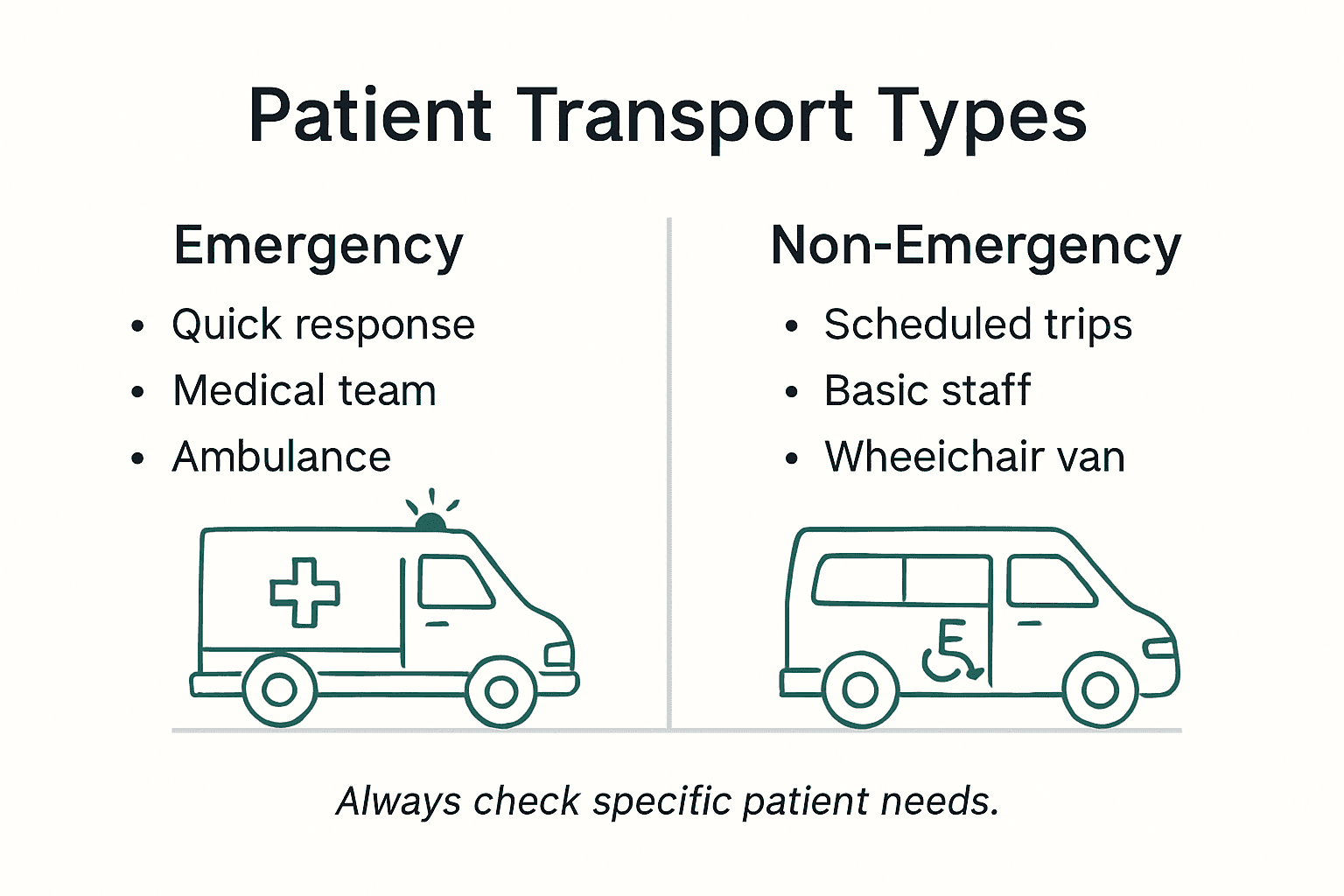
Here is a clear comparison of emergency and non-emergency patient transport services:
| Aspect | Emergency Transport | Non-Emergency Transport |
|---|---|---|
| Purpose | Immediate life-saving response | Scheduled, routine transfers |
| Team Qualifications | Advanced medical professionals | Basic certified medical staff |
| Vehicle Equipment | Advanced life support systems | Basic medical monitoring tools |
| Key Priority | Speed and critical intervention | Comfort and consistent monitoring |
| Example Scenarios | Heart attack, trauma, stroke | Rehab appointments, check-ups |
Pro tip: Always confirm a patient’s precise medical transport requirements in advance, considering their specific health condition, mobility limitations, and necessary medical support during transit.
How Patient Transport Services Operate
Patient transport services function through a complex, highly coordinated system involving multiple healthcare stakeholders. Patient transport coordination begins with a detailed assessment by the ordering healthcare provider, who determines the specific medical transport requirements based on the patient’s clinical condition, necessary interventions, and destination needs. This initial evaluation is critical in establishing the appropriate transport protocol, vehicle type, and medical personnel required for safe patient movement.

The operational workflow involves intricate communication channels between healthcare providers, emergency medical services (EMS) personnel, and transport teams. During transit, medical professionals continuously monitor patient status, maintaining real-time communication with the originating and receiving medical facilities. This dynamic communication allows for immediate adjustments to the transport plan if a patient’s condition changes unexpectedly, ensuring continuous and adaptive medical care throughout the transportation process.
Key operational components of patient transport services include rigorous patient identification protocols, specialized medical equipment preparation, and strict adherence to clinical safety standards. Transport teams must document every aspect of the patient’s journey, including vital signs, medical interventions performed, and any changes in patient condition. These detailed records are crucial for maintaining continuity of care and providing comprehensive medical handoff between healthcare providers. The entire process is designed to minimize medical risks, optimize patient comfort, and ensure seamless medical logistics across different healthcare settings.
Pro tip: Develop a standardized patient transport communication checklist to ensure all critical medical and logistical information is consistently and accurately transferred between healthcare teams.
Technology and Innovations in Patient Transport
Healthcare technology is rapidly transforming patient transport services through advanced digital solutions that enhance communication, monitoring, and patient safety. Health information technology innovations are revolutionizing medical logistics by enabling real-time data exchange and comprehensive patient tracking throughout the transportation process. Electronic Health Records (EHRs) now integrate seamlessly with transport teams, providing instant access to critical patient medical histories, treatment requirements, and potential intervention protocols.
Medical device technologies are creating unprecedented capabilities in patient monitoring during transportation. Advanced monitoring technologies such as portable vital sign monitors, smart medication delivery systems, and wireless communication devices allow healthcare professionals to maintain continuous patient surveillance outside traditional clinical settings. These innovations dramatically reduce manual monitoring requirements and enable rapid medical interventions if a patient’s condition unexpectedly changes during transport.
The convergence of mobile health technologies, artificial intelligence, and sophisticated communication platforms is fundamentally redesigning patient transport infrastructure. Emerging technologies now support predictive analysis, automated route optimization, and real-time risk assessment. These systems can dynamically adjust transport protocols based on patient conditions, traffic patterns, and medical facility capacities, creating a more intelligent and responsive patient transportation ecosystem that prioritizes safety, efficiency, and personalized care delivery.
This table summarizes benefits of technological innovation in patient transport:
| Innovation Area | Benefit for Patients | Impact on Providers |
|---|---|---|
| Real-time Data Sharing | Safer, timely interventions | Improved clinical coordination |
| Portable Monitoring | Ongoing health tracking | Early problem detection |
| Automated Route Planning | Reduced transit delays | Efficient resource management |
| Interoperable Systems | Fewer medical errors | Seamless information flow |
Pro tip: Invest in interoperable medical technologies that can seamlessly integrate patient data across different healthcare platforms to enhance transport coordination and patient safety.
Compliance, Safety, and Legal Responsibilities
Healthcare transport services operate within a complex regulatory landscape that demands strict adherence to federal and state legal requirements. Compliance programs are designed to protect patient rights, enforce ethical standards, and mitigate potential legal risks associated with medical transportation. These comprehensive frameworks incorporate critical policies addressing patient safety protocols, privacy regulations, and legal mandates such as the Emergency Medical Treatment and Active Labor Act (EMTALA), which governs emergency treatment and patient stabilization during transfers.
Patient privacy represents a cornerstone of legal responsibility in medical transport services. HIPAA regulations mandate rigorous protection of patient health information throughout the transportation process. Transport providers must implement stringent confidentiality measures, limiting data sharing exclusively to authorized medical personnel. This requires robust documentation practices, comprehensive staff training, and sophisticated information management systems that ensure patient data remains secure and protected during every stage of transport.
Legal accountability extends beyond information protection to encompass comprehensive patient safety protocols. Compliance officers play a critical role in developing, implementing, and monitoring transport practices that minimize medical risks and meet established legal standards. This involves continuous staff training, regular risk assessments, detailed incident reporting mechanisms, and proactive strategies to address potential legal vulnerabilities. Transport teams must maintain meticulous records, demonstrate adherence to professional standards, and consistently prioritize patient welfare within a complex legal and ethical framework.
Pro tip: Develop a comprehensive compliance training program that includes regular updates on legal regulations, privacy requirements, and ethical standards to ensure your patient transport team remains fully informed and legally protected.
Cost Considerations and Efficiency Benefits
Patient transport services represent a critical intersection of healthcare logistics and financial management, where strategic resource allocation can significantly impact overall healthcare system efficiency. Healthcare cost optimization in patient transportation involves carefully balancing medical necessity, technological investment, and operational expenses. Specialized medical equipment and appropriate transport modalities can directly influence patient outcomes, potentially reducing intensive care duration and minimizing complex medical interventions that drive substantial healthcare expenses.
Efficient patient transport strategies go beyond immediate transportation costs, encompassing broader healthcare system resource management. Health system efficiency principles emphasize the importance of optimizing logistical pathways to reduce unnecessary delays, eliminate service duplications, and ensure precise allocation of clinical and transportation resources. Advanced technological integration enables healthcare organizations to streamline transport processes, creating opportunities for significant cost reduction without compromising patient care quality or safety standards.
The economic impact of patient transport services extends to multiple organizational levels, influencing both direct medical expenses and broader healthcare system sustainability. By implementing data-driven transport protocols, leveraging advanced monitoring technologies, and developing comprehensive resource allocation strategies, healthcare providers can achieve substantial financial efficiencies. These approaches not only reduce immediate transportation costs but also minimize potential long-term expenses associated with medical complications, extended hospital stays, and inefficient patient management.
Pro tip: Conduct regular comprehensive audits of your patient transport logistics to identify potential cost-saving opportunities and optimize resource allocation across your healthcare transportation ecosystem.
Transform Patient Transport Challenges into Seamless Care Coordination
Patient transport services face complex obstacles like ensuring real-time communication, managing diverse medical needs during transfers, and maintaining compliance with strict safety protocols. This article highlights critical pain points including the need for continuous patient monitoring, efficient resource allocation, and minimizing risks during transit. If your organization struggles with coordinating emergency and non-emergency transport, juggling multiple stakeholders, or reducing costly delays, VectorCare offers a powerful solution.
Explore how VectorCare’s integrated digital platform tackles these exact challenges with AI-driven dispatching, real-time updates, and automated scheduling optimization. Designed for healthcare providers, emergency services, and payers, our tools support seamless patient handoffs and improved clinical outcomes while lowering operational costs. Don’t let transport logistics overwhelm your patient care objectives. Visit VectorCare today and empower your team to deliver timely, safe, and compliant patient transport services with confidence.
Frequently Asked Questions
What does a patient transport service do?
Patient transport services are designed to safely and efficiently move patients between medical facilities while ensuring continuous medical care during the transfer, regardless of whether it is for treatment, diagnostic procedures, or critical care management.
What are the main types of patient transport services?
Patient transport services are primarily categorized into emergency and non-emergency transport. Emergency transport involves immediate life-saving measures and advanced medical care during transit, while non-emergency transport is used for routine transfers requiring medical supervision without immediate critical intervention.
How do patient transport services operate?
These services operate through coordinated communication between healthcare providers, EMS personnel, and transport teams. Initial assessments dictate transport requirements, and medical professionals continuously monitor patients during transit to ensure safety and adapt to any changes in condition.
How does technology impact patient transport services?
Technology enhances patient transport services by enabling real-time data sharing, advanced monitoring, and predictive analysis. Innovations such as electronic health records and portable monitoring devices improve communication, patient safety, and operational efficiency throughout the transport process.