7 Proven Transportation Scheduling Best Practices for Healthcare

Nearly one in three American healthcare organizations faces transportation delays that put patient care at risk. Smooth, reliable transport is the backbone of timely treatment, yet confusion among teams and vendors can slow everything down. Standardizing, digitizing, and coordinating each step transforms patient movement from a frequent challenge into a well-managed process. Discover how strategic changes can not only reduce costly errors but also elevate the experience for every American patient and caregiver.
Table of Contents
- 1. Standardize Request Intake for All Stakeholders
- 2. Automate Scheduling with Digital Tools
- 3. Leverage Real-Time Communication and Updates
- 4. Optimize Routing for Faster Patient Transfers
- 5. Implement Secure, Compliant Data Sharing
- 6. Track Performance with Data-Driven Insights
- 7. Integrate Vendor and Resource Management
Quick Summary
| Takeaway | Explanation |
|---|---|
| 1. Standardize Request Intake Across Departments | Implement a centralized digital platform to capture all transport requests uniformly, minimizing errors and delays. |
| 2. Automate Scheduling Processes | Use digital scheduling tools to eliminate manual errors, enhance efficiency, and improve resource allocation in patient transport logistics. |
| 3. Leverage Real-Time Communication | Adopt real-time communication platforms to provide instant updates on transportation requests, increasing efficiency and patient care quality. |
| 4. Optimize Routing for Efficiency | Invest in advanced routing technology that adapts to real-time conditions, minimizing transit time and improving patient experience. |
| 5. Implement Secure Data Sharing | Ensure patient data is shared securely through compliant platforms, safeguarding privacy while enhancing operational efficiency. |
1. Standardize Request Intake for All Stakeholders
Healthcare transportation begins with a critical first step: creating a uniform method for managing patient transport requests. Standardizing intake processes transforms chaotic communication into a streamlined, efficient system that reduces errors and accelerates patient care.
In healthcare settings, inconsistent request methods lead to significant operational challenges. Different departments might use email, phone calls, fax, or verbal communication which creates confusion, delays, and potential patient risks. A recent medical transport study demonstrated that unstructured intake processes can dramatically increase wait times and reduce overall transportation effectiveness.
To implement a standardized intake system, healthcare organizations should develop a centralized digital platform where all stakeholders can submit transport requests using identical templates. This approach ensures that critical information like patient mobility needs, medical equipment requirements, urgency level, and pickup locations are consistently captured.
Key components of a standardized intake process include:
- Unified digital request form with mandatory fields
- Real-time tracking of each transportation request
- Clear prioritization protocols for urgent versus routine transports
- Automatic notification systems for relevant personnel
Research on non-emergency medical transportation reveals that organizations implementing standardized scheduling saw significant improvements in staff efficiency and patient satisfaction.
Pro Tip: Create a one-page reference guide for all staff members detailing the standardized request intake process, ensuring every team member understands how to submit and track transportation requests consistently and accurately.
2. Automate Scheduling with Digital Tools
In the complex world of healthcare transportation, manual scheduling is a recipe for inefficiency. Digital automation transforms this critical process, reducing human error and dramatically improving operational performance.
Advanced healthcare analytics platforms are revolutionizing how organizations manage transportation logistics. By implementing digital scheduling tools, healthcare providers can eliminate time consuming manual processes that drain staff resources and create potential scheduling conflicts.
The benefits of digital scheduling extend far beyond simple time savings. These tools enable real-time tracking, instant communication, and precise resource allocation. Research on physician scheduling systems demonstrates significant improvements in staff satisfaction and operational efficiency.
Key advantages of automated scheduling include:
- Instant availability tracking
- Automatic conflict resolution
- Comprehensive resource management
- Integrated communication platforms
- Detailed reporting and analytics
Successful implementation requires selecting a flexible digital platform that integrates seamlessly with existing healthcare information systems. Look for tools that offer customizable workflows, mobile accessibility, and robust security features.
Pro Tip: Start by mapping your current scheduling workflow and identifying the most time consuming manual steps. This will help you select a digital automation tool that addresses your specific organizational needs.
3. Leverage Real-Time Communication and Updates
In healthcare transportation, communication can mean the difference between timely care and critical delays. Real-time updates transform traditional communication models by providing instant, accurate information across all stakeholders.
Recent medical transport research underscores the vital importance of dynamic communication in patient transportation. Traditional communication methods often result in information gaps that can compromise patient care and operational efficiency.
Real-time communication platforms enable healthcare teams to track transportation requests with unprecedented precision. Non-emergency medical transportation studies demonstrate significant improvements in healthcare access when organizations implement robust communication technologies.
Key components of effective real-time communication include:
- Instant status notifications
- Mobile device compatibility
- Secure messaging protocols
- Automated update systems
- Multi-platform integration
Successful implementation requires selecting communication tools that seamlessly integrate with existing healthcare information systems. These platforms should provide comprehensive visibility while maintaining patient privacy and data security.
The most advanced systems offer features like GPS tracking, estimated arrival times, and immediate rerouting capabilities. This allows transportation coordinators to respond quickly to unexpected changes or emergencies.
Pro Tip: Conduct a comprehensive communication audit of your current transportation processes to identify specific communication bottlenecks and select a real-time update solution that directly addresses those gaps.
4. Optimize Routing for Faster Patient Transfers
In healthcare transportation, every minute counts. Routing optimization is not just about moving patients from point A to point B but creating the most efficient pathways that minimize transit time and maximize patient care.
Advanced routing strategies have transformed how healthcare organizations approach patient transportation. Traditional routing methods often result in unnecessary delays, increased operational costs, and potential patient discomfort.
Research on healthcare visit scheduling reveals that intelligent routing can dramatically improve service delivery. The key is developing dynamic routing algorithms that adapt to real-time conditions and patient needs.
Critical components of optimized routing include:
- Geographic mapping technology
- Real-time traffic integration
- Patient mobility assessment
- Vehicle availability tracking
- Predictive delay calculations
Successful routing optimization requires a comprehensive approach that considers multiple variables. Healthcare organizations must invest in technologies that can process complex routing scenarios quickly and accurately.
Advanced routing systems now incorporate machine learning algorithms that continuously improve route efficiency. These systems analyze historical data, current traffic conditions, and patient specific requirements to generate the most effective transportation plans.
Pro Tip: Conduct a comprehensive audit of your current transportation routes, mapping out typical delays and inefficiencies. Use this baseline data to develop targeted routing improvements that address your specific operational challenges.
5. Implement Secure, Compliant Data Sharing
Healthcare transportation requires more than moving patients it demands protecting sensitive information throughout the process. Secure data sharing is the critical backbone of modern healthcare logistics that ensures patient privacy while enabling seamless communication.
National strategic data infrastructure frameworks highlight the growing importance of robust, secure information exchange across healthcare sectors. Traditional data management approaches leave organizations vulnerable to privacy breaches and regulatory violations.
Healthcare financial technology research demonstrates how strategic data sharing can simultaneously improve operational efficiency and maintain stringent compliance standards.
Key elements of secure data sharing include:
- End to end encryption
- HIPAA compliant platforms
- Granular access controls
- Comprehensive audit trails
- Multi factor authentication
Successful implementation requires selecting technologies that provide multilayered security while maintaining system interoperability. Organizations must prioritize solutions that integrate seamlessly with existing electronic health record systems and transportation management platforms.
Modern data sharing approaches leverage advanced security protocols like zero trust architecture and blockchain inspired verification methods. These technologies create multiple checkpoints that validate user credentials and protect sensitive patient information throughout transmission.
Pro Tip: Develop a comprehensive data governance policy that clearly defines data access protocols, establishes regular security audits, and provides ongoing staff training on confidentiality best practices.
6. Track Performance with Data-Driven Insights
Beyond moving patients, healthcare transportation requires continuous improvement through intelligent analysis. Data driven insights transform raw information into actionable strategies that enhance operational efficiency and patient outcomes.
Non-emergency medical transportation research demonstrates how systematic performance tracking can dramatically reduce transportation wait times and operational costs. Without comprehensive data analysis, organizations remain blind to critical inefficiencies.
Healthcare automation initiatives emphasize the power of measuring key performance indicators across transportation networks. Modern healthcare organizations need robust analytics that provide real time visibility into their logistics operations.
Key metrics for performance tracking include:
- Average transport response time
- Vehicle utilization rates
- Patient satisfaction scores
- Cost per transportation mile
- Scheduling accuracy percentage
Successful performance tracking requires implementing advanced analytics platforms that can aggregate data from multiple sources. These systems transform complex transportation information into clear, actionable visualizations that enable quick strategic decisions.
Advanced data analysis tools now incorporate predictive modeling techniques that help organizations anticipate potential bottlenecks and optimize resource allocation before problems emerge. Machine learning algorithms can identify patterns that human analysts might overlook.
Pro Tip: Establish a quarterly performance review process where transportation leaders analyze comprehensive data reports, identifying trends and implementing targeted improvements based on objective metrics.
7. Integrate Vendor and Resource Management
Healthcare transportation relies on a complex network of vendors and resources that must work together seamlessly. Strategic vendor management transforms fragmented logistics into a coordinated, efficient ecosystem.
National strategic infrastructure research emphasizes the critical importance of integrated resource management across healthcare sectors. Traditional approaches that treat vendors as isolated entities create unnecessary operational friction.
Healthcare financial technology studies demonstrate how digitized vendor management can significantly reduce operational costs and improve overall service quality.
Key components of effective vendor integration include:
- Centralized vendor performance tracking
- Automated contract management
- Real time resource availability monitoring
- Standardized onboarding processes
- Comprehensive performance evaluation systems
Successful vendor management requires implementing technology platforms that provide comprehensive visibility across all transportation resources. These systems enable organizations to track vendor performance, manage contracts, and optimize resource allocation with unprecedented precision.
Advanced integration approaches now incorporate machine learning algorithms that can predict vendor reliability, recommend optimal resource allocation, and identify potential service disruptions before they impact patient care.
Pro Tip: Create a quarterly vendor scorecard that objectively measures performance across multiple dimensions including reliability, cost effectiveness, safety records, and customer satisfaction to drive continuous improvement.
Below is a comprehensive table summarizing key strategies for optimizing healthcare transportation as discussed in the article.
| Strategy | Implementation | Expected Results |
|---|---|---|
| Standardize Request Intake | Implement a centralized digital platform with unified request forms. | Reduced errors, faster patient care, and improved communication. |
| Automate Scheduling | Use digital tools for scheduling to replace manual processes. | Increased staff efficiency, reduced errors, and improved operational performance. |
| Leverage Real-Time Communication | Integrate real-time communication platforms with emergency notifications. | Enhanced care delivery speed and operational efficiency. |
| Optimize Routing | Develop dynamic routing algorithms that adapt to real-time conditions. | Minimized delays and improved patient care. |
| Implement Secure Data Sharing | Utilize HIPAA compliant platforms with end-to-end encryption. | Enhanced privacy protection and seamless communication.\ |
| Track Performance with Data Insights | Deploy advanced analytics to monitor key transportation metrics. | Improved efficiency and patient outcomes. |
| Integrate Vendor Management | Centralized vendor tracking and automated contract systems. | Reduced costs and improved service quality. |
Elevate Healthcare Transportation with Streamlined Scheduling and Real-Time Coordination
The article highlights key challenges like inconsistent request intake, manual scheduling errors, and communication gaps that slow down patient transport in healthcare. If your organization struggles with these pain points and aims to adopt best practices like standardized intake processes, automated scheduling, and secure data sharing, VectorCare offers a comprehensive solution tailored for you. Our platform empowers healthcare stakeholders with AI-driven dispatching, seamless vendor management, and real-time updates to significantly reduce delays and operational costs while enhancing patient care coordination.
Benefits of using VectorCare include:
- Automated digital scheduling eliminating manual conflicts
- Secure, compliant platforms that protect patient data
- Integrated communication tools for instant transportation updates
- Data-driven insights that track and optimize performance
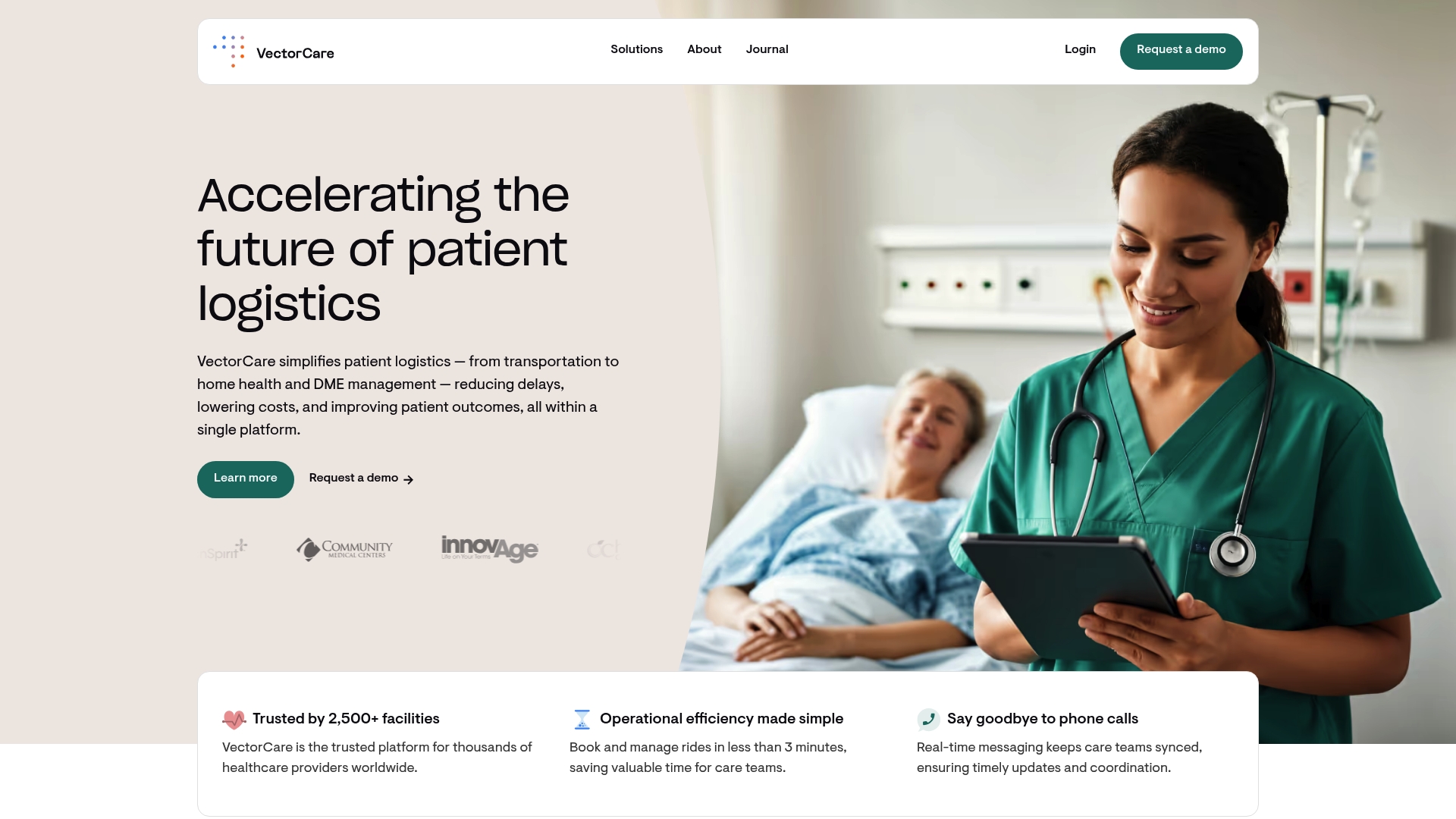
Take control of your healthcare transportation logistics today. Discover how VectorCare can transform your scheduling and routing practices into a reliable, efficient system. Visit VectorCare now to explore our solutions and start improving patient outcomes immediately.
Frequently Asked Questions
What are the best practices for standardizing transportation request intake in healthcare?
To standardize transportation request intake, create a unified digital request form that all stakeholders can use. This allows consistent capture of essential details like patient needs and urgency, improving efficiency and reducing errors.
How can I effectively automate scheduling for healthcare transportation?
Automate scheduling by selecting a digital tool that centralizes and streamlines the scheduling process. This reduces manual errors and conflicts, allowing for immediate tracking of transportation requests and timely patient transfers.
What should I consider when optimizing routing for faster patient transfers?
To optimize routing, implement geographic mapping technology that factors in real-time traffic conditions and patient mobility needs. This can shorten transit times significantly, enhancing overall patient care and satisfaction.
How can I ensure secure data sharing in healthcare transportation?
Implement end-to-end encryption and use HIPAA-compliant platforms for data sharing. Establish granular access controls to protect patient information while ensuring seamless communication among stakeholders.
What key performance indicators should I track for transportation efficiency?
Track metrics such as average transport response time and patient satisfaction scores to evaluate efficiency. Regular assessments of these indicators can inform actionable improvements within 30–60 days.
How do I effectively manage vendors for healthcare transportation services?
Use a centralized system to monitor vendor performance and manage contracts. By integrating these processes, you can enhance resource allocation and reduce operational costs, improving service quality systematically.