Top healthcare technology trends transforming patient logistics

Healthcare leaders today face an overwhelming array of technology options promising to optimize patient logistics and care delivery. With limited budgets and implementation bandwidth, selecting the right innovations becomes critical. This article cuts through the noise by highlighting proven 2025 technology trends backed by hospital data showing measurable improvements in patient flow, operational costs, and care outcomes. You’ll learn practical evaluation criteria and real-world results from leading health systems that have successfully deployed these solutions.
Table of Contents
- Key takeaways
- How to evaluate healthcare technology trends for 2025
- AI-powered patient flow optimization and command centers
- Robotic process automation in healthcare administration
- Hospital-at-home and remote patient monitoring trends
- AI and digital command centers boosting surgical capacity and staffing
- Explore VectorCare’s solutions for patient logistics and care delivery
- Frequently asked questions about 2025 healthcare technology trends
Key Takeaways
| Point | Details |
|---|---|
| AI command centers | Real time AI driven bed management reduces ED waiting and length of stay while expanding capacity without new construction. |
| RPA first | Leaders should start with RPA for administrative tasks before AI and logistics optimization to build capability and fund later investments. |
| Rural adoption hurdles | Rural systems face broadband gaps and smaller patient volumes that complicate ROI and slow deployment. |
| EHR interoperability | Solutions with proven APIs and vendor partnerships integrate with existing workflows and reduce implementation risk. |
| Phased adoption plan | Begin with one high impact use case, measure results, then expand to secure stakeholder buy in. |
How to evaluate healthcare technology trends for 2025
Selecting technology investments requires a structured framework that prioritizes operational impact over hype. Start by assessing five core criteria: direct operational impact on patient flow or care delivery, quantifiable cost savings within 12 months, seamless integration with your existing EHR infrastructure, scalability across multiple departments or facilities, and measurable improvements in clinical outcomes or patient satisfaction.
Sequencing matters as much as selection. Leaders must sequence automation starting with RPA for administrative tasks, then AI for clinical workflows, and finally logistics optimization for maximum ROI. This phased approach builds organizational capability while delivering early wins that fund subsequent investments.
Integration capability deserves special attention. Technologies that require extensive custom development or operate in silos create more problems than they solve. Your evaluation should prioritize solutions with proven EHR interoperability, standardized APIs, and vendor partnerships already in place. The best innovations enhance existing workflows rather than replacing them entirely.
Consider implementation challenges upfront. Data bias in AI algorithms can perpetuate healthcare disparities if training data lacks diversity. Ethical concerns around patient privacy and algorithmic transparency require clear governance frameworks. Rural healthcare systems face unique adoption barriers including limited broadband infrastructure and smaller patient volumes that affect ROI calculations. Understanding these constraints shapes realistic deployment timelines and success metrics.
Pro Tip: Build a phased technology adoption plan that starts with one high-impact use case, measures results rigorously, and uses those outcomes to secure buy-in for broader rollout. This approach mitigates risk while demonstrating value to skeptical stakeholders.
Explore automation in healthcare administration benefits and trends to understand how leading health systems are implementing these evaluation frameworks across their technology portfolios.
AI-powered patient flow optimization and command centers
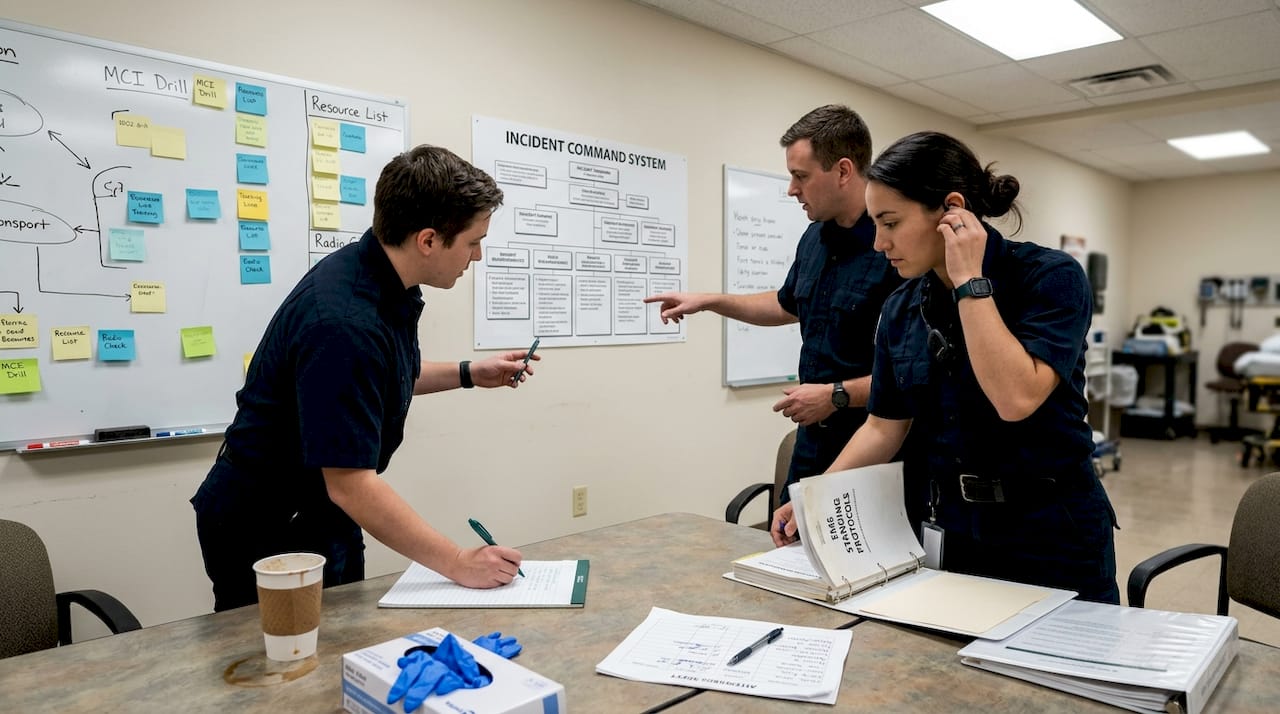
AI-based command centers represent the most impactful patient logistics innovation deployed in 2025, using real-time data to predict admissions, discharges, and transfers with remarkable accuracy. These systems integrate information from emergency departments, intensive care units, and inpatient floors to enable proactive bed management decisions hours before bottlenecks occur.
The operational benefits are substantial and well-documented. UCHealth’s AI command center implementation reduced length of stay by 0.8 days and cut ED wait times by 25%, creating capacity equivalent to adding 40 physical beds without construction costs. Sarasota Memorial achieved similar results, cutting average length of stay by 13 hours and reducing emergency department boarding by 32%.
| Hospital System | Length of Stay Reduction | ED Boarding Reduction | Capacity Equivalent |
|---|---|---|---|
| UCHealth | 0.8 days | 25% wait time decrease | 40 additional beds |
| Sarasota Memorial | 13 hours | 32% boarding decrease | Not disclosed |
These systems work by analyzing historical patterns alongside current census data, staffing levels, and scheduled procedures. Machine learning models identify patients likely to experience complications or extended stays, triggering early intervention protocols. The technology also optimizes discharge timing by predicting when patients will meet clinical criteria and coordinating post-acute care arrangements in advance.
Command center staff use visual dashboards showing real-time bed availability, predicted admissions over the next 4-8 hours, and bottleneck alerts requiring immediate attention. This centralized visibility enables rapid response to emerging issues. When the system predicts an ED surge, staff can proactively move stable inpatients to step-down units and prepare beds for incoming critical cases.
Pro Tip: Pair AI command centers with comprehensive staff training programs that teach clinical and operational teams how to interpret predictive analytics and act on insights. Technology alone won’t optimize flow; human decision-making informed by data creates the real impact.
Learn more about predictive analytics in healthcare applications beyond patient flow optimization.
Robotic process automation in healthcare administration
Robotic process automation tackles the administrative burden that diverts healthcare resources from patient care. RPA software bots execute repetitive tasks like insurance verification, prior authorization processing, and claims submission with speed and accuracy that human staff cannot match.
The time savings are dramatic. Healthcare organizations implementing RPA report 60% reduction in insurance verification time and 50% decrease in call volumes to payer services. One medical center documented annual savings between $225,000 and $350,000 from RPA deployment across just three administrative processes. These gains compound when organizations expand automation to additional workflows.
RPA excels at tasks requiring data extraction from multiple systems, validation against business rules, and entry into downstream applications. Insurance eligibility checks that previously took staff 10-15 minutes per patient now complete in under two minutes. Bots work 24/7 without breaks, processing verification requests overnight so staff arrive to completed work queues each morning.
The freed capacity allows administrative teams to focus on complex cases requiring human judgment. When routine verifications run automatically, staff can address coverage exceptions, appeal denials, and provide personalized service to patients with questions. This shift from transactional to value-added work improves job satisfaction while enhancing patient experience.
- Automates high-volume, rule-based administrative tasks with 99%+ accuracy
- Reduces processing backlogs by working continuously without downtime
- Cuts operational costs by 30-40% in targeted processes
- Integrates with existing systems without requiring infrastructure changes
- Scales easily as transaction volumes increase
Cost savings extend beyond labor reduction. Faster verification prevents claim denials from eligibility issues, improving first-pass payment rates. Reduced call volumes to payers lower telecommunications costs. Fewer errors mean less rework and fewer patient billing complaints.
Research combining DMAIC methodology with RPA demonstrates procurement process time savings exceeding 50% when organizations apply structured improvement frameworks alongside automation technology.
Discover comprehensive insights on automation in healthcare administration benefits and trends shaping operational efficiency in 2025.
Hospital-at-home and remote patient monitoring trends
Hospital-at-home programs fundamentally reimagine acute care delivery by bringing hospital-level services to patient homes. This model reduces facility costs while improving patient comfort and satisfaction. Currently, 366 hospitals participate in CMS waivers enabling HaH reimbursement, with strong evidence showing improved outcomes for heart failure patients and reduced readmission rates.

Remote patient monitoring complements HaH by providing continuous surveillance through wearable devices and home-based sensors. These technologies track vital signs, medication adherence, and symptom progression, alerting clinical teams to concerning trends before they escalate into emergency situations. Cleveland Clinic reports significant reductions in hospital readmissions and improved chronic disease management through integrated RPM programs.
The operational model requires careful orchestration. Clinical teams conduct in-home assessments, deliver IV medications, provide physical therapy, and perform diagnostic testing typically reserved for inpatient settings. Technology platforms coordinate scheduling, track supply inventory, and enable secure communication between patients, caregivers, and providers. Success depends on robust logistics supporting timely delivery of equipment, medications, and clinical visits.
Despite proven benefits, rural adoption lags significantly due to geographic distances, limited broadband access, and workforce shortages. Traveling to patient homes across wide service areas creates inefficiencies that undermine cost advantages. Rural hospitals struggle to achieve the patient volumes needed to justify dedicated HaH infrastructure investments.
Key distinctions between program types clarify implementation scope:
- Acute HaH substitutes for inpatient admission, treating conditions like pneumonia, heart failure exacerbations, and cellulitis
- Post-acute HaH replaces skilled nursing facility stays, focusing on rehabilitation and recovery
- Chronic care RPM monitors stable conditions long-term, preventing acute episodes through early intervention
- Transitional care programs bridge hospital discharge to home, reducing readmission risk during the vulnerable first 30 days
Reimbursement evolution drives adoption. As payers expand coverage beyond CMS waivers and create sustainable payment models, more health systems will invest in HaH infrastructure. Technology improvements in remote monitoring devices and telehealth platforms continue reducing implementation barriers.
Explore the hospital-at-home care model in depth to understand program design and operational requirements.
AI and digital command centers boosting surgical capacity and staffing
AI applications in operating rooms deliver efficiency gains previously thought impossible without physical expansion or staff additions. Computer vision systems analyze surgical workflow in real-time, identifying opportunities to reduce turnover time, optimize scheduling, and predict case duration with greater accuracy than historical averages.
Houston Methodist documented 15% capacity increase after deploying AI computer vision, enabling 33 additional surgical cases monthly without hiring additional staff or extending hours. The system tracks instrument usage, monitors procedural milestones, and alerts teams when cases deviate from expected timelines. This visibility enables proactive intervention to keep schedules on track.
Predictive AI embedded in EHR systems has achieved widespread adoption, with 71% of hospitals using these tools to identify clinical deterioration early and reduce costs by 10-20%. These algorithms analyze lab values, vital signs, and clinical notes to flag patients at risk for sepsis, respiratory failure, or other complications requiring intensive intervention. Early identification enables preventive treatment that avoids ICU transfers and reduces length of stay.
Digital command centers extend beyond patient flow to workforce optimization. These systems integrate staffing data, patient acuity scores, and predicted census to forecast nursing needs by unit and shift. Predictive scheduling reduces overtime costs while ensuring adequate coverage during high-demand periods. The technology also identifies opportunities to float staff between units based on real-time needs rather than fixed assignments.
| Scheduling Approach | Average OR Utilization | Cases Per Month | Overtime Hours |
|---|---|---|---|
| Traditional block scheduling | 65-70% | 850 | 320 |
| AI-optimized dynamic scheduling | 80-85% | 1,130 | 180 |
The staffing shortage crisis makes these tools essential rather than optional. Hospitals cannot hire their way out of workforce gaps; they must optimize existing resources through intelligent scheduling and workload balancing. AI provides the analytical horsepower to make these complex optimization decisions in real-time.
Benefits extend across multiple dimensions:
- Increased surgical throughput without capital investment in additional ORs
- Reduced staff burnout through balanced workload distribution
- Lower overtime costs from predictive staffing models
- Improved patient safety through early deterioration detection
- Enhanced resource utilization across all clinical departments
Understand how ambulance providers function as patient logistics centers to coordinate care transitions and transport within integrated command center frameworks.
Explore VectorCare’s solutions for patient logistics and care delivery
Implementing the technology trends covered in this article requires integrated platforms that connect disparate systems and coordinate complex logistics. VectorCare offers comprehensive patient logistics solutions that streamline discharge planning, automate transport scheduling, and optimize care transitions across the continuum.
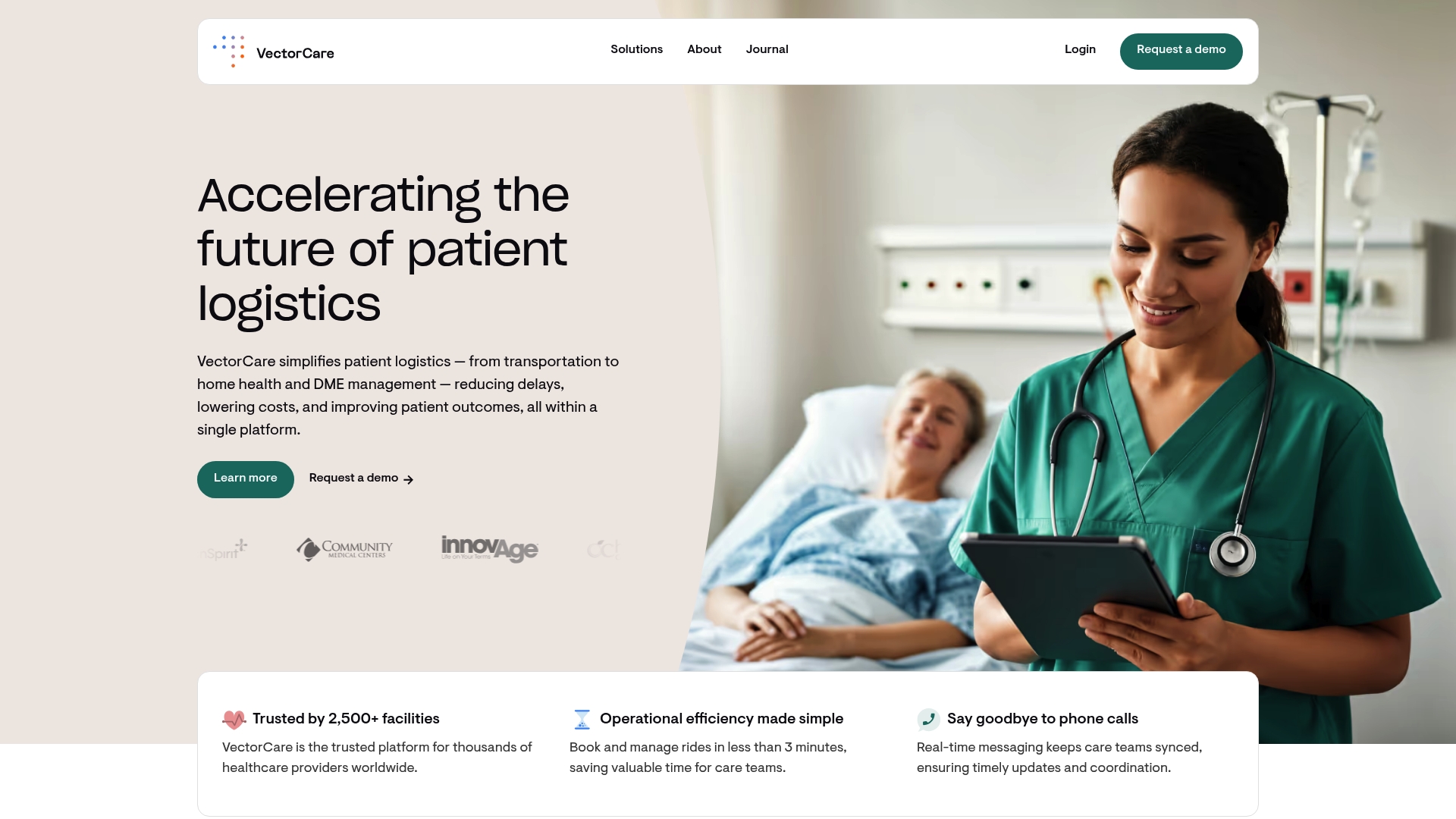
Our platform enables the operational efficiency improvements healthcare leaders seek from 2025 technology investments. Real-time patient tracking provides visibility into transport status and estimated arrival times. Automated scheduling eliminates manual phone calls and faxing, reducing discharge delays. Analytics dashboards surface bottlenecks and measure performance against key metrics.
Customer case studies demonstrate measurable impact. Health systems using VectorCare report 30-40% reductions in discharge coordination time and significant cost containment through optimized vendor management. The platform integrates seamlessly with existing EHR systems, requiring no custom development or infrastructure changes.
Core capabilities supporting modern patient logistics include:
- Real-time tracking of patient transport across all modalities
- Automated scheduling with intelligent vendor matching
- Centralized communication hub eliminating phone tag
- Analytics dashboards measuring key performance indicators
- Compliance documentation and audit trail maintenance
Learn what patient logistics encompasses and how comprehensive platforms address coordination challenges. Explore the VectorCare patient logistics platform to see how technology can transform your operational efficiency. Discover strategies for maximizing efficiencies through better patient logistics management.
Frequently asked questions about 2025 healthcare technology trends
What are the main benefits of AI-powered command centers in hospitals?
AI command centers reduce length of stay and ED wait times by predicting patient flow bottlenecks hours in advance, enabling proactive bed management and discharge coordination. Health systems report capacity gains equivalent to adding 40+ beds without construction costs. The technology integrates data from multiple departments to provide centralized visibility and coordinated response to emerging issues.
How does robotic process automation improve healthcare administration?
RPA automates repetitive administrative tasks like insurance verification and claims processing, reducing completion time by 60% while eliminating errors. Organizations save $225,000+ annually from decreased call volumes and faster processing. This frees staff to focus on complex cases requiring human judgment rather than transactional work.
What challenges hinder hospital-at-home expansion in rural areas?
Rural HaH programs face geographic barriers including long travel distances between patient homes, limited broadband infrastructure for remote monitoring, and workforce shortages making it difficult to staff mobile clinical teams. Lower patient volumes in rural markets also challenge the business case, as fixed infrastructure costs spread across fewer cases reduce ROI compared to urban implementations. Learn more about the hospital-at-home care model and implementation considerations.
How is AI computer vision transforming operating room efficiency?
Computer vision systems analyze surgical workflow in real-time, tracking instrument usage and procedural milestones to optimize turnover time and scheduling accuracy. Hospitals achieve 15% capacity increases and 33 additional monthly cases without adding staff or extending hours. The technology identifies scheduling inefficiencies and predicts case duration more accurately than historical averages.
Why are digital command centers crucial for staffing optimization?
Digital command centers integrate staffing data with patient acuity and predicted census to forecast nursing needs by unit and shift, reducing overtime while ensuring adequate coverage. During workforce shortages, these tools maximize existing resources through intelligent scheduling and workload balancing that human planners cannot achieve manually. Discover applications of predictive analytics in healthcare workforce management.