Streamlining Patient Discharge Planning for Better Outcomes

Every busy American hospital faces the challenge of ensuring that patient discharge does not become a source of costly delays or unplanned readmissions. Discharge planning is more than paperwork or passing responsibility. It is a complex, team-driven process with many potential communication gaps and operational inefficiencies. By embracing integrated logistics and real-time data-driven solutions, administrators can identify workflow bottlenecks and transform the patient transition experience for better outcomes.
Table of Contents
- Step 1: Assess Current Discharge Workflows And Data Gaps
- Step 2: Implement Integrated Logistics And Scheduling Tools
- Step 3: Automate Vendor Coordination And Secure Communications
- Step 4: Monitor Real-Time Updates And Address Bottlenecks
- Step 5: Verify Completion And Measure Patient Outcome Improvements
Quick Summary
| Main Insight | Details on Implementation |
|---|---|
| 1. Assess and document workflows | Evaluate current discharge processes to identify inefficiencies and data gaps for improvement. |
| 2. Utilize integrated technology tools | Implement logistics and scheduling tools to enhance communication and streamline patient transitions. |
| 3. Automate vendor coordination | Establish secure automated communication channels with vendors to improve collaboration and maintain data privacy. |
| 4. Monitor workflows in real-time | Utilize real-time tracking to identify bottlenecks and improve efficiency in patient discharge processes. |
| 5. Measure outcomes systematically | Verify completion of discharge processes and monitor patient outcomes to continuously refine care transitions. |
Step 1: Assess current discharge workflows and data gaps
Discharge planning requires a systematic approach to identifying operational inefficiencies and critical information gaps. By meticulously evaluating your current processes, you can pinpoint areas for improvement and develop targeted strategies to streamline patient transitions.
To effectively assess your discharge workflows, start by mapping out your current process through comprehensive documentation. Comprehensive patient transfer assessments reveal critical insights into potential bottlenecks. Focus on tracking these key elements:
- Patient communication frequency and quality
- Electronic health record documentation completeness
- Transfer coordination timelines
- Care team communication protocols
- Patient readiness evaluation metrics
Analyze your existing workflows by collecting data across multiple dimensions. Engage multidisciplinary teams including nurses, physicians, case managers, and administrative staff to gather comprehensive perspectives. Patient-centered discharge barriers often emerge from communication gaps between different healthcare professionals.
Effective discharge planning requires a holistic view of patient transitions, not just isolated administrative tasks.
Data collection methods should include:
- Review electronic health record documentation
- Conduct staff interviews
- Track patient transfer metrics
- Analyze readmission rates
- Evaluate communication efficiency
Pro tip: Create a standardized discharge assessment template that captures multidimensional patient transition data to streamline your workflow improvement process.

Step 2: Implement integrated logistics and scheduling tools
Implementing advanced logistics and scheduling tools is crucial for transforming patient discharge processes and ensuring smooth care transitions. These technological solutions can dramatically improve communication, reduce administrative burden, and enhance overall patient care coordination.
Electronic discharge readiness tools enable real-time tracking and coordination of patient transitions across multiple healthcare teams. When selecting and implementing these tools, consider the following key strategies:
- Comprehensive integration with existing electronic health records
- Real-time communication capabilities
- Automated scheduling features
- Patient tracking functionality
- Customizable workflow options
The implementation process requires a structured approach. Project RED discharge toolkit recommends developing a multidisciplinary implementation strategy that involves input from various healthcare professionals. Start by:
- Assess current technological infrastructure
- Select compatible scheduling platforms
- Train staff on new tools
- Establish clear communication protocols
- Create feedback mechanisms
Technology-driven discharge planning transforms administrative processes into strategic patient care coordination.
Ensure that your chosen tools support seamless information exchange between different healthcare departments, allowing for comprehensive patient management and reduced transition risks.
Pro tip: Conduct pilot testing with a small team to identify potential workflow challenges and refine your integrated logistics system before full-scale implementation.
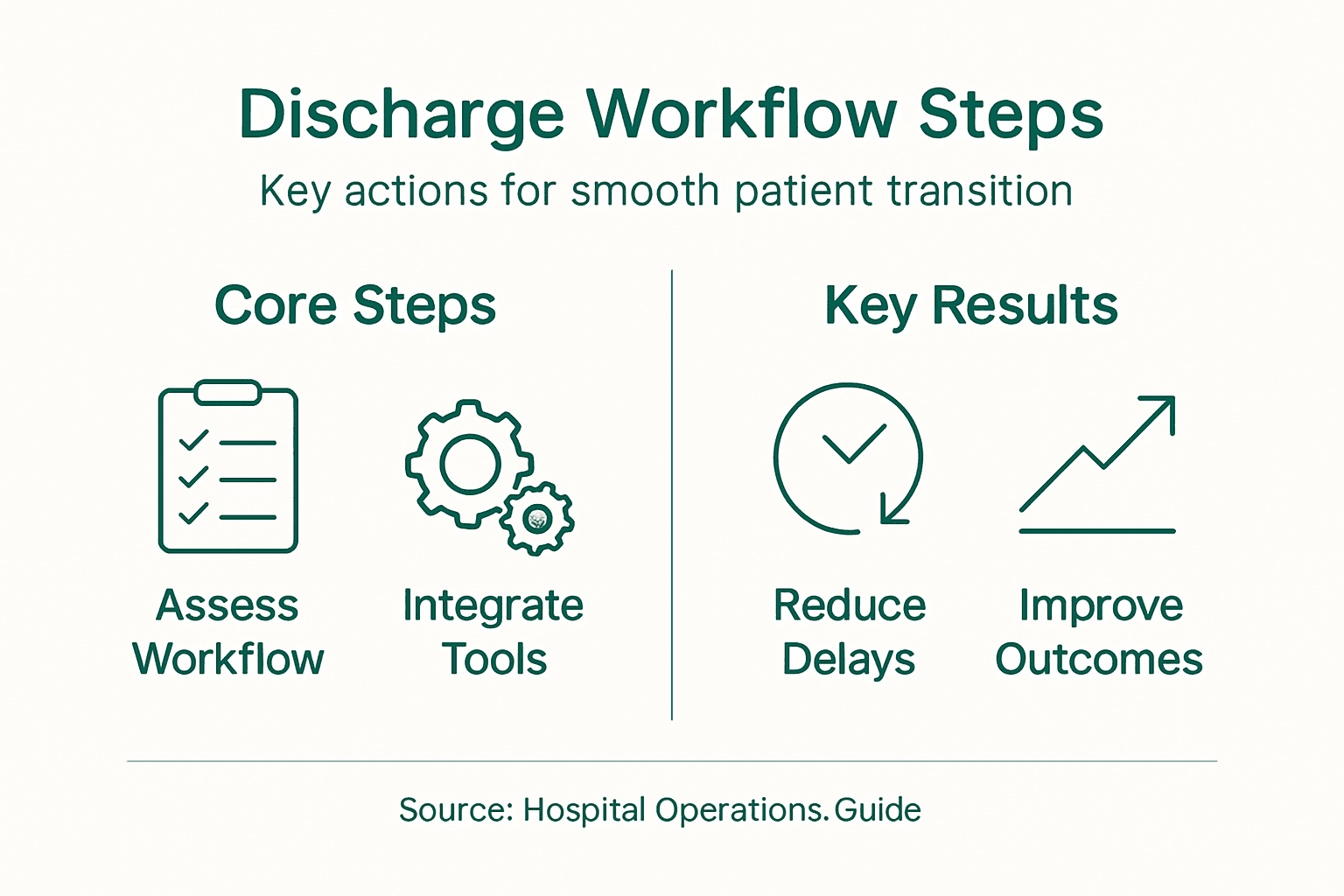
Here’s an overview of how integrated discharge technology drives results:
| Technology Feature | Operational Benefit | Patient Care Improvement |
|---|---|---|
| Real-time communication | Faster information transfer | Reduces discharge delays |
| Automated scheduling | Minimizes manual effort | Ensures timely transitions |
| Patient readiness tracking | Immediate status updates | Improves coordination accuracy |
| Secure messaging platforms | Enhances data privacy | Builds patient and partner trust |
Step 3: Automate vendor coordination and secure communications
Automating vendor coordination and establishing secure communication channels are critical for streamlining patient discharge processes and maintaining patient data privacy. By implementing advanced technological solutions, healthcare organizations can significantly improve interdepartmental collaboration and information exchange.
Discharge communication automation enables real-time updates and seamless coordination among clinical staff, vendors, and care partners. When developing your automation strategy, focus on these essential components:
- Secure messaging platforms
- Integrated electronic health record systems
- Role-based access controls
- Encrypted communication channels
- Automated notification mechanisms
Successful implementation requires a comprehensive approach that leverages existing health technology infrastructure. Begin by evaluating your current communication workflows and identifying potential security gaps. Key steps include:
- Select HIPAA-compliant communication platforms
- Establish vendor credentialing protocols
- Create standardized communication templates
- Implement multi-factor authentication
- Design role-specific access permissions
Effective vendor coordination transforms patient discharge from a transactional process to a strategic, secure patient care experience.
Ensure that your chosen solutions provide comprehensive audit trails, allowing you to track all vendor interactions and maintain rigorous compliance standards.
Pro tip: Regularly conduct security assessments and update vendor communication protocols to stay ahead of evolving cybersecurity threats and maintain patient data protection.
Step 4: Monitor real-time updates and address bottlenecks
Effective patient discharge management requires continuous monitoring of workflow progress and proactive identification of potential barriers. By implementing robust real-time tracking mechanisms, healthcare teams can significantly improve patient transition efficiency and reduce unnecessary delays.
Real-time discharge status tracking provides critical visibility into patient readiness and potential workflow interruptions. When developing your monitoring strategy, focus on these essential elements:
- Dynamic dashboard visualization
- Automated alert systems
- Performance metric tracking
- Bottleneck identification tools
- Immediate intervention capabilities
Discharge workflow monitoring becomes most effective when implemented through a structured approach. Key steps to establish comprehensive tracking include:
- Configure real-time status update systems
- Define clear performance benchmarks
- Create escalation protocols
- Establish cross-team communication channels
- Develop rapid response mechanisms
Continuous monitoring transforms discharge processes from reactive management to proactive optimization.
Successful implementation requires creating a culture of transparency where all team members understand their role in maintaining smooth patient transitions and quickly addressing potential delays.
Pro tip: Develop a standardized bottleneck response protocol that empowers frontline staff to initiate immediate corrective actions when workflow interruptions are detected.
Step 5: Verify completion and measure patient outcome improvements
The final stage of discharge planning involves comprehensive verification of process completion and systematic evaluation of patient outcomes. By implementing rigorous measurement strategies, healthcare teams can validate the effectiveness of their discharge workflows and continuously improve patient care transitions.
Discharge process verification requires a structured approach to tracking and analyzing critical performance indicators. When establishing your measurement framework, concentrate on these essential components:
- Readmission rate tracking
- Patient satisfaction surveys
- Clinical outcome metrics
- Transition of care assessments
- Comprehensive follow-up documentation
Systematic outcome measurement becomes most effective when implemented through a multi-dimensional evaluation strategy. Key steps to establish comprehensive outcome tracking include:
- Define clear performance benchmarks
- Implement standardized measurement tools
- Collect both quantitative and qualitative data
- Establish regular review intervals
- Create actionable improvement plans
Measuring patient outcomes transforms discharge planning from a process into a continuous improvement strategy.
Successful verification requires a holistic approach that goes beyond simple metric tracking, focusing on understanding the root causes of potential gaps and developing targeted interventions.
Pro tip: Develop a dynamic feedback loop that allows continuous refinement of discharge processes based on real-world patient outcome data and team insights.
The following table summarizes the main strategies for measuring discharge success:
| Measurement Strategy | Purpose | Example Metric |
|---|---|---|
| Readmission analysis | Identify care gaps | 30-day hospital readmission rate |
| Patient satisfaction survey | Assess experience quality | Post-discharge survey score |
| Clinical outcome tracking | Monitor health improvement | Complication rate post-discharge |
| Follow-up documentation | Ensure care continuity | Completed follow-up visit record |
Simplify Patient Discharge with Seamless Logistics and Real-Time Coordination
The article highlights critical challenges in patient discharge planning such as communication gaps, inefficient scheduling, and lack of real-time updates that lead to delays and increased readmission rates. Healthcare teams need to automate vendor coordination and monitor discharge workflows to ensure smooth transitions and better patient outcomes. VectorCare offers a comprehensive digital platform tailored to these exact needs by providing integrated scheduling optimization, secure communication, and AI-driven dispatching to minimize bottlenecks and reduce administrative burdens.
Key benefits include:
- Automated vendor management that secures and streamlines communication
- Real-time monitoring of patient readiness and discharge status
- Data-driven insights to identify and resolve workflow inefficiencies
Optimize your patient discharge process today by exploring how VectorCare’s platform transforms complex logistics into a coordinated, efficient experience. Visit VectorCare to learn more and start improving patient care coordination with technology designed for the future. Discover the power of scheduling optimization and secure vendor communication on our site.
Frequently Asked Questions
How can I assess my current discharge workflows to identify gaps?
To assess your current discharge workflows, start by mapping out your existing processes and documenting them thoroughly. Engage with multidisciplinary teams to gather insights, and focus on tracking patient communication, electronic health record documentation, and transfer coordination timelines.
What tools can I implement to improve logistics and scheduling for patient discharge?
Consider adopting integrated logistics and scheduling tools that offer real-time communication and automated scheduling features. Ensure these tools are compatible with your existing electronic health records and enable seamless information exchange between departments to enhance patient care coordination.
How can I automate vendor coordination to enhance patient discharge processes?
Automating vendor coordination can significantly streamline your discharge process. Start by selecting HIPAA-compliant communication platforms and establish secure messaging channels with standardized templates to ensure efficient information exchange while protecting patient data.
What metrics should I monitor to improve outcomes after patient discharge?
Focus on tracking key performance metrics such as readmission rates, patient satisfaction scores, and clinical outcomes. Set clear benchmarks for these metrics and regularly review them to identify areas for improvement in your discharge planning process.
What steps can I take to verify the completion of discharge processes?
To verify the completion of discharge processes, implement a systematic approach that includes tracking follow-up documentation and transition of care assessments. Regularly review these elements to ensure all aspects of the discharge process have been completed effectively and to identify any gaps that may need addressing.
Recommended
- Patient Flow Barriers: Impact to Hospital Efficiency and Patient Outcomes | VectorCare
- Tackling Discharge Delays With Technology | VectorCare
- Patient Transition of Care Best Practices for 2025 Providers
- Home Health Logistics Made Easy | Dispatch, Track & Coordinate Care
- What is Medical Repatriation: A Comprehensive Understanding - Unparalleled Global Benefits