Scheduling Healthcare Appointments for Seamless Care

Over 40 percent of patients have missed or delayed medical appointments due to scheduling barriers. For many people, even a simple doctor visit can become a complex task when factors like transportation, provider availability, and personal needs enter the equation. Streamlining every step of the appointment process helps remove these obstacles, leading to smoother care experiences and better health outcomes. This guide breaks down the key actions that make healthcare scheduling more accessible and efficient for everyone involved.
Table of Contents
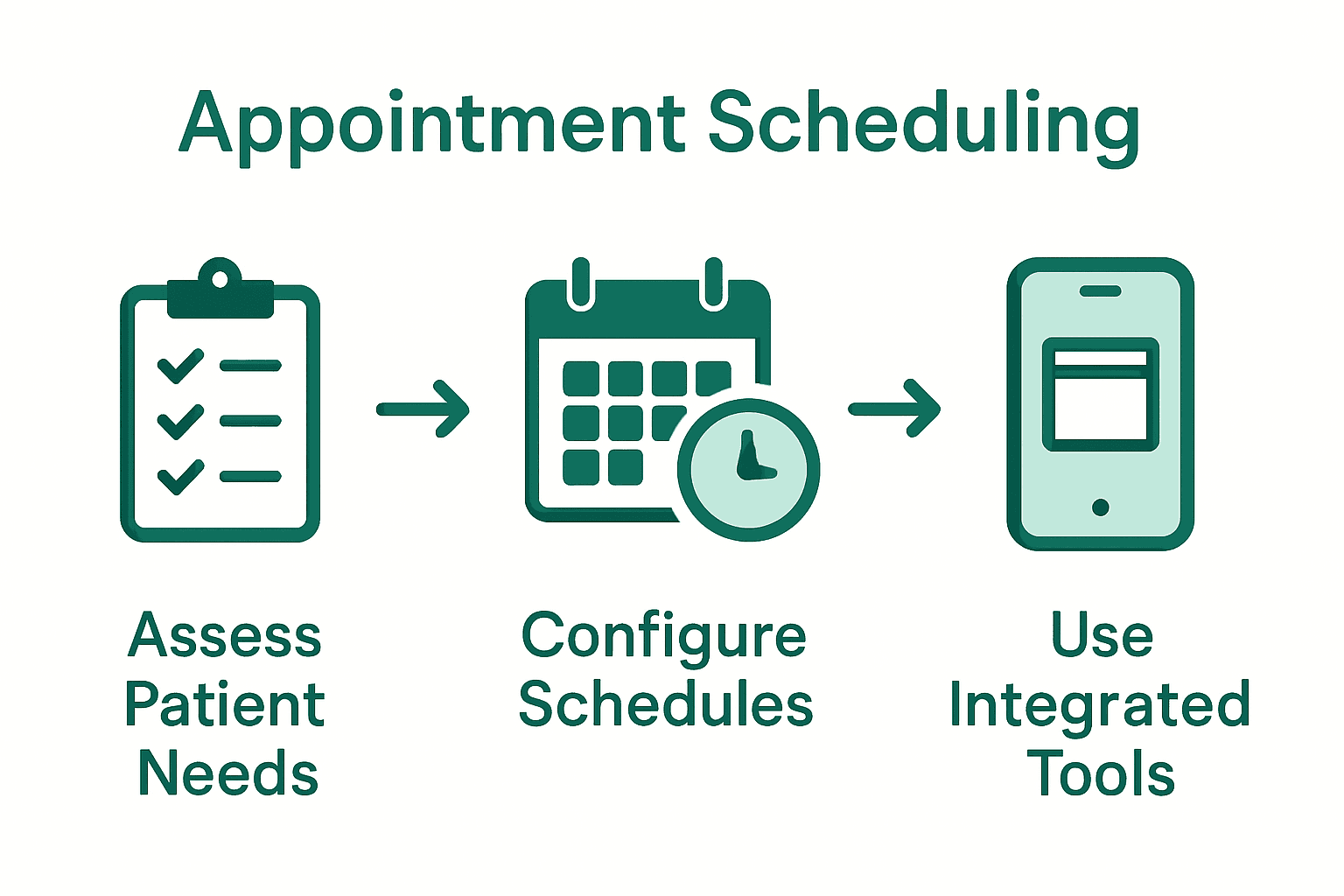
- Step 1: Assess Patient Needs And Service Requirements
- Step 2: Configure Scheduling Preferences And Provider Availability
- Step 3: Initiate Appointment Requests Using Integrated Tools
- Step 4: Coordinate Transportation And Ancillary Services
- Step 5: Verify Appointment Confirmation And Communicate Updates
Quick Summary
| Key Point | Explanation |
|---|---|
| 1. Assess patient needs comprehensively | Gather complete patient information to tailor scheduling and improve care satisfaction. |
| 2. Configure provider availability accurately | Maintain an up-to-date matrix of provider schedules for effective appointment handling. |
| 3. Utilize integrated scheduling tools | Empower patients to manage appointments through various user-friendly platforms for better access. |
| 4. Coordinate transportation needs thoroughly | Plan transportation considering unique patient conditions to reduce missed appointments. |
| 5. Verify and communicate appointment details | Ensure confirmation through multiple channels to reinforce accountability and reduce no-shows. |
|
Step 1: Assess Patient Needs and Service Requirements
Successfully scheduling healthcare appointments begins with a comprehensive assessment of individual patient needs and service requirements. This critical first step ensures that each patient receives the most appropriate and timely care possible.
According to research from NCBI, priority-based scheduling represents a strategic approach to managing patient appointments. This method involves carefully evaluating each patient’s condition and assigning wait times based on medical urgency. To conduct an effective needs assessment, start by gathering comprehensive patient information including:
- Medical history and current health status
- Mobility limitations
- Transportation requirements
- Specific care service needs
- Insurance coverage and potential transportation support
Pubmed highlights the importance of understanding patient demand and service requirements to optimize scheduling systems. This means looking beyond basic medical needs and considering the entire patient experience. Consider factors such as preferred appointment times, potential transportation challenges, and any special accommodations required.
Pro Tip: Create a standardized intake form that captures all essential patient information to streamline the assessment process and ensure no critical details are missed.
By thoroughly assessing patient needs upfront, healthcare providers can create more personalized and efficient scheduling experiences that improve overall patient satisfaction and care outcomes.

The next step involves matching these detailed patient requirements with appropriate service providers and transportation resources.
Step 2: Configure Scheduling Preferences and Provider Availability
Configuring scheduling preferences and provider availability is a critical step in creating an efficient and responsive healthcare appointment system. This process ensures that patient needs align seamlessly with healthcare provider capacities.
According to Methodist MD, effective scheduling requires a comprehensive approach to recording patient preferences and managing provider availability. Start by establishing a detailed matrix of provider schedules that includes:
- Individual provider working hours
- Specific service specialties
- Appointment type capacity
- Geographic service areas
- Potential time block limitations
Carefully mapping out these details allows for more precise and flexible scheduling. Consider implementing a dynamic scheduling system that can adapt to real time changes in provider availability. This might include creating buffer times between appointments, establishing backup provider options, and developing protocols for urgent or unexpected scheduling needs.
Pro Tip: Use technology that allows real time updates to provider schedules and enables quick communication about availability changes.
By meticulously configuring scheduling preferences and tracking provider availability, healthcare organizations can dramatically improve patient access and reduce administrative complexity. The Understanding Patient Scheduling Best Practices for Providers guide offers additional insights into optimizing these critical operational processes.
With scheduling preferences and provider availability configured, you are now ready to move forward with matching patient needs to the most appropriate healthcare resources.
Step 3: Initiate Appointment Requests Using Integrated Tools
Initiating healthcare appointment requests has been transformed by advanced integrated technological tools that simplify and streamline the scheduling process. This step empowers patients to take an active role in managing their healthcare interactions with unprecedented convenience and efficiency.
Research from PMC highlights the growing trend of self scheduling systems in medical practices. These integrated tools enable patients to submit appointment requests through multiple channels such as:
- Online patient portals
- Mobile applications
- Telephone automated systems
- Direct messaging platforms
- Electronic communication interfaces
Pubmed further demonstrates the effectiveness of automated scheduling systems that allow patients to initiate appointments with minimal administrative intervention. When using these integrated tools, ensure you have essential information ready including personal details, preferred appointment times, and specific service requirements.
Pro Tip: Always verify your contact information and preferred communication method to ensure smooth scheduling and confirmation processes.
Modern home health logistics platforms provide comprehensive tools that not only facilitate appointment requests but also enable real time tracking and coordination of care. By leveraging these integrated technologies, patients can significantly reduce waiting times and improve overall healthcare access.
With your appointment request initiated, the next phase involves confirming and finalizing the scheduling details with your healthcare provider.
Step 4: Coordinate Transportation and Ancillary Services
Coordinating transportation and ancillary services is a critical step in ensuring patients can successfully attend their healthcare appointments. This process involves comprehensive planning to address potential barriers that might prevent patients from accessing necessary medical care.
According to AHRQ, healthcare teams should develop a structured approach to preparing patients for appointments. This involves identifying and addressing transportation needs well in advance, considering factors such as:
- Patient mobility limitations
- Distance to medical facilities
- Special equipment or assistance requirements
- Insurance transportation benefits
- Alternative transportation options
PMC research highlights that effective coordination of transportation services significantly reduces missed appointment rates. By proactively addressing potential transportation challenges, healthcare providers can improve patient engagement and overall care continuity.
Pro Tip: Utilize air medical logistics platforms for patients requiring specialized or long distance medical transportation, ensuring comprehensive and reliable transit solutions.
Successful transportation coordination goes beyond simply arranging a ride. It involves creating a holistic support system that considers the patient’s unique medical and logistical needs. By integrating transportation planning into the overall care strategy, healthcare providers can dramatically improve patient access and treatment outcomes.
With transportation and ancillary services coordinated, you are now prepared to move forward with confirming and finalizing your healthcare appointment logistics.
Step 5: Verify Appointment Confirmation and Communicate Updates
Verifying appointment confirmation and maintaining clear communication represents the final critical step in ensuring a seamless healthcare scheduling experience. This process guarantees that both patients and healthcare providers are aligned on appointment details and expectations.
According to AHRQ, open access scheduling requires robust confirmation and communication protocols. Patients should proactively verify their appointments through multiple channels such as:
- Automated text message confirmations
- Email notifications
- Patient portal updates
- Telephone verification systems
- Mobile application alerts
National Academies Press research emphasizes the importance of maintaining clear communication channels to reduce missed appointments and improve overall healthcare access. This involves not just confirming the initial appointment but also being prepared for potential last minute changes or updates.
Pro Tip: Utilize hospital patient logistics platforms to streamline communication and receive real time updates about your appointment status.
Effective appointment confirmation goes beyond simple logistical communication. It represents an opportunity to build trust between patients and healthcare providers by demonstrating organizational competence and patient centered care. By implementing comprehensive verification processes, healthcare organizations can significantly reduce administrative overhead and improve patient satisfaction.
With your appointment confirmed and communication channels established, you are now prepared to attend your scheduled healthcare service with confidence and clarity.
Streamline Your Healthcare Appointment Scheduling for Better Patient Experiences
Scheduling healthcare appointments can feel overwhelming when you face challenges like coordinating patient needs, managing provider availability, and arranging transportation logistics. This process often leads to delays or missed visits that hurt patient satisfaction and care continuity. The article highlights key pain points such as the need for priority-based scheduling, real-time updates, seamless communication, and robust transportation coordination—all essential for delivering timely and efficient care.
VectorCare’s integrated digital platform addresses these exact challenges by automating and optimizing every step of patient logistics. Our tools ensure you can manage scheduling preferences, coordinate home health services, and secure transportation with AI-driven dispatching and real-time updates. Easily reduce administrative burdens and improve patient access with solutions designed for providers, payers, and emergency services alike.
Discover how VectorCare empowers healthcare organizations to transform appointment scheduling into a seamless experience that enhances operational efficiency and patient outcomes.
Ready to eliminate scheduling delays and improve care coordination today?
Take the first step by exploring how VectorCare streamlines patient logistics at https://www.vectorcare.com. Learn more about our comprehensive scheduling and transportation features with home health logistics platforms and air medical logistics platforms that drive real results.
Frequently Asked Questions
How do I assess my healthcare needs before scheduling an appointment?
Start by gathering your medical history, current health status, and any specific service requirements. Use a standardized intake form to capture this essential information, ensuring you provide all relevant details to your healthcare provider.
What factors should I consider when configuring my appointment preferences?
Consider your preferred appointment times, any transportation challenges, and specific providers who can attend to your health needs. By mapping out your availability and preferences, you can ensure a smooth scheduling process.
How can I initiate an appointment request using integrated tools?
You can initiate an appointment request through online patient portals, mobile applications, or even via telephone. Always have your personal details and preferred appointment times ready to streamline the submission process.
What should I do to ensure my transportation is coordinated for my appointment?
Identify your transportation needs, including mobility limitations and insurance benefits for transportation services. Make arrangements at least a few days in advance to avoid last-minute issues and ensure you arrive safely at your appointment.
How can I verify my appointment confirmation effectively?
Verify your appointment by checking multiple communication channels such as automated text messages, email notifications, or direct calls. Confirm your appointment one to two days prior to ensure all details are accurate and there are no last-minute changes.
What steps can I take if I need to reschedule my healthcare appointment?
Contact your healthcare provider as soon as possible to discuss rescheduling options. Be ready to provide alternative dates and times that work best for you to facilitate a smooth transition.
Recommended
- 7 Best Healthcare Scheduling Software for Smooth Operations
- Understanding Scheduling Software for Healthcare Providers
- 7 Essential Tips for Online Scheduling in Healthcare
- Understanding Patient Scheduling Best Practices for Providers
- Reducing No-Shows and Cancellations with Automated Appointment Reminders - Go Online Now
- What is Automated Scheduling? Understanding Its Impact - WhenNOT Blog