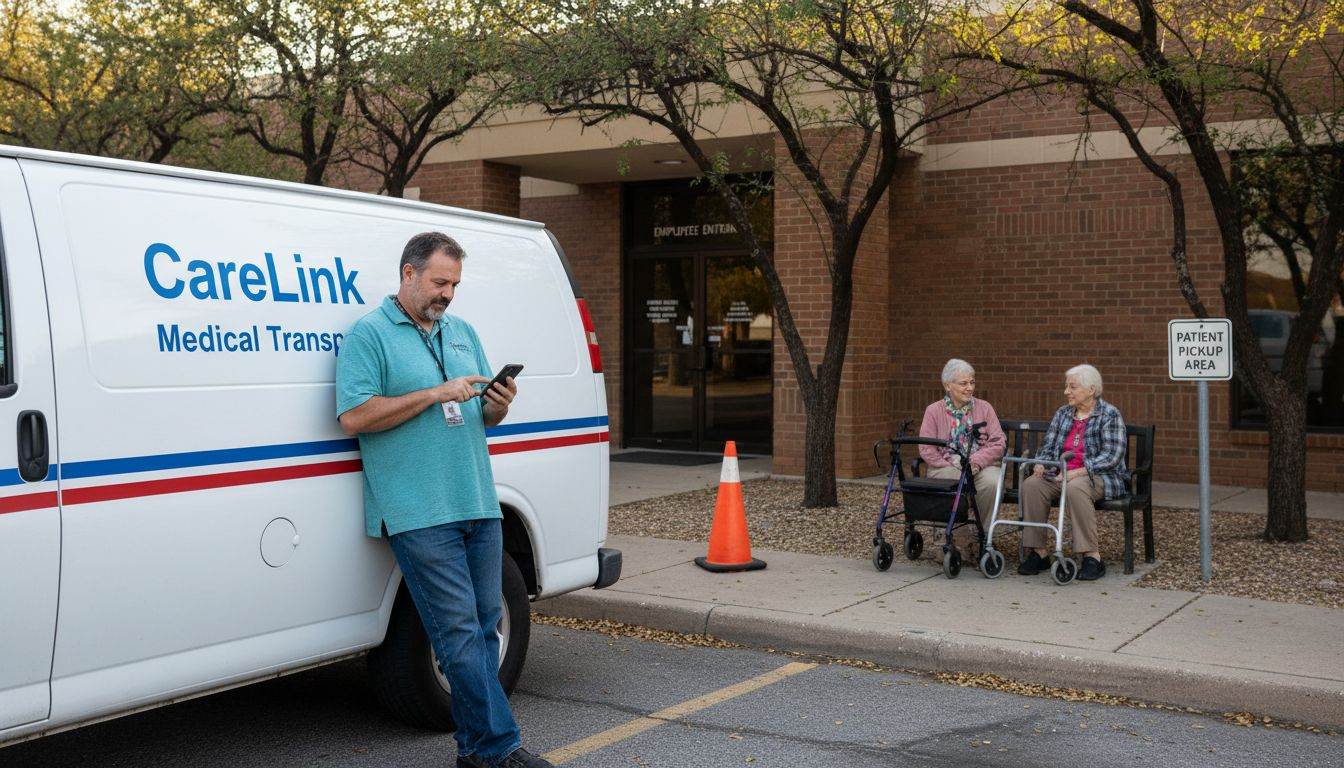
Safe Patient Transport: Reducing Delays in Hospitals

Most American hospitals face mounting pressure to improve patient flow, yet studies reveal that nearly 40 percent of internal transports encounter unnecessary delays. For healthcare logistics managers, every minute lost can mean postponed treatments and frustrated clinical staff. Automated solutions promise to ease these pain points by making patient movement safer, faster, and more reliable across complex American hospital systems.
Table of Contents
- Safe Patient Transport Defined And Debunked
- Types Of Patient Transport Services In Healthcare
- Critical Safety Protocols And Compliance Standards
- Technology-Driven Solutions For Efficient Transport
- Operational Risks, Costs, And Best Practices
Key Takeaways
| Point | Details |
|---|---|
| Comprehensive Assessment is Key | Conduct thorough evaluations of patients’ mobility needs and medical requirements before transport. |
| Standardized Safety Protocols are Essential | Adhere to established safety protocols to minimize risks during patient transport. |
| Technology Enhances Efficiency | Leverage digital tools for real-time tracking and improved communication to streamline transport processes. |
| Invest in Staff Training | Continuous training and education for staff are crucial for maintaining high standards in patient transport safety. |
Safe Patient Transport Defined and Debunked
Patient transport is far more complex than simply moving an individual from one location to another. Safe patient transport involves a comprehensive, individualized approach to transferring patients that prioritizes their medical needs, physical capabilities, and overall safety. Healthcare professionals must recognize that each transport scenario requires careful assessment and strategic planning to minimize potential risks.
Critical components of safe patient transport include selecting appropriate transportation devices and implementing precise safety protocols. Transport equipment must feature specific design elements like lockable wheels, padded surfaces, secure safety straps, and accommodations for medical equipment such as IV poles and oxygen tanks. The American Society of Transport Standards emphasizes that these devices are not optional extras but essential tools for preventing patient injury and maintaining physiological stability during movement.
Contrary to popular misconceptions, manual patient lifting without assistive technologies is no longer considered acceptable practice. Modern patient transport guidelines mandate the use of specialized medical devices and proper training for operators to reduce fall risks and potential patient harm. Healthcare teams must invest in both technological solutions and comprehensive staff training to ensure safe, efficient patient transfers across various medical settings.
Pro tip: Before initiating any patient transport, conduct a thorough individual assessment of the patient’s specific mobility needs, medical equipment requirements, and potential transfer risks to develop a customized transport strategy.
Types of Patient Transport Services in Healthcare
Healthcare organizations offer multiple patient transport services designed to meet diverse medical needs and clinical requirements. Hospitals categorize transport services based on patient complexity, mobility, and monitoring requirements, ranging from simple wheelchair transfers to highly specialized critical care transports. Understanding these service types is crucial for healthcare administrators and medical professionals seeking efficient patient movement strategies.
Patient transport services typically encompass three primary categories: perioperative transport, emergency medical services, and non-emergency transport. Perioperative transport involves moving patients within hospital facilities, often between surgical units and recovery areas. Emergency medical services include ambulance and rapid response transports for time-sensitive medical interventions. Non-emergency transports cover wheelchair services, stretcher transfers, and ambulette transportation for patients with limited mobility who require scheduled medical appointments or facility transfers.
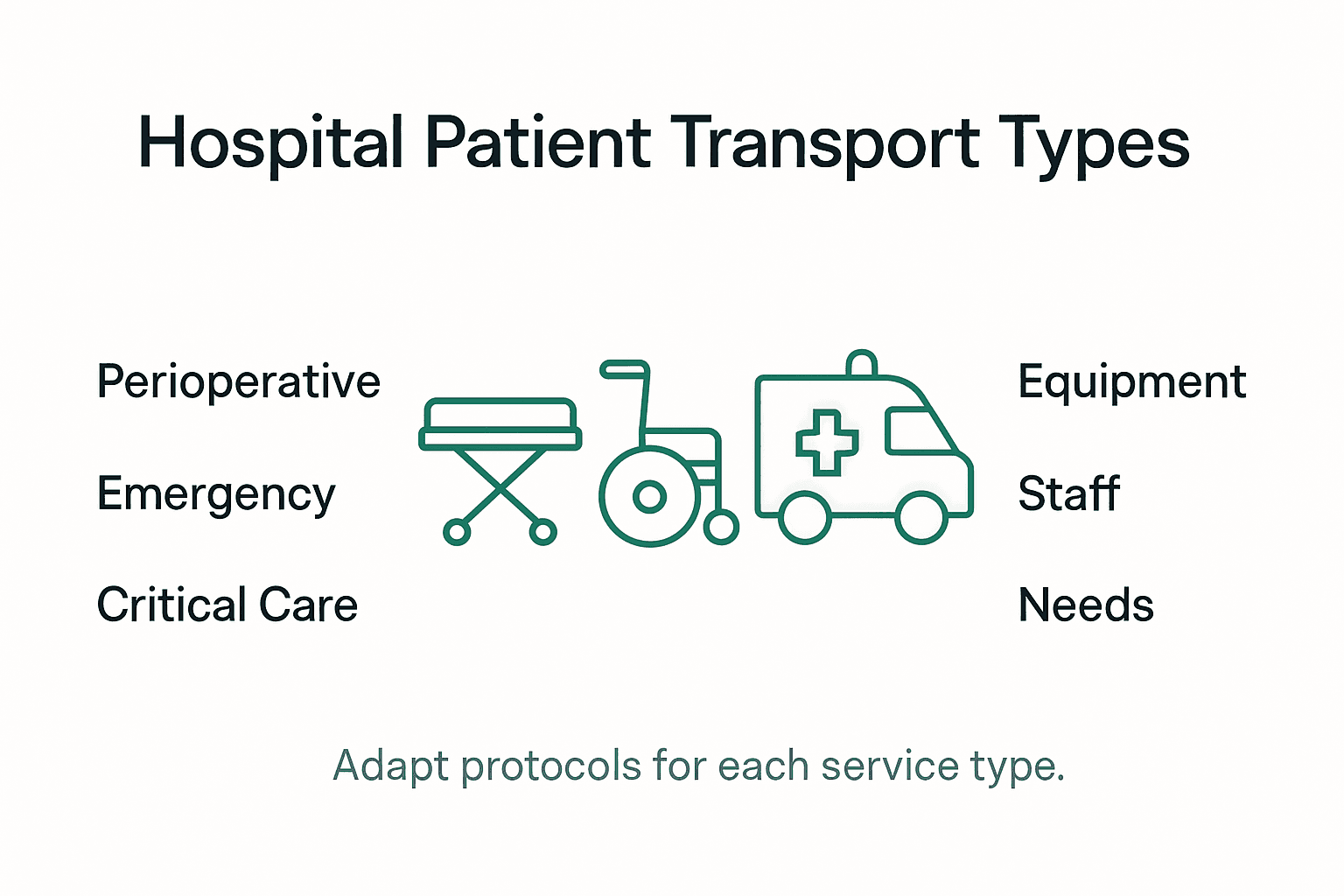
Critical care transport represents the most advanced patient transportation service, featuring specialized medical teams equipped to manage complex patient needs during transit. These advanced transport units typically include intensive care nurses, respiratory therapists, and advanced medical equipment capable of maintaining patient stability during interfacility transfers. Unlike standard ambulance services, critical care transports are designed to provide continuous, high-level medical monitoring and intervention throughout the patient’s journey.
Pro tip: Always conduct a comprehensive patient assessment before selecting a transport service to ensure the most appropriate and safe transportation method matches the individual’s specific medical requirements.
Here’s a comparison of the main types of patient transport services and their key differences:
| Service Type | Typical Patient Needs | Staff Specialization | Common Equipment |
|---|---|---|---|
| Perioperative | In-hospital transfers | General medical staff | Stretchers, wheelchairs |
| Emergency Medical | Time-sensitive emergencies | Paramedics, EMTs | Ambulances, monitors |
| Non-Emergency | Scheduled, stable transfers | Medical assistants | Ambulettes, lifts |
| Critical Care | Complex, unstable conditions | ICU nurses, RTs | Advanced life support |
Critical Safety Protocols and Compliance Standards
Healthcare patient transport safety demands rigorous adherence to comprehensive compliance standards that protect patient well-being and minimize potential risks. The Joint Commission’s National Patient Safety Goals establish critical protocols for healthcare organizations, focusing on essential areas including accurate patient identification, safe medication administration, infection prevention, and reducing patient harm during transportation processes.
Safety protocols in patient transport encompass multiple critical dimensions. These include comprehensive personnel training, precise equipment maintenance, systematic risk assessment, and continuous quality improvement initiatives. Hospitals must implement standardized procedures for patient verification, medical equipment handling, and emergency response preparedness. Key requirements include documenting patient medical status, ensuring proper restraint techniques, maintaining clear communication channels, and developing robust contingency plans for potential transport-related complications.
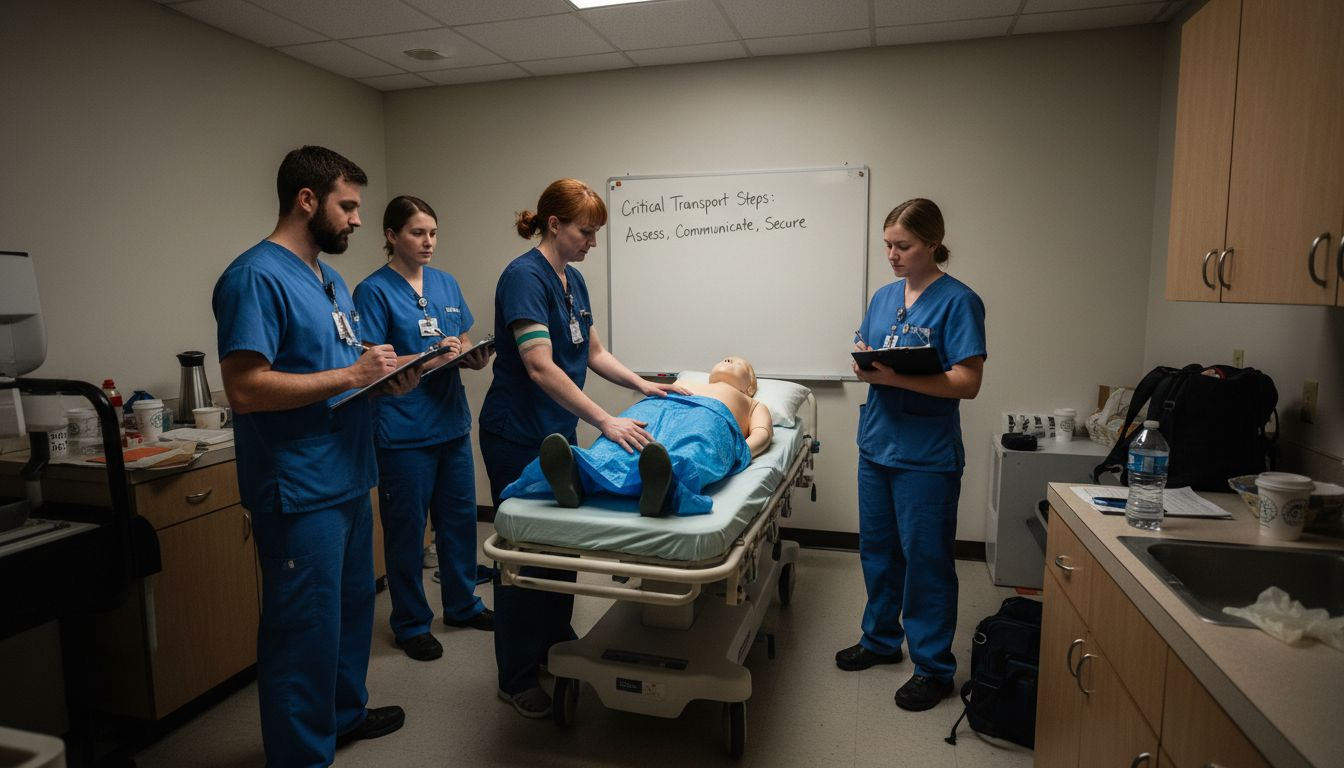
Medical transport accreditation standards provide comprehensive guidelines for ensuring patient safety during transit, with organizations like the Commission on Accreditation of Medical Transport Systems (CAMTS) establishing nationwide benchmarks. These standards mandate specific qualifications for transport personnel, define equipment performance requirements, and establish operational procedures that minimize patient risk. Critical elements include specialized training for medical transport professionals, advanced safety management systems, and continuous evaluation of transport protocols to address emerging healthcare challenges.
Pro tip: Develop a comprehensive compliance checklist that integrates multiple safety verification points and regularly update it based on the latest national patient safety recommendations.
Technology-Driven Solutions for Efficient Transport
Healthcare technology solutions are rapidly transforming patient transport logistics by introducing sophisticated digital tools that dramatically improve operational efficiency. Electronic health records, automated scheduling systems, and advanced communication platforms enable healthcare organizations to streamline patient movement processes, reduce administrative bottlenecks, and optimize resource allocation across medical facilities.
Digital transport technologies encompass multiple innovative approaches designed to address traditional healthcare logistics challenges. These solutions integrate artificial intelligence, machine learning, and Internet of Things (IoT) technologies to create intelligent transport management systems. Key technological innovations include real-time patient tracking, predictive analytics for transport scheduling, automated dispatch mechanisms, and comprehensive digital communication networks that connect medical teams, transport providers, and patient care coordinators.
Smart emergency department models demonstrate the transformative potential of technology-driven transport solutions, utilizing advanced technologies like wearable health monitors, decentralized patient records, and AI-powered triage systems. These integrated technological approaches enable faster, more accurate patient routing, reduce transport delays, and provide unprecedented visibility into patient movement processes. By leveraging data-driven decision-making tools, healthcare organizations can significantly improve transport efficiency, patient safety, and overall operational performance.
Pro tip: Conduct a comprehensive technology audit of your current patient transport systems to identify specific areas where digital solutions can streamline workflow and reduce operational inefficiencies.
Below is a quick reference to technology-driven solutions and their operational impact on patient transport:
| Technology Solution | Main Function | Operational Impact |
|---|---|---|
| Real-time tracking | Monitor patient location | Reduces delays and errors |
| Automated dispatch | Assigns transport tasks | Improves staff coordination |
| Predictive analytics | Forecasts transport demand | Optimizes resource allocation |
| Wearable health monitors | Continuous patient data | Supports rapid medical response |
Operational Risks, Costs, and Best Practices
Patient transport in healthcare settings involves complex operational challenges that directly impact patient outcomes and organizational efficiency. These risks encompass multiple interconnected factors including staff training gaps, equipment reliability, communication breakdowns, and systemic workflow inefficiencies. Understanding and mitigating these risks requires a comprehensive approach that goes beyond traditional reactive management strategies.
Operational risks in patient transport manifest through several critical dimensions. These include improper patient assessment protocols, insufficient staff competency, potential equipment failures, and communication disruptions that can compromise patient safety. Hospitals must implement rigorous risk mitigation strategies such as mandatory staff training programs, regular equipment maintenance checks, standardized safety checklists, and robust multidisciplinary communication frameworks. Proactive identification and management of these risks can significantly reduce potential transport delays and minimize patient harm.
Optimizing operational efficiency requires strategic investment in data-driven management approaches, focusing on predictive analytics, streamlined resource allocation, and continuous performance improvement. Best practices involve utilizing advanced technologies for real-time patient tracking, implementing standardized transfer protocols, and developing comprehensive staff training programs. These strategies not only reduce transport-related costs but also improve overall patient satisfaction by minimizing waiting times and ensuring smoother, more coordinated care transitions.
Pro tip: Conduct quarterly comprehensive risk assessments of your patient transport processes, analyzing performance metrics, staff feedback, and incident reports to identify and proactively address potential operational vulnerabilities.
Transform Safe Patient Transport Challenges Into Seamless Solutions
Safe patient transport requires more than just moving individuals within healthcare facilities. The article highlights crucial pain points such as minimizing delays, reducing risks through rigorous compliance, and optimizing resource allocation with real-time tracking and AI-driven scheduling. These challenges often cause operational inefficiencies, increase costs, and unfortunately impact patient outcomes.
VectorCare understands the urgency of these issues and delivers a comprehensive digital platform that automates and streamlines patient transportation logistics. With features like AI-driven dispatching, scheduling optimization, and secure communication, healthcare providers can significantly reduce delays and improve coordination across perioperative, emergency, and non-emergency transport services. This proactive approach empowers medical teams to focus on personalized patient care while ensuring compliance with safety protocols.
Discover how VectorCare’s integrated solutions can help you overcome critical patient transport challenges today. Take the first step to enhance your operational efficiency and patient safety by visiting VectorCare’s platform.
Ready to reduce hospital transport delays and improve patient outcomes through cutting-edge technology and seamless logistics management Go to VectorCare now and learn more about optimizing your patient transport workflows with our trusted digital tools.
Frequently Asked Questions
What is safe patient transport?
Safe patient transport refers to a comprehensive approach to moving patients that prioritizes their medical needs and safety, using proper equipment and protocols to minimize risks.
What are the critical components of safe patient transport?
Key components include selecting appropriate transport devices, implementing safety protocols, conducting patient assessments, and providing staff training to ensure safety and efficiency during transfers.
How can technology improve patient transport efficiency?
Technology enhances patient transport through real-time tracking, automated scheduling, predictive analytics, and improved communication systems, which lead to reduced delays and improved operational performance.
What are the main types of patient transport services in healthcare?
The primary types include perioperative transport for in-hospital transfers, emergency medical services for urgent situations, non-emergency transport for stable patients, and critical care transport for complex medical needs.