Private Care Coordinator: Streamlining Patient Logistics

Coordinating care in a busy American hospital often feels like solving a puzzle with shifting pieces. As patient loads rise and treatment pathways grow complex, managing every detail from referrals to communication can overwhelm even the most experienced teams. Embracing automated solutions in care coordination helps address these challenges by supporting smoother handoffs, clearer communication, and better patient outcomes for healthcare coordinators committed to quality.
Table of Contents
- Private Care Coordinators In Healthcare Logistics
- Types Of Private Care Coordination Models
- Core Functions And Digital Tools Explained
- Regulatory Standards And Compliance Requirements
- Key Challenges, Costs, And Common Pitfalls
Key Takeaways
| Point | Details |
|---|---|
| Patient Care Coordinators Enhance Communication | They act as vital liaisons between patients and healthcare providers, improving overall healthcare delivery. |
| Diverse Care Coordination Models Exist | Various models, such as Comprehensive and Integrated Care Models, cater to different patient needs and enhance care outcomes. |
| Digital Tools Streamline Coordination | Advanced technologies, including EHR systems and telemedicine platforms, significantly improve patient management and service delivery. |
| Regulatory Compliance is Essential | Adhering to healthcare regulations ensures patient safety and facilitates continuous quality improvement in care coordination. |
Private Care Coordinators in Healthcare Logistics
Private care coordinators serve as essential navigators in modern healthcare systems, bridging critical communication gaps between patients, providers, and various medical services. Their role has become increasingly complex as healthcare delivery transforms, requiring sophisticated logistical management and interpersonal skills.
At its core, a patient care coordinator acts as a comprehensive liaison, managing intricate healthcare interactions. Healthcare coordination involves monitoring treatment plans, connecting patients with appropriate providers, and ensuring seamless medical service delivery. Their responsibilities span multiple critical domains:
- Developing comprehensive healthcare programs
- Assisting patients with complex administrative paperwork
- Maintaining confidential communication among diverse care teams
- Providing targeted patient education about treatment options
- Managing referral networks and medical transitions
Care coordinators operate across diverse healthcare environments, including hospitals, insurance companies, and community health programs. They must navigate complex regulatory landscapes while maintaining patient-centered care approaches. Their work requires exceptional organizational skills, deep medical knowledge, and the ability to advocate effectively on behalf of patients.
Effective care coordination can significantly reduce medical errors, improve patient outcomes, and streamline healthcare delivery processes.
Successful private care coordinators combine technical expertise with strong interpersonal communication. They must interpret medical information, translate complex healthcare terminology for patients, and create comprehensive care strategies that address individual patient needs.
Pro tip: Develop a robust digital communication system that allows real-time tracking and coordination of patient care logistics.
Types of Private Care Coordination Models
Private care coordination models represent sophisticated approaches to managing patient healthcare needs, each designed to address unique challenges in medical service delivery. Care coordination models vary significantly across different healthcare settings, reflecting the complex nature of patient care management.
Key types of care coordination models include:
- Comprehensive Care Model: Provides holistic patient support across multiple healthcare domains
- Integrated Care Model: Focuses on seamless communication between different healthcare providers
- Disease-Specific Management Model: Targets specific medical conditions with specialized care strategies
- Social Worker Integrated Model: Incorporates comprehensive social need assessments
- Nursing-Led Coordination Model: Emphasizes direct nursing team management of patient care
Each model has distinct characteristics that influence patient outcomes. The comprehensive care model, for instance, takes a whole-person approach, addressing not just medical needs but also psychological, social, and economic factors affecting a patient’s health.
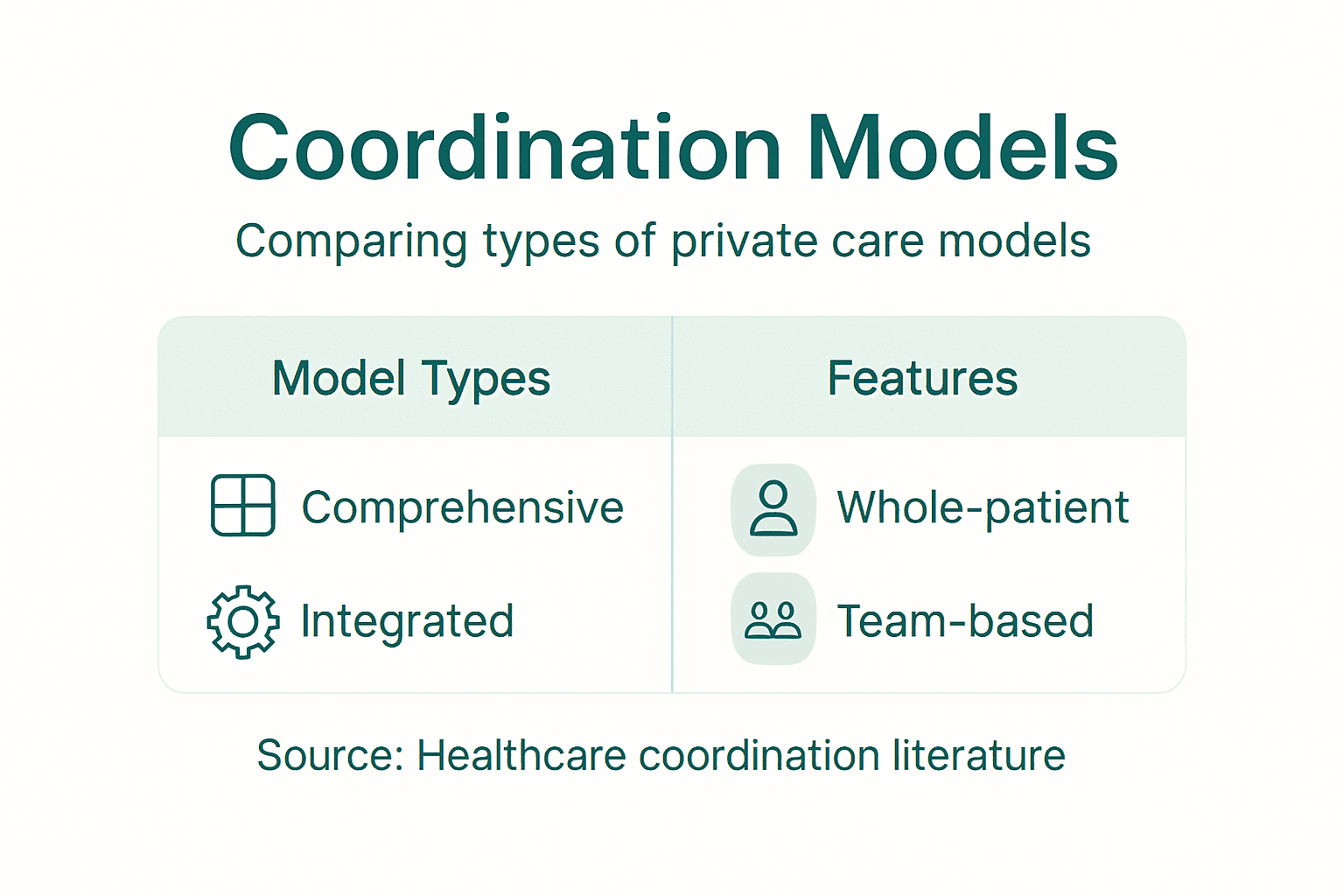
Here’s a comparison of key private care coordination models and their primary strengths:
| Model Type | Primary Focus | Unique Strength |
|---|---|---|
| Comprehensive Care Model | Whole-person support | Addresses all patient needs |
| Integrated Care Model | Provider collaboration | Minimizes care fragmentation |
| Disease-Specific Model | Targeted condition management | Expertise in specific diseases |
| Social Worker Integrated | Social need assessment | Holistic psychosocial support |
| Nursing-Led Coordination | Direct nursing care leadership | Timely clinical interventions |
Effective care coordination models can reduce healthcare fragmentation and improve patient experience by creating more personalized and responsive care strategies.
Primary care clinics increasingly adopt hybrid models that combine elements from different coordination approaches. These innovative strategies aim to create more flexible, patient-centered care frameworks that can adapt to individual healthcare requirements.
Pro tip: Regularly assess and adapt your care coordination model to match evolving patient needs and emerging healthcare technologies.
Core Functions and Digital Tools Explained
Private care coordination relies on sophisticated digital infrastructure to streamline patient management and healthcare delivery. Core functions of care coordination encompass strategic organization of patient care activities, ensuring comprehensive communication and seamless service delivery across multiple healthcare touchpoints.
The primary digital tools supporting care coordination include:
- Electronic Health Record (EHR) Systems: Centralized patient information platforms
- Referral Tracking Software: Automated patient transition management
- Telemedicine Platforms: Virtual consultation and remote monitoring technologies
- Communication Dashboards: Real-time collaborative healthcare interfaces
- AI-Powered Scheduling Tools: Intelligent patient appointment and resource optimization
Technology now plays a transformative role in healthcare coordination. Digital tools enable care coordinators to manage complex logistics more efficiently, reducing administrative burdens and improving overall patient care quality. These technologies facilitate instant information sharing, support comprehensive patient assessments, and create more responsive healthcare ecosystems.

A quick overview of common digital tools and their business impact in care coordination:
| Tool | Main Function | Impact on Care Quality |
|---|---|---|
| EHR Systems | Centralize patient records | Ensures data consistency |
| Referral Tracking Software | Automates patient transitions | Reduces administrative delays |
| Telemedicine Platforms | Enables remote consultations | Expands patient access |
| Communication Dashboards | Real-time team collaboration | Improves clinical teamwork |
| AI Scheduling Tools | Optimizes appointments and resources | Lowers wait times, boosts efficiency |
Effective digital tools can reduce care coordination time by up to 40% while significantly improving patient outcomes and provider communication.
Advanced digital solutions are particularly critical in managing chronic conditions, coordinating multiple specialist interventions, and ensuring continuous patient engagement. The integration of artificial intelligence and machine learning continues to enhance these digital platforms, creating more predictive and personalized care coordination strategies.
Pro tip: Invest in interoperable digital tools that seamlessly communicate across different healthcare systems and platforms.
Regulatory Standards and Compliance Requirements
Healthcare regulatory compliance represents a complex framework of legal and professional standards designed to ensure patient safety and quality care. The Joint Commission sets comprehensive standards that healthcare organizations must meticulously integrate into their operational practices, focusing on continuous quality improvement and patient protection.
Key regulatory compliance requirements for care coordinators include:
- Patient Privacy Protection: Adherence to HIPAA regulations
- Documentation Standards: Comprehensive and accurate medical record maintenance
- Informed Consent Protocols: Ensuring patient understanding and agreement
- Quality Measurement Reporting: Regular performance and outcome tracking
- Ethical Treatment Guidelines: Maintaining patient rights and dignity
State and federal regulations create a multilayered compliance landscape that demands constant vigilance and proactive management. Care coordinators must develop robust systems to track changing requirements, implement necessary protocols, and demonstrate ongoing compliance through systematic documentation and quality assurance processes.
Effective regulatory compliance is not just about meeting minimum standards, but creating a culture of continuous improvement and patient-centered care.
Technological advancements are increasingly supporting compliance efforts, with digital tools enabling more precise tracking, reporting, and documentation. These solutions help organizations streamline complex regulatory requirements while maintaining the highest standards of patient care and organizational accountability.
Pro tip: Develop a comprehensive compliance tracking system that automates regulatory updates and provides real-time monitoring of organizational adherence.
Key Challenges, Costs, and Common Pitfalls
Healthcare care coordination involves navigating a complex landscape of operational challenges and financial considerations. Turnover rates among care coordinators represent a significant organizational risk, with potential impacts on patient care continuity and operational effectiveness.
Key challenges in patient care coordination include:
- Staff Retention: High turnover rates (20-30%) disrupting team stability
- Technology Integration: Complex digital platform implementation
- Resource Allocation: Balancing cost-effectiveness with quality care
- Communication Barriers: Ensuring seamless inter-departmental collaboration
- Regulatory Compliance: Maintaining evolving legal and ethical standards
Financial implications are substantial. Replacement costs for care coordinators average 20-30 percent of annual salaries, creating significant economic pressure on healthcare organizations. These costs extend beyond direct salary replacements, encompassing training, productivity loss, and potential disruptions in patient care delivery.
Effective care coordination strategies can mitigate financial risks and improve overall healthcare system efficiency.
Technological solutions offer promising approaches to addressing these challenges, enabling more connected care teams and streamlined communication. Digital tools can help reduce administrative burdens, improve tracking mechanisms, and create more transparent care coordination processes.
Pro tip: Develop a comprehensive onboarding and retention program that addresses the unique challenges of care coordination roles.
Transform Patient Logistics with VectorCare’s Advanced Coordination Platform
The challenges faced by private care coordinators in streamlining healthcare logistics are clear. Complex patient transitions, fragmented communication, and high administrative burdens can disrupt care continuity and increase costs. If you are seeking to overcome these hurdles through automation, real-time updates, and AI-driven dispatching, VectorCare offers a solution tailored to your needs. Our integrated digital platform https://vectorcare.com empowers healthcare providers, payers, and emergency services to optimize scheduling, manage vendors effectively, and maintain secure communication while reducing delays and operational costs.
Discover how VectorCare’s suite of tools can enhance your care coordination efforts by simplifying patient transportation, home health services, and medical equipment delivery. Act now to improve patient outcomes and organizational efficiency with a platform designed for scalability and compliance. Visit VectorCare’s homepage to learn more and request a demo today.
Frequently Asked Questions
What is the role of a private care coordinator?
A private care coordinator acts as a liaison between patients and healthcare providers, managing communication, monitoring treatment plans, and ensuring seamless service delivery across various medical services.
How can care coordination improve patient outcomes?
Effective care coordination reduces medical errors, ensures comprehensive patient education, and creates personalized care strategies that address individual needs, ultimately enhancing overall patient experiences and outcomes.
What are the different models of private care coordination?
Types of private care coordination models include the Comprehensive Care Model, Integrated Care Model, Disease-Specific Management Model, Social Worker Integrated Model, and Nursing-Led Coordination Model, each with distinct approaches to managing patient healthcare needs.
What digital tools are essential for successful care coordination?
Key digital tools for care coordination include Electronic Health Record (EHR) systems, referral tracking software, telemedicine platforms, communication dashboards, and AI-powered scheduling tools, all of which streamline patient management and communication.
Recommended
- What is Patient Logistics: What You Need to Know | VectorCare
- How Technology is Transforming Patient Logistics for SNFs | VectorCare
- Top Patient Care Coordination Tips for Better Outcomes
- 7 Ways to Lower NEMT costs for Medicare Advantage plans | VectorCare
- Affordable Dental Care Workflow for Families Near You