Patient Data Privacy: Essential Strategies for Hospitals

Protecting patient data privacy has become a central priority for every American hospital administrator. As digital records and remote care networks expand, nearly one in four healthcare organizations reported a significant data breach last year. With mounting regulatory scrutiny and evolving federal standards, understanding what patient data privacy truly means is the first step toward safeguarding sensitive information and building trust in modern care environments. This guide delivers actionable insights for leaders seeking to advance compliance and operational efficiency.
Table of Contents
- What Patient Data Privacy Means In Healthcare
- Primary Data Types And Privacy Variations
- Key U.S. Laws Governing Patient Privacy
- Major Risks And Liability For Hospitals
- Achieving Compliance With Digital Platforms
- Best Practices For Staff And Vendors
Key Takeaways
| Point | Details |
|---|---|
| Patient Data Privacy is Essential | It safeguards sensitive medical information, ensuring confidentiality and control over personal health details. |
| Legal Frameworks Define Standards | Regulations like HIPAA set national standards for protecting health information, necessitating compliance from healthcare organizations. |
| Employee Training is Crucial | Regular training on data privacy protocols empowers staff to recognize and mitigate potential risks to patient information. |
| Vendor Compliance is Key | Stringent vendor management frameworks are essential to maintain patient data protection and to mitigate risks from third-party services. |
What Patient Data Privacy Means in Healthcare
Patient data privacy represents a fundamental protection mechanism within healthcare that ensures sensitive medical information remains confidential and secure. At its core, privacy means controlling how personal health details are collected, used, and shared, safeguarding individuals from unauthorized access or potential misuse. Patient data privacy standards establish critical boundaries that protect patient autonomy and maintain trust in medical systems.
In practical terms, patient data privacy encompasses multiple layers of protection. It involves securing physical medical records, protecting electronic health information, limiting data sharing to authorized personnel, and ensuring patients understand and control how their personal health information circulates. Healthcare organizations must implement robust technical, administrative, and physical safeguards that prevent unauthorized data exposure while maintaining the necessary information flow for effective medical treatment.
The legal framework surrounding patient data privacy is primarily defined by regulations like the Health Insurance Portability and Accountability Act (HIPAA), which sets stringent national standards for protecting individually identifiable health information. Privacy regulations mandate that healthcare providers develop comprehensive policies that balance patient confidentiality with the operational needs of delivering quality medical care.
Pro Tip for Data Protection: Implement a regular staff training program on data privacy protocols, ensuring every team member understands their responsibility in protecting patient information and recognizes potential security risks before they become breaches.
Primary Data Types and Privacy Variations
Healthcare data privacy encompasses multiple nuanced categories of sensitive information, each requiring distinct protective strategies. Patient privacy frameworks recognize four primary privacy domains: physical privacy, informational privacy, decisional privacy, and associational privacy. These categories represent the comprehensive spectrum of personal health information protection, ranging from physical record security to complex interpersonal information boundaries.
The primary data types requiring meticulous privacy protection include demographic details, clinical records, genetic information, biometric data, and behavioral health records. Each category demands unique security protocols and risk mitigation strategies. Demographic data might include name, address, and contact information, while clinical records contain detailed medical history, diagnoses, treatment plans, and prescription information. Genetic and biometric data represent especially sensitive categories, potentially revealing profound personal health insights that require stringent confidentiality measures.

Privacy control variations differ significantly depending on information context and transmission method. Electronic health records, mobile health applications, third-party medical platforms, and physical documentation each present distinct privacy challenges. Healthcare organizations must develop adaptive strategies that recognize the nuanced risk levels associated with different data transmission channels and storage mechanisms, ensuring comprehensive protection across multiple technological and administrative environments.
Pro Tip for Data Classification: Develop a comprehensive data mapping inventory that categorizes each type of patient information, identifying its sensitivity level, storage location, and specific privacy requirements to create targeted protection strategies.
Here is a comparison of primary patient data types and their unique risks and protection considerations:
| Data Type | Main Risk Factor | Unique Protection Need |
|---|---|---|
| Demographic Data | Identity theft, targeting | Address anonymization, strict access |
| Clinical Records | Misuse in insurance, treatment bias | Encrypted storage, access logs |
| Genetic Data | Discrimination, privacy invasion | Consent controls, advanced encryption |
| Biometric Data | Irreversible exposure | Secure capture, template protection |
| Behavioral Health | Social stigma, reputational harm | Restricted sharing, audit trails |
Key U.S. Laws Governing Patient Privacy
The landscape of patient data privacy in the United States is primarily shaped by a complex network of federal regulations designed to protect sensitive health information. Federal privacy regulations center around the Health Insurance Portability and Accountability Act (HIPAA), which serves as the cornerstone of patient data protection. This landmark legislation establishes comprehensive standards for how healthcare providers, health plans, and healthcare clearinghouses must handle protected health information, creating a robust framework for maintaining patient confidentiality.
Key legislative mechanisms include the HIPAA Privacy Rule, the Health Information Technology for Economic and Clinical Health (HITECH) Act, and the Genetic Information Nondiscrimination Act (GINA). These laws work in concert to provide multi-layered protection for patient data. The HIPAA Privacy Rule specifically defines protected health information and sets strict guidelines for its use and disclosure, while the HITECH Act strengthens these protections by introducing more stringent enforcement mechanisms and significant penalties for data breaches. Comprehensive privacy laws also address critical areas such as patient consent, data breach notification, and special protections for sensitive genetic and personal health information.
Beyond federal regulations, individual states have begun implementing their own supplementary privacy laws that often provide additional layers of protection. These state-level regulations can introduce more stringent requirements than federal standards, creating a complex legal landscape that healthcare providers must carefully navigate. Hospitals and healthcare organizations must develop comprehensive compliance strategies that not only meet federal requirements but also address potential variations in state-specific privacy mandates.
Pro Tip for Legal Compliance: Conduct an annual comprehensive review of your organization’s privacy policies, comparing them against the most recent federal and state regulatory updates to ensure full legal compliance and minimize potential risk exposure.
Below is a summary of major U.S. patient privacy laws and their distinct focus areas:
| Law/Regulation | Primary Focus | Notable Provision |
|---|---|---|
| HIPAA | Confidentiality, data use | Privacy Rule, disclosure limits |
| HITECH Act | Enhanced enforcement, technology | Breach notification, higher fines |
| GINA | Genetic data non-discrimination | Limits use in employment, insurance |
| State Laws | State-level specific protections | Stricter consent, local reporting |
Major Risks and Liability for Hospitals
Hospitals face increasingly complex and potentially devastating risks related to patient data privacy and cybersecurity. Cybersecurity breaches in healthcare have emerged as a critical threat, with ransomware attacks and data compromises presenting significant legal, financial, and reputational challenges. These incidents can result in massive patient record exposures, operational disruptions, and substantial financial penalties that can potentially cripple healthcare institutions.
The sources of data vulnerability are multifaceted, with third-party vendor risks representing a particularly complex challenge. Most compromised patient records are actually exposed through external business associates rather than direct hospital systems. This indirect vulnerability creates additional layers of risk management complexity, requiring hospitals to implement rigorous vendor assessment and monitoring protocols to maintain comprehensive data protection strategies.
Legal and regulatory liabilities surrounding patient data breaches are increasingly stringent, with potential consequences extending far beyond immediate financial penalties. Hospitals may face class-action lawsuits, regulatory sanctions, loss of critical accreditations, and long-term reputational damage. The financial impact can be devastating, with potential fines reaching millions of dollars, paired with the indirect costs of patient trust erosion, legal defense expenses, and mandatory system overhauls necessitated by breach investigations.
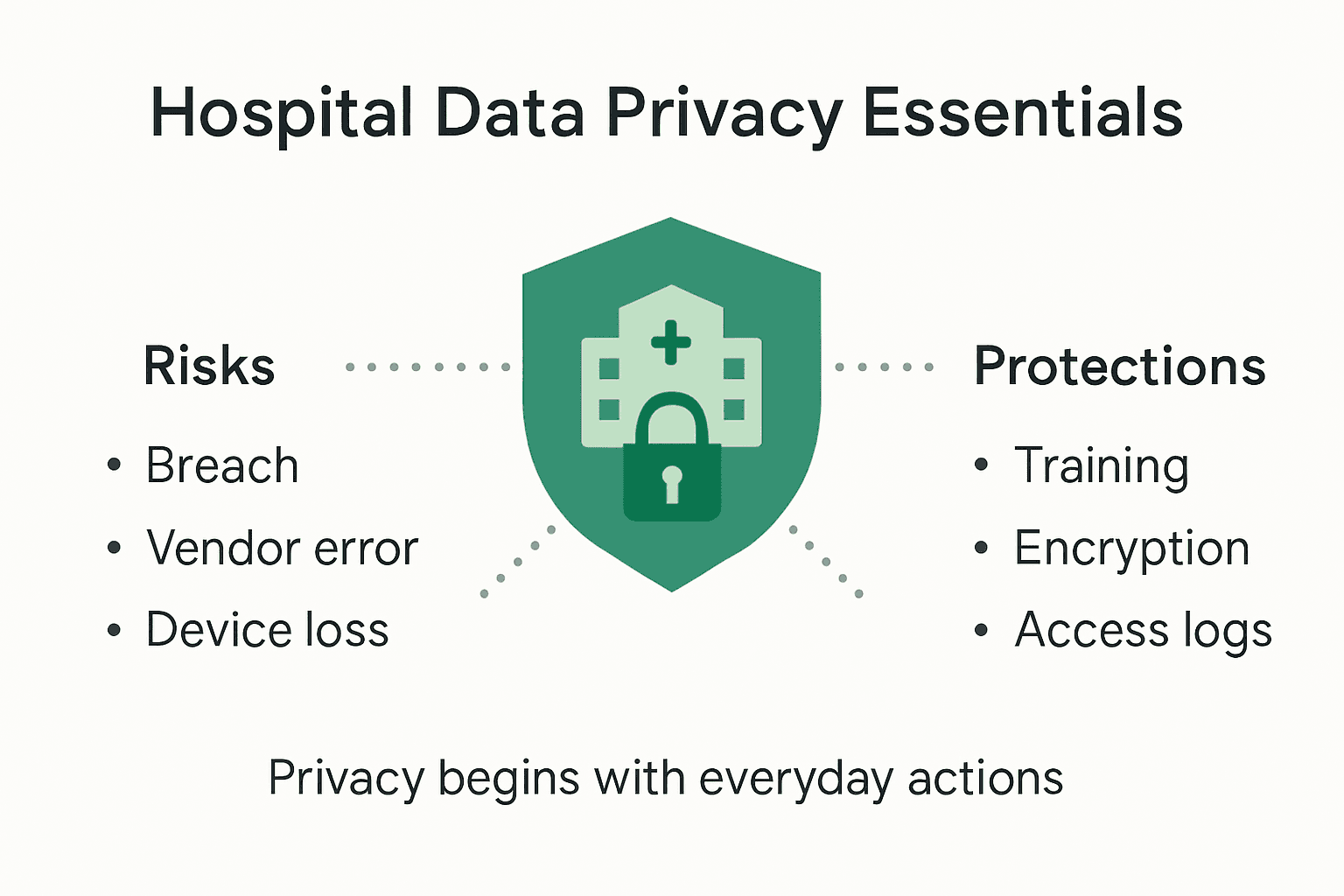
Pro Tip for Risk Mitigation: Develop a comprehensive cybersecurity risk assessment protocol that includes annual third-party vendor audits, continuous employee training, and real-time monitoring systems to proactively identify and neutralize potential data security vulnerabilities.
Achieving Compliance With Digital Platforms
Healthcare organizations must implement comprehensive strategies to ensure regulatory compliance when adopting digital platforms. Cybersecurity guidelines for digital health solutions provide critical frameworks for securing patient data across telehealth and remote monitoring technologies. These guidelines emphasize the importance of message encryption, secure data exchanges, and device-specific security protocols that protect patient information throughout digital interactions.
Effective compliance requires a multifaceted approach that goes beyond technical safeguards. Digital health privacy frameworks recommend robust governance structures that incorporate comprehensive user consent mechanisms, transparent third-party data handling policies, and continuous auditing processes. Hospitals must develop dynamic compliance strategies that adapt to evolving technological landscapes while maintaining stringent protection of patient information across all digital touchpoints.
Implementing compliance requires a holistic organizational approach that integrates technical, legal, and operational considerations. This means developing clear protocols for data access, creating detailed documentation of privacy practices, training staff on digital security best practices, and establishing transparent mechanisms for patient consent and data control. Hospitals must also invest in ongoing risk assessment processes that proactively identify potential vulnerabilities in their digital platforms, ensuring that technological innovations never compromise patient privacy and regulatory requirements.
Pro Tip for Digital Compliance: Create a dedicated cross-functional compliance team that includes IT security experts, legal professionals, and healthcare administrators to develop and continuously update your organization’s digital privacy and security protocols.
Best Practices for Staff and Vendors
Patient data privacy requires comprehensive strategies that encompass both internal staff protocols and external vendor management. Patient data privacy protocols mandate rigorous training programs that educate healthcare professionals about the intricate legal and ethical dimensions of protecting sensitive medical information. These training initiatives must go beyond basic compliance, focusing on developing a culture of privacy awareness that empowers employees to recognize and mitigate potential data risks proactively.
Vendor management represents a critical vulnerability in patient data protection strategies. Healthcare organizations must implement stringent vendor compliance frameworks that include comprehensive background checks, detailed contractual agreements, and ongoing monitoring processes. These frameworks should establish clear expectations around data handling, require regular security audits, and define precise consequences for potential privacy breaches. Vendors must demonstrate robust technical safeguards, transparent data management practices, and a commitment to maintaining the highest standards of patient confidentiality.
Successful implementation of privacy best practices demands a multifaceted approach that integrates technological solutions, legal compliance, and organizational culture. Hospitals should develop standardized workflows that limit information access to only essential personnel, implement secure electronic record systems with granular access controls, and create comprehensive documentation tracking all data interactions. Regular training sessions, simulated privacy scenario exercises, and continuous education programs can help staff and vendors develop the sophisticated understanding needed to protect patient information effectively.
Pro Tip for Privacy Management: Conduct quarterly privacy compliance workshops that include interactive scenarios and real-world case studies, helping staff and vendors develop practical skills for identifying and preventing potential data privacy risks.
Enhance Patient Data Privacy with Streamlined Healthcare Logistics
Protecting sensitive patient information is essential not only for compliance but also for maintaining trust and improving care outcomes. This article highlights critical challenges hospitals face, such as securing electronic health records and managing third-party vendor risks. VectorCare understands these urgent pain points and offers a comprehensive digital platform designed to optimize scheduling, enforce vendor management protocols, and ensure secure communications—all crucial for safeguarding patient data while improving operational efficiency.
Take control of your healthcare logistics and reduce privacy risks today by integrating VectorCare’s AI-driven dispatching and user-friendly workflows into your system. Discover how our platform supports stringent patient data privacy standards while helping hospitals cut delays and lower costs. Don’t wait until a breach happens. Visit VectorCare now to explore solutions tailored for your privacy and operational needs and start building a safer, more efficient healthcare environment.
Frequently Asked Questions
What is patient data privacy in healthcare?
Patient data privacy refers to the protection of sensitive medical information, ensuring that personal health details are collected, used, and shared in a confidential manner to prevent unauthorized access or misuse.
Why is patient data privacy important for hospitals?
Patient data privacy is crucial for maintaining patient trust, complying with legal regulations like HIPAA, and protecting sensitive information from cybersecurity threats and data breaches.
What are the main regulations governing patient data privacy?
Key regulations include the Health Insurance Portability and Accountability Act (HIPAA), the HITECH Act, and the Genetic Information Nondiscrimination Act (GINA), which collectively establish standards for the protection of patient health information.
How can hospitals improve their patient data privacy strategies?
Hospitals can enhance patient data privacy by implementing robust technical safeguards, conducting regular staff training on data privacy protocols, developing comprehensive compliance strategies, and assessing third-party vendor risks.