Optimizing Healthcare Workflows for Seamless Care Delivery

Nearly every American healthcare facility faces daily challenges with outdated workflows that slow down patient care and drain resources. Given that over 65 percent of American hospitals report inefficiencies impacting scheduling, documentation, and communication, improving operations is a top priority. This guide breaks down key steps that support leaders and teams in transforming patient logistics, data management, and administrative processes for lasting gains in efficiency and care quality.
Table of Contents
- Step 1: Assess Current Workflow Challenges
- Step 2: Map and Digitalize Patient Logistics
- Step 3: Automate Scheduling and Communication
- Step 4: Integrate Data and Vendor Management Tools
- Step 5: Monitor Results and Fine-Tune Workflows
Quick Summary
| Key Insight | Explanation |
|---|---|
| 1. Assess workflow challenges systematically | Thorough evaluation exposes inefficiencies in patient care and administrative processes, allowing targeted improvements in operations. |
| 2. Digitalize patient logistics effectively | Transforming paper processes to digital systems enhances care delivery efficiency and streamlines data management across platforms. |
| 3. Implement intelligent scheduling automation | Utilizing advanced software for scheduling and communication reduces administrative burdens and conflicts, improving patient experiences. |
| 4. Integrate data and vendor management systems | Developing a unified operational framework through data integration enhances transparency and optimizes resource allocation. |
| 5. Continuously monitor and refine workflows | Establishing clear performance metrics fosters a culture of improvement, ensuring workflows adapt to changing healthcare standards. |
Step 1: Assess current workflow challenges
Healthcare organizations must conduct a comprehensive evaluation of their existing operational processes to identify inefficiencies and bottlenecks. Healthcare workflow research reveals that systematic assessment is critical for uncovering performance gaps and designing targeted improvement strategies.
To effectively assess workflow challenges, start by documenting each step of current patient care and administrative processes. Map out the entire journey from patient intake through discharge, noting specific points where delays, redundancies, or communication breakdowns occur. Pay special attention to transitions between departments, handoff protocols, and documentation procedures. Key areas to scrutinize include patient scheduling, medical record management, interdepartmental communication, equipment allocation, and transportation coordination.
Critical data collection methods involve direct observation, staff interviews, and detailed time tracking of routine tasks. Quantify current performance metrics such as average patient wait times, documentation completion rates, and interdepartmental communication delays. By gathering objective evidence, healthcare leaders can transform anecdotal frustrations into actionable insights for workflow optimization.
Step 2: Map and digitalize patient logistics
In this critical phase of healthcare workflow optimization, the goal is to transform traditional paper based processes into streamlined digital systems. Emerging research demonstrates how digitalizing patient logistics can significantly improve care delivery efficiency, providing healthcare organizations with unprecedented operational insights and performance tracking capabilities.
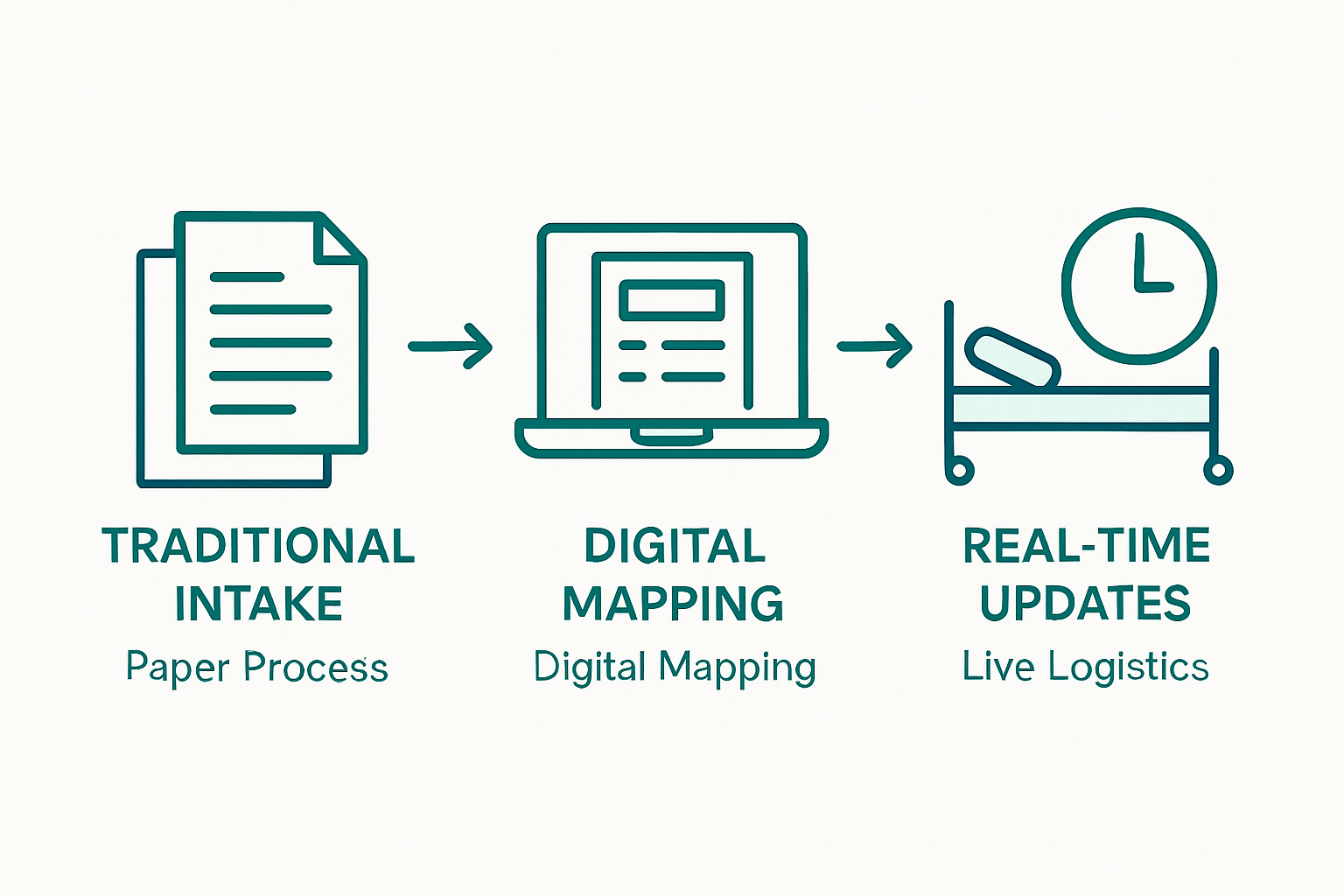
Begin by creating a comprehensive digital mapping of your current patient journey, identifying every touchpoint from initial contact through final treatment. This involves documenting each interaction between patients, medical staff, administrative personnel, and support services. Leverage electronic health record systems and integrated patient management platforms to capture detailed workflow data. Advanced spatial representations of medical histories can help reduce the time healthcare professionals spend navigating complex patient information, enabling more responsive and personalized care delivery.
Key strategies for successful digitalization include standardizing data entry protocols, implementing real time tracking mechanisms, and ensuring seamless information transfer across different departments and systems. Prioritize user friendly interfaces that minimize additional administrative burden while maximizing data capture and accessibility. By transforming analog processes into intelligent digital workflows, healthcare organizations can dramatically improve operational efficiency, reduce human error, and create more responsive patient care experiences.
Step 3: Automate scheduling and communication
Healthcare organizations can dramatically improve operational efficiency by implementing intelligent automation strategies for scheduling and communication processes. Advanced scheduling optimization approaches offer sophisticated solutions for managing complex workforce requirements, enabling more responsive and streamlined patient care delivery.

Begin by selecting robust healthcare scheduling software that integrates seamlessly with existing electronic health record systems. The ideal platform should offer intelligent features like automated appointment reminders, real time availability tracking, and smart routing capabilities that minimize scheduling conflicts. Implement communication protocols that leverage automated messaging systems, allowing instant patient notifications, staff updates, and critical healthcare information transmission.
Prioritize solutions that provide granular control over communication channels while maintaining patient privacy and regulatory compliance. This means configuring automated systems to send appointment confirmations, prescription refill reminders, and follow up instructions through patients preferred communication methods such as text messages, email, or patient portal notifications. By transforming manual scheduling and communication processes into intelligent automated workflows, healthcare organizations can reduce administrative overhead, minimize human error, and create a more responsive patient experience.
Step 4: Integrate data and vendor management tools
Healthcare organizations must develop a comprehensive strategy for connecting disparate data systems and vendor management platforms to create a unified operational ecosystem. Advanced research highlights critical challenges in deploying integrated solutions that require careful interoperability planning, emphasizing the need for sophisticated data integration approaches.
Start by conducting a thorough audit of existing vendor management systems and data repositories to identify potential integration points and compatibility gaps. Select enterprise software platforms that offer robust application programming interfaces (APIs) and support standardized data exchange protocols like HL7 FHIR. Implement middleware solutions that can seamlessly translate information between different systems, ensuring smooth communication across electronic health records, supply chain management platforms, and vendor databases.
Prioritize solutions that provide real time data synchronization, comprehensive vendor performance tracking, and advanced analytics capabilities. This approach enables healthcare organizations to monitor vendor relationships, track supply chain efficiency, and make data driven decisions about resource allocation. By creating an integrated ecosystem that connects vendor management tools with critical operational data, healthcare providers can dramatically improve transparency, reduce administrative overhead, and optimize resource utilization across their entire organizational infrastructure.
Step 5: Monitor results and fine-tune workflows
Healthcare organizations must develop a systematic approach to evaluating and improving their operational processes through continuous performance monitoring and strategic refinement. Comprehensive workflow assessments provide critical insights into the effectiveness of newly implemented electronic health record systems, enabling targeted improvements in healthcare delivery.
Begin by establishing clear performance metrics and key performance indicators that can objectively measure workflow efficiency. These should include quantitative measurements such as patient wait times, documentation completion rates, interdepartmental communication speed, and resource utilization percentages. Implement robust analytics platforms that can track these metrics in real time, providing immediate visibility into operational performance. Conduct regular interdisciplinary review sessions where clinical staff, administrators, and technical teams collaboratively analyze performance data and identify potential optimization opportunities.
Create a continuous improvement framework that allows for rapid iteration and adjustment of workflows. This means developing a culture of data driven decision making where performance insights directly inform process modifications. Be prepared to make incremental changes based on empirical evidence, always maintaining a balance between operational efficiency and quality patient care. By establishing a dynamic monitoring and refinement process, healthcare organizations can ensure their workflows remain adaptive, responsive, and aligned with evolving healthcare delivery standards.
Transform Healthcare Workflow Challenges into Seamless Solutions
The article highlights crucial challenges in healthcare operations such as inefficient patient logistics, manual scheduling, fragmented data systems, and the need for continuous workflow optimization. If your organization is struggling with these pain points like delay reduction, automation of communication, or integrating vendor management tools, VectorCare offers a comprehensive digital platform designed precisely to meet these goals. Our solutions focus on digitalizing patient logistics, automating scheduling, and providing real-time insights that empower healthcare providers, payers, and agencies to deliver better patient care while reducing operational costs.
Experience firsthand how VectorCare’s AI-driven dispatching and secure communication tools can streamline your workflow and facilitate smoother transitions across departments. Discover how workflow automation fits into patient logistics and see how our platform supports interoperability and no-code workflows tailored for modern healthcare demands.
Ready to optimize your healthcare delivery with proven digital solutions?
Explore the future of efficient healthcare operations at VectorCare’s website and start transforming your workflows today. Don’t let outdated systems hold your organization back from achieving seamless, scalable care coordination.
Frequently Asked Questions
How can I assess current workflow challenges in my healthcare organization?
To assess current workflow challenges, document each step of your patient care and administrative processes. Map out the entire patient journey and identify specific areas where inefficiencies or communication breakdowns occur, such as scheduling and record management.
What steps should I take to digitalize patient logistics effectively?
Begin by creating a digital map of your current patient journey, capturing all touchpoints from intake to treatment. Standardize data entry protocols and implement real-time tracking mechanisms to improve operational efficiency and minimize errors.
How can I automate scheduling and communication in my healthcare organization?
You can automate scheduling by selecting a robust software that integrates with your existing systems and provides features like appointment reminders and real-time tracking. Configure communication protocols that use automated messaging to ensure timely patient notifications and updates.
What should I consider when integrating data and vendor management tools?
Conduct an audit of your existing data systems and identify integration points. Choose enterprise software platforms that support standard data exchange protocols and provide middleware solutions for seamless communication among different systems.
How do I monitor results and fine-tune workflows after optimization?
Establish clear performance metrics to measure workflow efficiency, such as patient wait times and resource utilization. Regularly review performance data and be prepared to make incremental adjustments based on insights gained to keep workflows adaptive and efficient.
Recommended
- Healthcare Workflow Optimization Strategies for 2025
- Streamlining Hospital Workflows for Optimal Efficiency
- Healthcare Workforce Optimization Strategies for 2025 Success
- Healthcare Workflow Automation Trends and Solutions 2025
- Mastering IT Support Processes for Efficient Operations | NineArchs
- Understanding Efficient Scheduling Methods for Better Planning - WhenNOT Blog