Optimizing Care Coordination for Seamless Healthcare Delivery

Over half of American healthcare organizations report ongoing problems with care coordination, leading to communication breakdowns and missed opportunities for patient support. As healthcare teams grow more complex, the need for efficient coordination across departments and digital platforms becomes even more urgent. By understanding proven strategies for optimizing care processes, American providers can significantly reduce bottlenecks, improve patient outcomes, and meet the rising standards for quality care.
Table of Contents
- Step 1: Assess Current Care Coordination Processes
- Step 2: Integrate Digital Solutions Across All Stakeholders
- Step 3: Automate Workflows For Patient Logistics
- Step 4: Standardize Secure Communication Channels
- Step 5: Monitor Metrics And Fine-Tune Coordination Strategies
Quick Summary
| Important Insight | Explanation |
|---|---|
| 1. Assess Care Coordination Processes | Evaluate existing workflows to identify inefficiencies and improve communication across healthcare teams and departments. |
| 2. Integrate Digital Solutions | Implement interconnected technologies to enhance communication and ensure smooth information flow among healthcare stakeholders. |
| 3. Automate Workflows | Transform manual processes into automated systems to enhance operational efficiency and reduce administrative burdens in patient logistics. |
| 4. Standardize Communication Channels | Develop secure, unified communication methods to protect patient data and facilitate efficient information sharing among providers. |
| 5. Monitor and Refine Metrics | Establish a tracking system to evaluate care coordination performance, allowing for continuous improvements based on data-driven insights. |
Step 1: Assess Current Care Coordination Processes
Assessing your current care coordination processes is a critical first step in identifying potential inefficiencies and opportunities for improvement. This evaluation will help you understand how patient information and care management are currently being handled across different healthcare teams and departments.
Begin by conducting a comprehensive review of your existing care coordination workflows. A systematic review highlighted the importance of examining communication channels and information transfer mechanisms within your healthcare system. Key areas to analyze include patient referral processes, interdepartmental communication protocols, and information sharing strategies. Pay special attention to how patient data moves between different healthcare providers, identifying potential bottlenecks or gaps in communication.
Carefully map out the current patient journey from initial contact through treatment and follow-up care. Look for moments where coordination breaks down or where patient handoffs might result in lost information. The national priority of improving healthcare quality demands a meticulous approach to understanding these intricate coordination processes. Create a visual workflow that tracks how patient information and care responsibilities are transferred between different healthcare professionals and departments. This mapping will reveal critical insights into potential areas for streamlining and optimization, ultimately supporting more seamless and efficient patient care delivery.
Step 2: Integrate Digital Solutions Across All Stakeholders
Integrating digital solutions across healthcare stakeholders is essential for creating a seamless, interconnected care delivery system. This step will help you develop a comprehensive strategy for connecting various healthcare professionals, technologies, and information systems to improve patient outcomes and operational efficiency.
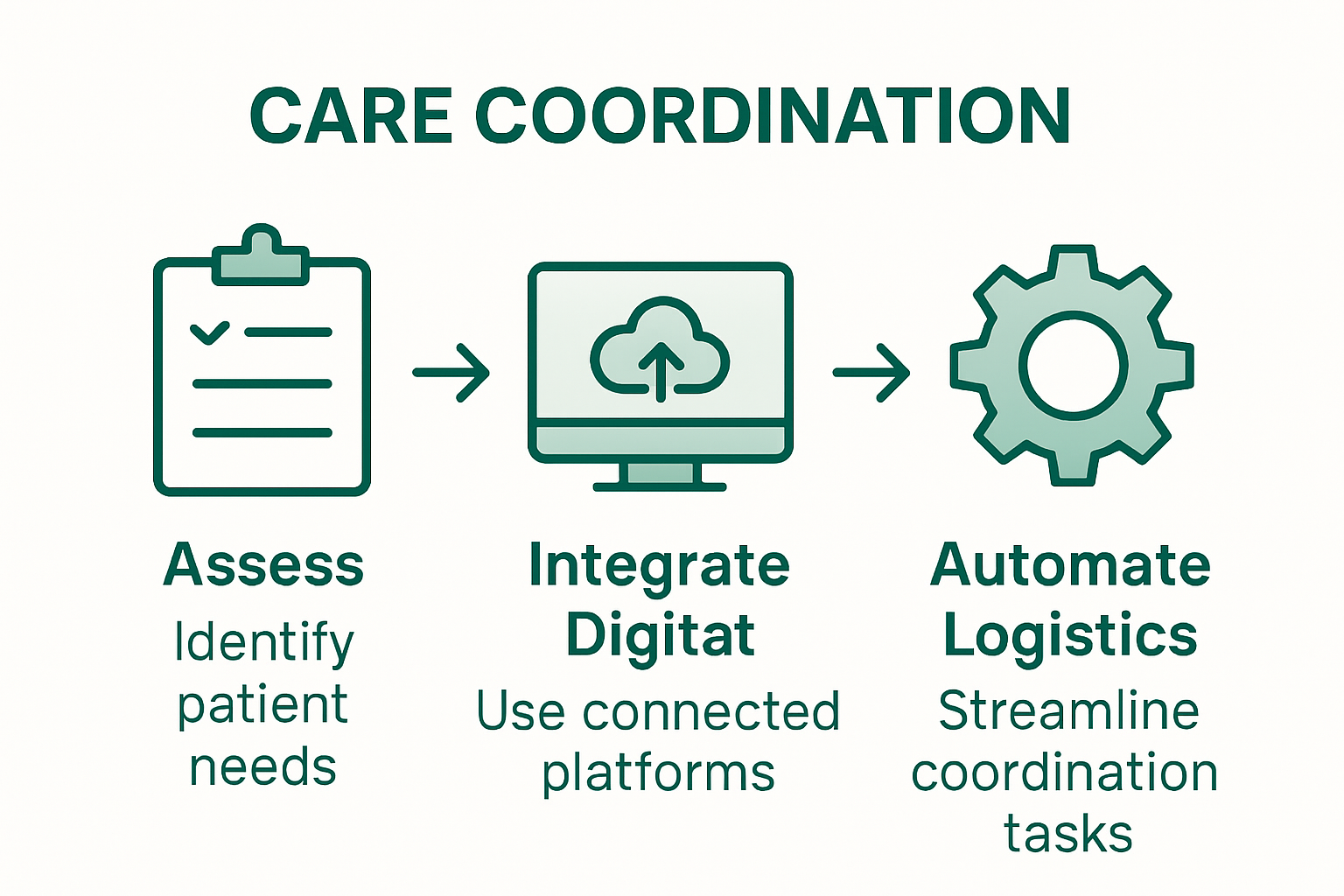
Start by exploring digital integration frameworks that enable comprehensive communication between different healthcare entities. Recent research demonstrates the transformative potential of AI in healthcare, particularly in areas like predictive analytics and care coordination. Artificial intelligence technologies can help simulate clinical decision making processes, allowing for more intelligent and responsive healthcare systems. Focus on implementing platforms that support standardized data exchange, ensuring that patient information can flow securely and efficiently across different departments, providers, and technological systems.
When integrating digital solutions, prioritize interoperability and user friendly interfaces. Develop a phased approach that allows gradual adoption of new technologies, providing adequate training and support for healthcare professionals. Pay special attention to data privacy, security protocols, and compliance requirements. By creating a robust digital ecosystem that connects all stakeholders, you can significantly enhance care coordination, reduce communication gaps, and ultimately improve patient care quality and operational effectiveness.
Step 3: Automate Workflows for Patient Logistics
Automating workflows for patient logistics represents a critical strategy for improving healthcare efficiency and reducing operational complexity. This step will guide you through transforming manual processes into streamlined, intelligent systems that enhance patient care and organizational performance.

Begin by mapping out current patient logistics workflows using comprehensive automation strategies. Research demonstrates that efficient workflow coordination can significantly reduce hospital length of stay by minimizing operational friction and increasing interdepartmental collaboration. Focus on identifying repetitive tasks that can be automated such as appointment scheduling, patient tracking, transportation coordination, and communication protocols. Implement intelligent systems that can automatically route patient information, generate reports, and trigger necessary actions without manual intervention.
Prioritize workflow automation that maintains high standards of accountability and patient care quality. The National Quality Forum emphasizes the importance of structured processes in patient logistics, so ensure your automated systems include robust tracking, reporting, and compliance mechanisms. Design workflows that not only reduce administrative burden but also provide real time visibility into patient movement, resource allocation, and care coordination. By strategically automating patient logistics workflows, you can create a more responsive, efficient healthcare ecosystem that improves both operational performance and patient experiences.
Step 4: Standardize Secure Communication Channels
Standardizing secure communication channels is a critical component of effective care coordination, enabling healthcare providers to exchange information seamlessly and securely. This step will help you develop a robust communication infrastructure that protects patient data while facilitating efficient information sharing across different healthcare teams and systems.
Begin by evaluating current communication methods and identifying potential vulnerabilities in your existing information exchange processes. Research demonstrates the crucial need for standardized communication channels that can support continuous care across individual, organizational, and systemic levels. Implement secure messaging platforms that use encryption, multifactor authentication, and comprehensive access controls. Ensure these channels can integrate with electronic health record systems, allowing for real time updates while maintaining strict compliance with healthcare privacy regulations.
Develop clear protocols that define how different healthcare stakeholders will use these standardized communication channels. Create comprehensive training programs that educate staff about secure communication best practices, including how to handle sensitive patient information, recognize potential security risks, and follow established communication workflows. By establishing a unified, secure communication framework, you can significantly improve care coordination, reduce miscommunication risks, and ultimately enhance the quality of patient care across your healthcare ecosystem.
Step 5: Monitor Metrics and Fine-Tune Coordination Strategies
Monitoring and refining care coordination metrics is essential for continuous improvement in healthcare delivery. This step will guide you through establishing a robust performance tracking system that allows you to systematically evaluate and enhance your care coordination efforts.
Begin by implementing comprehensive accountability measures that provide meaningful insights into your care coordination performance. Research suggests focusing on key metrics that capture the effectiveness of coordination across individual, organizational, and systemic levels. Develop a dashboard that tracks critical indicators such as patient handoff efficiency, communication response times, care transition smoothness, and overall patient satisfaction. Use advanced analytics to identify patterns, bottlenecks, and opportunities for improvement in your care coordination workflows.
Create a continuous feedback loop that involves input from all healthcare stakeholders. Nursing care coordination interventions highlight the importance of multidisciplinary perspectives in refining coordination strategies. Regularly schedule review sessions where team members can discuss performance metrics, share insights, and collaboratively develop targeted improvements. Implement a dynamic approach that allows for rapid iteration and adaptation of your coordination strategies based on real world data and emerging healthcare challenges. By maintaining a proactive and data driven approach to monitoring and fine tuning, you can consistently elevate the quality and efficiency of patient care across your healthcare ecosystem.
Transform Your Care Coordination with VectorCare’s Innovative Platform
Optimizing care coordination requires addressing complex challenges like fragmented communication, inefficient patient logistics, and the need for secure, standardized workflows as highlighted in the article. VectorCare understands these pain points deeply and provides a digital platform that integrates AI-driven dispatching, real-time updates, and automation to streamline every step from patient transportation to home health services. By embracing solutions designed for interoperability and ease of use, healthcare organizations can drastically reduce delays, lower operational costs, and elevate patient care quality.
With VectorCare’s comprehensive tools supporting scheduling optimization, secure communication, and detailed data insights, your team gains full visibility and control over care coordination processes. Stop struggling with inefficient workflows and start delivering seamless healthcare experiences. Discover how our platform can help you fine-tune coordination strategies and automate patient logistics effectively by visiting VectorCare today.
Ready to reshape your care coordination? Explore the future of healthcare logistics with VectorCare and unlock instant improvements in operational efficiency and patient satisfaction. Visit us now at VectorCare to learn more and take the first step toward transforming your healthcare delivery.
Frequently Asked Questions
How can I assess my current care coordination processes?
Evaluating your existing care coordination processes can help identify inefficiencies. Start by reviewing your workflows, focusing on communication channels and patient referral processes to pinpoint potential gaps.
What digital solutions can improve care coordination?
Integrating digital solutions, such as secure messaging platforms and interoperability frameworks, enhances communication among healthcare providers. Focus on implementing systems that allow for efficient data exchange across departments to improve patient outcomes.
How can I automate patient logistics workflows?
Automating patient logistics involves identifying repetitive tasks like appointment scheduling and communication protocols that can be streamlined. Map your current workflows and implement automation to reduce administrative burden and enhance efficiency.
What steps should I take to standardize secure communication channels?
To standardize communication, evaluate your current methods and introduce secure messaging platforms with encryption and access controls. Provide clear guidelines and training for staff on using these channels effectively while ensuring compliance with privacy regulations.
How do I monitor metrics to improve care coordination?
Monitoring core metrics involves establishing a performance tracking system to evaluate care coordination efforts. Create a dashboard to track key indicators like patient handoff efficiency and use feedback loops for continuous improvement, aiming to refine strategies regularly.
Recommended
- What Is Care Coordination? Guide for Providers and Agencies 2025
- Top Patient Care Coordination Tips for Better Outcomes
- Understanding Health Home Care Coordination
- 5 Reasons to Improve Healthcare Dispatching | VectorCare
- Master the Family Dentistry Workflow for Better Care - Vacaville Aesthetic Dentistry & Implants