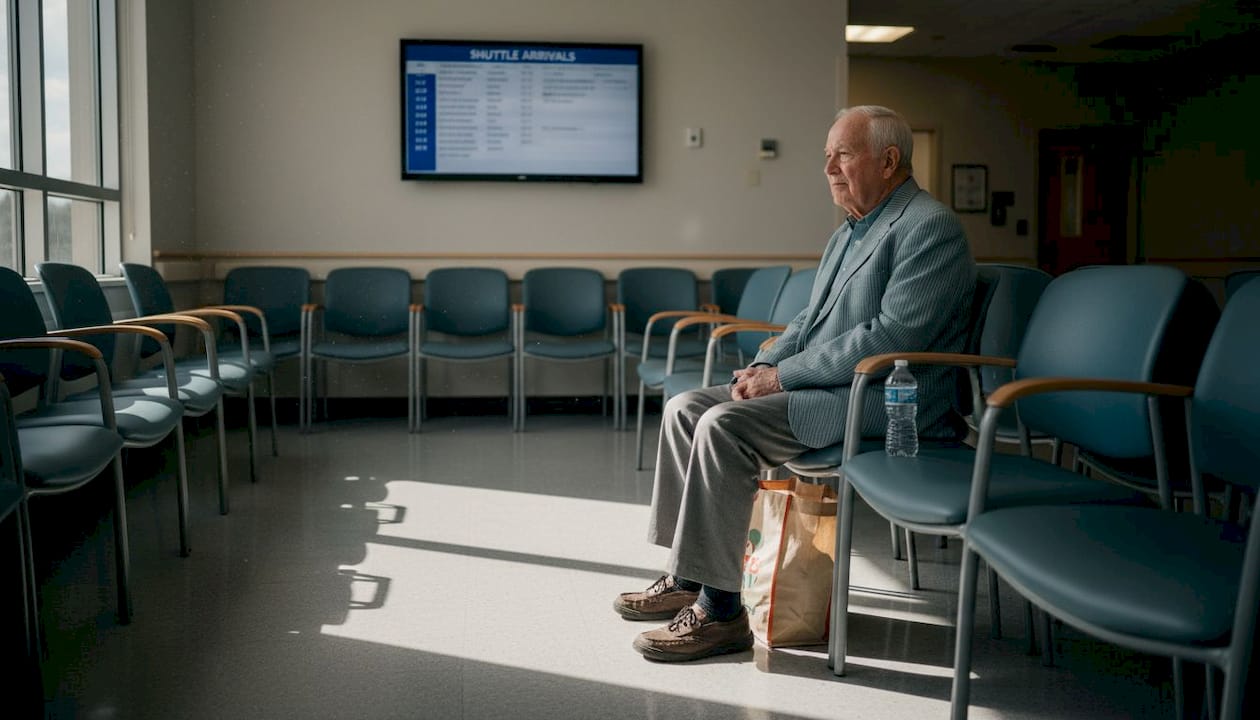
Optimize patient logistics with real-time updates
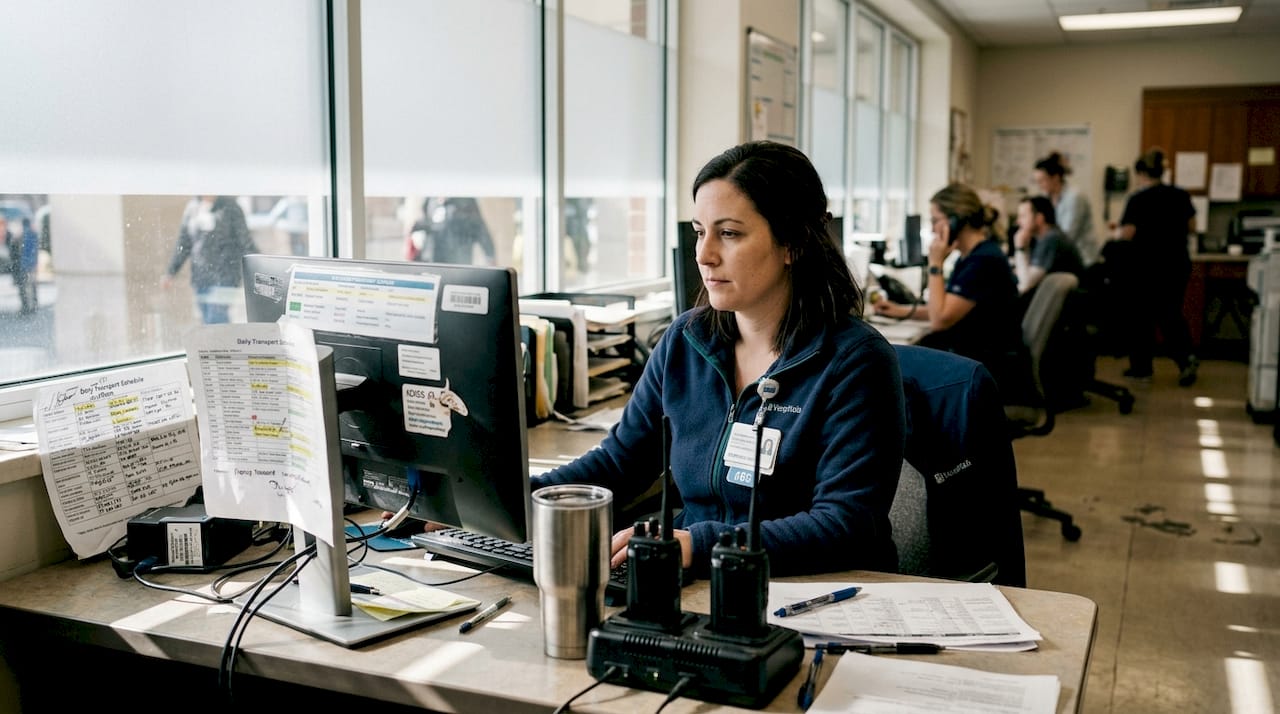
TL;DR:Real-time updates improve healthcare logistics by reducing delays, errors, and patient wait times.Key technologies include RTLS, AI analytics, digital twins, and mobile dispatch systems.Successful implementation depends on structured workflows, staff training, and contingency protocols.
Unexpected transport delays and last-minute patient condition changes are not edge cases in healthcare operations. They are daily realities that stall discharge workflows, strain care teams, and erode patient satisfaction scores. When a transport vehicle arrives late, a bed sits occupied longer than necessary, and the downstream effects ripple across departments within minutes. Real-time updates represent the operational backbone that connects transport coordinators, clinical staff, and logistics vendors into a single, responsive system. This guide breaks down why real-time visibility matters, which technologies power it, how to implement it effectively, and how to handle the edge cases that trip up even well-resourced health systems.
Table of Contents
- Why real-time updates matter for healthcare logistics
- Technologies enabling real-time updates in healthcare
- Implementing real-time updates for patient transport and care
- Challenges and solutions for edge cases in real-time healthcare updates
- Our perspective: What most organizations miss about real-time patient logistics
- Ready to streamline your patient logistics?
- Frequently asked questions
Key Takeaways
| Point | Details |
|---|---|
| Instant visibility | Real-time updates provide immediate awareness of patient status and transport needs. |
| Improved coordination | Live data ensures all healthcare teams can act quickly and avoid delays. |
| Tech-driven efficiency | AI, RTLS, and digital twins transform patient logistics for higher throughput. |
| Risk management | Proactive protocols reduce errors from communication lags and unpredictable changes. |
Why real-time updates matter for healthcare logistics
Patient logistics is a precision operation. A single missed pickup can delay a discharge, which delays an admission, which backs up the emergency department. The compounding effect of even minor delays is significant, and better patient logistics is consistently linked to improved throughput, lower operational costs, and stronger patient outcomes. The stakes are high enough that real-time data is no longer a luxury. It is a baseline requirement.
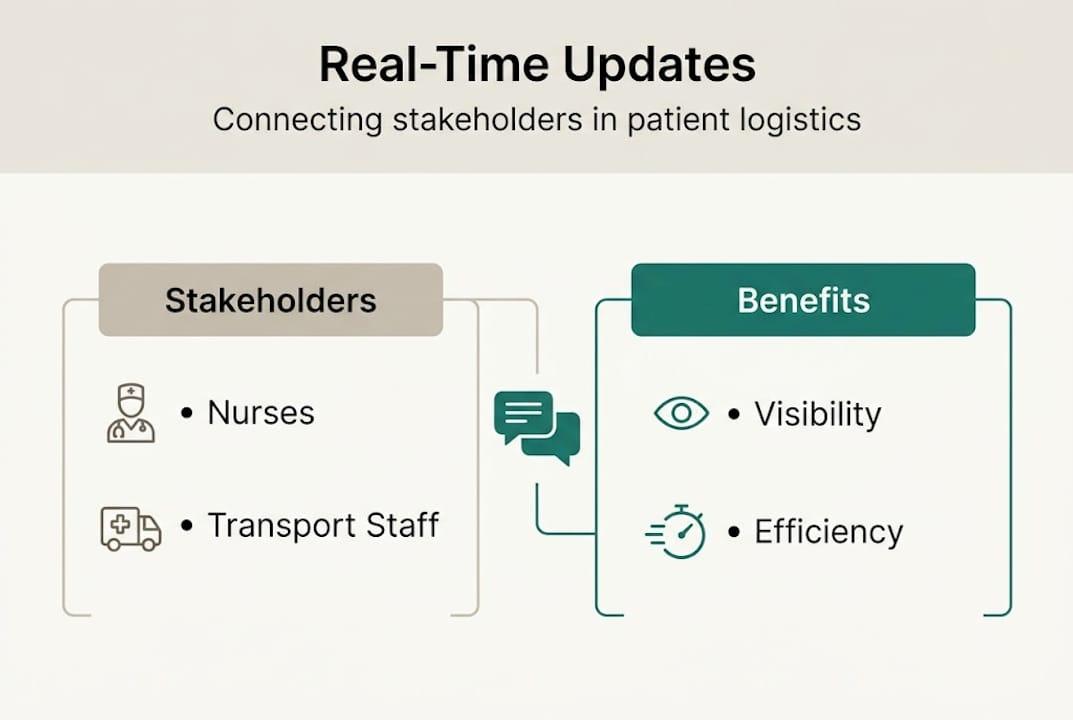
Real-time updates work by connecting every stakeholder in the transport chain to a shared, live data environment. Transport coordinators see vehicle locations. Clinical teams receive instant notifications when a patient is en route or delayed. Dispatch systems automatically adjust assignments when conditions change. This level of coordination reduces the communication lag that traditionally causes bottlenecks in hospital transport.
Consider a common scenario: a patient is cleared for discharge at 10:00 AM, but the transport vendor has no live tracking capability. The coordinator calls to confirm, gets an estimated arrival window, and waits. By 11:30 AM, the patient is still in the bed, the room cannot be turned over, and the next admission is delayed. With real-time visibility, the coordinator sees the vehicle location, receives an automatic alert if the driver is running behind, and can proactively notify the care team to adjust the plan.
The operational benefits extend beyond individual transport events. Reducing patient wait times at scale requires systemic change, and real-time data is the mechanism that makes systemic responsiveness possible. As one industry analysis notes, real-time updates minimize delays and maximize throughput in hospital transport by leveraging predictive analytics, simulation, and advanced dispatching.
The most common failure points in healthcare logistics include:
- Missed or late pickups due to no live vehicle tracking
- Slow discharge processes caused by manual coordination between nursing and transport
- Workflow bottlenecks when patient condition changes are not communicated instantly
- Vendor accountability gaps when transport completion is self-reported rather than system-verified
Each of these failure points has a measurable cost in staff time, bed availability, and patient experience. Real-time updates address all of them simultaneously by replacing reactive, phone-based coordination with proactive, data-driven workflows.
Technologies enabling real-time updates in healthcare
The technology stack behind real-time patient logistics has matured significantly. Healthcare administrators no longer need to choose between accuracy and affordability. Several proven tools now work in combination to deliver continuous visibility across the entire logistics chain.
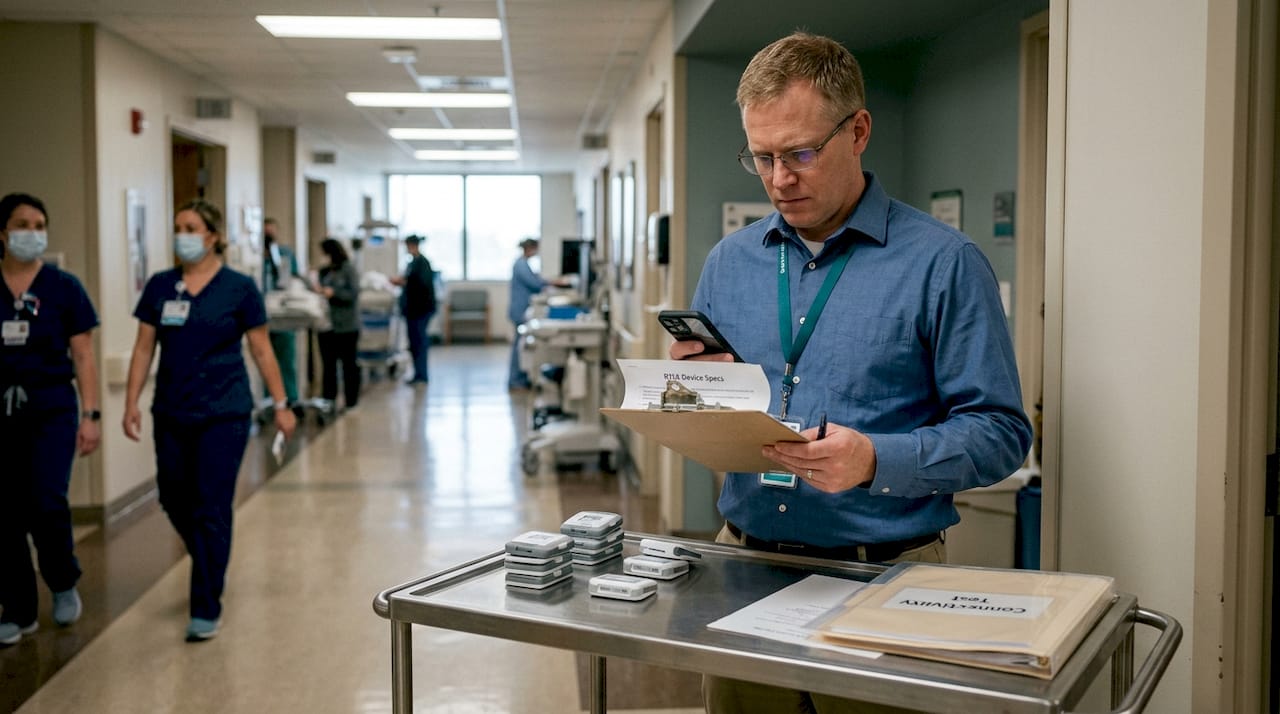
Real-Time Location Services (RTLS) form the foundation. RTLS uses wireless protocols including BLE (Bluetooth Low Energy), Wi-Fi, and Zigbee to track the physical location of patients, staff, and equipment within a facility. The granularity of RTLS data allows dispatch systems to know exactly where a transport team member is, reducing assignment delays and improving response times.
Predictive analytics in healthcare adds a forward-looking layer. Rather than simply reporting what is happening, AI-driven analytics forecast what is likely to happen next. A platform can predict that a specific transport route will experience a 12-minute delay based on historical patterns and current traffic data, allowing dispatch to reassign proactively. Optimization relies on AI-driven predictive analytics, digital twins for simulation, MILP scheduling, and dynamic dispatching to minimize delays and improve throughput.
| Technology | Primary function | Typical benefit |
|---|---|---|
| RTLS (BLE/Wi-Fi/Zigbee) | Physical location tracking | Reduces search time for staff and equipment |
| AI-driven analytics | Demand forecasting and routing | Cuts average transport delay by 20 to 35% |
| Digital twins | Workflow simulation and testing | Identifies bottlenecks before they occur |
| Dynamic dispatch software | Automated assignment and rerouting | Reduces manual coordinator workload |
| Mobile platforms | Field communication and updates | Eliminates phone-based status checks |
For round-trip ride scheduling, the combination of AI scheduling and mobile dispatch is particularly effective. The system can automatically confirm return pickups, adjust timing based on appointment duration data, and notify drivers without coordinator intervention.
Pro Tip: Integrating your real-time logistics platform directly with your EHR system unlocks the highest value. When patient status changes in the clinical record, the logistics system updates automatically, eliminating duplicate data entry and reducing the risk of acting on stale information.
Implementing real-time updates for patient transport and care
Deploying real-time updates effectively requires a structured approach. Technology alone does not produce results. The implementation sequence matters as much as the tools selected.
- Deploy RTLS infrastructure across key areas including transport staging zones, discharge lounges, and high-traffic corridors. Establish baseline location accuracy before connecting to dispatch systems.
- Integrate dispatch software with RTLS data feeds so that vehicle and staff assignments update automatically based on live location and availability.
- Configure real-time monitoring dashboards for coordinators, giving them a single view of all active transport requests, vehicle locations, and patient statuses.
- Enable multi-team notifications so that nursing, transport, and receiving units all receive automated alerts when a patient’s status or transport timeline changes.
- Establish escalation protocols for cases where automated systems flag an anomaly, ensuring a human coordinator can intervene within a defined response window.
The contrast between manual and real-time systems is stark when measured against operational metrics:
| Metric | Manual update process | Real-time system |
|---|---|---|
| Average update speed | 8 to 15 minutes | Under 60 seconds |
| Error rate | 12 to 18% of transport events | Under 3% |
| Coordinator time per transport | 22 minutes | 7 minutes |
| Patient wait time (average) | 45 minutes | 18 minutes |
Addressing NEMT scheduling challenges requires particular attention to last-minute changes. Consider a scenario where a patient’s condition worsens 20 minutes before a scheduled non-emergency transport. In a real-time system, the clinical team updates the patient record, the logistics platform detects the change, and dispatch automatically reassigns a higher-acuity vehicle while notifying the receiving facility. The entire adjustment takes under two minutes.
Pro Tip: Build workflow buffers into your scheduling logic for high-risk patient segments. For patients with complex conditions or frequent acuity changes, add a 10 to 15 minute buffer to transport windows and configure the system to alert coordinators earlier than standard thresholds. This reduces the frequency of emergency rerouting and protects patient flow barriers from cascading.
Edge cases such as condition changes, rerouting, and data quality issues are handled most effectively by combining buffers, real-time monitoring, and risk stratification into a unified workflow protocol.
Challenges and solutions for edge cases in real-time healthcare updates
Even well-designed real-time systems encounter conditions that test their reliability. Healthcare administrators need to anticipate these challenges and build contingency protocols before they become operational crises.
The most common problem areas in U.S. healthcare settings include:
- Wireless dead zones in older hospital wings where BLE or Wi-Fi signals are inconsistent
- Data integration gaps between legacy EHR systems and modern logistics platforms
- Unpredictable patient acuity changes that outpace automated routing logic
- Vendor data latency when third-party transport providers use outdated reporting methods
- HIPAA compliance requirements that restrict how patient location data can be transmitted and stored
Each of these challenges has a documented solution. For wireless dead zones, hybrid RTLS deployments combine indoor BLE tracking with GPS for outdoor and transitional spaces, ensuring continuous coverage. For data integration gaps, modern platforms use FHIR-compliant APIs to connect with major EHR vendors, reducing the need for manual data reconciliation.
As the research confirms, edge cases like traffic delays, high-acuity transfers, and real-time monitoring failures require hybrid RTLS, redundancy, and buffer strategies to maintain operational continuity.
Streamlining hospital workflows under these conditions depends on layered redundancy. If the primary tracking system loses signal, a secondary check-in protocol activates automatically, prompting the transport team member to confirm status via mobile app. This prevents data gaps from becoming operational blind spots.
Reducing healthcare operational costs is also directly tied to how well edge cases are managed. Every unplanned rerouting event or missed transport costs the organization in staff time, vehicle utilization, and patient experience metrics.
Pro Tip: Prepare layered protocols for dead zones by mapping your facility’s signal coverage before go-live. Identify every area where RTLS accuracy drops below 90%, and assign a manual check-in step for transports passing through those zones. Notify receiving teams in parallel so they are never waiting on data that may be delayed.
Our perspective: What most organizations miss about real-time patient logistics
Most healthcare organizations invest heavily in the technology side of real-time logistics and underinvest in the human side. New dashboards get deployed. Tracking hardware gets installed. And then adoption stalls because the transport team was trained in a two-hour session and the nursing staff was never told the workflow changed.
The uncomfortable truth is that technology does not fix information silos. People do. Real-time systems only deliver their full value when every stakeholder understands their role in the updated workflow, trusts the data they are seeing, and knows how to escalate when something looks wrong. Organizations that improve patient flow sustainably are the ones that treat implementation as a change management initiative, not an IT project.
The most meaningful gains come from aligning teams around shared data, not from adding more screens to the coordinator’s workstation. Focus change efforts equally on workflows, training, and communication as on the technology itself.
Ready to streamline your patient logistics?
The operational case for real-time updates in patient logistics is clear, but selecting and implementing the right platform requires careful evaluation of your organization’s specific workflows, vendor relationships, and integration requirements.
The VectorCare patient logistics platform is purpose-built for healthcare administrators who need automation, real-time visibility, and AI-driven dispatching in a single, integrated system. If you are new to the space, the guide on what is patient logistics provides a strong foundation. For a side-by-side evaluation of available tools, the top transportation software comparison offers a detailed breakdown to support your decision-making process.
Frequently asked questions
What are real-time updates in healthcare logistics?
Real-time updates use live data and digital tracking to instantly share changes in patient status, location, or transport needs with all care teams. Live updates connect transport teams, coordinators, and clinicians to improve response and reduce delays.
How do real-time updates improve patient transportation?
They enable instant rerouting and resource allocation, reducing wait times and errors with up-to-the-minute information. Dynamic dispatching and real-time monitoring minimize delays in patient transfer by replacing reactive coordination with automated, data-driven workflows.
What challenges can disrupt real-time updates in hospitals?
Common issues include wireless dead zones, data integration gaps, and unpredictable patient changes, which require hybrid systems and contingency protocols. Hybrid RTLS and workflow buffers address data quality issues and high-acuity changes effectively.
Which tools are essential for real-time healthcare updates?
Key tools include real-time location services (RTLS), mobile dispatch apps, AI-driven scheduling platforms, and analytics integrations. Modern logistics optimization uses RTLS, AI analytics, digital twins, and dispatch software to minimize delays and improve throughput across the transport chain.