Optimize health & wellness in healthcare workplaces 2026

Healthcare workers face a wellness crisis that directly impacts patient care. Burnout prevalence hovers around 42% among clinicians and staff, nearly double the rate of other industries. This guide equips healthcare administrators and HR professionals with evidence-based strategies to build effective workplace wellness programs that reduce turnover, improve staff satisfaction, and enhance patient outcomes through targeted interventions and smart technology use.
Table of Contents
- Understanding Wellness Challenges Specific To Healthcare Workplaces
- Core Components Of Effective Healthcare Workplace Wellness Programs
- Leveraging Technology For Wellness Program Success In Healthcare
- Debunking Common Misconceptions About Workplace Wellness In Healthcare
- Comparing Wellness Program Models: Small Vs. Large Healthcare Organizations
- Applying Best Practices: Case Studies And Measurable Outcomes
- Actionable Steps For Healthcare Administrators And Hr Professionals
- Enhance Your Healthcare Operations With Vectorcare
Key takeaways
| Point | Details |
|---|---|
| Healthcare workers experience unique wellness challenges | Burnout rates reach 42%, compounded by mental health stigma and shift work stress that increase medical errors. |
| Effective programs require multi-dimensional approaches | Mental health resources, flexible scheduling, leadership endorsement, and physical wellness supports must work together. |
| Technology enables scalability and measurement | AI-driven scheduling, data integration, and digital wellness tools improve engagement tracking and program responsiveness. |
| Common misconceptions limit program success | Focusing solely on physical activity or ignoring operational stressors undermines long-term wellness improvements. |
| Program models must match organizational capacity | Large systems leverage dedicated staff and technology while small providers benefit from modular, scalable solutions. |
Understanding wellness challenges specific to healthcare workplaces
Healthcare professionals operate in environments where chronic stress is not just common but expected. The burnout prevalence of approximately 42% reflects the cumulative weight of long shifts, emotional labor, and exposure to trauma. This isn’t merely a human resources issue. Research demonstrates that medical errors increased by 20% when cognitive impairment from stress compounds clinical decision making.
Mental health stigma persists even among professionals trained to recognize psychological distress. Nurses, physicians, and support staff often avoid seeking help due to concerns about professional reputation or licensure implications. This creates a paradox where those most equipped to understand mental health challenges are least likely to access care themselves.
Operational realities amplify these pressures:
- Rotating shift schedules disrupt circadian rhythms and family life
- Understaffing forces longer hours and reduced recovery time
- Exposure to patient suffering creates compassion fatigue
- Administrative burdens pull focus from direct care activities
“The healthcare environment creates a perfect storm of physical exhaustion and emotional depletion that standard wellness approaches fail to address.”
These sector-specific wellness challenges require interventions designed specifically for healthcare contexts. Generic corporate wellness models built around gym memberships or nutrition seminars miss the mark. Healthcare administrators must recognize that improving staff well-being directly correlates with patient safety metrics and care quality outcomes.
Core components of effective healthcare workplace wellness programs
Successful programs integrate multiple support dimensions rather than treating wellness as a single-focus initiative. Mental health resources form the foundation, reducing both sickness absence and the cultural barriers that prevent help-seeking behaviors. When organizations embed confidential counseling, peer support networks, and destigmatization campaigns into daily operations, utilization rates climb and reported stress levels drop.
Flexible scheduling addresses one of healthcare’s most persistent stressors. Self-scheduling systems, shift-swapping platforms, and predictable roster patterns help staff balance work demands with personal responsibilities. This isn’t about reducing hours but providing control and predictability that mitigate burnout triggers.

Leadership involvement separates effective programs from checkbox compliance exercises. When executives visibly participate in wellness activities and allocate budget resources, staff engagement increases measurably. Leaders who receive training on recognizing burnout signs and modeling healthy boundaries create cultural permission for others to prioritize well-being.
Key program elements include:
- On-site or virtual mental health counseling with guaranteed confidentiality
- Flexible scheduling tools that give staff autonomy over their time
- Physical wellness options like ergonomic assessments and fitness subsidies
- Peer support groups facilitated by trained staff members
- Regular wellness surveys to identify emerging needs and measure impact
Pro Tip: Start with anonymous staff surveys to identify which stressors matter most to your specific workforce before designing program components. Cookie-cutter approaches waste resources on initiatives that don’t resonate.
Comprehensive healthcare workplace wellness programs recognize that physical health initiatives alone produce limited results. The most effective models combine mental health workplace strategies with operational improvements that address root causes of workplace stress rather than just symptoms.
Leveraging technology for wellness program success in healthcare
Digital tools transform wellness programs from resource-intensive manual processes into scalable, data-driven systems. AI-driven scheduling platforms balance staffing requirements with individual wellness needs, automatically flagging when employees approach overtime thresholds or haven’t taken adequate recovery time between shifts. This reduces administrative burden while preventing the schedule-related burnout that contributes to turnover.
Data integration enables real-time program adjustments that respond to changing workforce needs. When wellness platforms connect with HR systems, payroll, and employee assistance programs, administrators gain visibility into participation patterns, utilization gaps, and outcome trends. This intelligence supports targeted interventions rather than broad, inefficient campaigns.
Smaller healthcare organizations face distinct technology adoption challenges. Limited IT budgets, smaller staff counts, and competing operational priorities often delay implementation of sophisticated wellness platforms. However, modular cloud-based solutions designed for healthcare contexts offer entry points that don’t require massive upfront investment or dedicated technology teams.
Technology benefits include:
- Automated wellness challenge tracking that gamifies healthy behaviors
- Mobile apps providing 24/7 access to mental health resources and stress management tools
- Analytics dashboards showing engagement metrics, cost savings, and health outcome trends
- Integration with wearable devices for personalized wellness insights
- Secure messaging platforms connecting staff with wellness coaches and counselors
Organizations using technology empowering healthcare professionals report higher program participation rates and better outcome measurement. The key is selecting tools that integrate with existing healthcare workflow optimization strategies rather than creating additional administrative complexity.
Careful implementation addresses accessibility concerns. Not all staff have equal comfort with digital tools or reliable internet access. Successful programs offer both high-tech and high-touch options, ensuring technology enhances rather than replaces human connection in wellness support.
Debunking common misconceptions about workplace wellness in healthcare
Many healthcare organizations invest heavily in physical wellness initiatives while neglecting the psychological and operational factors that drive burnout. Fitness center memberships and step-counting challenges generate initial enthusiasm but rarely produce sustained engagement or measurable health improvements. Physical activity matters, but it represents just one dimension of a comprehensive wellness strategy.
Mental health stigma remains deeply entrenched despite widespread professional knowledge about psychological conditions. Healthcare workers worry that seeking mental health support could trigger mandatory reporting, impact licensure, or mark them as less capable than peers. This barrier prevents early intervention and allows treatable conditions to worsen into serious impairments.
The assumption that wellness programs can compensate for operational dysfunction creates false hope. No amount of yoga classes or mindfulness apps will offset chronic understaffing, mandatory overtime, or toxic workplace culture. Effective wellness strategies address systemic stressors alongside individual coping resources.
Common misconceptions include:
- Believing physical wellness initiatives alone drive meaningful health outcomes
- Assuming healthcare workers will naturally seek mental health support without cultural change
- Expecting wellness programs to solve problems caused by poor staffing or management practices
- Thinking one-size-fits-all corporate wellness models work in healthcare contexts
- Underestimating the importance of leadership participation in program success
“True wellness in healthcare requires simultaneous attention to individual resilience, organizational culture, and operational realities that create or reduce workplace stress.”
Holistic approaches that integrate mental health resources, schedule flexibility, leadership engagement, and physical wellness supports produce stronger, more sustainable results. This requires moving beyond checkbox compliance to genuine organizational commitment to staff well-being as a strategic priority.
Comparing wellness program models: small vs. large healthcare organizations
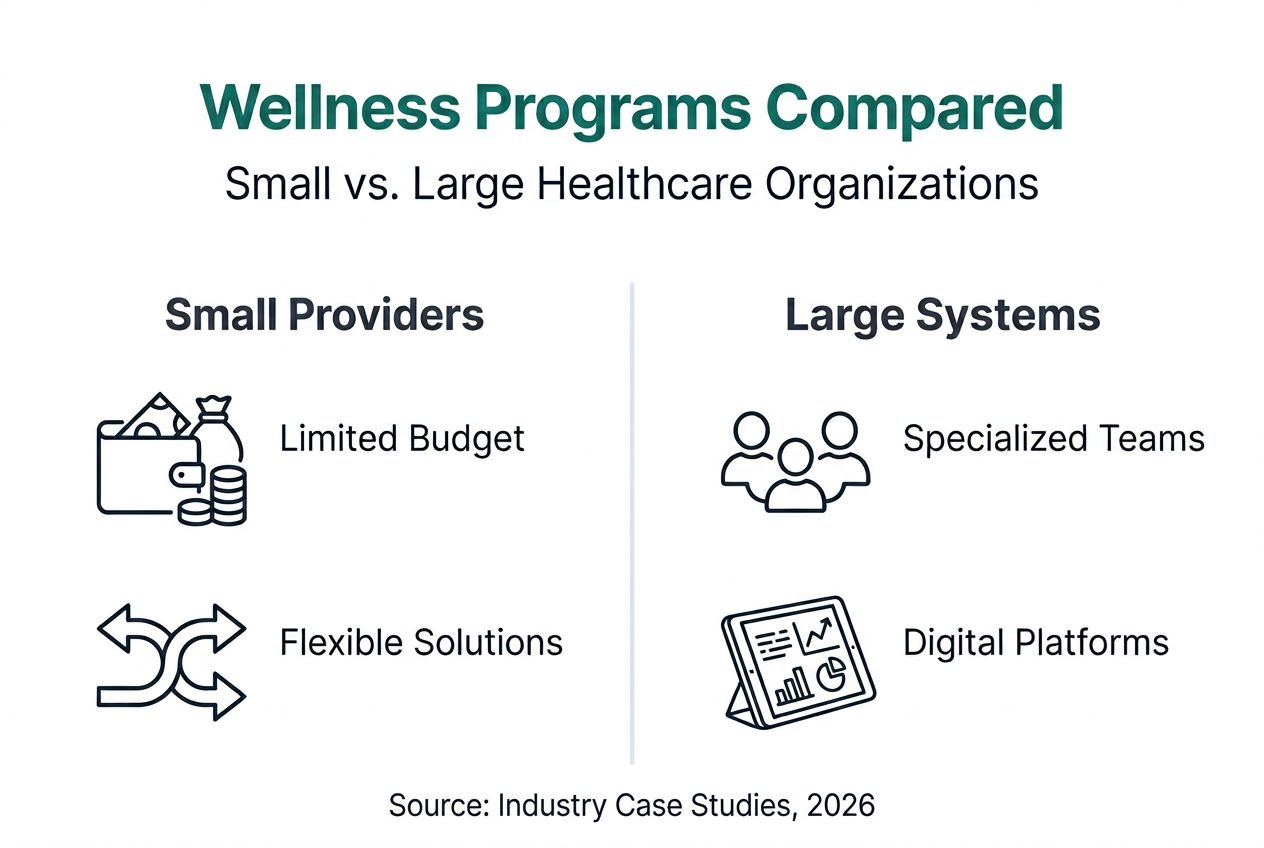
Organizational size fundamentally shapes wellness program design, resource allocation, and implementation approaches. Large healthcare systems typically employ dedicated wellness coordinators, invest in comprehensive technology platforms, and offer extensive on-site resources. Their scale enables specialized programming like resilience training cohorts, peer support networks, and 24/7 counseling access.
Small healthcare providers face resource constraints that demand creative, efficient approaches. Limited budgets, lean staffing, and competing operational priorities make it difficult to match the breadth of large system offerings. However, smaller organizations often achieve higher participation rates due to stronger workplace relationships and faster decision-making processes.
| Feature | Large Healthcare Systems | Small Healthcare Providers |
|---|---|---|
| Dedicated wellness staff | Full-time coordinators and specialists | Part-time or shared HR responsibility |
| Technology adoption | Comprehensive platforms with integration | Modular apps and cloud-based tools |
| Mental health resources | On-site counseling and EAP programs | Telehealth counseling and community partnerships |
| Program customization | Department-specific initiatives | Organization-wide basic offerings |
| Leadership engagement | Formal wellness committees and champions | Direct executive involvement |
| Budget allocation | Substantial dedicated wellness budgets | Integrated into general HR spending |
Leadership training improves participation regardless of organization size. When managers learn to recognize burnout symptoms, facilitate work-life balance, and model healthy boundaries, cultural shifts occur that amplify formal program impacts. This represents a high-ROI investment accessible to organizations of any size.
Pro Tip: Small providers can partner with community health organizations, telehealth platforms, and regional wellness consortiums to access resources beyond their individual capacity while controlling costs.
Scalable digital solutions help smaller organizations maximize impact despite resource limitations. Cloud-based wellness platforms, mobile mental health apps, and virtual coaching services provide enterprise-level capabilities without requiring substantial IT infrastructure or staffing. Success depends on selecting solutions aligned with organizational capacity and integrating them thoughtfully with existing vendor management best practices healthcare processes.
Applying best practices: case studies and measurable outcomes
A 450-bed Midwest hospital system implemented a comprehensive wellness program combining mental health counseling, flexible self-scheduling, and leadership training. Within 18 months, employee engagement scores increased from 62% to 78%. Voluntary turnover among nursing staff dropped by 31%, saving an estimated $2.4 million in recruitment and training costs annually.
A rural health clinic with 45 employees partnered with a telehealth mental health provider and introduced peer support circles facilitated by trained staff volunteers. Despite minimal budget increases, the clinic reported a 40% reduction in unscheduled absences and measurably improved patient satisfaction scores as staff stress levels declined.
A large urban hospital network integrated wellness metrics into leadership performance evaluations, making manager support for staff well-being a formal accountability measure. This cultural shift correlated with significant improvements in patient complaint rates, particularly regarding staff responsiveness and communication quality.
| Organization Type | Intervention | Measured Outcome | Timeframe |
|---|---|---|---|
| Mid-sized hospital | Mental health integration + flexible scheduling | 31% reduction in nursing turnover | 18 months |
| Rural clinic | Telehealth counseling + peer support | 40% decrease in unscheduled absences | 12 months |
| Urban hospital network | Leadership accountability for wellness | 22% improvement in patient satisfaction | 24 months |
| Community health center | Modular digital wellness platform | 65% staff participation rate | 6 months |
Successful programs share common characteristics:
- Leadership visible commitment beyond policy statements
- Data-driven adjustments based on participation and outcome tracking
- Multi-dimensional approaches addressing mental, physical, and operational wellness
- Stigma reduction initiatives that normalize help-seeking behaviors
- Integration with existing workflows rather than additional administrative burden
These workplace wellness case studies demonstrate that measurable improvements in staff retention, engagement, and patient care quality are achievable across diverse organizational contexts when programs align evidence-based components with specific workforce needs and organizational capacity.
Actionable steps for healthcare administrators and HR professionals
Building an effective wellness program starts with understanding your specific workforce challenges rather than importing generic models. Conduct comprehensive needs assessments using anonymous surveys, focus groups, and analysis of turnover, absence, and satisfaction data. Healthcare-specific stressors like shift work, exposure to trauma, and moral distress require targeted investigation.
Design multi-component programs that address the interconnected dimensions of healthcare worker wellness:
- Establish confidential mental health resources including counseling, peer support, and crisis intervention.
- Implement scheduling flexibility through self-scheduling platforms, shift-swapping systems, and predictable roster patterns.
- Create physical wellness supports like ergonomic assessments, fitness subsidies, and healthy food options.
- Develop stigma reduction campaigns featuring leadership participation and staff testimonials.
- Build measurement systems tracking engagement, utilization, health outcomes, and business metrics like turnover and absence.
Technology implementation should enhance rather than complicate existing workflows. Select platforms that integrate with current HR systems, offer mobile accessibility, and provide actionable analytics. Prioritize user-friendly interfaces that don’t require extensive training or create additional administrative burden for already stretched staff.
Leadership engagement transforms wellness from an HR initiative into an organizational priority. Train managers to recognize burnout symptoms, facilitate work-life balance conversations, and model healthy boundaries. Include wellness support in performance evaluations and leadership development programs.
Pro Tip: Start small with high-impact interventions like mental health counseling and flexible scheduling before expanding to comprehensive programs. Early wins build momentum and demonstrate ROI for broader investment.
Monitor key performance indicators that connect wellness investments to organizational outcomes. Track turnover rates, absenteeism, engagement scores, patient satisfaction, safety incidents, and program participation. Regular measurement enables continuous improvement and builds the business case for sustained wellness funding.
Scale programs thoughtfully based on organizational size and resources. Large systems can develop specialized offerings while small providers benefit from modular approaches and strategic partnerships. Success depends on matching program scope to implementation capacity while maintaining focus on evidence-based components proven to reduce burnout and improve well-being. Apply vendor management best practices healthcare principles when selecting wellness technology partners and service providers.
Enhance your healthcare operations with VectorCare
Effective wellness programs require operational excellence that frees staff from administrative burden and streamlines care delivery. VectorCare provides a comprehensive platform designed to optimize patient logistics, scheduling coordination, and workflow efficiency across healthcare organizations of all sizes. The system’s AI-driven dispatching and real-time updates reduce the operational friction that contributes to staff stress and burnout.
Healthcare administrators leveraging the VectorCare patient logistics platform report measurable improvements in staff satisfaction alongside enhanced patient care coordination. By automating complex scheduling tasks and improving resource allocation, VectorCare supports the operational foundation that wellness programs require to succeed. Explore how integrated technology empowering healthcare professionals can transform your organization’s approach to both staff wellness and patient care delivery.
FAQ
What are the biggest wellness challenges unique to healthcare workplaces?
Healthcare workers face burnout rates around 42%, nearly double other industries, driven by shift work, emotional labor, and exposure to patient suffering. Mental health stigma prevents many clinicians from seeking help despite professional knowledge of psychological conditions. These combined stressors directly impact patient safety through increased medical errors and reduced care quality.
How can technology improve wellness program outcomes in healthcare settings?
AI-driven scheduling reduces administrative burden while preventing burnout from excessive hours or inadequate recovery time between shifts. Integrated data systems enable real-time program adjustments based on participation patterns and emerging workforce needs. Digital wellness platforms provide 24/7 access to mental health resources, fitness tracking, and personalized interventions that scale efficiently across large healthcare organizations.
What common mistakes limit the effectiveness of healthcare wellness programs?
Focusing exclusively on physical wellness while neglecting mental health and operational stressors produces minimal sustained impact. Failing to engage leadership or address workplace stigma around mental health prevents staff from utilizing available resources. Programs that don’t measure participation, utilization, and health outcomes lack the data needed to demonstrate ROI or make evidence-based improvements.
How do wellness program needs differ between small and large healthcare organizations?
Large systems typically employ dedicated wellness staff and invest in comprehensive technology platforms with extensive on-site resources. Small providers face resource constraints requiring modular, cost-efficient approaches often relying on telehealth partnerships and community collaborations. Both benefit from leadership training and flexible scheduling, but implementation approaches must match organizational capacity and available infrastructure.