The Essential Guide to Non Emergency Medical Transportation Medicaid
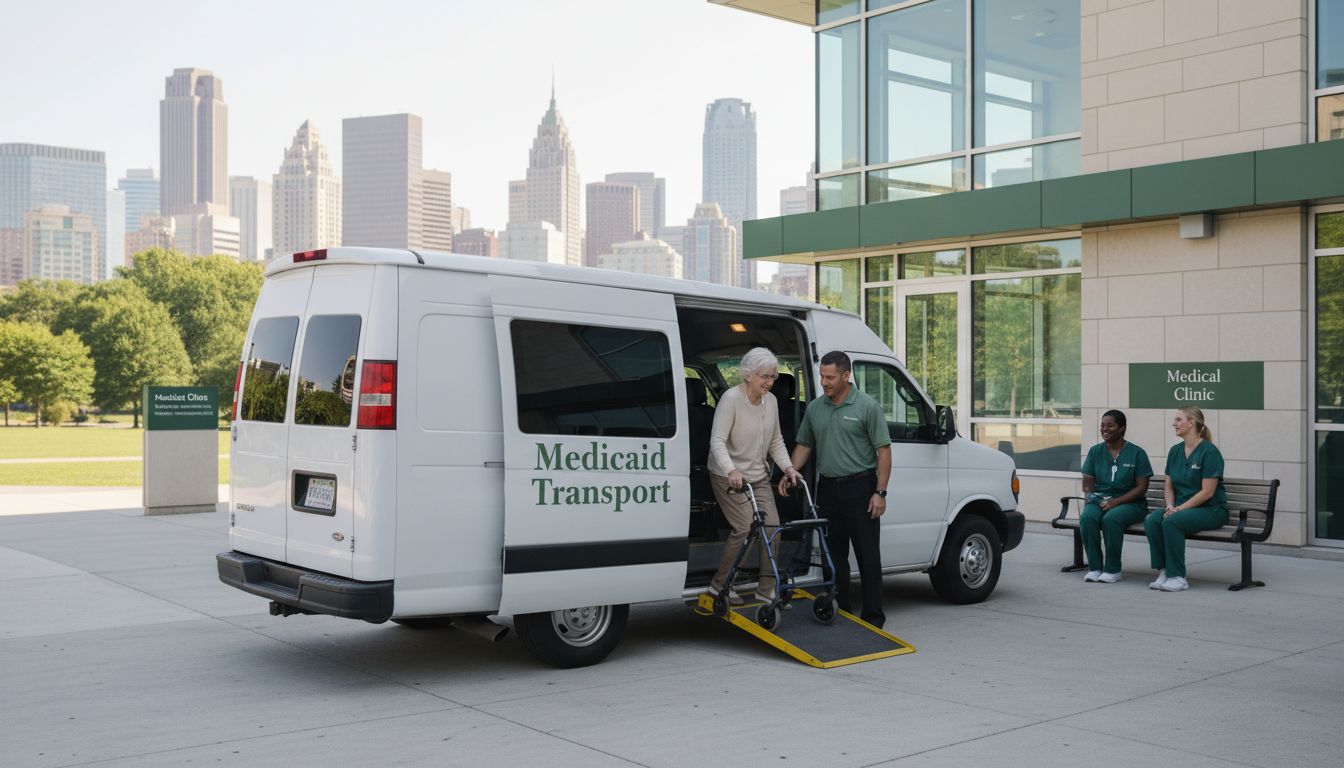
Over 3.6 million american adults miss or delay medical care each year due to transportation challenges. For those relying on Medicaid, simply reaching a doctor can be a major hurdle that puts health at risk. Non-emergency medical transportation bridges this gap, supporting vulnerable individuals who need consistent access to care. Understanding how these services work, who qualifies, and what to expect helps families make informed decisions and ensures no one is left behind due to lack of a ride.
Table of Contents
- Defining Non Emergency Medical Transportation Medicaid
- Eligibility Criteria And Service Coverage
- How NEMT Services Operate Under Medicaid
- Provider Responsibilities And Compliance Requirements
- Costs, Limitations, And Common Challenges
Key Takeaways
| Point | Details |
|---|---|
| NEMT Overview | Non-emergency medical transportation (NEMT) is a vital Medicaid benefit ensuring healthcare access for those without reliable transportation. |
| Eligibility Criteria | Medicaid beneficiaries qualify for NEMT based on transportation barriers that prevent them from accessing medical services. |
| Operational Models | NEMT services operate under various administrative frameworks across states, utilizing third-party brokers and managed care plans for coordination. |
| Provider Compliance | NEMT providers must adhere to strict federal and state regulations, ensuring patient eligibility and safety throughout the transportation process. |
Defining Non Emergency Medical Transportation Medicaid
Non-emergency medical transportation (NEMT) represents a critical Medicaid benefit designed to ensure healthcare access for vulnerable populations who lack reliable transportation. This service provides individuals with transportation support to medical appointments, treatments, and healthcare services when they cannot independently travel.
The core purpose of NEMT is comprehensive: connecting patients with necessary medical care through diverse transportation methods. These methods include taxis, public transit systems, specialized medical vans, and personal vehicle reimbursement. Transportation options are carefully tailored to meet individual medical needs, ensuring patients can reach critical healthcare appointments regardless of their mobility challenges.
Medicaid NEMT serves multiple patient populations, including:
- Elderly individuals with limited mobility
- People with disabilities
- Low-income patients without personal transportation
- Individuals requiring specialized medical transport
By providing these transportation services, NEMT eliminates potential barriers to healthcare access, supporting preventive care, chronic disease management, and overall patient wellness. The program recognizes that transportation challenges should never prevent someone from receiving essential medical treatment.
Eligibility Criteria and Service Coverage
Non-Emergency Medical Transportation (NEMT) eligibility centers on a patient’s specific medical and transportation needs. Medicaid beneficiaries qualify when they demonstrate an inability to independently access medical services due to transportation barriers. These barriers can include lacking a valid driver’s license, not owning a functional vehicle, or experiencing physical or cognitive limitations that prevent self-transportation.
Eligibility requirements typically encompass several key factors. Patients must be Medicaid recipients, have a documented medical need for transportation, and lack alternative means of reaching healthcare appointments. State-specific programs often have nuanced criteria, but generally cover transportation to:
- Scheduled medical appointments
- Pharmacy visits
- Diagnostic testing locations
- Rehabilitation centers
- Mental health treatment facilities
Coverage typically extends to various transportation modes tailored to individual patient needs. These can include wheelchair-accessible vans, public transit reimbursement, taxi services, and personal vehicle mileage compensation. Some programs may require nominal copayments, with exemptions available for specific patient populations such as individuals with disabilities, elderly patients, and low-income beneficiaries.
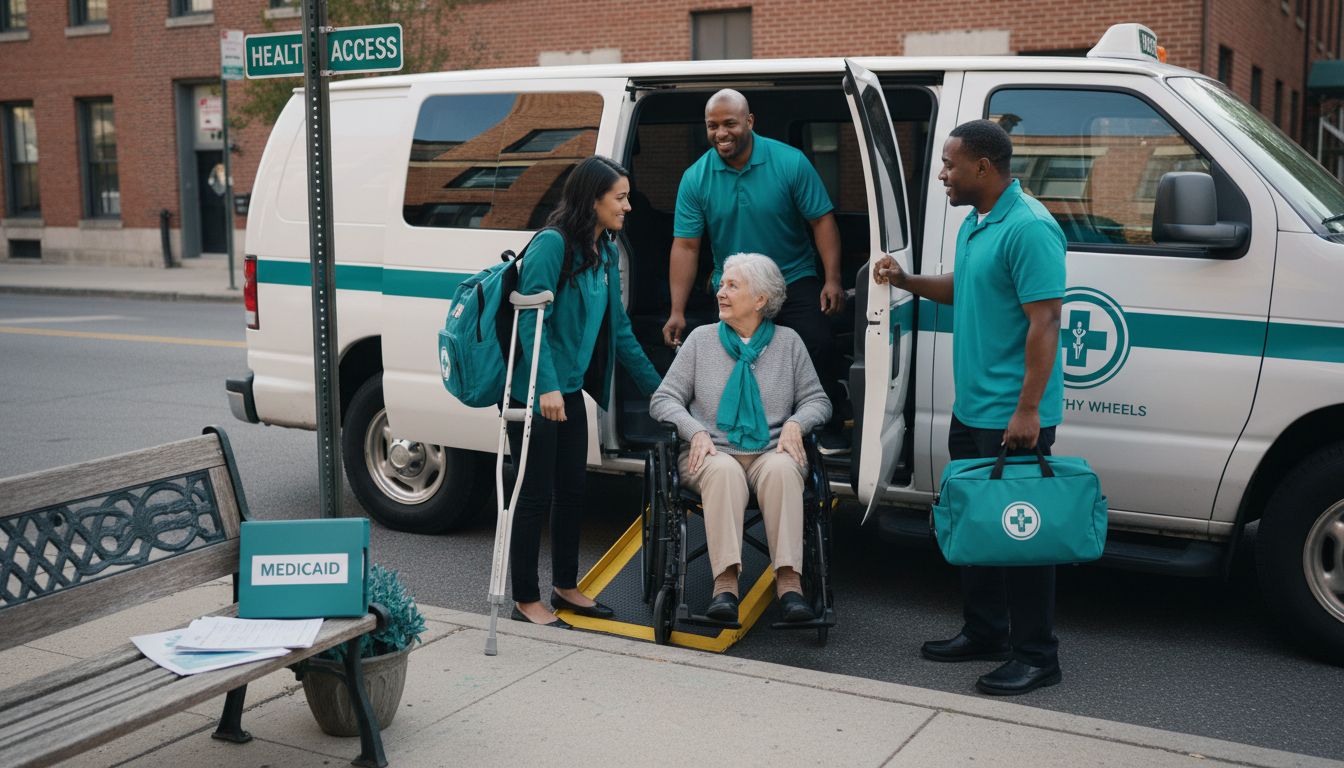
Patients seeking NEMT services must typically coordinate with their local Medicaid office or designated transportation provider. Documentation requirements often include proof of Medicaid enrollment, medical appointment verification, and demonstration of transportation need. The ultimate goal remains consistent: ensuring no patient experiences healthcare access barriers due to transportation challenges.
How NEMT Services Operate Under Medicaid
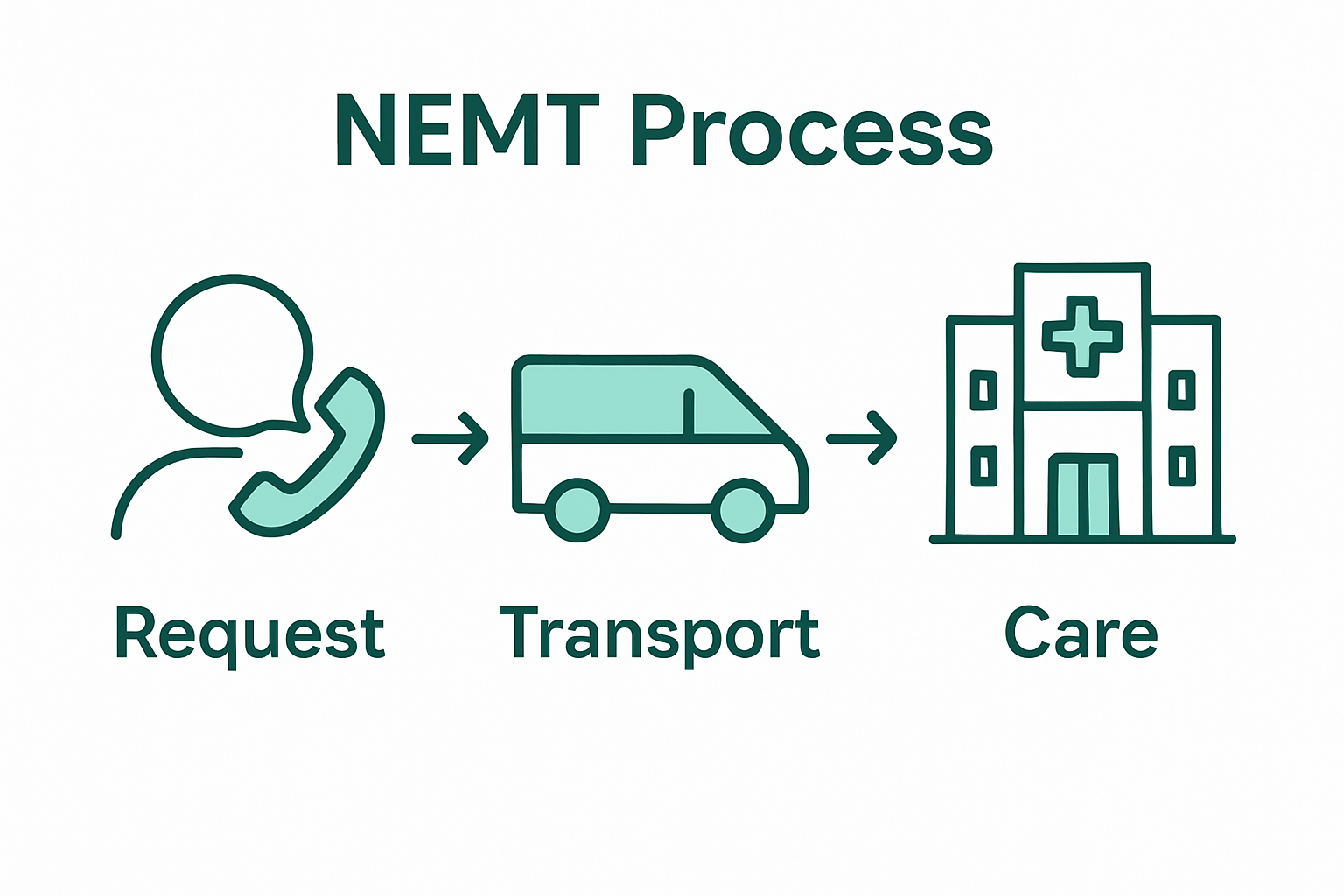
Non-Emergency Medical Transportation (NEMT) services operate through complex administrative frameworks that vary across different states. States implement diverse operational models for coordinating transportation, including contracting with third-party brokers, utilizing fee-for-service arrangements, and integrating managed care plans. These approaches determine how transportation services are authorized, scheduled, and ultimately reimbursed.
One prevalent operational model involves transportation brokerage systems, where specialized brokers manage the entire transportation process. These brokers handle critical functions such as:
- Verifying patient eligibility
- Scheduling transportation
- Coordinating appropriate vehicle types
- Ensuring quality and reliability of services
- Managing transportation provider networks
The authorization process typically requires patients to request transportation in advance, providing details about their medical appointment, location, and specific transportation needs. Medicaid administrators or contracted brokers evaluate these requests, considering factors like medical necessity, distance, and available transportation options. Some states impose limitations on trip frequency or require prior approvals to manage program costs and prevent potential misuse.
Under most NEMT service models, transportation is provided at no direct cost to eligible Medicaid members. Transportation providers are reimbursed through predetermined rates established by state Medicaid programs, with compensation varying based on factors like distance, vehicle type, and specific patient requirements. The ultimate goal remains consistent: ensuring reliable, accessible transportation that enables patients to receive necessary medical care without financial barriers.
Provider Responsibilities and Compliance Requirements
Non-Emergency Medical Transportation (NEMT) providers operate within a complex regulatory framework that demands strict adherence to federal and state guidelines. Providers must meticulously verify beneficiary eligibility, maintain comprehensive documentation, and ensure transportation services meet rigorous safety and medical necessity standards.
Key compliance requirements for NEMT providers include:
- Verifying patient Medicaid eligibility
- Documenting medical transportation needs
- Maintaining accurate trip records
- Ensuring driver and vehicle safety certifications
- Adhering to state-specific transportation protocols
Transportation routing regulations further mandate that providers transport patients to the nearest appropriate medical facility. This often requires demonstrating that selected routes represent the most cost-effective and medically appropriate transportation option. Providers must also confirm that no alternative transportation methods exist before scheduling NEMT services.
Compliance extends beyond logistical considerations to encompass ethical and legal responsibilities. Providers must implement robust quality assurance mechanisms, protect patient privacy, maintain appropriate insurance coverage, and regularly train staff on evolving regulatory requirements. Failure to meet these comprehensive standards can result in financial penalties, contract termination, or potential legal consequences, underscoring the critical importance of meticulous compliance in non-emergency medical transportation services.
Costs, Limitations, and Common Challenges
Non-Emergency Medical Transportation (NEMT) services face complex financial and operational challenges that impact their effectiveness and accessibility. Some states may impose nominal copayments or trip limitations to manage program costs, creating potential barriers for Medicaid beneficiaries who require consistent medical transportation.
Key challenges in NEMT services include:
- Geographic service coordination
- Preventing fraudulent transportation claims
- Managing transportation availability
- Addressing diverse patient transportation needs
- Ensuring cost-effective routing
Mental health patients often experience significant transportation barriers, which can lead to missed medical appointments and compounded healthcare complications. These challenges disproportionately impact vulnerable populations, potentially increasing overall healthcare expenses and reducing treatment continuity.
Financial constraints and operational limitations require innovative solutions. Transportation providers must balance cost management with comprehensive service delivery, developing flexible routing strategies, implementing robust verification processes, and creating specialized transportation options for patients with unique medical requirements. The ultimate goal remains ensuring equitable medical access while maintaining program fiscal responsibility.
Improve Non-Emergency Medical Transportation with VectorCare
The article highlights key challenges in coordinating Non-Emergency Medical Transportation Medicaid services such as verifying eligibility, managing complex scheduling, ensuring cost-effective routing, and overcoming transportation barriers for vulnerable patients. These pain points often lead to missed appointments and unnecessary delays that affect patient health outcomes and increase operational costs for healthcare providers. VectorCare’s platform offers a powerful solution to these problems by automating scheduling, optimizing vendor management, and providing real-time tracking and communication, all designed to streamline medical transportation logistics. This means fewer delays, improved patient access, and safer, more reliable transport tailored to individual medical needs.
If your organization struggles with coordinating Medicaid NEMT services or wants to reduce administrative burdens while improving patient care continuity, explore how VectorCare’s integrated suite can transform your operations today. Discover the benefits of AI-driven dispatching and no-code workflows that align perfectly with state and federal compliance requirements. Take the next step toward efficient, patient-centered medical transportation by visiting VectorCare and learn how to simplify your healthcare logistics now.
Frequently Asked Questions
What is Non-Emergency Medical Transportation (NEMT)?
Non-Emergency Medical Transportation (NEMT) is a Medicaid benefit that provides transportation support for eligible individuals who cannot access healthcare services due to transportation barriers.
Who is eligible for NEMT services under Medicaid?
Eligibility for NEMT services typically includes Medicaid recipients who demonstrate a need for transportation to medical appointments due to lack of a valid driver’s license, vehicle ownership, or physical limitations.
What types of transportation services are covered by NEMT?
NEMT covers various transportation options such as taxis, public transit, specialized medical vans, and personal vehicle reimbursement, depending on the individual’s medical needs.
How do patients request NEMT services?
Patients can request NEMT services through their local Medicaid office or designated transportation provider, usually needing to provide proof of Medicaid enrollment and documentation of their medical transportation needs.