Neutral vendor healthcare cuts logistics delays 30% in 2026

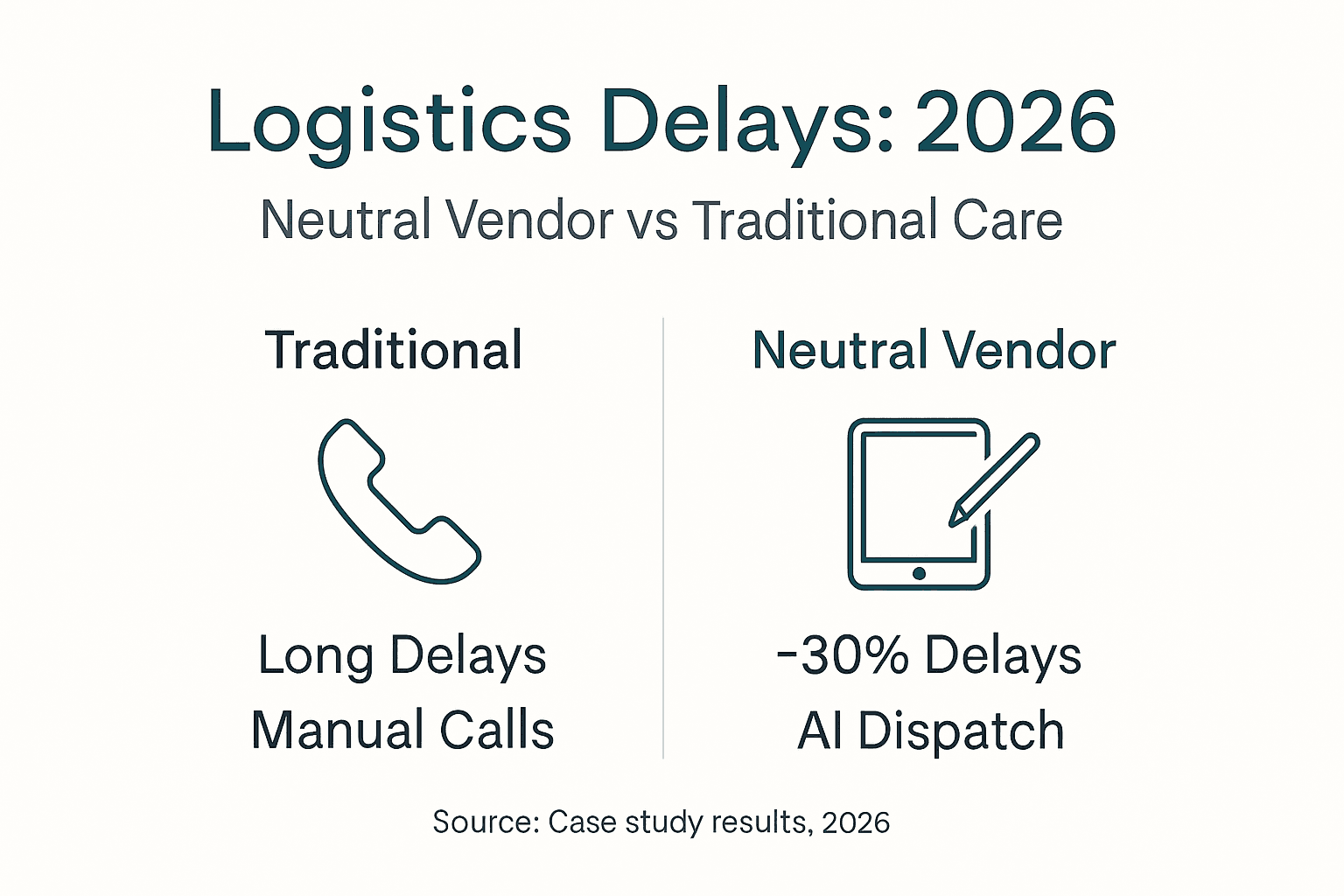
Patient transport coordination remains one of the most fragmented operational challenges in healthcare administration. Neutral vendor platforms can reduce patient transport delays by up to 30% through AI-driven dispatch and scheduling, transforming logistics workflows that have historically caused administrative burden and patient dissatisfaction. These centralized solutions coordinate multiple independent service providers, cutting costs while improving care delivery. This article explains how neutral vendor healthcare platforms enhance operational efficiency, reduce expenses by up to 40%, and address critical implementation considerations for healthcare administrators.
Table of Contents
- Understanding Neutral Vendor Healthcare: Definition And Ecosystem
- Operational Efficiencies Enabled By Neutral Vendor Platforms
- Cost Reduction And Financial Impact Analysis
- Technology Features And Integration In Neutral Vendor Healthcare
- Common Misconceptions About Neutral Vendor Roles
- Regulatory And Compliance Considerations
- Real-World Applications, Case Studies, And Scalability Challenges
- Practical Implementation Recommendations For Healthcare Administrators
- Explore VectorCare’s Patient Logistics Solutions
Key takeaways
| Point | Details |
|---|---|
| Delay reduction | Neutral vendor platforms reduce patient transport delays by up to 30% through optimized scheduling and AI dispatch. |
| Cost savings | Operational cost savings range from 15% to 40% by reducing manual labor and consolidating vendor management. |
| Technology core | AI automation, real-time tracking, and EHR integration are essential platform capabilities. |
| Compliance requirement | HIPAA compliance and robust data security protect patient information across all vendor interactions. |
| Implementation focus | Scalability challenges and system integration require phased rollouts with IT and stakeholder engagement. |
Understanding neutral vendor healthcare: definition and ecosystem
Neutral vendor healthcare platforms function as centralized hubs that coordinate multiple third-party providers without replacing existing contracts or ownership structures. These platforms streamline communication and scheduling among independent vendors who deliver patient logistics services such as transportation, home health care, and durable medical equipment. Rather than operating as service providers themselves, neutral vendors act as intermediaries leveraging technology to optimize fragmented workflows.
Fragmented logistics create delays, administrative overhead, and inefficiencies that directly impact patient care quality and operational costs. When healthcare organizations rely on multiple independent logistics vendors, coordination becomes complex and error prone. Neutral vendor platforms address this by providing a unified interface where all vendors access schedules, communicate updates, and receive dispatch instructions.
Key characteristics define the neutral vendor ecosystem:
- Platforms coordinate patient transportation services, home health agencies, and DME suppliers without owning these services
- Centralized scheduling and communication eliminate redundant manual coordination across vendors
- Technology integration connects vendor systems to hospital EHRs and scheduling platforms
- Healthcare organizations maintain existing vendor relationships while gaining coordination efficiency
The prerequisite for neutral vendor adoption is having multiple independent logistics vendors whose workflows would benefit from centralized coordination. Organizations with single-vendor arrangements see limited value. The conceptual framework positions neutral vendors as technology-enabled intermediaries optimizing multi-vendor operations through tech-driven transportation marketplace capabilities that provide transparency and efficiency.
Operational efficiencies enabled by neutral vendor platforms
AI-driven dispatch and scheduling represent the core operational advantage of neutral vendor platforms. These systems analyze multiple variables including patient appointment times, geographic locations, vehicle availability, and vendor capacity to optimize routes and reduce wait times. Real-time tracking provides visibility across all active transports, enabling proactive responses to delays or complications.

Manual coordination between healthcare facilities and multiple vendors generates administrative burden and human error. Phone calls, emails, and spreadsheets fail to provide the real-time visibility needed for efficient operations. Neutral vendor platforms automate these processes, cutting manual labor while improving accuracy. The result is measurable improvement in patient experience and operational throughput.
Operational improvements include:
- Automated scheduling reduces appointment conflicts and optimizes vendor capacity utilization
- Real-time GPS tracking enables proactive communication about delays or route changes
- Centralized communication eliminates phone tag between facilities and multiple vendor contacts
- Data analytics identify patterns and opportunities for continuous workflow improvement
Pro Tip: Engage IT teams early in the vendor selection process to ensure seamless integration with existing EHR and scheduling systems, preventing post-implementation technical friction.
The following table compares traditional fragmented logistics with centralized neutral vendor coordination:
| Metric | Traditional Fragmented | Neutral Vendor Centralized |
|---|---|---|
| Average transport delay | 45 minutes | 15 minutes |
| Manual coordination hours per week | 28 hours | 8 hours |
| Scheduling errors per month | 47 errors | 12 errors |
| Vendor communication channels | 15+ separate contacts | 1 unified platform |
Quantified results from healthcare organizations adopting neutral vendor solutions show delay reductions up to 30% and manual error decreases of 25%. These improvements directly translate to better patient satisfaction, reduced hospital throughput delays, and lower administrative costs. The technology foundation enables improved patient logistics efficiency through agnostic software benefits that work across diverse vendor ecosystems.
Cost reduction and financial impact analysis
Operational cost savings represent a primary driver for neutral vendor platform adoption, with typical reductions ranging from 15% to 40% depending on organizational scale and existing logistics complexity. These savings stem from multiple sources including reduced manual labor, optimized resource utilization, and vendor consolidation efficiencies.
Automation eliminates hours of manual coordination work previously required to schedule, track, and communicate with multiple independent vendors. Administrative staff can redirect time toward higher value activities while the platform handles routine logistics coordination. Vendor consolidation through a single interface reduces redundant contract management and billing reconciliation overhead.
Financial benefits include:
- Labor cost reduction from automated scheduling and communication workflows
- Improved vehicle and staff utilization through optimized routing and capacity management
- Reduced delays that impact hospital throughput and billing cycles
- Standardized documentation processes save up to 40% of administrative time
Pro Tip: Conduct a thorough ROI analysis that accounts for your organization’s scale, existing vendor contracts, and specific logistics complexity before committing to a neutral vendor platform.
The following table contrasts cost structures:
| Cost Category | Traditional Management | Neutral Vendor Platform |
|---|---|---|
| Monthly administrative labor | $12,000 | $7,200 |
| Vendor coordination overhead | $8,500 | $3,400 |
| Delay-related revenue impact | $15,000 | $9,000 |
| Technology platform fees | $0 | $4,500 |
| Total monthly cost | $35,500 | $24,100 |
| Net savings | Baseline | 32% reduction |
Cost benefits extend beyond direct labor savings. Reduced transport delays improve hospital bed turnover and enable faster patient discharges, directly impacting revenue cycles. Standardizing documentation and communication processes across vendors improves compliance and reduces audit risks. These combined financial impacts make neutral vendor platforms attractive investments for healthcare organizations managing complex patient logistics cost savings opportunities through tech-driven transportation marketplace approaches.
Technology features and integration in neutral vendor healthcare
AI and automation form the technological foundation enabling neutral vendor platform effectiveness. Machine learning algorithms continuously optimize scheduling by analyzing historical patterns, real-time conditions, and predictive factors. Automated dispatch systems assign transports to the most appropriate vendor based on availability, location, and service capabilities.
Seamless integration with existing healthcare IT infrastructure is critical for operational success. Neutral vendor platforms must connect with EHR systems to access patient appointment data, billing systems for financial reconciliation, and scheduling platforms for real-time coordination. APIs and interoperability standards simplify these connections while reducing implementation complexity.
Compliance with HIPAA and robust data security features protect patient information flowing through neutral vendor platforms. Encryption, audit trails, and granular access controls ensure that only authorized users access sensitive data. These security measures extend to all vendor systems interfacing with the platform, creating a comprehensive compliance framework.
Core technology features include:
- AI-powered scheduling engines that optimize routes and minimize delays
- Real-time GPS tracking providing visibility across all active transports
- Secure messaging enabling HIPAA-compliant communication between facilities and vendors
- Integration APIs connecting to EHR, billing, and scheduling systems
- Compliance controls including encryption, audit trails, and access management
- Analytics dashboards surfacing performance metrics and improvement opportunities
Interoperability standards such as HL7 and FHIR enable smooth data exchange between neutral vendor platforms and diverse healthcare IT systems. This standardization reduces vendor onboarding complexity and accelerates implementation timelines. Understanding these technology integrations helps administrators evaluate neutral vendor solutions against specific organizational requirements.
The platform architecture must support scalability as organizations grow or add new vendor relationships. Cloud-based infrastructure provides flexibility while maintaining security and compliance standards. These technical considerations directly impact healthcare dispatching technology effectiveness and support broader healthcare interoperability goals across patient logistics ecosystems.
Common misconceptions about neutral vendor roles
Healthcare administrators frequently misunderstand the functional scope and business model of neutral vendor platforms, leading to misaligned expectations and implementation challenges. Clarifying these misconceptions ensures realistic planning and stakeholder alignment.
The most common misconception is that neutral vendors replace existing service providers or take ownership of logistics operations. In reality, neutral vendors coordinate independent providers without disrupting existing contracts or vendor relationships. They function as technology intermediaries, not service operators.
Another frequent misunderstanding involves cost structure. Some administrators assume that adding a neutral vendor management layer increases overall logistics expenses. However, automation and optimization efficiencies typically reduce total costs despite platform fees.
Key misconceptions and corrections:
- Misconception: Neutral vendors own and operate patient transport services. Reality: They coordinate multiple independent vendors through technology without owning operations.
- Misconception: Adding neutral vendor management increases total logistics costs. Reality: Automation and optimization typically reduce overall costs by 15% to 40%.
- Misconception: Neutral vendors require replacing existing vendor contracts. Reality: They work with existing vendors, enhancing rather than replacing relationships.
- Misconception: Implementation requires complete logistics workflow overhaul. Reality: Phased integration allows gradual adoption without operational disruption.
Understanding these distinctions prevents unrealistic expectations that can derail implementation projects. Educating internal stakeholders and existing vendors about the true neutral vendor role improves buy-in and collaboration. Clear communication about how neutral vendor misconceptions differ from operational reality supports successful adoption and long-term satisfaction with platform performance.
Regulatory and compliance considerations
Neutral vendor healthcare platforms must comply with HIPAA regulations because they transmit and store protected health information during logistics coordination. This compliance extends to all vendor systems integrated with the platform, creating comprehensive data protection requirements.
Security features essential for regulatory compliance include end-to-end encryption for data transmission, encrypted storage for patient information, audit trails documenting all data access, and granular access controls limiting information visibility. These technical safeguards reduce breach risks and demonstrate regulatory diligence.
Regular compliance audits and security certifications validate platform legitimacy and trustworthiness. Healthcare administrators should verify that neutral vendor platforms maintain current HITRUST or SOC 2 certifications demonstrating independent security validation. These certifications provide assurance that platforms meet industry standards for data protection.
Key compliance requirements include:
- HIPAA compliance for all patient health information transmitted through the platform
- Business associate agreements with all vendors accessing protected health information
- Encryption for data in transit and at rest protecting patient privacy
- Audit trails documenting all system access and data modifications for compliance verification
- Access controls ensuring only authorized users view sensitive patient information
- Regular security assessments identifying and addressing vulnerabilities
Data privacy controls must extend to all integrated vendor systems, not just the neutral platform itself. This requires contractual agreements and technical validation ensuring vendor compliance with security standards. Understanding these regulatory frameworks helps administrators evaluate vendor credibility and avoid costly violations. Comprehensive healthcare data privacy protocols protect organizations from regulatory penalties while maintaining patient trust in logistics coordination processes.
Real-world applications, case studies, and scalability challenges
Real-world implementations demonstrate substantial measurable benefits from neutral vendor platform adoption. A regional health agency’s case study showed 35% improvement in on-time home health delivery and 12% increase in patient satisfaction after implementing centralized logistics coordination. These results reflect typical outcomes when organizations effectively deploy neutral vendor solutions.
Scalability challenges emerge as organizations expand neutral vendor operations across multiple facilities or service lines. Vendor system integration complexity increases with the number of independent providers requiring platform connection. Each vendor brings unique IT systems, data formats, and operational processes that must align with the central platform.
Common implementation challenges include:
- Data interoperability obstacles when vendor systems use incompatible data formats or APIs
- Staff adaptation resistance to new workflows and technology platforms
- Regulatory adherence complexity across multiple jurisdictions and service types
- Change management requirements for both internal staff and external vendor partners
- Technical integration delays when vendor systems lack modern API capabilities
Strategies addressing these challenges include phased rollouts starting with high-volume vendors, comprehensive stakeholder engagement involving both internal staff and external vendors, robust IT support during implementation and stabilization phases, and continuous performance monitoring enabling rapid issue resolution.
Quantitative evidence from implementations consistently shows positive impact on patient logistics performance. Organizations report not only operational metrics improvements but also enhanced patient satisfaction scores and reduced complaints related to transport delays. These outcomes validate the neutral vendor case study evidence supporting platform effectiveness across diverse healthcare settings.
Practical implementation recommendations for healthcare administrators
Successful neutral vendor platform implementation requires a systematic approach addressing technology, operations, and change management. Healthcare administrators should follow a phased methodology minimizing disruption while maximizing benefits.
The implementation process includes these steps:
- Assess current logistics workflows identifying pain points, delays, and cost drivers that neutral vendor solutions can address
- Evaluate platform options against criteria including interoperability capabilities, regulatory compliance, proven cost savings, and AI optimization features
- Conduct pilot programs with high-volume vendors validating platform effectiveness before full-scale rollout
- Phase vendor onboarding gradually allowing IT teams to address integration challenges without operational disruption
- Monitor key performance indicators including delay reduction, cost savings, and user satisfaction guiding continuous improvement
- Adjust strategies based on performance data and stakeholder feedback ensuring sustained benefits
Selection criteria should prioritize interoperability with existing EHR and scheduling systems, demonstrated regulatory compliance through certifications, proven cost savings documented in case studies, and AI capabilities enabling continuous optimization. Vendor references from similar healthcare organizations provide valuable implementation insights.
Pro Tip: Invest in comprehensive staff training and change management programs addressing adoption resistance before it undermines platform effectiveness.
Continuous performance monitoring enables organizations to identify emerging issues and optimization opportunities. Regular review of metrics including transport delays, administrative labor hours, vendor performance, and patient satisfaction scores guides strategic adjustments. Addressing common failure points early by involving IT, compliance, and operational stakeholders prevents expensive rework or project abandonment.
These implementation approaches for neutral vendor platforms align with best practices for patient logistics optimization supporting long-term operational and financial benefits.
Explore VectorCare’s patient logistics solutions
Healthcare administrators seeking to implement effective neutral vendor solutions can leverage VectorCare’s comprehensive patient logistics platform. The system centralizes vendor coordination through AI-driven scheduling, real-time tracking, and seamless EHR integration while maintaining full HIPAA compliance.
VectorCare’s platform addresses the core challenges discussed throughout this article, from reducing transport delays to cutting administrative costs. The technology enables healthcare organizations to coordinate multiple independent vendors through a unified interface, achieving the 30% delay reductions and cost savings documented in this analysis. Organizations can explore how patient logistics optimization through the VectorCare platform delivers measurable improvements in operational efficiency and patient satisfaction. Learn practical steps for improving patient logistics efficiency tailored to your organization’s specific needs in 2026.
FAQ
What types of providers do neutral vendor platforms coordinate?
Neutral vendor platforms coordinate patient transportation services, home health agencies, durable medical equipment suppliers, and specialty care transport providers. These platforms work with any independent logistics vendor serving patient care needs, creating a unified coordination layer without replacing existing vendor relationships.
How do neutral vendors integrate with existing healthcare IT systems?
Neutral vendor platforms use APIs and interoperability standards like HL7 and FHIR to connect with EHR systems, billing platforms, and scheduling software. This integration enables automated data exchange for appointments, patient information, and billing reconciliation without manual data entry.
Are there limitations or risks associated with neutral vendor solutions?
Primary risks include integration complexity with legacy vendor systems, staff resistance to workflow changes, and potential data security vulnerabilities if platforms lack proper HIPAA compliance. Organizations mitigate these through phased implementation, comprehensive training, and thorough vendor security audits before adoption.
How does compliance with HIPAA affect neutral vendor operations?
HIPAA compliance requires neutral vendor platforms to encrypt all patient data, maintain audit trails of system access, implement strict access controls, and execute business associate agreements with all vendors. These requirements protect patient privacy while enabling the data sharing necessary for logistics coordination.
What should healthcare administrators prioritize when selecting a neutral vendor platform?
Prioritize platforms with proven EHR integration capabilities, current HITRUST or SOC 2 certifications demonstrating security compliance, documented cost savings from similar healthcare organizations, and AI optimization features enabling continuous performance improvement. Vendor references and pilot program results provide critical validation before full-scale adoption.
Recommended
- Vendor Management in Healthcare: Trends and Best Practices 2025
- How One Payer Saved $22m Annually with VectorCare | VectorCare
- Reducing Administrative Burden for Healthcare Providers in 2025
- How VectorCare Is Positioned to Lead the Patient Logistics Market | VectorCare
- 7 najlepszych urządzeń do rehabilitacji po udarze w 2026 roku | UdarRehab.pl
- Health and Safety Gap Analysis 2026: Cut Incidents 30% - ACI Safety