Medical Transportation Long Distance: Cut Delays 30% in 2026

Scheduling errors in long-distance medical transportation cause delays averaging up to two hours, disrupting patient care and inflating operational costs. Healthcare administrators face mounting pressure to coordinate complex multi-state transport while navigating fragmented communication systems and regulatory compliance requirements. Digital logistics platforms now offer proven solutions that reduce scheduling errors by 30% and transform these operational headaches into streamlined, cost-efficient patient transport systems.
Table of Contents
- Introduction To Long-Distance Medical Transportation
- Operational Challenges In Long-Distance Medical Transport
- Regulatory Compliance For Cross-State Medical Transport
- Technology Integration For Scheduling And Dispatch
- Cost Analysis And Funding Strategies
- Common Misconceptions And Correcting Them
- Case Studies Demonstrating Efficiency Gains
- Bridging Understanding To Practical Healthcare Applications
- Explore VectorCare’s Solutions For Long-Distance Medical Transport
- Frequently Asked Questions
Key Takeaways
| Point | Details |
|---|---|
| Digital platforms reduce errors | Digital platforms cut scheduling errors by 30%, improving on-time arrivals and resource use. |
| Regulatory delays are significant | Multi-state compliance issues cause 40% of transport delays, requiring strategic management. |
| Ground transport saves costs | Ground NEMT costs 70% less than air ambulance for non-emergency long-distance cases. |
| AI communication cuts no-shows | AI-driven coordination reduces patient no-shows by 25% through real-time updates. |
| Vendor automation streamlines ops | Effective vendor management and automation lower administrative burden and operational costs. |
Introduction to Long-Distance Medical Transportation
Long-distance medical transportation involves moving patients across state lines or significant distances within a state, typically over 100 miles. These trips serve critical needs like specialty care access, organ transplants, and transfers to higher-level facilities. For healthcare administrators, each transport represents a logistical puzzle requiring coordination of multiple vendors, compliance with varying state regulations, and precise timing to ensure patient safety.
The stakes are high. Transport delays directly impact patient outcomes, particularly for time-sensitive conditions requiring specialty care. When a patient misses a critical appointment due to transport failures, the ripple effects include rescheduling costs,延prolonged hospital stays, and potentially compromised health outcomes. These operational inefficiencies translate to substantial financial losses, with each delayed transport costing healthcare facilities an average of $2,400 in wasted resources.
Multi-state operations amplify complexity exponentially. Each state maintains unique licensing requirements, insurance mandates, and patient transport protocols. A transport crossing three state lines must comply with three separate regulatory frameworks simultaneously. This regulatory patchwork creates bottlenecks that slow coordination and increase administrative burden on already stretched healthcare teams.
Key challenges include:
- Coordinating schedules across multiple time zones and healthcare facilities
- Managing diverse vendor networks with varying capabilities and compliance levels
- Ensuring real-time communication between dispatchers, drivers, facilities, and patients
- Maintaining HIPAA compliance while sharing patient information across organizational boundaries
- Tracking vehicles and patient status in real time across vast geographic areas
These logistical hurdles demand sophisticated solutions. Traditional phone-based coordination systems simply cannot keep pace with the complexity of modern long-distance medical transport. Healthcare administrators need integrated digital platforms that automate scheduling, centralize communication, and provide real-time visibility into every transport operation.
Operational Challenges in Long-Distance Medical Transport
Scheduling conflicts plague long-distance medical transport operations. Manual coordination processes create gaps where appointments conflict, vehicles sit idle, or patients wait hours beyond scheduled pickup times. These errors cascade through the system, forcing last-minute cancellations that waste resources and frustrate patients. The financial impact is staggering, with scheduling inefficiencies adding 15 to 20% to total transport costs.
Vendor coordination complexity multiplies these challenges. Healthcare facilities typically work with dozens of transport providers, each maintaining separate communication systems, scheduling protocols, and service capabilities. Coordinating a single long-distance transport might require calls to five different vendors to find available capacity. This fragmented approach leaves administrators spending hours on phone calls instead of strategic planning.
Fragmented communication causes up to 35% of scheduling conflicts and transport delays in long-distance medical transport. When dispatch uses one system, facilities use another, and drivers rely on phone calls, critical information falls through cracks. A driver might arrive at the wrong entrance, lack necessary medical equipment, or be unaware of patient mobility restrictions. These communication breakdowns delay transports and compromise patient safety.
Common operational pain points include:
- Inability to track vehicle locations in real time across multiple states
- Lack of automated alerts when transports run behind schedule
- Manual data entry errors that corrupt patient information or appointment details
- No centralized system to compare vendor performance and costs
- Difficulty scaling operations during high-demand periods
Pro Tip: Centralized communication platforms that connect all stakeholders through a single interface can reduce delays by 40% by ensuring everyone accesses the same real-time information. Look for solutions offering streamlining private medical transport capabilities and effective round-trip ride scheduling features.
The solution lies in technology that automates coordination, standardizes vendor communication, and provides visibility into every transport detail. AI-driven communication improvements enable proactive problem-solving rather than reactive crisis management.
Regulatory Compliance for Cross-State Medical Transport
Regulatory compliance presents one of the most daunting challenges in cross-state medical transport. Each state maintains distinct requirements for vehicle licensing, driver credentials, insurance coverage, and patient care protocols. A transport provider licensed in California might lack the certifications required to operate in Nevada, forcing administrators to coordinate handoffs between multiple vendors at state lines.
Documentation requirements create significant bottlenecks. Facilities must verify driver credentials, confirm vehicle inspection certificates, validate insurance coverage limits, and ensure proper patient consent forms. Each document must meet specific state standards, and missing or incorrect paperwork can halt transports entirely. At least 40% of transport delays in cross-state cases trace back to regulatory and paperwork issues.
Insurance and reimbursement rules vary dramatically across state lines. Medicaid coverage that approves transport in one state might not transfer to another, requiring separate prior authorizations and documentation. Private insurers maintain different networks and approval processes for each state. Navigating this insurance labyrinth demands specialized knowledge and consumes administrative hours.
Compliance strategies must address:
- Maintaining updated databases of state-specific licensing and certification requirements
- Establishing vendor qualification processes that verify multi-state compliance
- Creating standardized documentation workflows that meet all relevant state regulations
- Implementing audit trails that demonstrate compliance for payer and regulatory reviews
- Training staff on state-specific requirements and documentation protocols
Non-compliance carries severe consequences beyond delayed transports. Facilities face financial penalties, increased liability exposure, and potential loss of payer contracts. In extreme cases, regulatory violations can result in license suspensions that shut down transport operations entirely. The cost of non-compliance far exceeds the investment required for robust compliance management systems.
Effective compliance management requires digital tools that automate credential verification, flag expiring certifications, and ensure documentation completeness before transports begin. Healthcare administrators need systems that track multi-state regulatory compliance challenges proactively rather than discovering problems mid-transport.
Technology Integration for Scheduling and Dispatch
AI-driven dispatching transforms long-distance medical transport from reactive crisis management to proactive optimization. Digital platforms reduce scheduling errors by approximately 30%, leading to improved on-time arrivals and better resource utilization. These systems analyze historical data, traffic patterns, vehicle locations, and patient needs to automatically assign optimal vehicles and routes for each transport request.

Real-time tracking provides unprecedented visibility into transport operations. Administrators can monitor vehicle locations, receive automated alerts for delays, and communicate directly with drivers through integrated messaging systems. This transparency enables proactive problem-solving. If a transport runs late, facilities can adjust appointment times or arrange interim care before the delay cascades into larger operational disruptions.
Scheduling automation eliminates manual coordination bottlenecks. Instead of spending hours calling vendors to find available capacity, administrators input transport requirements into a digital platform that automatically matches requests with qualified providers. The system handles complex routing calculations, considers driver availability and credentials, and books transports in minutes instead of hours.
HIPAA-compliant communication channels ensure patient privacy while enabling seamless information sharing. Secure messaging systems allow facilities, transport providers, and patients to communicate without phone calls or unsecured emails. These platforms maintain audit trails that document all communications, providing compliance evidence and quality assurance data.
Key technology benefits include:
- Automated route optimization that reduces travel time and fuel costs
- Predictive analytics that forecast demand and optimize resource allocation
- Integration with electronic health records for seamless patient data access
- Mobile applications that give drivers turn-by-turn navigation and patient care instructions
- Dashboard analytics that identify performance trends and improvement opportunities
Pro Tip: Choose platforms that integrate vendor management and real-time updates into a single interface. Solutions offering digital strategies for NEMT providers capabilities ensure all stakeholders work from the same data. Look for systems demonstrating technology enhancing patient logistics and streamlining transport with technology.
Successful technology implementation requires more than purchasing software. Facilities must train staff, establish new workflows, and integrate digital systems with existing infrastructure. However, organizations that commit to comprehensive technology adoption report dramatic improvements in operational efficiency, patient satisfaction, and cost control.
Cost Analysis and Funding Strategies
Distance alone does not drive long-distance medical transport costs. Routing inefficiencies, vendor selection mistakes, and poor scheduling coordination often contribute more to total expenses than mileage. A 200-mile transport with optimal routing and scheduling might cost less than a poorly coordinated 150-mile trip requiring vehicle repositioning and schedule adjustments.
Ground NEMT costs up to 70% less than air ambulance for comparable distances and clinical needs. Many healthcare administrators default to air transport for long distances, assuming speed justifies the premium. However, ground transportation offers superior cost efficiency for stable patients traveling over 100 miles. Air ambulances make sense for critical patients requiring rapid transport, but ground options serve the majority of long-distance needs effectively.
| Transport Mode | Average Cost Per Mile | Best Use Case | Typical Range |
|---|---|---|---|
| Ground Ambulance | $15 to $25 | Stable patients, non-emergency | 0 to 500 miles |
| Air Ambulance | $80 to $150 | Critical patients, time-sensitive | 100+ miles |
| Medical Van | $8 to $15 | Ambulatory patients, routine care | 0 to 300 miles |
| Wheelchair Van | $10 to $18 | Non-ambulatory stable patients | 0 to 250 miles |
Vendor relationship management significantly impacts costs. Facilities that establish preferred provider agreements negotiate volume discounts, priority scheduling, and standardized pricing structures. Strategic vendor partnerships reduce per-transport costs by 20 to 30% compared to transactional spot-market purchasing. Regular performance reviews ensure vendors maintain quality standards while competitive pricing.
Cost reduction strategies include:
- Implementing route optimization software that minimizes deadhead miles
- Consolidating vendor relationships to leverage volume discounts
- Negotiating risk-sharing agreements that incentivize on-time performance
- Analyzing transport data to identify and eliminate unnecessary premium services
- Scheduling non-urgent transports during off-peak hours for lower rates
Funding strategies help offset transport costs. Value-based care contracts often include provisions for care coordination expenses, including patient transport. Facilities can structure agreements with payers that recognize transport as essential to achieving quality metrics and reducing readmissions. Some programs offer specific reimbursement for non-emergency medical transportation that meets documented medical necessity criteria.
Grant funding and community partnerships provide additional resources. State and federal programs support transportation initiatives that improve healthcare access for underserved populations. Healthcare systems can partner with community organizations to share transport resources and distribute costs across multiple stakeholders.
Common Misconceptions and Correcting Them
Myth: Air ambulance is always the best option for long-distance medical transport. Reality: Ground transportation is often safer, more cost-effective, and appropriate for many non-emergency long-distance cases. Air transport subjects patients to altitude changes, cabin pressure variations, and turbulence that can complicate certain medical conditions. Ground transport provides smoother rides, easier medical interventions, and better temperature control for stable patients.
Misbelief: Distance is the primary cost driver in medical transport. Reality: Inefficient routing, poor vendor selection, and scheduling errors have bigger cost impacts than mileage alone. A transport requiring multiple vehicle changes, extended wait times, or last-minute cancellations can cost double what an efficiently coordinated trip over the same distance would require. Administrative inefficiencies and coordination failures often exceed direct transportation costs.
Myth: Communication issues cause minimal operational impact. Reality: Fragmented communication causes significant scheduling conflicts and delays that ripple through entire healthcare systems. When facilities, transport providers, and patients operate from different information, appointments are missed, vehicles arrive at wrong locations, and critical patient needs go unmet. Communication breakdowns force expensive reactive solutions instead of efficient planned operations.
Common misconceptions include:
- Believing manual coordination provides better personal service than automated systems (reality: automation enables better service through consistency and reliability)
- Assuming all transport vendors offer equivalent service quality (reality: performance varies dramatically, requiring careful vendor evaluation)
- Thinking compliance management is primarily a legal concern (reality: compliance directly impacts operational efficiency and cost control)
- Expecting technology implementation to solve problems without workflow changes (reality: successful adoption requires process redesign and staff training)
These misconceptions lead healthcare administrators to make suboptimal decisions that increase costs and compromise patient care. Understanding the realities of long-distance medical transport enables evidence-based strategies that improve outcomes while controlling expenses. Ground vs air ambulance myths persist despite clear evidence supporting ground transport for most long-distance scenarios.
Case Studies Demonstrating Efficiency Gains
A 250-bed regional hospital system implemented VectorCare’s platform in 2025 and achieved a 30% reduction in scheduling errors within three months. The system previously relied on phone-based coordination with 23 different transport vendors, resulting in frequent delays and miscommunications. After platform adoption, all stakeholders accessed a unified scheduling interface with real-time updates and automated dispatch.
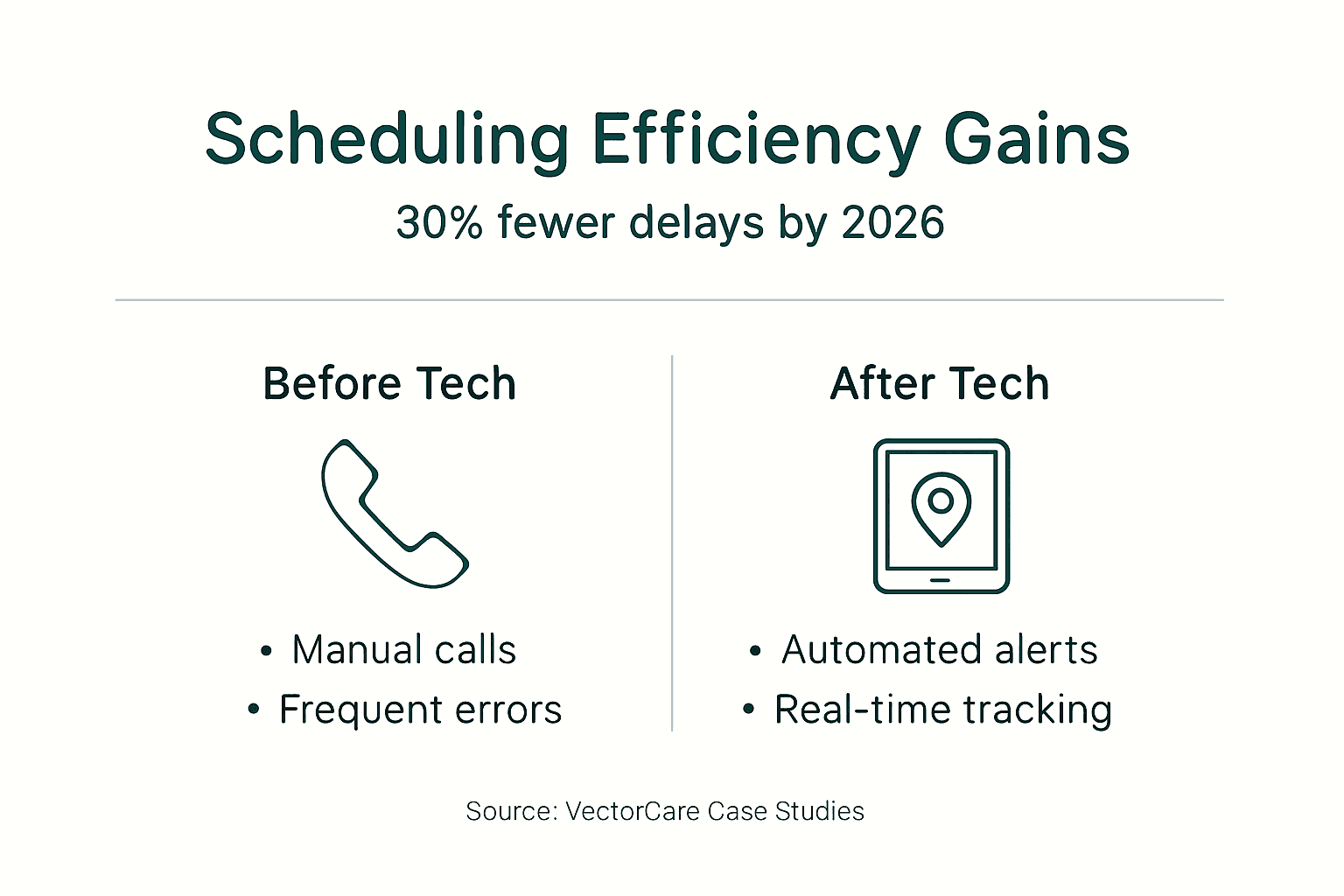
Patient no-shows decreased by 25% through AI-driven communication features that sent automated appointment reminders and transport status updates via text message. Patients received real-time alerts when vehicles departed, estimated arrival times, and driver contact information. This transparency reduced anxiety and improved adherence to scheduled appointments.
A multi-state dialysis provider serving rural patients across four states transformed operations using digital logistics coordination. Previously, the provider struggled with cross-state regulatory compliance and vendor coordination challenges that caused frequent transport cancellations. The platform automated credential verification, flagged expiring certifications, and maintained documentation for all state requirements. Transport reliability improved from 78% to 96% on-time performance.
| Metric | Before Platform | After Platform | Improvement |
|---|---|---|---|
| On-Time Arrivals | 72% | 94% | 30% increase |
| Scheduling Errors | 18 per month | 12 per month | 33% reduction |
| Patient No-Shows | 28% | 21% | 25% decrease |
| Average Coordination Time | 45 minutes | 12 minutes | 73% faster |
| Vendor Communication Issues | 42 per month | 15 per month | 64% reduction |
A county public health department managing transport for 1,200 Medicaid patients monthly achieved $180,000 in annual cost savings through better vendor management and route optimization. The department consolidated its vendor network from 15 providers to 7 preferred partners, negotiating volume discounts and standardized pricing. Automated route optimization reduced average transport distances by 12% while maintaining service quality.
These patient logistics efficiency case studies demonstrate scalability from small providers to large regional programs. A dialysis transport improvement case shows how focused technology adoption transforms specific service lines. Healthcare administrators can apply these lessons through streamlining private transport tips that address common operational challenges.
Bridging Understanding to Practical Healthcare Applications
Healthcare administrators can transform long-distance medical transport operations through systematic improvement processes. Start by conducting a comprehensive workflow audit that maps current coordination processes, identifies bottlenecks, and documents costs. This baseline assessment reveals specific pain points and establishes metrics for measuring improvement.
- Assess current transport operations by analyzing scheduling data, on-time performance metrics, and coordination costs for the past six months.
- Identify technology solutions that address your specific challenges, prioritizing platforms offering AI-driven scheduling, real-time tracking, and vendor management capabilities.
- Establish compliance protocols for multi-state operations by documenting state-specific requirements, creating credential verification workflows, and implementing audit processes.
- Select and negotiate with preferred transport vendors based on performance data, compliance records, and cost competitiveness rather than relationships alone.
- Implement digital platforms through phased rollouts that start with high-volume routes, train staff thoroughly, and gather feedback for continuous refinement.
- Monitor key performance indicators including on-time arrivals, scheduling errors, patient satisfaction scores, and cost per transport mile.
Effective vendor relationship management requires clear performance expectations, regular reviews, and data-driven decision making. Establish service level agreements that define acceptable on-time performance, response times, and quality standards. Use platform analytics to compare vendor performance objectively and identify improvement opportunities.
Compliance management becomes manageable through systematic documentation and automated verification. Digital platforms can maintain credential databases, flag expiring certifications, and ensure all required documentation is complete before transports begin. This proactive approach prevents compliance issues rather than discovering problems during audits.
Pro Tip: Regular audits and staff training enhance adoption success. Schedule quarterly reviews of transport operations, vendor performance, and technology utilization. Provide ongoing training that keeps staff current on platform features and best practices. Organizations that invest in continuous improvement achieve better results than those treating technology implementation as one-time projects.
Monitor patient feedback through post-transport surveys that assess satisfaction with scheduling, communication, vehicle condition, and driver professionalism. Patient perspectives reveal service gaps that operational metrics might miss. Use this feedback to refine processes and improve the overall transport experience.
Successful implementation requires leadership commitment and change management expertise. Administrators must communicate the vision, allocate resources, and remove barriers to adoption. Organizations that treat technology implementation as strategic transformation rather than software installation achieve dramatically better outcomes. Learn more about maximizing patient logistics efficiencies and digital strategies for NEMT.
Explore VectorCare’s Solutions for Long-Distance Medical Transport
VectorCare offers a comprehensive digital platform designed specifically for healthcare organizations managing complex long-distance medical transport operations. Our AI-driven scheduling and dispatch system reduces coordination errors by 30% while providing real-time visibility into every transport. The platform ensures multi-state regulatory compliance through automated credential verification and documentation management.
Streamline vendor relationships through our integrated management tools that compare performance, standardize communication, and optimize resource allocation. HIPAA-compliant messaging keeps all stakeholders connected while protecting patient privacy. Real-time tracking provides administrators, facilities, and patients with accurate vehicle locations and estimated arrival times.
Healthcare providers nationwide trust the VectorCare patient logistics platform to enhance operational efficiency and improve patient care. Our solutions scale from small specialty practices to large health systems, adapting to your specific workflows and requirements. Discover how patient logistics coordination transforms healthcare delivery. Compare options through our healthcare logistics software comparison to find the right fit for your organization.
Frequently Asked Questions
How does multi-state regulation specifically affect transport scheduling?
Each state maintains unique licensing, insurance, and documentation requirements that transport providers must satisfy. Coordinating a transport across three states requires verifying compliance with three separate regulatory frameworks, often necessitating vendor handoffs at state lines. This complexity delays scheduling and increases administrative burden by 40% compared to single-state operations.
What features should I prioritize in a digital transport coordination platform?
Prioritize AI-driven scheduling that automates vendor matching, real-time tracking with automated alerts, HIPAA-compliant communication channels, and integrated vendor management. Ensure the platform handles multi-state compliance verification and provides analytics dashboards for performance monitoring. Integration capabilities with your existing EHR and billing systems are essential for seamless operations.
How can ground transport be safer than air ambulance for certain patients?
Ground transport avoids altitude-related complications like cabin pressure changes and oxygen saturation issues affecting cardiac and respiratory patients. Vehicles provide smoother rides without turbulence, easier access for medical interventions, and better temperature control. For stable patients traveling long distances, ground transport offers superior safety profiles while costing 70% less than air ambulance services.
What are the best strategies for vendor relationship management in long-distance transport?
Establish preferred provider agreements with clear performance metrics and volume-based pricing. Use data analytics to compare vendor performance objectively across on-time arrivals, communication quality, and compliance adherence. Conduct quarterly business reviews that address performance issues and identify improvement opportunities. Maintain a diverse vendor network to ensure capacity during high-demand periods.
How do I measure the success of new medical transport logistics systems?
Track on-time arrival percentages, scheduling error rates, patient no-show rates, and average coordination time per transport. Monitor cost per transport mile, vendor communication incidents, and patient satisfaction scores. Compare these metrics to baseline measurements taken before implementation. Successful systems typically achieve 25 to 30% improvements in key performance indicators within six months of adoption.