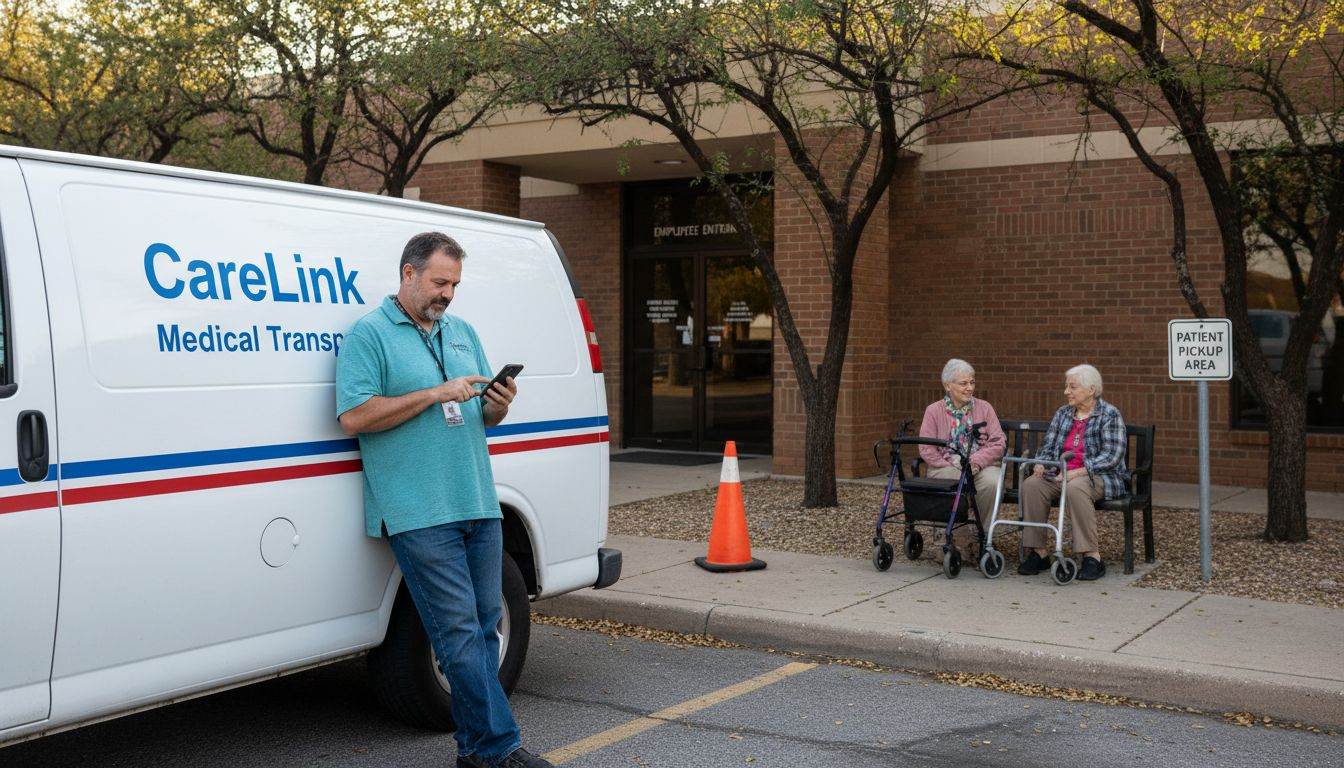
Medical Transport for Medicare Patients: Streamlining Access

Long patient wait times in busy United States cities can quickly disrupt schedules and create serious challenges for Medicare transport coordinators. The difference between a smooth transfer and a frustrated family often comes down to understanding the exact requirements for Medicare-covered ambulance services and how to qualify non-emergency medical transport. This guide lays out clear definitions, eligibility criteria, and practical steps to help your home health agency coordinate safer, faster patient transport while minimizing compliance risks.
Table of Contents
- Defining Medical Transport For Medicare Patients
- Types Of Covered Medical Transportation Services
- Eligibility Criteria And Documentation Needs
- Compliance Requirements And Industry Standards
- Coordinating Efficient Transport And Vendor Management
- Managing Costs, Risks, And Operational Challenges
Key Takeaways
| Point | Details |
|---|---|
| Medical Transport Categories | Medicare-covered medical transport includes emergency and non-emergency services, each with specific eligibility criteria and documentation requirements. |
| Documentation Necessity | Obtaining written physician documentation is crucial for justifying the medical necessity of transport services and ensuring Medicare coverage. |
| Compliance Standards | Adhering to operational standards set by organizations like CAMTS ensures safe and high-quality medical transportation for patients. |
| Cost Management Strategies | Implementing technology for routing, vendor contracts, and predictive analytics can help manage costs and improve efficiency in medical transport operations. |
Defining Medical Transport for Medicare Patients
Medical transport for Medicare patients represents a critical healthcare service designed to ensure safe and appropriate transportation for individuals with medical needs. Medicare-covered ambulance services are specifically structured to address emergency and limited non-emergency medical transportation scenarios.
Under Medicare guidelines, medical transport is categorized into two primary classifications: emergency and non-emergency transportation. Emergency transport covers situations where a patient’s health is in immediate danger and requires urgent medical intervention. These scenarios typically involve ground or air ambulance services that transport patients to the nearest appropriate medical facility. Non-emergency transport, by contrast, requires specific medical justification and involves more stringent eligibility criteria.
The core criteria for Medicare medical transport coverage center on medical necessity. Patients must demonstrate that alternative transportation methods pose significant health risks or are impossible due to their medical condition. This means simply lacking personal transportation does not qualify for Medicare ambulance services. Physicians must provide explicit documentation confirming that the patient is bed-confined or requires specialized medical monitoring during transit.
Specific Coverage Parameters include:
- Ground ambulance transportation
- Air ambulance services for remote or critical access scenarios
- Transportation between approved medical facilities
- Limited non-emergency transport with precise medical documentation
Pro tip: Always obtain written physician documentation confirming medical transportation necessity to maximize Medicare coverage potential.
Types of Covered Medical Transportation Services
Medicare offers multiple transportation services designed to address different medical transportation needs, with emergency and non-emergency ambulance services being the primary modes of covered transport. Emergency ambulance services represent the most critical transportation option, focusing on urgent medical situations that require immediate professional medical intervention.
Ground ambulance transportation forms the backbone of Medicare’s medical transport coverage. These services include fully equipped vehicles staffed with trained medical professionals capable of providing immediate care during transit. Air ambulance services complement ground transportation, particularly for patients in remote locations or those requiring specialized critical care that cannot be safely managed through ground transport. These services are typically reserved for scenarios where ground transportation would pose significant health risks or be impractical.

Non-emergency medical transportation presents a more nuanced coverage scenario. Medicare Part B covers non-emergency ambulance services only when transportation by other means could potentially endanger the patient’s health. This means patients must have a documented medical condition that prevents them from using alternative transportation methods like personal vehicles, taxis, or public transit. Specific qualifying conditions might include being bed-confined, requiring continuous medical monitoring, or having a medical need that necessitates specialized transportation equipment.
Key Transportation Service Categories:
Here’s an overview comparing types of Medicare-covered medical transport services:
| Transport Type | Typical Situations | Medical Staff Involved | Unique Limitations |
|---|---|---|---|
| Emergency Ground | Critical injury, collapse | EMTs or paramedics | Nearest facility only |
| Emergency Air | Remote trauma, urgent care | Flight nurse, paramedic | Weather and distance constraints |
| Non-Emergency Ambulance | Scheduled treatments | EMTs, driver | Requires strict documentation |
| Specialized Bed-Confined | Homebound patients | Medical attendant | Specialized equipment needed |
- Emergency ground ambulance transport
- Emergency air ambulance services
- Non-emergency ambulance transportation
- Specialized medical transport for bed-confined patients
Pro tip: Always request and maintain detailed medical documentation from your physician to substantiate the medical necessity of specialized transportation services.
Eligibility Criteria and Documentation Needs
Navigating Medicare transportation services requires understanding the precise medical necessity documentation requirements. Patients must meet stringent criteria to qualify for covered medical transportation, with medical necessity serving as the fundamental determining factor for eligibility.
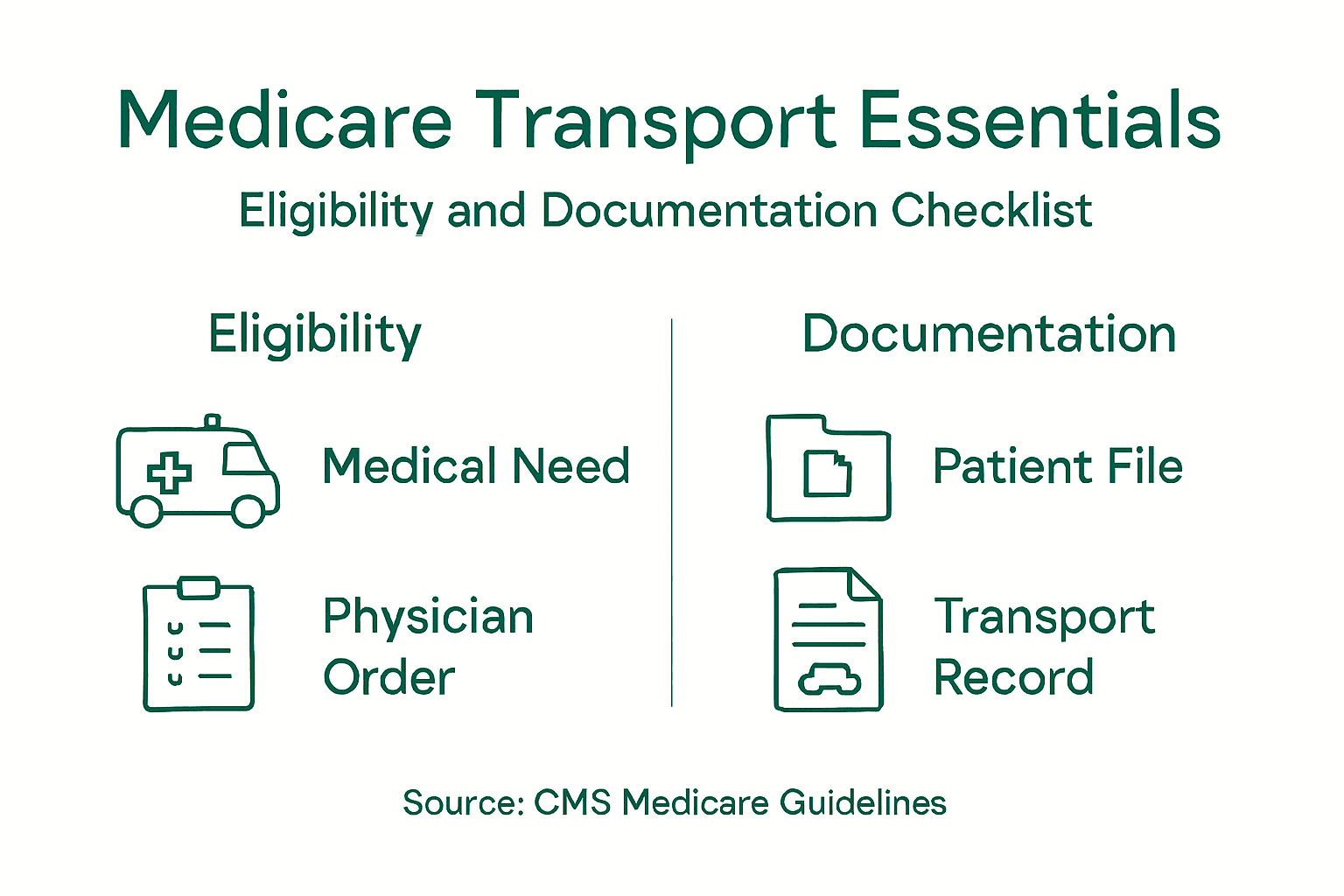
For non-emergency medical transportation, Medicare enforces strict documentation protocols. Patients must obtain a written physician’s order confirming that alternative transportation methods would pose significant health risks. This documentation must explicitly state why ambulance or specialized transport is the only safe mode of transportation. Qualifying conditions typically include being bed-confined, requiring continuous medical monitoring, or having a medical condition that prevents using standard transportation methods like personal vehicles or public transit.
The documentation process involves multiple critical components. Physician orders must be dated within specific timeframes, typically no more than 60 days before a scheduled transport or submitted within 48 hours for unscheduled trips. Healthcare providers must include detailed medical justification explaining why standard transportation would compromise the patient’s health. Some states additionally require prior authorization, which means patients and medical teams must proactively submit comprehensive documentation before transportation services can be approved.
Key Documentation Requirements:
- Physician-signed medical necessity statement
- Detailed explanation of transportation limitations
- Date of medical assessment
- Specific medical conditions preventing standard transport
- Estimated duration of transportation needs
Pro tip: Maintain a comprehensive medical file and work closely with your healthcare provider to ensure all transportation documentation is complete, current, and thoroughly substantiated.
Compliance Requirements and Industry Standards
Medical transportation services must adhere to rigorous industry standards for patient safety that establish comprehensive guidelines for operational excellence. These standards encompass multiple dimensions of medical transport, ensuring that patients receive high-quality, reliable, and medically appropriate transportation services across various healthcare scenarios.
The Commission on Accreditation of Medical Transport Systems (CAMTS) and The Joint Commission play pivotal roles in establishing and maintaining these critical compliance frameworks. These organizations develop detailed standards that address multiple aspects of medical transportation, including vehicle equipment specifications, staff qualifications, medical protocols, communication systems, and patient care protocols. Compliance involves meeting measurable criteria that demonstrate a commitment to safety, professional training, and continuous operational improvement.
Regulatory compliance extends beyond basic medical transportation requirements. Healthcare providers must implement comprehensive quality assurance programs that include regular staff training, equipment maintenance, performance evaluations, and incident reporting mechanisms. These standards mandate thorough documentation, ongoing risk management assessments, and adherence to evolving healthcare regulations. Transportation providers must also demonstrate their ability to maintain patient confidentiality, ensure safe patient handling, and provide specialized care tailored to individual medical needs.
Key Compliance Dimensions:
- Vehicle safety and equipment standards
- Staff certification and training requirements
- Patient care and safety protocols
- Communication and documentation procedures
- Continuous quality improvement mechanisms
Pro tip: Regularly verify your medical transportation provider’s current accreditation status and ask about their specific compliance certifications to ensure the highest standard of patient care.
Coordinating Efficient Transport and Vendor Management
Effective medical transportation for Medicare patients requires sophisticated coordination and mobility management strategies that align multiple stakeholders and resources. Healthcare organizations must develop comprehensive frameworks that optimize vendor relationships, streamline communication channels, and ensure reliable patient transport services across complex healthcare ecosystems.
Vendor management in medical transportation involves carefully screening, selecting, and monitoring transportation providers who meet stringent Medicare compliance standards. This process requires establishing clear performance metrics, conducting regular audits, and implementing robust communication protocols. Healthcare coordinators must evaluate vendors based on criteria such as safety records, staff qualifications, vehicle maintenance standards, and their ability to provide specialized medical transportation services tailored to patient needs.
Successful coordination demands a multifaceted approach that integrates technological solutions, clear operational guidelines, and flexible response mechanisms. Transportation networks must develop sophisticated scheduling systems that can dynamically adjust to patient requirements, manage real-time logistics, and provide transparent reporting. This includes creating comprehensive vendor performance dashboards, establishing escalation procedures for service disruptions, and maintaining detailed documentation to ensure continuous quality improvement and regulatory compliance.
Key Coordination Strategies:
- Comprehensive vendor screening processes
- Performance-based vendor selection criteria
- Real-time logistics tracking systems
- Clear communication and escalation protocols
- Continuous quality improvement mechanisms
Pro tip: Develop a standardized vendor evaluation framework with quantifiable metrics to objectively assess and compare medical transportation service providers.
The following table summarizes essential elements for compliant vendor selection in medical transport coordination:
| Key Vendor Criteria | Why It Matters | Evaluation Method |
|---|---|---|
| Certification status | Ensures regulatory compliance | Review accreditation docs |
| Performance metrics | Assesses consistency and quality | Analyze service reports |
| Safety record | Guards patient interests | Check incident history |
| Specialization | Matches unique patient needs | Interview provider |
Managing Costs, Risks, and Operational Challenges
Healthcare organizations face significant pressure to manage escalating operational costs and economic challenges within medical transportation services. These challenges require strategic approaches that balance financial constraints with maintaining high-quality patient care, particularly for Medicare transportation programs that operate under tight budgetary restrictions.
Risk management in medical transportation involves multiple interconnected components. Financial risks include unpredictable service costs, potential liability issues, and the need for continuous staff training and equipment maintenance. Operational risks encompass scheduling complexities, potential service disruptions, and ensuring consistent patient safety across diverse transportation scenarios. Healthcare providers must develop comprehensive risk mitigation strategies that include robust contingency planning, detailed performance tracking, and adaptive response mechanisms.
Cost containment strategies must be sophisticated and multifaceted. This involves leveraging technology to optimize routing, implementing data-driven scheduling algorithms, negotiating strategic vendor contracts, and developing performance-based payment models. Organizations need to invest in solutions that reduce administrative overhead, minimize unnecessary transport expenses, and create more efficient resource allocation mechanisms. Predictive analytics and real-time monitoring can help identify potential cost-saving opportunities and streamline overall transportation service delivery.
Key Cost and Risk Management Strategies:
- Implement advanced routing optimization technologies
- Develop performance-based vendor contracts
- Use predictive analytics for resource planning
- Create comprehensive risk mitigation protocols
- Establish continuous improvement mechanisms
Pro tip: Develop a dynamic cost-tracking dashboard that provides real-time insights into transportation expenses and performance metrics to enable proactive financial management.
Simplify Medical Transport Coordination for Medicare Patients
Navigating the complexities of medical transportation for Medicare patients is challenging. The article highlights core pain points such as meeting strict medical necessity documentation requirements, ensuring compliance with industry standards, and managing vendor relationships efficiently. These hurdles can cause delays, increase operational costs, and compromise patient safety — critical issues for healthcare providers aiming to deliver timely and coordinated care.
VectorCare offers a powerful solution that directly addresses these challenges. With a comprehensive digital platform designed for healthcare logistics, VectorCare streamlines scheduling optimization, vendor management, and real-time updates using AI-driven dispatching. This solution helps you reduce administrative burdens, improve documentation compliance, and easily track transportation vendors all from one user-friendly interface. Explore how VectorCare can enhance your coordination of Medicare medical transport services by visiting VectorCare’s website.
Looking for a smarter way to manage patient transport for Medicare programs?

Discover the difference cutting-edge technology can make in ensuring safe, compliant, and cost-effective medical transportation. Visit VectorCare today and take the first step toward transforming your patient logistics operations.
Frequently Asked Questions
What types of medical transport does Medicare cover?
Medicare covers emergency ground and air ambulance services, as well as limited non-emergency ambulance transportation that meets strict medical necessity criteria.
How does Medicare determine medical necessity for transport?
To qualify for coverage, patients must demonstrate that alternative forms of transportation pose significant health risks due to their medical condition. A physician must provide written documentation to support this need.
What documentation is required for non-emergency medical transportation under Medicare?
Patients need a physician-signed order stating the medical necessity of ambulance transport, including specific conditions preventing them from using standard transport methods, along with details on the patient’s health status and estimated transport duration.
How can healthcare organizations manage costs and risks associated with medical transport?
Organizations can implement advanced routing optimization technologies, develop performance-based vendor contracts, and leverage predictive analytics for better resource planning to manage costs and mitigate operational risks.
Recommended
- 7 Ways to Lower NEMT costs for Medicare Advantage plans | VectorCare
- 7 Ways to Improve Outcomes for Medicare Advantage Members | VectorCare
- 3 Reasons Medicare Advantage Plans Should Prioritize NEMT Software | VectorCare
- All About CMS’ New Dialysis Transportation Reimbursement Cuts | VectorCare
- Services for End Users - Stonos Solutions