Long Distance Non-Emergency Medical Transport: Boosting Hospital Efficiency and Patient Outcomes
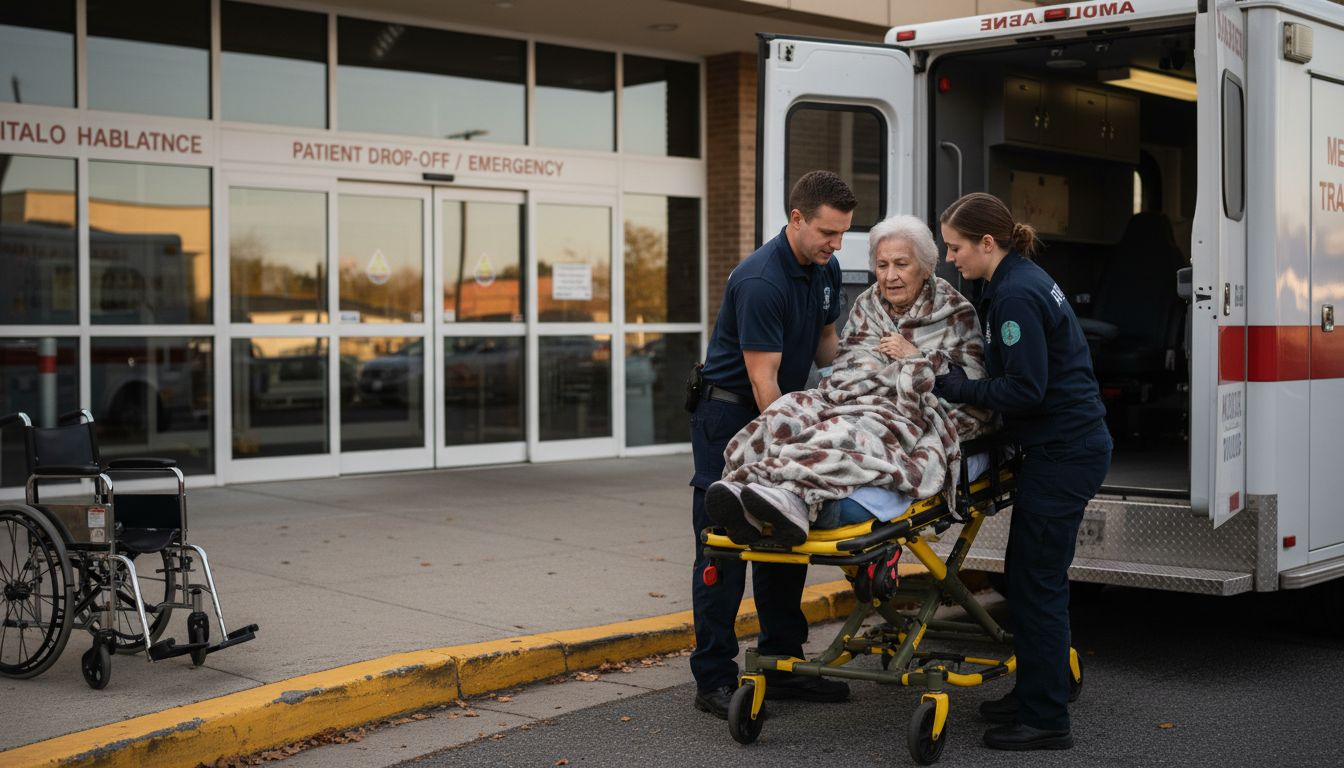
For many hospital administrators, the challenge of getting patients to distant appointments safely—without overextending your budget—feels endless. As patient needs grow more complex and facility locations spread farther apart, the burden lands squarely on your team to bridge these gaps efficiently. By defining long-distance Non-Emergency Medical Transport and its role in the modern healthcare system, you can identify the most cost-effective strategies that align with regulatory standards and truly support your patient population.
Table of Contents
- Defining Long Distance Non-Emergency Medical Transport
- Service Categories And Common Use Cases
- Scheduling, Dispatch, And Equipment Standards
- Legal, Regulatory, And Compliance Requirements
- Risks, Costs, And Common Challenges
- Comparing Alternatives And Avoiding Pitfalls
- Building A Sustainable Model
Key Takeaways
| Point | Details |
|---|---|
| Importance of NEMT | Non-Emergency Medical Transport is essential for patients who cannot use standard transport due to medical conditions, enabling access to healthcare services. |
| Long-Distance Challenges | Long-distance NEMT requires careful planning and coordination, with unique operational challenges like advanced scheduling and resource allocation. |
| Impact on Patient Health | Well-managed long-distance transport can improve patient health outcomes by reducing missed appointments and enhancing access to preventive care. |
| Regulatory Compliance | Understanding Medicaid regulations and maintaining compliance is critical to avoid denied claims and ensure sustainable operations. |
Defining Long Distance Non-Emergency Medical Transport
Non-Emergency Medical Transport (NEMT) serves a specific and critical function within the healthcare system. It encompasses transportation services for patients who cannot safely use standard public or personal transportation due to medical conditions, mobility limitations, or disabilities. These patients require specialized assistance to reach medical appointments, treatments, dialysis centers, rehabilitation facilities, or other healthcare destinations—but unlike emergency ambulance services, they don’t need urgent intervention during transport itself.
The definition has evolved significantly over the past decade. What once referred exclusively to transport for patients needing assistance to medical appointments has expanded into a comprehensive healthcare service. Today, NEMT encompasses ambulatory transport for patients who can walk with assistance, wheelchair transport for those with mobility challenges, stretcher transport for patients unable to sit upright, and specialized air transport for remote or particularly complex situations. Non-emergency medical transportation services now address broader healthcare access barriers, including social determinants that prevent patients from receiving timely care.
For hospital administrators, understanding this distinction matters deeply. Long-distance NEMT specifically refers to non-emergency medical transport covering extended distances—typically beyond 50 miles or requiring more than one hour of travel time. This subset of NEMT presents unique operational challenges compared to local transport. Long-distance transport demands careful coordination with multiple stakeholders, requires advance scheduling rather than rapid dispatch, involves longer vehicle utilization periods, and necessitates different resource planning than short-haul services. These services bridge critical gaps for patients with chronic illnesses, disabilities, or geographic isolation who would otherwise face insurmountable barriers to accessing necessary medical care.
When long-distance transport is well-managed, it directly impacts patient health outcomes. Regular missed appointments decrease. Preventive care increases. Chronic conditions stabilize rather than deteriorate. From an operational standpoint, however, poorly organized long-distance transport creates significant administrative burden. Scheduling conflicts multiply, vehicle costs escalate, staff spend excessive time coordinating logistics, and patient no-show rates climb. The goal is to structure your long-distance NEMT operations so that accessibility for patients aligns with operational efficiency for your organization.
Pro tip: When evaluating your current long-distance transport operations, track the average distance per trip and average duration per assignment—these metrics will reveal whether your scheduling and resource allocation actually matches your patient population’s needs.
Service Categories and Common Use Cases
Long-distance NEMT isn’t one-size-fits-all. Different patients require different transportation modes based on their mobility level, medical condition, and distance involved. Understanding these categories helps you allocate resources correctly and set realistic expectations for scheduling and costs.
Transportation Modes by Patient Mobility
The foundation of NEMT service categories rests on how independently a patient can move. Ambulatory transport serves patients who can walk with minimal assistance or use a cane or walker. These passengers occupy standard vehicle seats and require the least specialized equipment. Wheelchair transport accommodates patients who cannot walk but can sit upright in a wheelchair or regular seat. This requires vehicle lifts, securement systems, and trained operators who understand proper restraint procedures. Stretcher transport handles patients who must remain lying down due to medical conditions, recent surgeries, or severe disabilities. These trips need specialized vehicles with climate control, monitoring capabilities, and staff trained in patient positioning and safety. Beyond ground transport, air transport options address situations where ground distance is prohibitive or medical complexity demands faster transit.
Here’s a summary of long-distance NEMT transport modes and their business impact:
| Transport Mode | Patient Profile | Required Equipment | Business Impact |
|---|---|---|---|
| Ambulatory | Walks with minor help | Standard vehicle, basic aids | Lower costs, high scheduling flexibility |
| Wheelchair | Uses wheelchair, upright | Vehicle lift, securement | Moderate costs, staff training essential |
| Stretcher | Cannot sit upright | Stretcher, monitoring tools | High costs, complex scheduling |
| Specialized Air | Remote/complex cases | Air ambulance, medical staff | Very high costs, limited frequency |
Real-World Destinations and Trip Patterns
Your patient population likely travels to consistent destination types that repeat regularly. Dialysis centers generate the highest volume of recurring trips—patients typically need three sessions weekly, same days, same times. Physician offices and diagnostic facilities create irregular but essential appointments for ongoing management. Rehabilitation and therapy centers involve multi-week treatment courses with predictable schedules. Specialty hospitals and residential care facilities often require one-time or occasional transport. Behavioral health facilities present unique coordination needs due to patient vulnerability.
Why does this matter operationally? Recurring dialysis trips allow you to build standing contracts with vendors, negotiate better rates, and achieve predictable scheduling. One-off appointments to specialist offices demand flexible capacity and shorter booking windows. When you categorize your patient base by destination type, you can right-size your long-distance transport fleet and avoid expensive idle capacity.
Medicaid Program Variations
How NEMT services are delivered varies significantly by state and funding model. State Medicaid programs operate through different approaches: some manage NEMT in-house with fee-for-service models, others contract with managed care organizations, and many use brokerage firms to coordinate rides. These models directly affect your hospital’s coordination responsibilities, billing processes, and patient eligibility verification. A patient covered under one state’s Medicaid arrangement may follow entirely different authorization and payment procedures in another state.
Pro tip: Audit your patient base by destination type and transport mode needed—this data reveals which service categories drive your volume and costs, allowing you to negotiate vendor partnerships and implement specialized scheduling protocols for your highest-frequency trips.
Scheduling, Dispatch, and Equipment Standards
Successful long-distance NEMT operations depend on three interconnected systems that must work seamlessly together: scheduling that anticipates patient needs, dispatch procedures that coordinate resources efficiently, and equipment standards that ensure safe, reliable transport. When any of these three falters, your entire operation suffers.
Scheduling That Actually Works
Long-distance scheduling differs fundamentally from local transport. You cannot schedule a long-distance trip 30 minutes before departure. Patients traveling 100+ miles need advance notice, drivers need route planning time, and vehicles must be positioned strategically. Effective scheduling starts with identifying your recurring appointments—those dialysis runs, regular therapy sessions, and predictable specialist visits that anchor your calendar. Once those are locked in, you have visibility into available capacity for one-off appointments. The worst mistake administrators make is treating long-distance transport like emergency dispatch, scrambling reactively instead of planning proactively.
Your scheduling system must accommodate medical constraints that standard transportation ignores. A patient cannot skip dialysis because transport failed. A chemotherapy appointment cannot be rescheduled casually. This means your scheduling software needs built-in flexibility, buffer time between appointments, and clear communication protocols with referring physicians and patients. Current NEMT scheduling approaches in hospitals reveal that many institutions still rely on manual spreadsheets and phone calls, creating bottlenecks and human error.
Dispatch Operations and Personnel Coordination
Dispatchers shoulder enormous responsibility. They coordinate multiple vehicles, track real-time locations, respond to unexpected delays, and ensure patients reach appointments on time. Dispatchers managing non-emergency medical transport prepare schedules, relay work orders, monitor personnel and equipment locations, and advise on traffic or weather issues that may impact transport times. In long-distance operations, dispatch complexity multiplies because trips take hours, conditions change en route, and communication gaps create dangerous situations.
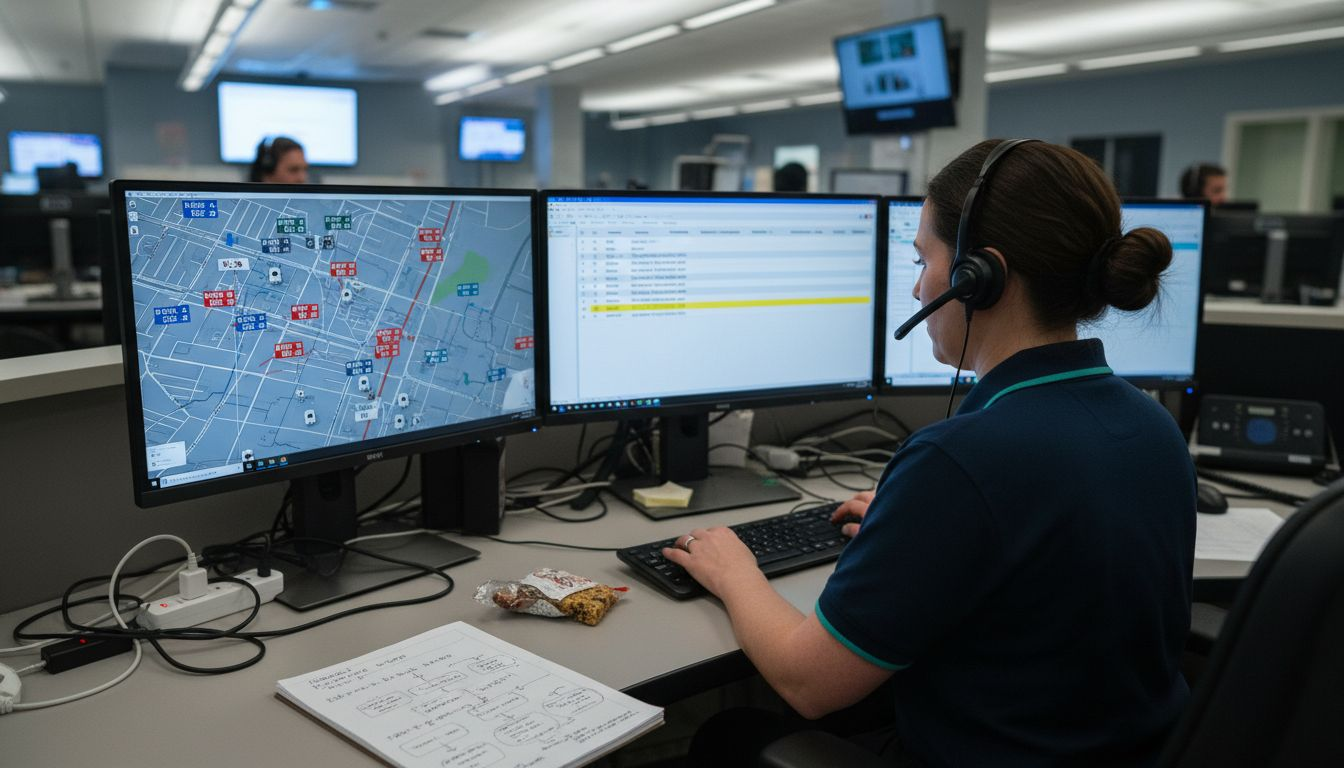
Your dispatch team needs tools that provide real-time visibility. GPS tracking shows you where vehicles are. Two-way communication keeps drivers and dispatchers connected. Automated alerts notify you of delays, vehicle breakdowns, or traffic incidents. Without these tools, dispatchers operate blind, unable to redirect resources or notify patients of delays.
Equipment Standards and Vehicle Requirements
Not all vehicles are created equal for long-distance transport. Medical transport standards established by the Commission on Accreditation of Medical Transport Systems address vehicle requirements, equipment specifications, staff qualifications, and dispatch procedures to ensure quality and safety. These standards cover everything from wheelchair lift capacity and securement systems to climate control and communication equipment.
For long-distance routes, you need vehicles that handle highway driving safely. That means proper suspension, reliable air conditioning, backup electrical systems, and communication infrastructure. Stretcher vehicles need equipment for patient monitoring during extended transport. Wheelchair vans need lifts that function reliably after hours of use. Cutting corners on equipment leads directly to patient injuries, failed appointments, and liability exposure.
Beyond the vehicles themselves, your equipment standards must include maintenance protocols. A vehicle breakdown 60 miles from a medical facility isn’t inconvenient—it’s dangerous. Regular inspections, scheduled maintenance, and backup equipment become non-negotiable operational expenses.
Pro tip: Implement a unified scheduling and dispatch system that integrates patient appointment data, driver availability, vehicle locations, and medical constraints—this eliminates the coordination gaps that plague manual processes and reduces missed appointments by 20 to 30 percent.
Legal, Regulatory, and Compliance Requirements
Long-distance NEMT operates within a tightly regulated framework where federal requirements intersect with state rules, and where billing compliance directly impacts your hospital’s revenue cycle. Understanding these regulations isn’t optional—it’s the foundation of sustainable NEMT operations. Missteps lead to denied claims, audit exposure, and potential legal consequences.
Medicaid Regulations and Federal Requirements
Medicaid NEMT is a mandated benefit, not an optional service. Federal Medicaid regulations require state programs to provide necessary transportation ensuring access to healthcare for beneficiaries lacking reliable means. This federal mandate creates both obligations and protections for your operations. On the obligation side, you must serve eligible Medicaid patients without discrimination. On the protection side, Medicaid reimbursement provides a legal foundation for your services.
However, Medicaid administration varies significantly by state. Some states manage NEMT directly through fee-for-service models. Others contract with managed care organizations or transportation brokers. This variation creates compliance complexity for hospitals serving multi-state populations. A patient transported from a hospital in one state to a specialist in another may fall under different Medicaid rules depending on where they hold coverage. Your billing and authorization protocols must account for these variations, or claims get denied.
The core compliance requirement is documenting medical necessity. Every transport must satisfy regulatory definitions of medical need. This isn’t subjective. Transportation to a physician’s office for routine follow-up qualifies. Transportation for non-medical purposes—even if the patient requests it—does not. Your transport authorization protocols must include physicians confirming medical necessity before trips occur, not after.
State-Specific Rules and Provider Compliance
Medicaid programs must comply with federal rules on eligibility, provider reimbursement, and service delivery methods while maintaining documentation of medical necessity and adherence to Medicaid plan policies. States operate NEMT through different delivery models, each with distinct compliance requirements.
If your hospital contracts with a NEMT broker or managed care organization, you inherit compliance responsibilities. You cannot simply hand off all accountability. You’re responsible for verifying that your contractor maintains proper insurance, employs trained personnel, and follows dispatch protocols. Audit failures trickle upstream to your institution.
Reimbursement classification matters legally and financially. Some states reimburse NEMT as a medical service. Others classify it as an administrative expense. This distinction affects billing codes, documentation requirements, and which department absorbs costs if reimbursement falls short. Your finance and compliance teams must coordinate carefully here. A billing error could cost thousands in denied claims and potentially trigger audit flags.
Insurance, Licensing, and Personnel Standards
Long-distance NEMT drivers and vehicles must meet specific insurance and licensing requirements. Drivers need commercial licenses appropriate for the vehicle type. Ambulance crews may require certification as Emergency Medical Technicians or similar qualifications depending on state rules. Your vehicles need commercial liability insurance covering long-distance routes. A standard commercial auto policy may exclude medical transport. This gap creates catastrophic exposure if an accident occurs.
Personnel training standards exist in most states. Your staff cannot simply drive patients. They need training in patient handling, equipment operation, emergency procedures, and communication protocols. Documentation of training becomes compliance evidence during audits. Gaps in staff training can result in claim denials and regulatory citations.
Pro tip: Conduct a quarterly compliance audit reviewing medical necessity documentation, reimbursement coding, personnel certifications, and insurance coverage—this proactive approach catches issues before regulators do and typically prevents 80 to 90 percent of potential compliance violations.
Risks, Costs, and Common Challenges
Long-distance NEMT operations expose hospitals to financial, operational, and reputational risks that many administrators underestimate. Understanding these challenges upfront allows you to build safeguards rather than discovering problems after they create damage.
Financial Pressures and Cost Control
NEMT programs face constant financial scrutiny. Unlike emergency ambulance services with clear revenue streams, long-distance NEMT operates in murky financial territory where Medicaid reimbursement rates rarely cover full costs. A typical long-distance transport might cost your hospital $400 to $600 in vehicle operation, fuel, personnel, and overhead. Medicaid reimbursement often returns $150 to $300. That gap represents a loss your hospital absorbs.
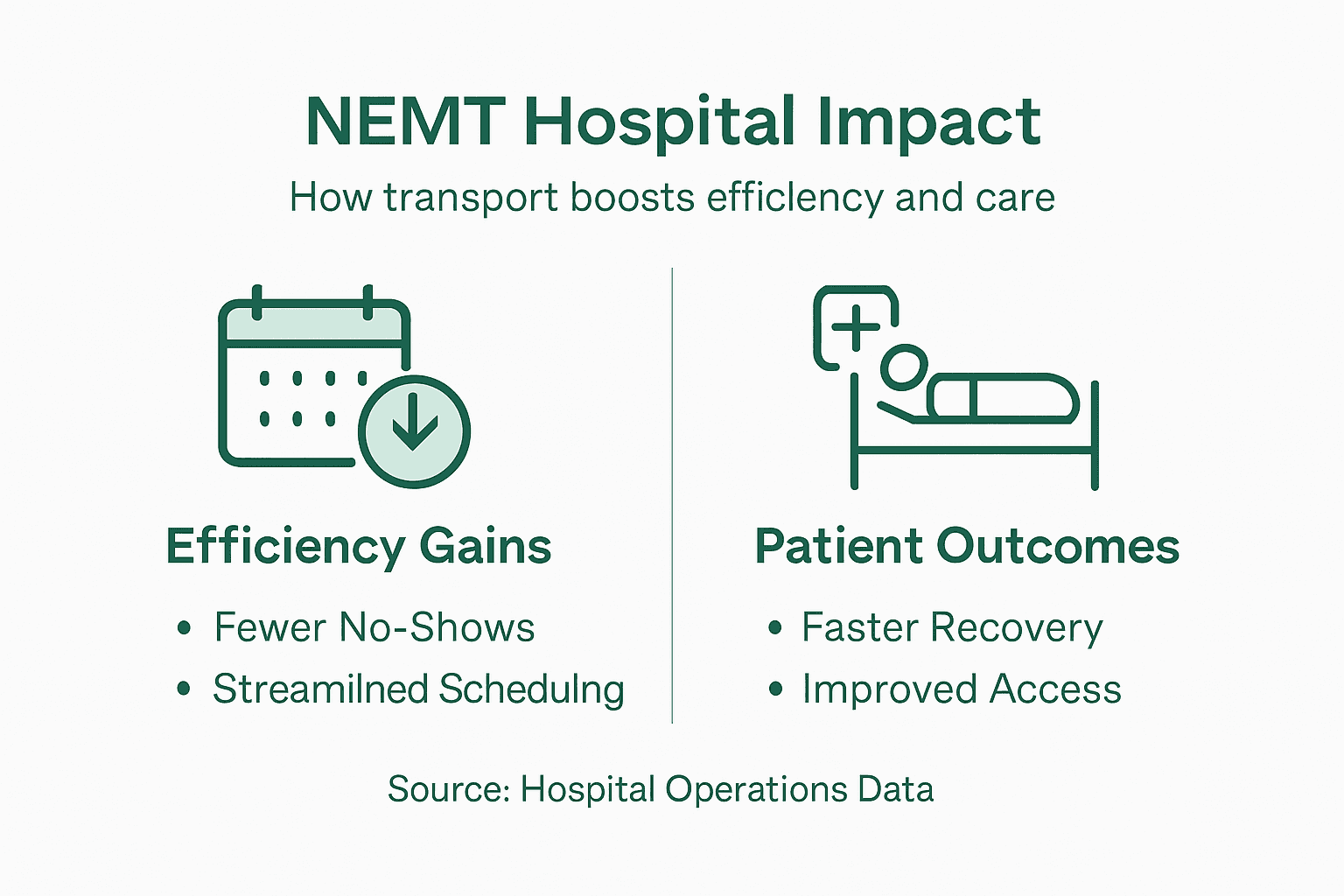
Program risks include curtailments through Medicaid waivers and varying state coverage levels that directly impact your financial planning. States facing budget pressures frequently reduce NEMT eligibility or reimbursement rates. What you budgeted for this year becomes impossible to sustain next year. This creates workforce instability—you cannot reliably retain drivers and dispatchers when funding becomes unpredictable.
Cost containment demands attention to operational efficiency. Vehicle maintenance costs escalate with long-distance mileage. Fuel expenses spike during economic disruptions. Personnel costs climb as driver shortages force wage competition. Without aggressive cost management, your NEMT program can become a budget black hole consuming resources without corresponding revenue.
Missed Appointments and Care Avoidance
Transport reliability directly impacts patient outcomes. When transport fails, patients skip appointments. When patients skip appointments, conditions worsen. Chronic disease management deteriorates. Preventive care gaps widen. The irony is brutal: the patients most dependent on NEMT are those with the least margin for error—dialysis patients, cancer patients, those with serious mental illness.
Missed appointments create cascading problems. Your hospital’s clinics experience no-shows that waste provider time. Revenue recognition delays when patients don’t appear. Worse, patients develop mistrust. If transport failed once, they stop trusting it will work next time. Care avoidance follows. During public health emergencies or disruptions, challenges amplify as reduced availability of traditional transportation modes forces vulnerable populations to avoid seeking care entirely, compounding health deterioration.
Coordination Complexity and Operational Inefficiency
Long-distance NEMT coordination involves multiple stakeholders with conflicting priorities. Patients want flexible scheduling. Physicians want appointments at specific times. Drivers need reasonable work hours. Your finance department needs predictable costs. Medicaid requires documentation. Everyone wants something different, and you’re supposed to satisfy them all simultaneously.
This complexity generates operational errors. Scheduling mistakes create missed pickups. Dispatch miscommunications strand patients. Authorization delays prevent transport. Each error damages patient relationships and wastes resources. Without robust systems and clear protocols, coordination becomes chaotic.
The challenge deepens when managing multiple vendor relationships. If you contract with brokers or transportation companies, you depend on their reliability. Their failures become your failures from the patient’s perspective. Vendor accountability becomes critical but difficult to enforce.
Safety and Liability Exposure
Long-distance transport involves inherent risks. Highway accidents happen. Medical emergencies occur during transit. Medication errors occur. Patient falls happen during loading or unloading. Each incident creates liability exposure. Your hospital’s insurance must cover medical transport, but coverage gaps exist. Standard commercial auto policies may exclude medical transport. Medical malpractice policies may not cover transport-related injuries.
Personnel training directly impacts safety. Untrained or under-trained drivers create accidents. Improperly secured patients suffer injuries during sudden stops. Equipment failures lead to complications. Your hospital’s duty to train staff adequately never disappears, regardless of whether you operate transport directly or contract it out.
Pro tip: Implement a quarterly risk assessment reviewing accident reports, missed appointments, Medicaid reimbursement variance, and vendor performance—this data reveals which operational challenges demand immediate intervention and where your cost reduction efforts should focus.
Comparing Alternatives and Avoiding Pitfalls
Not every patient transport needs to be handled the same way. Hospitals that optimize their NEMT operations evaluate alternatives and choose the right tool for each situation. This strategic thinking reduces costs, improves outcomes, and prevents common operational disasters.
Understanding Your Transport Options
Traditional dedicated NEMT vehicles represent only one solution. Your hospital has alternatives worth evaluating. Public transportation works for ambulatory patients with no mobility constraints, but this option serves only a small percentage of your population. Ride-sharing services like rideshare platforms can supplement NEMT for certain patients, reducing your vehicle fleet burden. Family transportation with mileage reimbursement works when reliable family members exist. Volunteer driver programs leverage community resources but require careful liability management and vetting.
The table below compares alternative patient transport methods to help guide resource allocation:
| Transport Type | Accessibility | Typical Use Case | Key Limitation |
|---|---|---|---|
| Dedicated NEMT Vehicle | Widest (all patients) | Complex medical/long distance | High overhead |
| Ride-sharing Service | Ambulatory only | Short appointments, mobile users | No medical support |
| Family Transportation | Mobile patients | Reliable family available | Varies in reliability |
| Volunteer Drivers | Limited | Community programs, local trips | Liability and vetting needed |
Innovation in Medicaid NEMT involves integrating alternative transportation methods such as rideshare services to augment traditional NEMT, addressing common pitfalls like limited provider networks, scheduling inefficiencies, and high costs. However, integration requires careful planning. Rideshare drivers lack medical training. Wheelchair accessibility doesn’t exist with standard vehicles. Patients with cognitive impairment may struggle with rideshare protocols. You cannot replace specialized NEMT with rideshare for all patients, but strategic hybrid approaches reduce pressure on your dedicated fleet.
The key insight: match transport mode to patient need. Ambulatory patients without cognitive impairment might use rideshare. Wheelchair users need accessible vehicles with trained operators. Stretcher patients require specialized ambulances. Patients with dementia need familiar, trained personnel. When you segment your population this way, you optimize resources instead of one-size-fits-all approaches that waste money on over-specialized solutions for simple cases.
Avoiding Common NEMT Pitfalls
Hospitals that fail at NEMT usually fail in predictable ways. Underestimating coordination complexity is the first pitfall. Administrators assume NEMT is simple logistics, then discover it involves medical necessity documentation, multiple stakeholder requirements, and regulatory compliance. Solution: hire dedicated NEMT coordinators with healthcare knowledge, not just transportation experience.
Neglecting vendor accountability creates the second pitfall. You contract with a broker or transportation company, then discover they cut corners on driver training, vehicle maintenance, or response times. Your hospital absorbs the reputational damage. Solution: build service level agreements with measurable performance standards. Audit vendors quarterly. Maintain backup vendor relationships so you’re never dependent on a single provider.
Ignoring technology integration generates the third pitfall. Manual scheduling, phone-based dispatch, and spreadsheet tracking create bottlenecks that expensive staff time cannot overcome. Solution: implement scheduling and dispatch software that automates workflows, provides real-time visibility, and captures compliance documentation automatically. This investment pays for itself through reduced administrative burden within 12 months.
Failing to track financial performance causes the fourth pitfall. Administrators operate NEMT as a vague cost center, unaware whether they’re losing money on specific trip types or patient populations. Solution: implement cost accounting that tracks vehicle utilization, cost per trip by distance and transport type, reimbursement rates, and margin analysis. This data reveals where operational improvements matter most.
Building a Sustainable Model
Sustainable NEMT operations balance three competing demands: patient access, operational efficiency, and financial viability. You cannot optimize for one without considering the others. Aggressive cost reduction that forces missed appointments destroys patient outcomes. Unlimited service provision that ignores costs depletes hospital resources. The goal is the middle path: reliable, accessible transport delivered as efficiently as possible.
This requires honest assessment of what your hospital can sustain versus what Medicaid funding covers. If the gap is too wide, explore partnerships with community health centers, academic medical centers, or specialized transportation brokers who may achieve economies of scale you cannot. Avoid the trap of operating an unsustainable program year after year, consuming resources without strategic benefit.
Pro tip: Conduct a transport mode analysis of your patient population by identifying which patients truly require specialized vehicles versus which could use standard transportation with appropriate support—this segmentation typically reveals 25 to 35 percent of your volume could shift to lower-cost alternatives, reducing your overall NEMT costs significantly.
Transform Your Long-Distance Non-Emergency Medical Transport with VectorCare
Managing long-distance non-emergency medical transport brings complex challenges like scheduling difficulties, coordination inefficiencies, and strict compliance requirements. The article highlights critical pain points such as missed appointments, operational inefficiencies, and escalating costs that can undermine patient outcomes and hospital stability. VectorCare understands these demands with a powerful digital platform that simplifies scheduling, real-time dispatch, and vendor management while ensuring regulatory compliance and improving patient care coordination.
Streamline your operations with features designed to:
- Optimize transport scheduling to reduce no-shows and late arrivals
- Enable real-time communication between drivers, dispatchers, and patients
- Automate compliance documentation and authorization workflows
Ready to reduce administrative burden and improve long-distance transport efficiency today Visit VectorCare to explore how our integrated technology can boost your hospital’s operational performance and patient satisfaction Start transforming your NEMT operations now with VectorCare and experience better outcomes with less effort.
Frequently Asked Questions
What is long-distance non-emergency medical transport (NEMT)?
Long-distance non-emergency medical transport (NEMT) refers to specialized transportation services for patients traveling over 50 miles to healthcare appointments who cannot safely use standard public or personal transportation due to medical conditions or mobility limitations.
How does long-distance NEMT improve patient outcomes?
Long-distance NEMT enhances patient outcomes by ensuring timely access to necessary medical care, reducing missed appointments, and allowing for regular monitoring of chronic conditions. This consistency helps stabilize patients’ health and promotes preventive care.
What are the different transport modes available in long-distance NEMT?
Long-distance NEMT offers various transport modes based on patient mobility needs: ambulatory transport for those who can walk, wheelchair transport for those with mobility challenges, stretcher transport for patients who must remain lying down, and specialized air transport for complex cases requiring rapid transit.
What are the operational challenges of long-distance NEMT?
Operational challenges of long-distance NEMT include scheduling complexities, coordination among multiple stakeholders, ensuring compliance with regulations, managing vehicle utilization effectively, and addressing financial pressures from reimbursement gaps.