Logistics Emergency Management: Streamlining Healthcare Response

Every emergency brings a test of coordination for logistics managers in American healthcare facilities, especially when rapid patient transport is essential. The ability to mobilize resources, anticipate disruptions, and maintain clear communication directly impacts patient safety and response times. By embracing Logistics Emergency Management practices, you gain practical strategies for risk assessment, infrastructure readiness, and efficient transport planning that empower teams to respond decisively in critical moments.
Table of Contents
- Defining Logistics Emergency Management in Healthcare
- Types of Patient Logistics in Emergencies
- Key Components of Emergency Logistics Platforms
- Regulatory Standards and Compliance Requirements
- Roles, Risks, and Coordination in Emergency Response
- Cost Implications and Common Operational Pitfalls
Key Takeaways
| Point | Details |
|---|---|
| Logistics Emergency Management Framework | Healthcare organizations must establish a comprehensive logistics framework that includes risk assessment, resource allocation, and emergency response protocols to effectively manage unforeseen challenges. |
| Patient Logistics Strategies | Successful patient logistics require the development of modular transportation and tracking systems to ensure safe and efficient patient transfers during emergencies. |
| Emergency Logistics Platforms | Implementing sophisticated logistics platforms enhances real-time resource management, improves communication, and supports quick mobilization during crisis situations. |
| Regulatory Compliance | Strict adherence to regulatory standards is crucial for maintaining operational integrity, ensuring patient safety, and enabling effective emergency response mechanisms. |
Defining Logistics Emergency Management in Healthcare
Logistics Emergency Management represents a critical strategic approach for healthcare organizations to prepare, respond, and adapt during emergency scenarios. At its core, this discipline ensures healthcare systems can mobilize resources, coordinate patient transport, and maintain operational continuity when unexpected challenges arise.
The framework of Logistics Emergency Management encompasses several key dimensions that healthcare providers must understand:
- Comprehensive risk assessment
- Infrastructure readiness evaluation
- Resource allocation strategies
- Transport and distribution protocols
- Emergency response coordination
Healthcare organizations must develop robust logistics preparedness frameworks that anticipate potential disruptions. This involves systematically analyzing potential disaster scenarios, mapping critical supply chains, and establishing pre-defined response mechanisms that can be rapidly activated during emergencies.
Emergency Supply Chain Management represents another crucial component of this strategic approach. Healthcare leaders must develop governance structures that enable rapid procurement, efficient stockpiling, and seamless distribution of medical resources. Emergency supply chain protocols must integrate sophisticated forecasting techniques, transportation logistics, and real-time data visibility to ensure responsive healthcare delivery.
Effective Logistics Emergency Management transforms potential chaos into coordinated, strategic response.
Successful implementation requires cross-functional collaboration between medical professionals, logistics experts, emergency management specialists, and administrative leadership. Organizations must invest in training, develop comprehensive contingency plans, and leverage technology to enhance communication and resource tracking.
Pro tip: Develop a modular emergency response plan that can be quickly adapted to different disaster scenarios, ensuring flexibility and rapid deployment.
Types of Patient Logistics in Emergencies
Patient logistics during emergencies represent a complex network of transportation and resource management strategies that ensure critical medical support reaches those most in need. These logistics encompass multiple transportation modes and coordination mechanisms designed to maintain patient safety and operational efficiency.
The primary types of patient logistics in emergency scenarios include:
- Road Transport: Ambulance and emergency vehicle patient transfers
- Air Transport: Medical helicopter and fixed-wing aircraft evacuations
- Inter-Hospital Transfers: Moving patients between healthcare facilities
- Home-to-Hospital Transport: Critical patient pickup and transportation
- Mass Casualty Event Logistics: Large-scale patient movement and triage
Patient transport infrastructure demands sophisticated planning that considers multiple transportation modalities. Emergency medical teams must develop comprehensive strategies that account for various disaster scenarios, ensuring rapid and safe patient movement across different geographical terrains and infrastructure limitations.
Healthcare organizations must implement hospital patient flow management systems that enable seamless patient tracking, resource allocation, and real-time communication. These systems integrate multiple logistics channels, allowing for dynamic response and adaptive patient care strategies during unpredictable emergency situations.
Effective patient logistics transform potential chaos into coordinated, life-saving response mechanisms.
Successful patient logistics require cross-functional collaboration between emergency medical services, transportation specialists, healthcare providers, and administrative teams. Technology integration, continuous training, and adaptable communication protocols are essential for maintaining operational readiness and patient safety.

Pro tip: Develop modular patient transportation protocols that can be quickly scaled and adjusted based on specific emergency requirements and available resources.
Key Components of Emergency Logistics Platforms
Emergency logistics platforms represent sophisticated technological and operational frameworks designed to enable rapid, coordinated healthcare response during critical situations. These advanced systems integrate multiple capabilities to ensure seamless resource management, communication, and patient support across complex emergency scenarios.
The core components of emergency logistics platforms include:
- Real-time asset tracking and allocation
- Comprehensive resource deployment systems
- Dynamic communication infrastructure
- Customizable response protocols
- Advanced data visualization tools
- Integrated supply chain management
Logistics emergency team capabilities require sophisticated deployment strategies that enable rapid mobilization of specialized personnel and critical resources. These platforms must incorporate technical expertise across multiple domains, including customs navigation, route planning, and emergency asset management to ensure swift and effective response mechanisms.
Healthcare organizations must develop emergency supply chain management systems that provide comprehensive governance protocols and flexible commodity planning. These platforms enable dynamic resource allocation, allowing teams to customize responses based on specific epidemic or disaster contexts while maintaining operational agility and efficiency.
Emergency logistics platforms transform complex challenges into coordinated, life-saving interventions.
Successful implementation demands cross-functional collaboration, leveraging technology to create adaptable, intelligent response systems. By integrating advanced communication protocols, real-time data tracking, and scalable resource management, organizations can develop robust emergency logistics platforms capable of addressing unpredictable healthcare challenges.
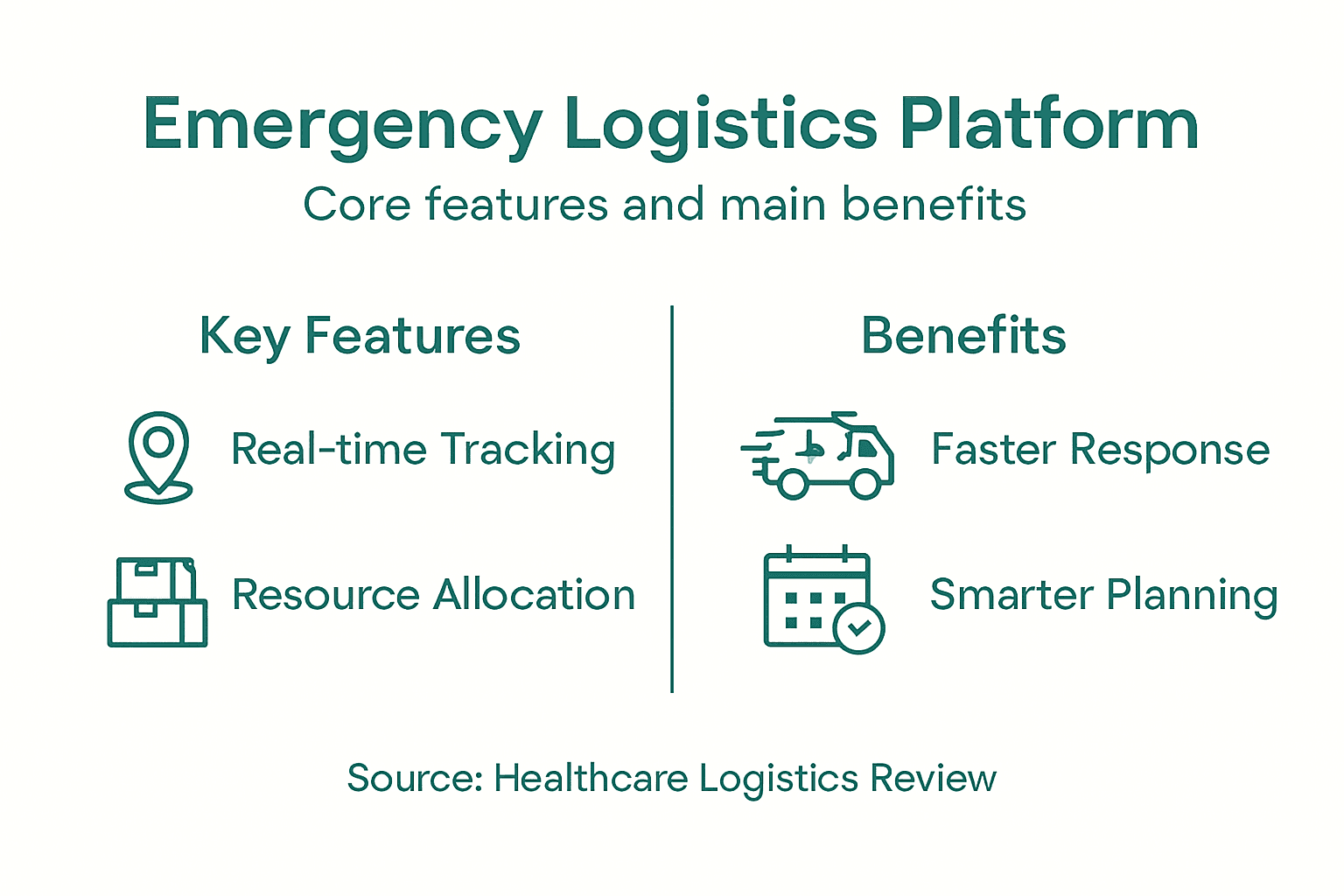
Here is a summary comparing core emergency logistics platform features and their impacts on healthcare operations:
| Feature | Operational Benefit | Impact on Emergency Response |
|---|---|---|
| Real-time Asset Tracking | Faster resource identification | Reduces delays and shortages |
| Dynamic Communication | Immediate updates and coordination | Accelerates response time |
| Data Visualization Tools | Identifies resource gaps quickly | Improves situational awareness |
| Integrated Supply Chain Mgmt | Streamlined procurement | Ensures steady supply distribution |
Pro tip: Conduct regular simulation exercises to test and refine your emergency logistics platform, ensuring seamless operational readiness across different potential scenarios.
Regulatory Standards and Compliance Requirements
Regulatory standards in healthcare emergency logistics serve as critical frameworks that ensure patient safety, operational integrity, and consistent performance across diverse emergency scenarios. These comprehensive guidelines establish fundamental protocols for medical resource management, transportation, and emergency response mechanisms.
Key regulatory compliance requirements encompass:
- Quality assurance protocols
- Safety validation processes
- Documentation and tracking standards
- Procurement and distribution guidelines
- Cross-organizational communication frameworks
- Risk management strategies
Emergency supply chain compliance demands rigorous adherence to established standards that govern medical commodity management. Healthcare organizations must develop systematic approaches to procurement, stockpiling, transportation, and disposal of critical medical resources while maintaining strict accountability and quality control measures.
Universal logistics standards provide comprehensive guidance for humanitarian emergency responses, aligning supply chain practices with internationally recognized humanitarian quality benchmarks. These standards foster collaborative approaches that enable organizations to meet complex regulatory requirements while maintaining operational flexibility during critical healthcare interventions.
Compliance is not a limitation, but a strategic framework for effective emergency response.
Successful regulatory compliance requires continuous training, robust documentation systems, and proactive risk management strategies. Healthcare organizations must invest in comprehensive compliance programs that integrate technological solutions, regular auditing processes, and adaptive response mechanisms.
Pro tip: Develop a centralized compliance management system that provides real-time tracking, automated reporting, and rapid adaptation to changing regulatory landscapes.
Roles, Risks, and Coordination in Emergency Response
Emergency response represents a complex ecosystem of interconnected roles, strategic risk management, and sophisticated coordination mechanisms. Healthcare organizations must develop comprehensive frameworks that enable rapid, synchronized actions during critical public health scenarios, balancing operational efficiency with patient safety.
Key emergency response roles include:
- Decision-makers and executive leadership
- Subject matter experts
- Emergency management specialists
- Clinical response teams
- Logistics and resource coordinators
- Communication and information managers
Incident Management Systems establish critical command structures that define clear responsibilities and communication protocols during emergency interventions. These systems create hierarchical frameworks that enable rapid decision-making, resource allocation, and synchronized response across multiple organizational levels.
Effective emergency coordination demands robust information management strategies that prevent operational duplication and ensure consistent, timely communication. Healthcare teams must develop centralized mechanisms for sharing real-time data, tracking population needs, and adapting response actions dynamically.
Successful emergency response transforms potential chaos into strategic, coordinated intervention.
Risk management in emergency scenarios requires proactive planning, continuous training, and adaptive response capabilities. Organizations must invest in comprehensive preparedness exercises, develop flexible communication channels, and create resilient systems that can quickly pivot during unpredictable healthcare challenges.
Pro tip: Implement regular cross-functional emergency simulation training that tests communication protocols, decision-making processes, and resource allocation strategies.
Cost Implications and Common Operational Pitfalls
Healthcare emergency logistics represent a complex financial landscape where operational efficiency directly correlates with substantial cost management challenges. Organizations must navigate intricate economic considerations while maintaining robust emergency response capabilities that balance financial constraints with critical patient care requirements.
Key operational cost challenges include:
- Unpredictable resource demand
- Supply chain infrastructure expenses
- Workforce training and deployment costs
- Emergency equipment procurement
- Technology integration investments
- Regulatory compliance expenditures
Healthcare operations management confronts significant financial challenges that require strategic resource allocation and sophisticated cost control mechanisms. Organizations must develop comprehensive financial frameworks that anticipate potential disruptions while maintaining fiscal responsibility and operational readiness.
Emergency logistics supply chain strategies demand nuanced approaches to managing financial risks, including developing flexible procurement protocols, establishing contingency funding mechanisms, and implementing dynamic resource allocation systems that can adapt to rapidly changing emergency scenarios.
Financial preparedness is not an expense, but an investment in resilient healthcare infrastructure.
Common operational pitfalls often emerge from insufficient financial planning, inadequate technological infrastructure, and fragmented communication systems. Healthcare organizations must proactively identify potential vulnerabilities, develop comprehensive risk mitigation strategies, and create adaptive financial models that support emergency response capabilities.
The table below contrasts common operational pitfalls and financial risks in healthcare emergency logistics:
| Pitfall or Risk | Financial Consequence | Solution Strategy |
|---|---|---|
| Insufficient Financial Planning | Budget shortfalls during emergencies | Implement scenario-based budgeting |
| Fragmented Communication | Resource duplication and waste | Establish unified information flow |
| Outdated Technology | Inefficiency and higher costs | Invest in scalable tech platforms |
| Rigid Procurement Processes | Inflexible and expensive sourcing | Use adaptive procurement protocols |
Pro tip: Develop a dynamic financial modeling approach that includes scenario-based budgeting and flexible resource allocation strategies to address unexpected emergency logistics challenges.
Enhance Your Healthcare Emergency Logistics with VectorCare
The article highlights the crucial need for streamlined logistics emergency management to ensure rapid patient transport, resource allocation, and coordinated responses during critical healthcare events. Challenges such as inefficient communication, real-time tracking gaps, and complex patient flow can hinder the ability to act swiftly and save lives. Your goal is to overcome these hurdles by leveraging technology that supports adaptive, real-time decision-making and automates patient logistics across various emergency scenarios.
VectorCare offers a comprehensive digital platform designed to address these very pain points. With features like AI-driven dispatching, real-time updates, and scheduling optimization, VectorCare empowers healthcare providers, payers, and emergency services to reduce delays, lower operational costs, and improve patient outcomes. The platform’s focus on compliance, vendor management, and secure communication ensures your emergency logistics align with regulatory standards while maintaining operational agility.
Ready to transform your healthcare emergency logistics into a coordinated, efficient response system that adapts to any crisis? Discover how VectorCare’s integrated tools can enhance patient transportation and resource management. Explore VectorCare’s comprehensive platform today and take the first step to increase readiness and resilience in healthcare response.
Frequently Asked Questions
What is logistics emergency management in healthcare?
Logistics emergency management in healthcare is a strategic approach that enables healthcare organizations to prepare for, respond to, and adapt during emergency scenarios, ensuring effective mobilization of resources and continuity of operations.
Why is emergency supply chain management important in healthcare?
Emergency supply chain management is essential as it enables rapid procurement, efficient stockpiling, and seamless distribution of medical resources during emergencies, ensuring that healthcare systems can respond effectively to patient needs.
What are the key components of emergency logistics platforms?
Key components of emergency logistics platforms include real-time asset tracking, resource deployment systems, dynamic communication infrastructure, customizable response protocols, and integrated supply chain management, all of which facilitate coordinated healthcare responses during critical situations.
How can healthcare organizations enhance their emergency response capabilities?
Healthcare organizations can enhance their emergency response capabilities by developing comprehensive training programs, implementing technology for real-time data tracking, establishing cross-functional collaboration, and conducting regular simulation exercises to ensure preparedness for various emergency scenarios.
Recommended
- How to Prepare Your Healthcare Facility for the Unexpected | VectorCare
- Understanding Disaster Response Coordination: Key Concepts
- Emergency Services Coordination: Complete U.S. Guide
- How to Leverage VectorCare to Evacuate Patients 4x Faster in an Emergency | VectorCare
- Why a Chiropractor Might Be Better Than the Emergency Room to Solve Your Post-Accident Pain