Integrated Health Partners: Transforming Hospital Logistics

More than 60 percent of American hospitals report rising challenges in patient transport delays that drive up costs and prolong treatments. For healthcare logistics managers, the pressure to coordinate teams and resources across sprawling networks is mounting. Integrated health partnerships are rewriting how American hospitals deliver patient-centered care, offering practical solutions for smoother transport, faster communication, and significant cost reduction.
Table of Contents
- Defining Integrated Health Partners In Healthcare
- Core Functions And Technology Integration
- Types Of Integrated Health Solutions
- Compliance, Security, And Data Privacy Essentials
- Financial Impact And Cost-Saving Strategies
- Key Challenges And What To Avoid
Key Takeaways
| Point | Details |
|---|---|
| Integrated Health Partnerships | These partnerships involve coordinated efforts among various healthcare providers to enhance patient-centered care and improve health outcomes. |
| Technology Integration | Sophisticated technologies, such as EHR interoperability and AI-driven analytics, are essential for creating seamless care coordination and efficient data management. |
| Financial Strategies | Effective cost containment strategies focus on optimizing workflows, utilizing data analytics, and fostering strategic partnerships to improve care quality and operational efficiency. |
| Overcoming Challenges | Addressing entrenched silos, misaligned incentives, and insufficient infrastructure is crucial for the successful implementation of integrated health solutions. |
Defining Integrated Health Partners in Healthcare
Healthcare is transforming through integrated health partnerships that reimagine patient care delivery. These collaborative networks represent a comprehensive approach to medical service coordination, moving beyond traditional siloed healthcare models. Integrated health services networks are operational expressions of primary health care systems, emphasizing universal coverage and accessible patient-centered care.
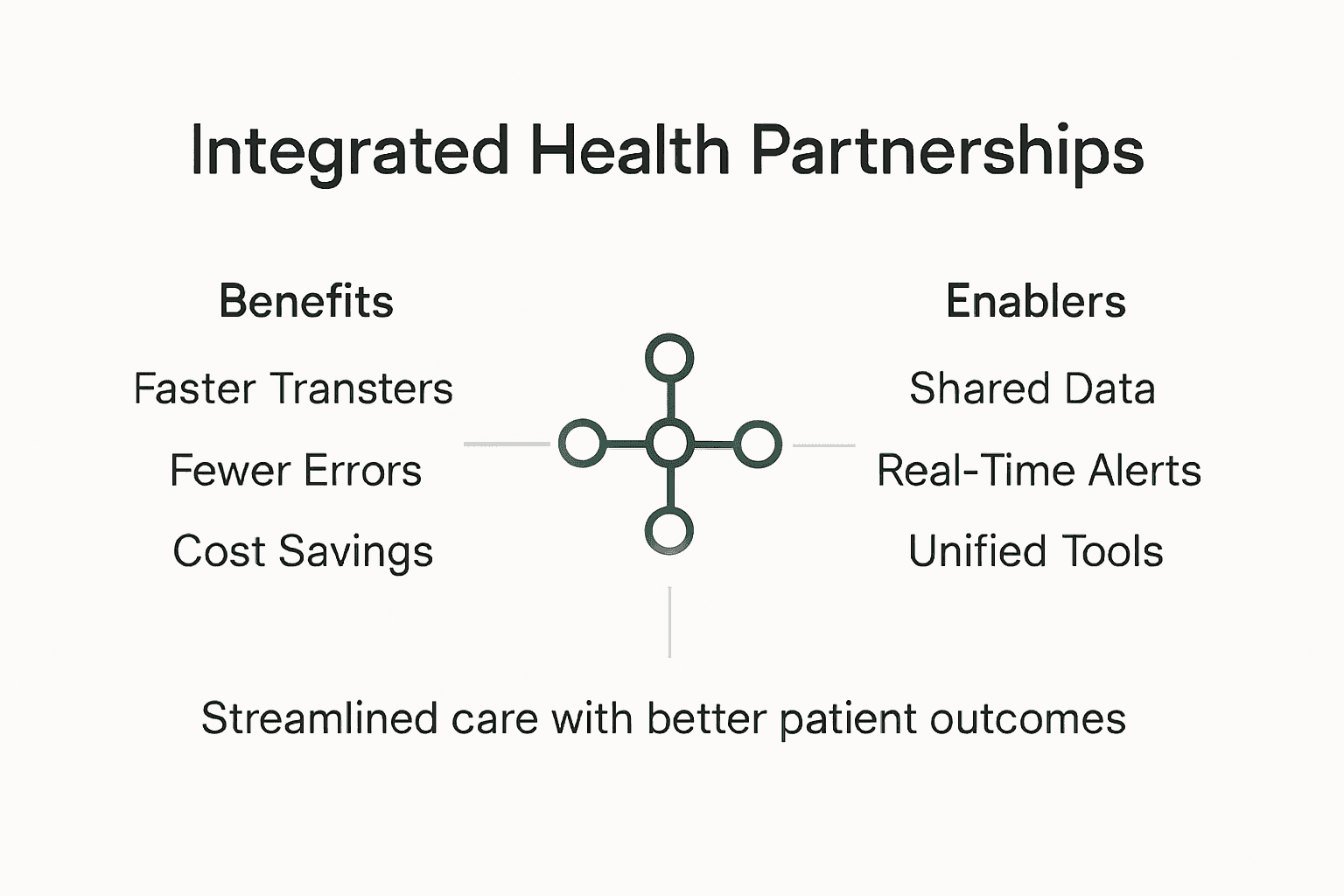
At its core, an integrated health partnership involves multiple healthcare providers, specialists, and administrative teams working together seamlessly to deliver holistic patient treatment. This model focuses on breaking down communication barriers between different medical departments and creating a unified approach to patient management. Integrated health care refers to coordinated care addressing all patient health aspects through a multidisciplinary team, focusing on evidence-based treatment and strong patient-provider relationships.
Key characteristics of integrated health partnerships include:
- Comprehensive patient data sharing
- Collaborative treatment planning
- Coordinated administrative processes
- Unified technological infrastructure
- Emphasis on preventive and continuous care
These partnerships aim to streamline healthcare delivery, reduce redundant services, minimize patient transfer friction, and ultimately improve overall health outcomes. By connecting primary care physicians, specialists, hospitals, and support services into a cohesive network, integrated health partners can more effectively address complex medical needs.
Pro tip: Start mapping your organization’s current interdepartmental communication channels to identify potential integration opportunities and collaboration bottlenecks.
Core Functions and Technology Integration
Integrated health partnerships rely on sophisticated technological infrastructures to enable seamless care coordination and communication. Integrated Practice Units (IPUs) organize multidisciplinary teams around specific patient conditions, coordinating care delivery with enabling IT platforms, representing a fundamental shift in how healthcare services are conceptualized and delivered.
Technology integration serves as the critical backbone of these advanced healthcare networks. By implementing comprehensive digital platforms, healthcare providers can synchronize patient data, streamline administrative processes, and create more responsive treatment pathways. Healthcare integration involves coordinating diverse services and professions around the patient’s needs through collaboration, effective data exchange, and governance.
Key technological components of integrated health partnerships include:
- Electronic Health Record (EHR) interoperability
- Real-time patient data sharing mechanisms
- Advanced telehealth communication platforms
- Secure cloud-based information systems
- Artificial intelligence-driven analytics tools
These technological solutions enable healthcare providers to transcend traditional organizational boundaries, creating a more holistic and patient-centered approach to medical care. By breaking down information silos, integrated health partners can dramatically improve diagnostic accuracy, treatment planning, and overall patient outcomes.

This table summarizes how technology integration enhances each core function in integrated health partnerships:
| Core Function | Role of Technology | Business Impact |
|---|---|---|
| Patient Data Management | EHR interoperability | Faster information exchange |
| Care Coordination | Real-time communication tools | Fewer missed treatments |
| Workflow Automation | Cloud-based systems | Reduced admin workload |
| Data Analytics | AI-powered insights | Improved clinical outcomes |
Pro tip: Conduct a comprehensive audit of your current technological infrastructure to identify potential integration gaps and opportunities for cross-system communication.
Types of Integrated Health Solutions
Integrated health solutions represent a comprehensive approach to healthcare delivery, addressing complex patient needs through sophisticated organizational strategies. Integrated health service delivery networks encompass a range of solutions including comprehensive first-level care, specialized care at appropriate locations, and coordination mechanisms throughout care continuums, transforming traditional healthcare models.
These solutions can be categorized into several key types that address different aspects of patient care and system optimization. Comprehensive care models focus on creating seamless patient experiences by connecting multiple healthcare providers and service lines. These integrated approaches typically include:
- Vertical integration systems
- Horizontal collaboration networks
- Patient-centered medical homes
- Accountable care organizations
- Telehealth and remote monitoring platforms
Each integrated health solution aims to break down traditional organizational barriers, enabling more efficient and responsive healthcare delivery. 4 Tools to Improve Patient Outcomes demonstrate how technology and strategic collaboration can dramatically enhance medical service quality and patient experience.
Here is a comparison of common types of integrated health solutions and their core strengths:
| Solution Type | Focus Area | Main Benefit |
|---|---|---|
| Vertical Integration System | Provider-hospital alignment | Reduces care fragmentation |
| Horizontal Collaboration | Peer provider networking | Expands service access |
| Patient-Centered Medical Home | Whole-person care teams | Improves patient experience |
| Accountable Care Organization | Value-based management | Incentivizes quality & cost |
| Telehealth Platform | Remote care coordination | Increases care accessibility |
The ultimate goal of these integrated health solutions is to create a more holistic, patient-centered approach that reduces fragmentation, minimizes unnecessary medical interventions, and improves overall health outcomes. By connecting different care providers, leveraging advanced technologies, and implementing coordinated management strategies, healthcare organizations can develop more responsive and efficient medical service networks.
Pro tip: Conduct a comprehensive assessment of your current care delivery model to identify potential integration opportunities and areas for cross-departmental collaboration.
Compliance, Security, and Data Privacy Essentials
Healthcare compliance represents a critical framework for protecting patient information and ensuring organizational integrity across medical systems. The HIPAA Privacy Rule sets national standards to protect individually identifiable health information by regulating its use and disclosure by covered entities, establishing a comprehensive approach to maintaining patient confidentiality and data security.
Effective compliance strategies involve multiple interconnected components that work together to safeguard sensitive medical information. Key compliance elements include:
- Robust encryption protocols
- Comprehensive staff training programs
- Detailed risk management frameworks
- Regular security audits
- Strict access control mechanisms
Healthcare data security and privacy require understanding policies like HIPAA, implementing advanced encryption, and managing information flow carefully, with the ultimate goal of maintaining patient trust and preventing potential data breaches. Organizations must develop sophisticated strategies that balance technological innovation with rigorous protection mechanisms.
Successful integrated health partners recognize that compliance is not just a regulatory requirement but a fundamental aspect of patient care. By implementing comprehensive security protocols, healthcare organizations can create trust, protect sensitive information, and ensure the highest standards of patient confidentiality across increasingly complex digital healthcare ecosystems.
Pro tip: Develop a quarterly comprehensive review process that systematically evaluates your organization’s data privacy and security protocols against the latest regulatory requirements and technological standards.
Financial Impact and Cost-Saving Strategies
Healthcare financial optimization represents a critical challenge for modern medical organizations seeking to balance quality care with operational efficiency. Integrated systems enhance access, quality, and affordability by reducing service duplication and enabling innovative payment models, creating substantial economic opportunities for healthcare providers.
Cost containment strategies in integrated health partnerships focus on multiple interconnected approaches:
- Workflow process optimization
- Eliminating redundant administrative functions
- Implementing advanced data analytics
- Negotiating strategic vendor partnerships
- Leveraging technology for efficiency gains
Integrated Health Partners enhance quality care by leveraging data analysis, closing care gaps, and refining organizational workflows, with a strategic focus on value maximization through system-level integration. This approach transforms traditional cost management by creating comprehensive, data-driven strategies that simultaneously reduce expenses and improve patient outcomes.
Successful financial strategies go beyond simple cost cutting, instead focusing on systemic improvements that create long-term value. Healthcare organizations must develop holistic approaches that balance economic considerations with quality patient care, using technological innovations and strategic partnerships to drive meaningful financial transformation.
Pro tip: Conduct a comprehensive quarterly audit of your operational workflows, identifying potential inefficiencies and opportunities for technological integration that can generate meaningful cost savings.
Key Challenges and What to Avoid
Healthcare integration presents complex challenges that can derail even the most well-intentioned organizational transformation efforts. Current implementations do not uniformly solve cost, quality, or equity challenges, with significant barriers including misaligned incentives and financial priorities overshadowing patient outcomes, revealing the nuanced landscape of healthcare system redesign.
Critical challenges that integrated health partners must carefully navigate include:
- Entrenched organizational silos
- Misaligned financial incentive structures
- Insufficient technological infrastructure
- Resistance to collaborative care models
- Complex regulatory compliance requirements
Healthcare integration faces significant obstacles including financing complexities, health information technology infrastructure shortages, and workforce supply challenges. Organizations must proactively address these systemic barriers to create meaningful, sustainable transformation that genuinely improves patient care and operational efficiency.
Successful integrated health partnerships require a strategic approach that goes beyond surface-level changes. Leaders must cultivate a culture of collaboration, invest in robust technological platforms, and develop comprehensive change management strategies that address both technological and human dimensions of healthcare transformation.
Pro tip: Develop a cross-functional implementation team with representatives from clinical, administrative, and technological domains to ensure comprehensive perspective and reduce potential resistance to integration efforts.
Transform Hospital Logistics with Integrated Health Partnership Solutions
The article highlights the growing challenge of managing complex patient care coordination within integrated health partnerships. Key pain points such as communication breakdowns, inefficient care coordination, and fragmented logistics directly impact hospital operations and patient outcomes. For organizations aiming to overcome siloed workflows and deliver seamless, patient-centered care, adopting an advanced digital platform is crucial.
VectorCare offers a comprehensive solution tailored to these challenges by streamlining patient logistics through automation, real-time updates, and AI-driven dispatching. Our platform addresses critical integration needs mentioned in the article, including scheduling optimization, vendor management, and secure communication across multiple healthcare providers. This creates measurable improvements in efficiency and reduces costly delays, helping healthcare organizations realize the true benefits of integrated partnerships.
Unlock the power of modern, coordinated healthcare logistics today by exploring how VectorCare can transform your hospital’s operational workflows.
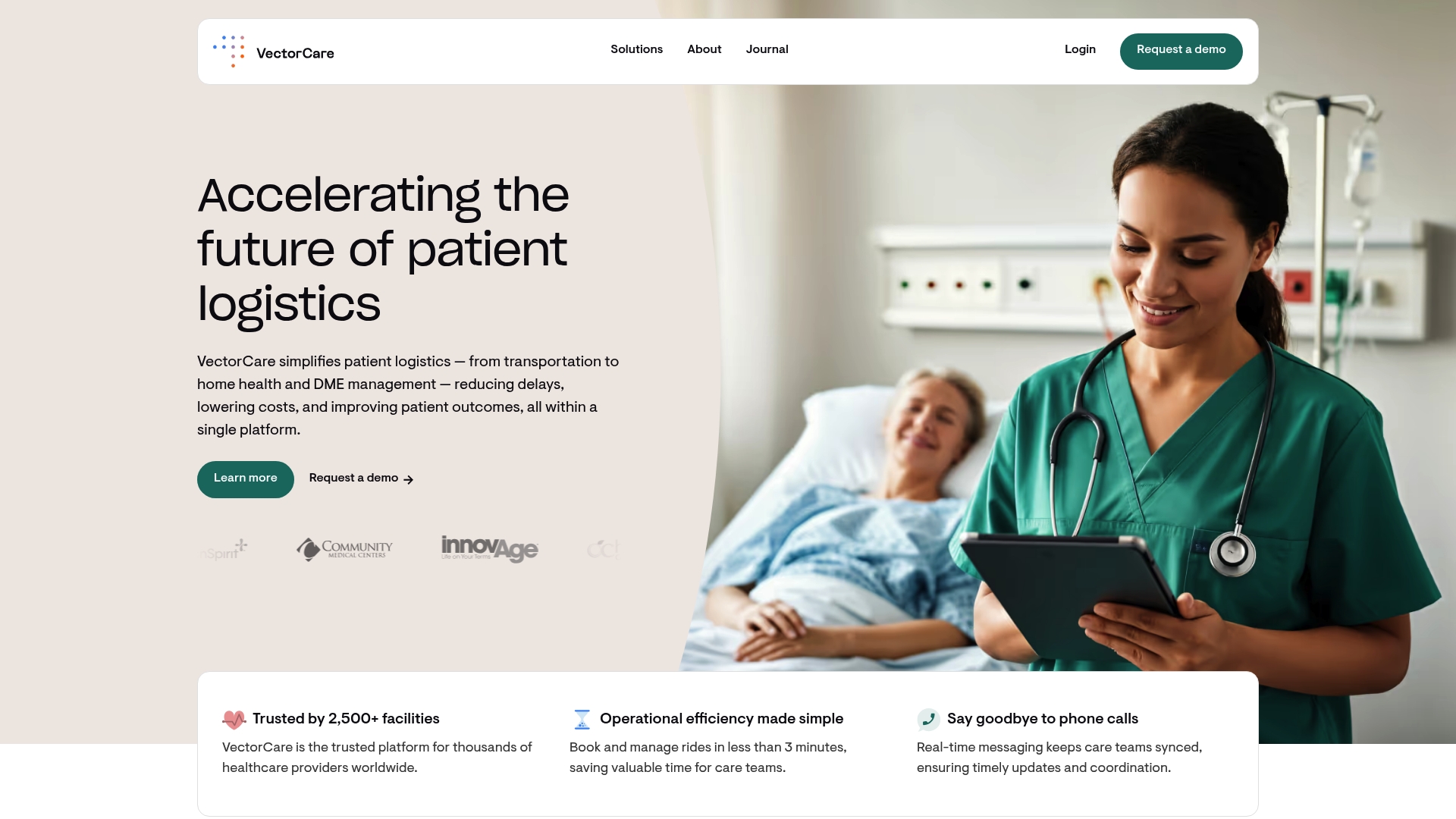
Experience the impact of seamless patient logistics and become a leader in integrated health care. Discover more about our platform at VectorCare and start optimizing your hospital’s logistics with proven, scalable tools designed for integrated health solutions.
Learn how VectorCare supports the technology and coordination advances essential for integrated health systems by visiting VectorCare’s home. Stay ahead of healthcare integration challenges and enhance patient care now.
Frequently Asked Questions
What are integrated health partners?
Integrated health partners are collaborative networks of healthcare providers and specialists that work together to deliver comprehensive, coordinated patient care, breaking down traditional silos in healthcare delivery.
How does technology support integrated health partnerships?
Technology supports integrated health partnerships through tools like Electronic Health Record (EHR) interoperability, real-time patient data sharing systems, and advanced telehealth platforms, enhancing communication and care coordination across different providers.
What are the benefits of integrated health solutions for patient care?
Integrated health solutions improve patient care by enhancing access to services, reducing care fragmentation, and providing a more holistic approach through coordinated care that addresses all aspects of a patient’s health needs.
What challenges do integrated health partnerships face?
Integrated health partnerships face challenges such as entrenched organizational silos, misaligned financial incentives, insufficient technological infrastructure, and resistance to collaborative care models, which can hinder successful integration.
Recommended
- What is Patient Logistics: What You Need to Know | VectorCare
- The Hospital-at-Home Care Model: What you need to know | VectorCare
- The benefits of transforming Patient Care Logistics with technology | VectorCare
- How Technology is Transforming Patient Logistics for SNFs | VectorCare
- Flight Medical 60 | Transport Ventilator | Portable ICU-Grade Unit