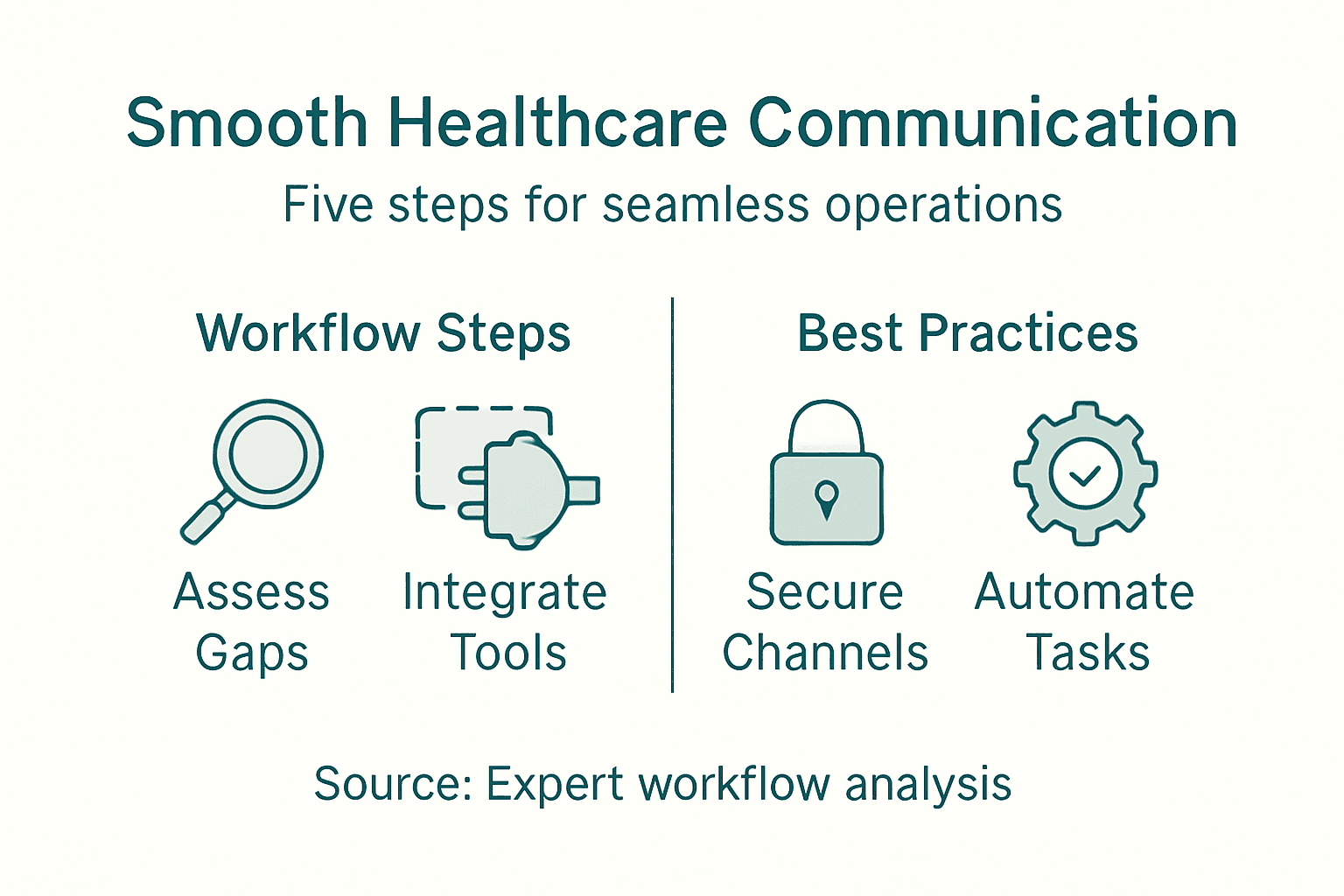
Improving Interdisciplinary Communication for Seamless Healthcare Operations

Nearly 60 percent of American hospitals report significant delays caused by communication breakdowns among care teams. For healthcare administrators, these challenges can lead to workflow disruptions, patient safety risks, and dissatisfaction across staff and families. With the increasing demands placed on American hospitals, adopting integrated technology solutions offers a proven path to improving interdisciplinary communication and optimizing patient logistics without increasing administrative burden.
Table of Contents
- Step 1: Assess Existing Communication Workflows For Key Barriers
- Step 2: Implement Integrated Digital Tools To Unify Stakeholder Access
- Step 3: Establish Secure Channels For Real-Time Updates And Collaboration
- Step 4: Automate Scheduling And Information Flow Across Teams
- Step 5: Verify System Effectiveness With Ongoing Data Monitoring
Quick Summary
| Key Insight | Explanation |
|---|---|
| 1. Assess communication workflows | Analyze existing communication to identify barriers and streamline information flow between departments. |
| 2. Implement integrated digital tools | Use digital platforms to eliminate information silos and enhance interdisciplinary collaboration across teams. |
| 3. Establish secure communication channels | Prioritize secure, compliant platforms that allow real-time updates while protecting patient privacy. |
| 4. Automate scheduling processes | Adopt automation tools to optimize scheduling and resource allocation, reducing administrative burdens. |
| 5. Monitor system performance continuously | Regularly evaluate communication effectiveness and make data-driven adjustments to improve workflows. |
Step 1: Assess existing communication workflows for key barriers
Understanding the current communication landscape within healthcare teams is crucial for identifying potential bottlenecks and improving interdisciplinary collaboration. Healthcare organizations need a systematic approach to diagnose communication challenges and develop targeted solutions.
Begin by conducting a comprehensive workflow analysis that maps out how information currently moves between different departments and professionals. Comprehensive barrier identification strategies recommend starting with a detailed documentation process. Track communication channels including electronic health records, verbal handoffs, interdepartmental emails, and team meetings. Note specific points where miscommunication frequently occurs such as patient transfer protocols, shift change reports, or complex treatment planning discussions.
Create a visual workflow diagram that highlights interaction touchpoints between nurses, physicians, specialists, administrators, and support staff. Look for systemic communication gaps like inconsistent documentation standards, limited cross-departmental visibility, or technological integration challenges. Engage team members from various roles to provide candid feedback about communication obstacles they regularly encounter.
Pro tip: Document communication breakdowns using standardized incident reporting templates to transform anecdotal challenges into measurable improvement opportunities.
Here’s a summary of common barriers and solutions in healthcare team communications:
| Communication Barrier | Impact on Teamwork | Example Solution |
|---|---|---|
| Inconsistent documentation | Delays and confusion | Standardized templates |
| Limited cross-department access | Missed critical updates | Centralized digital platforms |
| Technology integration gaps | Fragmented data | Interoperable software solutions |
| Privacy concerns | Restricted information flow | Secure, role-based permissions |
Step 2: Implement integrated digital tools to unify stakeholder access
Streamlining communication across healthcare teams requires strategic technological integration that breaks down traditional information silos. This step focuses on selecting and implementing digital platforms that enable seamless information sharing and real time collaboration.
Begin by evaluating your current technological ecosystem and identifying interoperability gaps. Look for digital solutions that support comprehensive communication workflows capable of connecting different departments and professional roles. Prioritize tools with robust integration capabilities that can connect electronic health records, messaging systems, scheduling platforms, and reporting dashboards. Consider cloud based platforms that offer secure, centralized access and enable multiple users to view and update information simultaneously.
When selecting digital tools, focus on user experience and intuitive design. Ensure the chosen platforms have customizable permission levels that protect patient privacy while allowing appropriate information access. Conduct pilot testing with representative teams from various departments to validate the tool effectiveness and identify potential implementation challenges. Train staff thoroughly on new systems and establish clear protocols for digital communication and documentation.
Pro tip: Select digital tools with mobile compatibility and offline synchronization features to ensure healthcare professionals can access critical information regardless of their physical location or network connectivity.
Step 3: Establish secure channels for real-time updates and collaboration
Creating robust communication infrastructure requires implementing secure digital platforms that enable instantaneous information sharing while maintaining patient confidentiality and data integrity. Healthcare teams must develop strategic communication channels that support rapid collaboration across diverse professional roles.
Select communication platforms with advanced security protocols that align with healthcare privacy regulations. Secure communication tools provide critical infrastructure for interdisciplinary teams to exchange information dynamically. Focus on solutions offering end-to-end encryption, multi factor authentication, and granular access controls. Prioritize platforms that integrate seamlessly with existing electronic health record systems and support role based permissions that restrict sensitive information to authorized personnel.
Implement comprehensive training programs to ensure all team members understand proper communication protocols and security best practices. Develop clear guidelines for message content, response timelines, and documentation requirements. Regularly audit communication channels to identify potential vulnerabilities and update security measures proactively. Encourage a culture of transparent yet protected information exchange that prioritizes patient safety and professional collaboration.
Pro tip: Conduct quarterly security assessments and provide ongoing staff training to maintain the highest standards of digital communication security and compliance.
Step 4: Automate scheduling and information flow across teams
Streamlining healthcare operations requires implementing sophisticated digital solutions that transform traditional manual coordination processes. Healthcare teams can significantly improve efficiency by adopting intelligent automation technologies that simplify complex scheduling and information management tasks.
Workflow automation technologies enable real time coordination across interdisciplinary teams by reducing administrative overhead and minimizing communication gaps. Select integrated software platforms that offer comprehensive features like automatic shift scheduling, resource allocation, and seamless data synchronization. These systems should support configurable rules that match staff availability with patient needs while maintaining compliance with organizational policies. Look for solutions that provide intelligent matching algorithms capable of balancing workload distribution and preventing scheduling conflicts.
Implement a phased rollout strategy that includes comprehensive staff training and gradual system integration. Begin with pilot departments to test the automation platform and gather feedback. Configure customizable dashboards that provide real time visibility into team schedules, patient assignments, and resource utilization. Establish clear protocols for manual override and exception handling to ensure human oversight remains a critical component of the automated workflow.
Pro tip: Choose automation platforms with robust reporting capabilities that allow you to track system performance and identify continuous improvement opportunities.
This table compares key features of digital communication and automation tools for healthcare teams:
| Tool Type | Key Feature | Impact on Operations | Security Consideration |
|---|---|---|---|
| Messaging platform | Real-time updates | Faster decision-making | End-to-end encryption |
| Scheduling software | Automated shift matching | Optimized staff allocation | Access control per role |
| EHR integration | Unified patient records | Reduced errors, improved care | HIPAA compliance |
| Reporting dashboard | Visual performance metrics | Proactive problem detection | Data privacy standards |
Step 5: Verify system effectiveness with ongoing data monitoring
Effective healthcare communication systems require continuous evaluation and refinement to ensure optimal performance and sustained improvements. Implementing a robust monitoring strategy allows healthcare teams to identify potential issues and track the real world impact of communication technologies.
Performance monitoring techniques provide critical insights into system functionality and interdisciplinary communication effectiveness. Establish a comprehensive measurement framework that tracks key performance indicators such as response times, error rates, user adoption levels, and information accuracy. Develop customizable dashboards that offer real time visualizations of system performance metrics, enabling quick identification of potential bottlenecks or communication gaps. Conduct regular system audits that compare current performance against predetermined benchmarks and organizational communication standards.
Create a structured feedback mechanism that allows team members to report system challenges or suggest improvements. Schedule quarterly review sessions where stakeholders from different departments can discuss system performance, share observations, and collaboratively develop optimization strategies. Integrate qualitative feedback with quantitative data to gain a holistic understanding of the communication platform effectiveness. Use data driven insights to make incremental adjustments that continuously enhance interdisciplinary collaboration and operational efficiency.
Pro tip: Implement automated alerting systems that notify key administrators about significant performance deviations or potential communication disruptions in real time.
Enhance Interdisciplinary Communication with VectorCare’s Integrated Healthcare Logistics Platform
The article highlights critical challenges such as inconsistent documentation, fragmented data flow, and the need for secure, real-time communication across healthcare teams. These barriers often lead to operational delays, increased costs, and compromised patient care. VectorCare addresses these pain points through its comprehensive digital platform designed to unify patient logistics and streamline interdisciplinary workflows. With features like scheduling optimization, secure communication channels, and AI-driven dispatching, the platform empowers providers, payers, emergency services, and health agencies to collaborate seamlessly under one roof.
Transform your healthcare operations today by exploring how VectorCare’s user-friendly, no-code workflows and centralized data insights can eliminate communication gaps and automate scheduling complexities. Discover the benefits of integrated, secure, and efficient team collaboration now at VectorCare. Experience the future of healthcare logistics management and make your interdisciplinary communication truly seamless.
Frequently Asked Questions
How can we assess existing communication workflows in our healthcare organization?
To assess existing communication workflows, begin by mapping out how information flows between departments and professionals. Conduct a detailed documentation process and identify common miscommunication points, such as patient transfers and shift changes, to pinpoint improvement areas within 30 days.
What digital tools can help unify communication among healthcare teams?
Look for integrated digital platforms that support seamless information sharing, such as messaging systems and electronic health records. Prioritize tools with interoperability features that allow for real-time updates and role-specific access to ensure smoother operations within 60 days.
What steps should we take to ensure secure communication in our healthcare team?
To establish secure communication, select platforms that offer end-to-end encryption and multi-factor authentication. Implement comprehensive training for team members on communication protocols to protect patient data and maintain confidentiality from day one.
How can we automate scheduling to improve interdisciplinary collaboration?
Adopt workflow automation technologies that provide automated shift scheduling and resource allocation. Implement systems with intelligent matching algorithms to optimize staff placement according to patient needs and reduce scheduling conflicts by approximately 30%.
What performance metrics should we monitor to evaluate communication effectiveness?
Monitor key performance indicators such as response times, error rates, and user adoption levels. Develop customizable dashboards to visualize system performance and conduct performance reviews with stakeholders quarterly to address potential bottlenecks.
How often should we re-evaluate our communication systems for continuous improvement?
Regularly evaluate your communication systems every 3 to 6 months. Use structured feedback mechanisms and data-driven insights to make incremental adjustments that enhance interdisciplinary collaboration and operational effectiveness.
Recommended
- How to Improve Team Collaboration in Healthcare Settings
- Improving Patient Communication: 2025 Strategies for Healthcare Teams
- Understanding Interoperability in Healthcare Systems
- Secure Healthcare Communication Solutions for 2025 Providers
- The Link Between Oral and Overall Health: Why a Healthy Mouth Matters