How to Manage Home Health Services for Optimal Efficiency

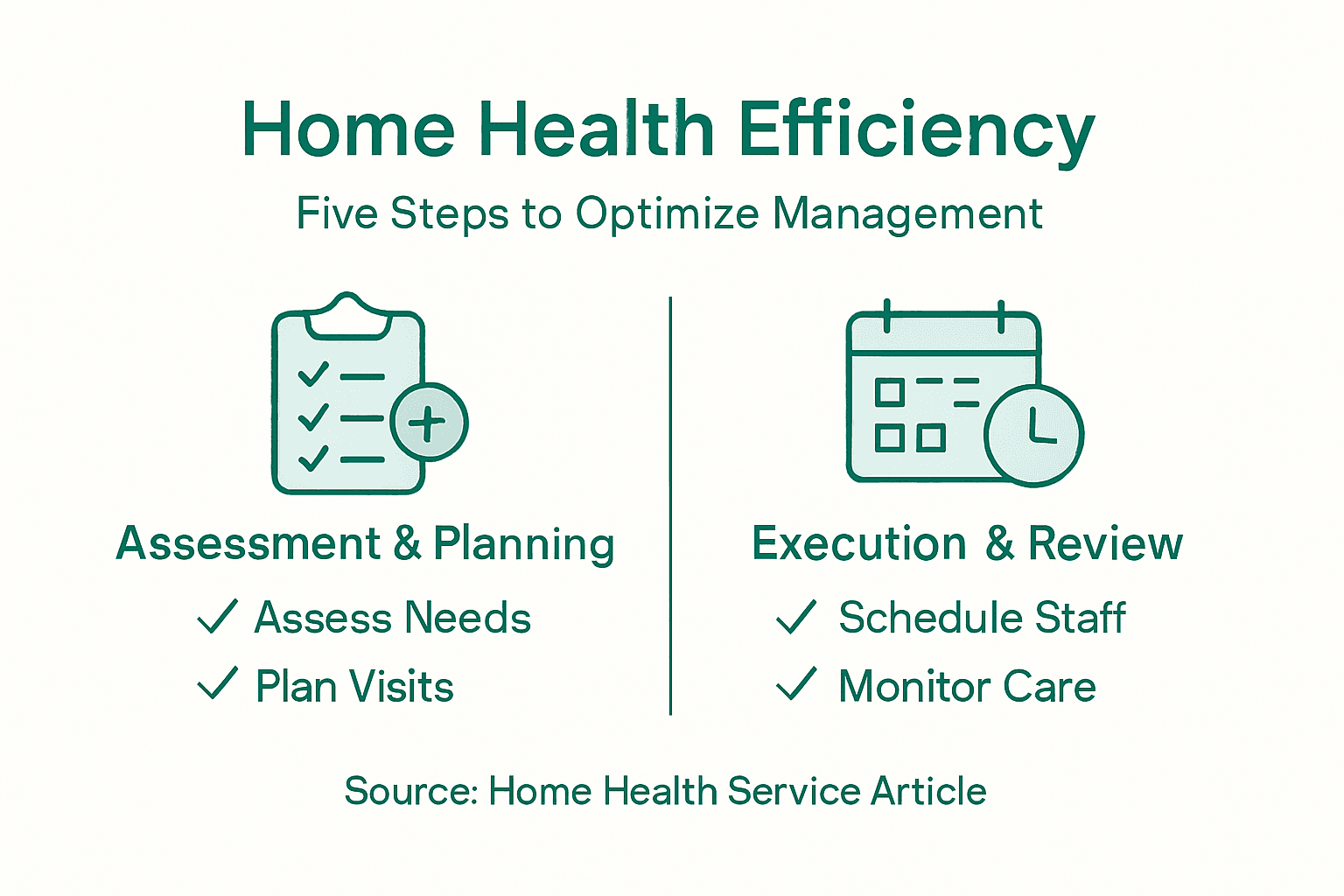
Managing an American home health agency demands more than compassion. The pressure to deliver top-quality care while keeping expenses under control is a daily reality for agency managers. With rising patient needs and complex regulations, finding practical ways to enhance efficiency and ensure compliance can make all the difference. A systematic patient assessment and optimized scheduling approach can lay the groundwork for better outcomes and smarter operations.
Table of Contents
- Step 1: Assess Patient and Service Requirements
- Step 2: Implement Digital Scheduling Solutions
- Step 3: Coordinate Vendor and Staff Assignments
- Step 4: Monitor Service Delivery in Real Time
- Step 5: Evaluate Outcomes and Optimize Processes
Quick Summary
| Key Point | Explanation |
|---|---|
| 1. Comprehensive Patient Assessment is Essential | Tailored care begins with a thorough evaluation of medical history, functional status, and care needs to create personalized home health plans. |
| 2. Digital Scheduling Enhances Coordination | Implementing a digital scheduling platform improves efficiency, ensures timely patient assignments, and provides real-time tracking of workforce availability. |
| 3. Effective Staff Coordination Improves Care | Matching caregiver expertise with patient needs and maintaining continuity of care enhance patient experiences and streamline service delivery. |
| 4. Real-Time Monitoring Improves Quality | Continuous tracking of patient health and caregiver performance enables proactive management, ensuring safety and immediate interventions when needed. |
| 5. Regular Evaluation Drives Continuous Improvement | Analyzing outcomes, satisfaction, and efficiency metrics allows for ongoing refinements to home health services, fostering a culture of quality care. |
Step 1: Assess Patient and Service Requirements
Assessing patient and service requirements is the critical first step in delivering effective home health services. This foundational process ensures that patients receive precisely tailored care that matches their unique medical needs and functional capabilities.
To systematically evaluate patient requirements, start by conducting a comprehensive initial assessment that covers multiple dimensions of patient health. This involves gathering detailed information about the patient’s medical history, current health status, and specific care needs. Medicare guidelines for home health eligibility recommend focusing on several key evaluation areas:
- Medical Documentation: Obtain comprehensive medical records and physician referrals
- Functional Assessment: Evaluate patient’s mobility, self-care abilities, and daily living requirements
- Home Environment Analysis: Review living conditions and potential care delivery challenges
- Care Complexity Evaluation: Determine the level of skilled nursing or therapeutic interventions needed
A thorough patient assessment requires collaboration between healthcare professionals, including physicians, nurses, and home health coordinators. Each team member brings specialized insights that contribute to developing a holistic care plan. The assessment should systematically document the patient’s:
- Current medical conditions
- Medication regimens
- Specific care requirements
- Treatment goals
- Potential limitations or risk factors
Critical Insight: A comprehensive patient assessment is not a one-time event but an ongoing process that requires regular reevaluation and adjustment.
Pro tip: Develop a standardized assessment template that ensures consistent and thorough evaluation across all patient intakes, reducing potential oversight and improving overall care quality.
Step 2: Implement Digital Scheduling Solutions
Implementing digital scheduling solutions represents a transformative approach to optimizing home health service delivery. This step focuses on leveraging technology to streamline patient assignments, improve workforce efficiency, and enhance overall service coordination.
Begin by selecting a robust digital scheduling platform that integrates advanced optimization techniques for healthcare routing, which can intelligently manage worker assignments and patient routes. Key considerations for digital scheduling implementation include:
- Comprehensive Patient Profiling: Capture detailed patient requirements and preferences
- Real-Time Workforce Tracking: Monitor healthcare worker availability and location
- Flexible Scheduling Mechanisms: Allow dynamic adjustments for urgent care needs
- Integrated Communication Tools: Enable seamless coordination between patients and providers
The digital scheduling system should incorporate sophisticated algorithms that balance multiple complex factors. Innovative scheduling models recommend approaches like open access scheduling and modified wave scheduling to maximize appointment accessibility and reduce potential service gaps.

Here’s a summary of digital scheduling solutions and their business impacts:
| Feature | Description | Business Impact |
|---|---|---|
| Patient Profiling | Detailed records of patient needs and preferences | Enhances personalized care |
| Real-Time Staff Tracking | Monitor worker availability and locations | Improves response times |
| Flexible Scheduling | Dynamic changes to appointments | Reduces missed visits |
| Integrated Communication | Direct provider-patient messaging | Boosts coordination |
| Analytics and Reporting | Real-time performance metrics | Drives process improvement |
- Evaluate current scheduling inefficiencies
- Research compatible digital scheduling platforms
- Design custom workflow integration
- Train staff on new digital system
- Implement gradual rollout with continuous monitoring
Critical Insight: Successful digital scheduling transformation requires a holistic approach that considers technological capabilities, workforce dynamics, and patient needs.
Pro tip: Select a digital scheduling solution with robust analytics capabilities that can provide real-time insights into operational performance and help continuously refine your service delivery model.
Step 3: Coordinate Vendor and Staff Assignments
Coordinating vendor and staff assignments is a critical process that ensures seamless home health service delivery. This step focuses on strategically matching healthcare professionals with patient needs while optimizing operational efficiency.
Successful coordination begins with understanding robust routing and scheduling strategies that balance multiple complex factors. You’ll want to develop a comprehensive assignment framework that considers several key elements:
- Caregiver Expertise: Match specific staff skills with patient requirements
- Geographic Proximity: Minimize travel time between patient locations
- Continuity of Care: Prioritize consistent caregiver assignments when possible
- Scheduling Flexibility: Allow adaptations for urgent or changing patient needs
Implement a systematic approach to vendor and staff coordination that integrates comprehensive care coordination principles. This involves creating a robust communication and matching process that considers:
- Detailed staff skill profiling
- Patient-specific care requirements
- Availability and scheduling constraints
- Performance tracking and feedback mechanisms
- Ongoing training and skill development
Critical Insight: Effective staff coordination is not just about filling schedules, but creating meaningful, consistent care experiences for patients.
Pro tip: Develop a dynamic assignment matrix that allows real-time adjustments and tracks caregiver-patient compatibility to continuously improve service quality.
Step 4: Monitor Service Delivery in Real Time
Monitoring service delivery in real time is crucial for maintaining high-quality home health services and ensuring patient safety. This step involves implementing sophisticated tracking mechanisms that provide continuous insight into care delivery and patient outcomes.
Utilize advanced remote patient monitoring technologies to track patient health parameters and caregiver performance. Real-time monitoring allows for immediate intervention and adaptive care strategies that significantly improve service quality and patient experiences.
Key components of effective real-time monitoring include:
- Continuous Data Collection: Gather comprehensive patient health metrics
- Performance Tracking: Monitor caregiver responsiveness and service quality
- Alert Systems: Implement immediate notification protocols for critical changes
- Comprehensive Reporting: Generate actionable insights from monitoring data
Develop a robust monitoring framework that incorporates service delivery performance metrics to assess and improve operational effectiveness:
The following table compares traditional and real-time monitoring methods in home health services:
| Aspect | Traditional Monitoring | Real-Time Monitoring |
|---|---|---|
| Data Collection | Periodic manual updates | Continuous automated tracking |
| Issue Response Time | Hours or days | Instant or minutes |
| Care Adjustment Speed | Delayed | Immediate |
| Patient Safety | Reactive interventions | Proactive management |
| Reporting | Retrospective analysis | Live dashboards and alerts |
- Establish baseline performance indicators
- Configure real-time tracking dashboards
- Create automated alert mechanisms
- Develop responsive intervention protocols
- Regularly review and adjust monitoring strategies
Critical Insight: Real-time monitoring transforms reactive healthcare management into a proactive, data-driven service delivery model.
Pro tip: Invest in integrated monitoring technologies that provide comprehensive, actionable insights while maintaining patient privacy and data security.
Step 5: Evaluate Outcomes and Optimize Processes
Evaluating outcomes and optimizing processes represents the critical final stage of home health service management. This comprehensive approach ensures continuous improvement and sustainable operational excellence by systematically analyzing performance and identifying opportunities for refinement.
Implement a robust program evaluation framework that provides structured insights into service delivery effectiveness. This methodology involves collecting quantitative and qualitative data to assess the impact of your home health services across multiple dimensions:
- Performance Metrics: Track key indicators of service quality
- Patient Satisfaction: Measure direct feedback and experience
- Clinical Outcomes: Evaluate health improvements and intervention effectiveness
- Operational Efficiency: Analyze resource utilization and cost-effectiveness
Develop a comprehensive evaluation strategy that incorporates healthcare quality measurement techniques to drive continuous improvement:
- Establish clear performance benchmarks
- Implement systematic data collection protocols
- Conduct regular performance reviews
- Identify process improvement opportunities
- Execute targeted optimization strategies
Critical Insight: Effective evaluation is not about finding fault, but about creating a dynamic learning environment that constantly enhances service quality.
Pro tip: Create a feedback loop that transforms evaluation insights into actionable improvements, ensuring your home health services remain adaptive and patient-centered.
Elevate Your Home Health Service Management with VectorCare
Managing home health services effectively requires addressing complex challenges like patient assessment accuracy, dynamic scheduling, and real-time staff coordination as outlined in the article “How to Manage Home Health Services for Optimal Efficiency.” The critical pain points include balancing caregiver expertise with geographic proximity, ensuring continuous monitoring, and leveraging data-driven insights to optimize outcomes. These goals demand technology that can handle scheduling optimization, vendor management, and instant communication while maintaining a patient-centered approach.
VectorCare’s comprehensive digital platform is designed to solve these exact challenges by automating and streamlining the entire home health workflow. With features such as AI-driven dispatching, secure communication, and analytics, VectorCare enables healthcare providers to reduce delays, lower operational costs, and improve patient satisfaction. The platform’s real-time updates support proactive service delivery adjustments, making consistent and high-quality care achievable. Discover how VectorCare can transform your operations today by visiting VectorCare or explore our full suite of solutions at VectorCare Scheduling Optimization.
Take control of your home health services now and experience seamless coordination and measurable efficiency improvements. Visit VectorCare to learn how you can start optimizing scheduling, managing vendors, and enhancing patient care with an integrated solution built for modern healthcare logistics.
Frequently Asked Questions
How can I assess patient and service requirements for home health services?
Begin by conducting a comprehensive initial assessment that evaluates medical history, current health status, and specific care needs. Document key factors such as the patient’s medical conditions, medications, and goals to create a tailored care plan.
What digital scheduling solutions should I implement for home health services?
Select a digital scheduling platform that allows real-time workforce tracking and flexible scheduling. This helps streamline patient assignments and can reduce missed visits by approximately 15% through efficient management.
How do I coordinate vendor and staff assignments effectively?
Develop a matching framework that aligns caregiver expertise with patient needs while considering geographic proximity and scheduling flexibility. Ensuring consistent caregiver assignments can enhance patient satisfaction and continuity of care.
What are the key components of real-time monitoring in home health services?
Implement continuous data collection and performance tracking systems that monitor patient health metrics and caregiver responsiveness. This proactive approach can reduce response times significantly, improving overall service quality.
How do I evaluate outcomes and optimize processes in home health services?
Establish a program evaluation framework that includes performance metrics, patient satisfaction, and clinical outcomes. Conduct regular reviews and identify opportunities for improvement, aiming to enhance service quality continuously within each evaluation cycle.
What benefits does implementing a feedback loop provide in managing home health services?
Creating a feedback loop transforms evaluation insights into actionable improvements, allowing your services to remain adaptive and patient-centered. This ongoing process fosters a culture of continuous learning and can lead to measurable enhancements in service delivery.