How to Choose NEMT Providers for Optimal Efficiency

Nearly one in four American patients relies on non emergency medical transport to reach vital healthcare services safely each year. For healthcare administrators, balancing regulatory demands with real world logistics can quickly complicate provider selection. By defining clear requirements and understanding shifting service criteria, you gain more than compliance—you build a foundation for efficient patient flow and stronger operational results.
Table of Contents
- Step 1: Define Your Organization’s NEMT Requirements
- Step 2: Set Criteria for Selecting NEMT Providers
- Step 3: Research and Shortlist Qualified Providers
- Step 4: Evaluate Provider Technology and Integrations
- Step 5: Validate Compliance and Service Quality
- Step 6: Monitor Ongoing Provider Performance
Quick Summary
| Key Point | Explanation |
|---|---|
| 1. Define NEMT requirements first | Understanding specific transportation needs is essential for creating an efficient patient logistics strategy. It aligns with state and federal compliance standards. |
| 2. Establish clear provider selection criteria | Having detailed criteria for selecting NEMT providers ensures reliable service and aligns with operational needs, enhancing patient experience and safety. |
| 3. Conduct thorough provider research | Systematic research and assessment help shortlist qualified NEMT providers, ensuring they meet unique transportation and quality standards for your organization. |
| 4. Evaluate technology capabilities | Assessing a provider’s technological tools is crucial for operational efficiency, ensuring they can integrate seamlessly with existing healthcare systems. |
| 5. Monitor ongoing provider performance | Implement regular performance evaluations to maintain service quality and responsiveness, allowing for timely adjustments as needed. |
Step 1: Define your organization’s NEMT requirements
Defining your organization’s Non Emergency Medical Transportation (NEMT) requirements is the critical first stage in building an efficient patient logistics strategy. This process involves understanding your specific transportation needs, legal obligations, and service parameters.
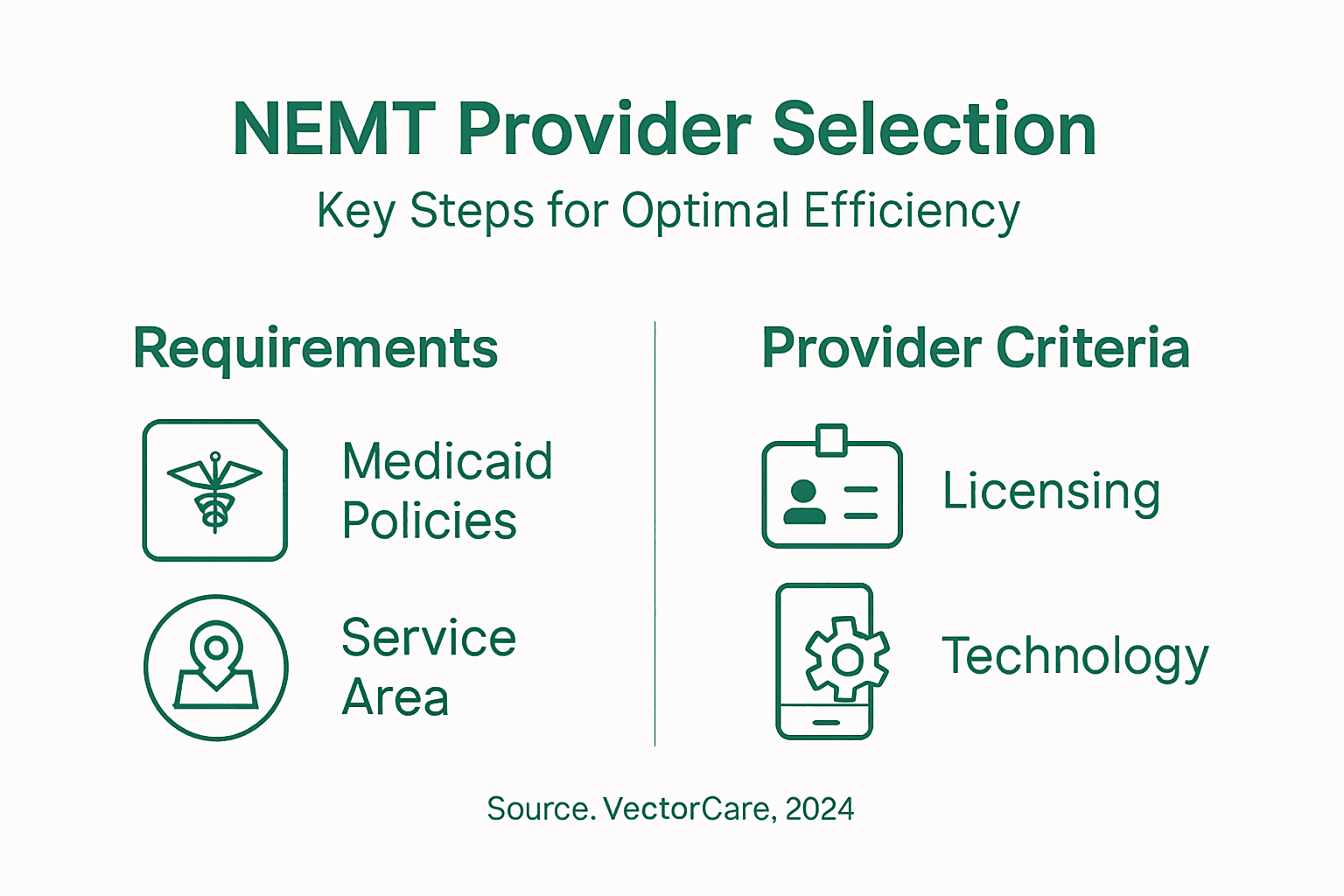
Start by examining your state’s Medicaid transportation policies, which vary significantly across different regions. Each state has unique coordination models and administrative requirements that will directly impact your NEMT planning. You’ll need to assess key factors including your target population demographics, required transportation modes, peak service times, and potential integration opportunities with public transit systems.
Further, review the federal legal requirements for transportation services, which mandate that Medicaid beneficiaries must have access to necessary transportation to medical providers. This means your NEMT strategy must align not just with organizational goals, but with state and federal compliance standards. Consider creating a comprehensive matrix that documents your specific transportation needs, including vehicle types, accessibility requirements, service area coverage, and anticipated patient volume.
Pro Tip: Develop a detailed NEMT requirements checklist that includes demographic data, transportation modes, service area maps, and compliance documentation to streamline your provider selection process.
The following table summarizes key Medicaid NEMT requirements versus best practice organizational goals when defining your transportation strategy:
| Area of Focus | Medicaid Requirement | Best Practice Objective |
|---|---|---|
| Transportation Access | Must provide for eligible beneficiaries | Ensure minimal wait times, easy scheduling |
| Mode of Transport | Match patient needs (ambulance, van, etc.) | Optimize mode choice for cost and comfort |
| Service Area | As defined by state policy | Expand to cover all patient regions |
| Compliance Documentation | Mandatory for reimbursement | Streamline processes and regularly audit |
| Integration | Not always required | Fully integrate with public transit, EHR systems |
Step 2: Set criteria for selecting NEMT providers
Establishing clear and comprehensive criteria for selecting Non Emergency Medical Transportation (NEMT) providers is crucial to ensuring reliable patient logistics and maintaining high service standards. This step requires a strategic approach to evaluating potential transportation partners.
Begin by focusing on key provider selection criteria that address critical operational aspects. These should include licensing and certification requirements, driver background checks, vehicle safety standards, and geographic coverage. Your evaluation matrix must assess provider network adequacy, responsiveness, member experience, cost effectiveness, and robust fraud prevention mechanisms. Consider creating a scoring system that weights these factors based on their importance to your specific organizational needs.

Additionally, examine each potential NEMT provider’s ability to integrate technology, handle data reporting, and coordinate with existing public transit systems. Verify their compliance with state Medicaid regulations and their track record of reliable service delivery. Prioritize providers who demonstrate flexibility, technological capability, and a commitment to patient safety and experience. By developing a comprehensive and rigorous selection framework, you can ensure your NEMT providers meet the highest standards of service and reliability.
Pro Tip: Create a standardized provider evaluation scorecard with weighted criteria to objectively compare and select the most suitable NEMT transportation partners for your organization.
Step 3: Research and shortlist qualified providers
Researching and shortlisting qualified Non Emergency Medical Transportation (NEMT) providers requires a systematic and comprehensive approach to ensure you select the most reliable transportation partners for your organization. This step is critical in building a robust and efficient patient logistics network.
Begin by conducting comprehensive provider network assessments through multiple channels. Request detailed proposals from potential providers, analyze their capabilities to serve diverse populations, and evaluate their technological infrastructure. Focus on gathering performance data from state agencies, transportation brokers, and current provider performance records. This multi pronged research strategy will help you identify providers who not only meet basic requirements but excel in service delivery.
Carefully examine each potential provider’s track record in handling specific transportation needs, particularly their experience with populations requiring specialized assistance. Review their compliance documentation, technological capabilities, cost efficiency, and demonstrated ability to coordinate with healthcare systems. Look beyond basic credentials to understand their operational flexibility, responsiveness, and commitment to patient safety. By meticulously investigating each potential provider, you can create a shortlist of NEMT partners who align precisely with your organization’s unique transportation requirements and quality standards.
Pro Tip: Create a detailed evaluation matrix that scores providers across multiple dimensions, allowing for an objective and comprehensive comparison of potential NEMT transportation partners.
Step 4: Evaluate provider technology and integrations
Evaluating a Non Emergency Medical Transportation (NEMT) provider’s technological capabilities is crucial for ensuring efficient patient logistics and operational excellence. This step requires a comprehensive assessment of their digital infrastructure and integration potential.
Begin by examining the provider’s advanced technological capabilities. Key technologies to assess include GPS tracking systems, electronic visit verification, automated scheduling platforms, and data integration capabilities with Medicaid management information systems. Look for providers who offer real time monitoring, efficient route planning, and robust communication tools that can seamlessly connect with your existing healthcare infrastructure.
Delve deeper into the provider’s technological ecosystem by investigating their ability to integrate with various healthcare platforms, public transit systems, and broker networks. Assess their mobile application capabilities, data reporting mechanisms, and overall technological flexibility. Pay special attention to how their technology can prevent fraud, improve member communication, and provide transparent, traceable transportation services. The most advanced NEMT providers will demonstrate not just technological competence, but a strategic approach to using technology to enhance patient experience and operational efficiency.
Pro Tip: Request comprehensive technology demonstration sessions with potential NEMT providers to gain hands on insight into their actual technological capabilities and integration potential.
Here is a quick reference guide to high-impact NEMT provider technology features and their benefits:
| Technology Feature | Primary Benefit | Added Value |
|---|---|---|
| GPS Tracking | Real-time ride monitoring | Reduces delays, improves safety |
| Automated Scheduling | Efficient ride allocation | Minimal administrative burden |
| Data Integration | Seamless sharing with Medicaid systems | Faster claims, fewer errors |
| Mobile Apps | On-demand ride management | Enhances member experience |
Step 5: Validate compliance and service quality
Validating compliance and service quality represents a critical phase in selecting a Non Emergency Medical Transportation (NEMT) provider that will consistently meet your organization’s operational standards and patient care requirements. This comprehensive evaluation ensures your chosen provider operates with the highest levels of professionalism and regulatory adherence.
Begin by thoroughly examining the provider’s compliance and regulatory standards. This involves verifying essential documentation including legal licensing, insurance certifications, HIPAA confidentiality protocols, driver background checks, and comprehensive training records. Pay close attention to their safety inspection processes, vehicle maintenance standards, and documented procedures for managing potential fraud or service interruptions.
Expand your validation process by conducting a detailed review of the provider’s historical performance metrics. Request comprehensive member satisfaction surveys, analyze complaint resolution records, and examine their consistent reporting of ride metrics. The most reliable NEMT providers will demonstrate transparency in their operations, maintaining clear documentation of service quality indicators, performance benchmarks, and proactive approaches to continuous improvement. Your goal is to select a partner who not only meets minimum regulatory requirements but consistently exceeds expectations in service delivery and patient experience.
Pro Tip: Request a comprehensive compliance audit report and performance dashboard from potential NEMT providers to gain unfiltered insight into their operational excellence.
Step 6: Monitor ongoing provider performance
Monitoring ongoing Non Emergency Medical Transportation (NEMT) provider performance is a critical process that ensures continuous quality, accountability, and alignment with your organization’s service standards. This proactive approach helps maintain high service levels and quickly address any emerging operational challenges.
Establish a comprehensive performance monitoring framework that tracks key performance indicators systematically. Focus on metrics such as no-show rates, on-time pickup percentages, complaint frequencies, driver responsiveness, and member satisfaction survey results. Develop a structured evaluation process that includes regular data collection, detailed performance dashboards, and periodic comprehensive audits to assess your NEMT provider’s operational effectiveness.
Implement a continuous feedback and improvement mechanism that goes beyond simple performance tracking. Create clear communication channels for receiving and addressing member experiences, conduct periodic provider meetings to discuss performance insights, and establish a transparent process for implementing corrective actions. The most successful monitoring strategies not only identify issues but also provide constructive guidance that helps providers enhance their service quality and operational efficiency.
Pro Tip: Develop a standardized quarterly performance review template that objectively captures and compares provider performance across multiple critical service dimensions.
Unlock Seamless Efficiency in Choosing Your NEMT Providers
Selecting the right Non Emergency Medical Transportation providers requires clear criteria, rigorous compliance checks, and robust technology integration, just as outlined in “How to Choose NEMT Providers for Optimal Efficiency.” Many organizations struggle with coordinating schedules, ensuring compliance, and maintaining quality standards without a unified platform. VectorCare addresses these challenges by offering an all-in-one digital solution that automates scheduling, enhances provider management, and delivers real-time insights to reduce delays and lower costs.
Experience the power of streamlined patient logistics with VectorCare. Our platform supports compliance validation, vendor evaluation, and performance monitoring with AI-driven dispatching and secure communication tools designed for healthcare organizations of all sizes.
Take control of your NEMT operations today and elevate patient experiences through smarter logistics.
Find out how VectorCare can transform your transportation strategy by visiting our official website. Explore how to optimize provider selection and integration at VectorCare’s platform. Get started now and see immediate improvements in operational efficiency and patient care coordination.
Frequently Asked Questions
What steps should I follow to define my NEMT requirements?
To define your Non Emergency Medical Transportation (NEMT) requirements, start by assessing your target population’s demographics, transportation modes, and service area needs. Create a detailed checklist that includes essential factors such as accessibility and compliance documentation to ensure comprehensive coverage of your transportation strategy.
How can I effectively select NEMT providers?
To effectively select NEMT providers, create clear criteria focused on licensing, safety standards, and provider responsiveness. Develop a scoring system to evaluate potential partners based on how they meet your specific organizational needs and prioritize those who demonstrate strong compliance with regulations.
What technology features should I look for in NEMT providers?
Look for technology features such as GPS tracking, automated scheduling, and data integration capabilities. Request demonstrations of these technologies to evaluate how well they can enhance operational efficiency and improve patient experience.
How do I ensure compliance and quality from my NEMT providers?
Ensure compliance and quality by reviewing the provider’s licensing, insurance, and performance records thoroughly. Conduct regular audits and request transparency in their operations to confirm they meet both regulatory standards and your organization’s service expectations.
What key performance indicators (KPIs) should I monitor for NEMT providers?
Monitor KPIs such as no-show rates, on-time pickups, and member satisfaction survey results to track provider performance. Establish a structured evaluation process that includes regular data collection to identify areas for improvement and enhance service delivery.
How often should I review the performance of NEMT providers?
You should review the performance of NEMT providers on a quarterly basis to ensure service standards are met consistently. Use a standardized review template to capture relevant metrics and facilitate constructive feedback discussions with providers.
Recommended
- The Top 6 Questions SNFs Should Ask When Evaluating NEMT Solutions | VectorCare
- How to Choose the Right NEMT Provider For Your SNF | VectorCare
- The Importance of Efficient Patient Transportation for SNFs | VectorCare
- NEMT Services Offered: Complete Guide for Providers
- Industry Insights & Strategy - CEU Builder Blog