Home Medical Monitoring: Transforming Hospital Care

Over half of American hospital administrators now rank remote patient monitoring among their top investment priorities. As healthcare systems shift rapidly, home medical monitoring has become essential for delivering safe, efficient care while controlling operational costs. Understanding the full scope of these technologies helps American hospitals implement solutions that drive better patient outcomes, meet compliance standards, and optimize everything from logistics to reimbursement strategies.
Table of Contents
- Defining Home Medical Monitoring Solutions
- Types of Home Medical Monitoring Devices
- Key Features And Integration With Hospital Systems
- Legal, Regulatory, And Reimbursement Requirements
- Operational Risks And Best Practices
- Cost Implications And Values Compared To Alternatives
Key Takeaways
| Point | Details |
|---|---|
| Home Medical Monitoring Transforms Care Delivery | Utilizes advanced technologies to provide patient care in home settings, enhancing convenience and efficiency. |
| Diverse Device Ecosystem Enhances Patient Monitoring | Includes various devices designed for real-time tracking and management of chronic conditions, improving patient outcomes. |
| Critical Integration with Hospital Systems Required | Effective communication between monitoring devices and hospital information systems is essential for informed clinical decisions. |
| Regulatory Compliance and Reimbursement Improvements Necessary | Navigating legal frameworks and ensuring reimbursement models are key to implementing successful home medical monitoring solutions. |
Defining Home Medical Monitoring Solutions
Home medical monitoring represents a transformative approach in healthcare delivery, enabling patients to receive comprehensive medical care directly from their residences. These advanced solutions leverage cutting-edge technologies like artificial intelligence and remote patient monitoring (RPM) to track health metrics, predict potential medical issues, and provide continuous healthcare support without traditional hospital settings.
At its core, home medical monitoring integrates sophisticated hardware and software systems designed to capture real-time patient health data. Remote patient monitoring technologies allow healthcare providers to collect critical information such as vital signs, medication adherence, and chronic condition management through wearable sensors, mobile applications, and intelligent digital platforms. These tools enable proactive interventions, reducing hospital readmissions and supporting more personalized patient care strategies.
The technological ecosystem of home medical monitoring includes several key components: wearable health trackers, smart medical devices, AI-powered analytics platforms, and secure telecommunication networks. Seniors and patients with chronic conditions particularly benefit from these solutions, as they provide continuous health surveillance, early warning systems for potential medical complications, and seamless communication channels between patients and healthcare professionals. By transforming traditional healthcare delivery models, these monitoring solutions create more accessible, efficient, and patient-centered medical experiences.
Pro tip: Implement a comprehensive staff training program to ensure healthcare professionals understand how to effectively interpret and respond to remote monitoring data streams.
Types of Home Medical Monitoring Devices
Home medical monitoring devices represent a sophisticated array of technological solutions designed to track patient health metrics remotely and comprehensively. Remote patient monitoring technologies encompass a wide range of specialized devices that enable continuous health surveillance across various medical conditions and patient demographics. These intelligent systems transform traditional healthcare delivery by providing real-time data collection and analysis capabilities outside traditional clinical environments.
The primary categories of home medical monitoring devices include vital signs trackers, chronic disease management tools, and wearable health monitors. Blood pressure monitors, glucose tracking devices, and weight management scales represent foundational tools that help patients with specific health conditions maintain ongoing monitoring. Advanced wearable technologies like smartwatches and fitness trackers now integrate sophisticated sensors capable of tracking heart rate, oxygen levels, sleep patterns, and even detecting potential cardiac irregularities. These devices not only collect data but also provide actionable insights through integrated mobile applications and cloud-based health platforms.
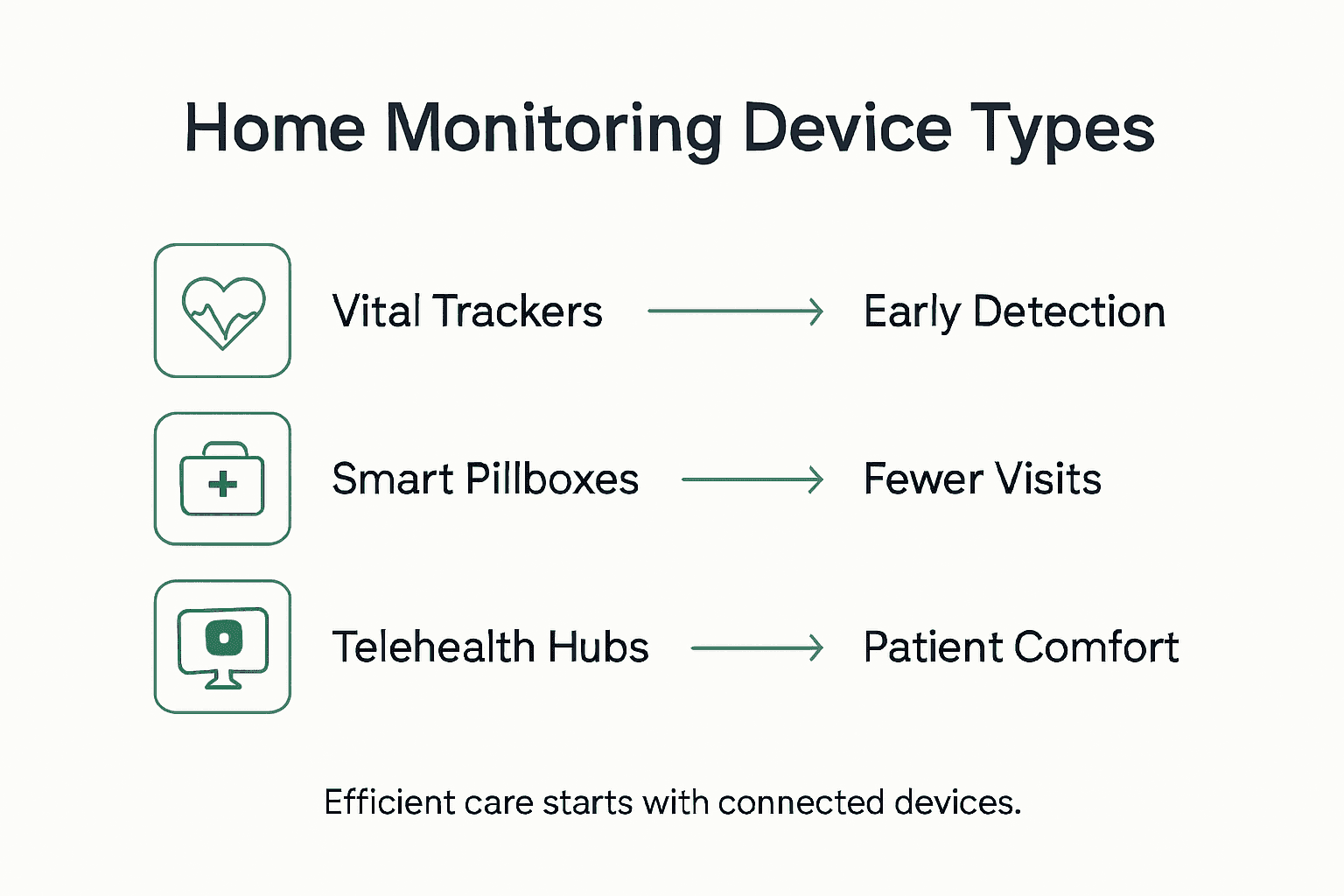
Moreover, specialized medical monitoring devices cater to unique patient needs across different healthcare domains. Respiratory monitoring devices help patients with asthma or chronic obstructive pulmonary disease track lung function, while cardiac monitoring tools provide continuous electrocardiogram (ECG) tracking for individuals with heart conditions. Insulin pumps and continuous glucose monitors represent critical innovations for diabetes management, enabling patients to receive real-time blood sugar level updates and automated insulin delivery. By integrating advanced sensor technologies, artificial intelligence, and secure data transmission protocols, these devices create a comprehensive ecosystem of personalized healthcare monitoring.
Here’s a summary of key home medical monitoring device categories and their primary benefits:
| Device Category | Example Devices | Primary Benefit |
|---|---|---|
| Vital Signs Trackers | Blood pressure monitor | Immediate health status alerts |
| Chronic Disease Managers | Insulin pump | Ongoing condition management |
| Wearable Health Monitors | Smartwatch | Continuous, passive tracking |
| Respiratory Monitors | Spirometer | Personalized respiratory care |
| Cardiac Monitors | ECG patch | Early detection of arrhythmias |
Pro tip: Develop a standardized device compatibility and data integration protocol to ensure seamless communication between different home medical monitoring technologies.
Key Features and Integration with Hospital Systems
Home medical monitoring technologies require sophisticated integration capabilities to effectively connect with existing hospital information systems. Data transmission protocols and interoperability standards play a critical role in ensuring seamless communication between remote monitoring devices and electronic health record (EHR) platforms. These integration mechanisms enable healthcare providers to receive real-time patient data, analyze health trends, and make informed clinical decisions without disrupting established workflow processes.
The key features of advanced home medical monitoring systems include robust security frameworks, user authentication protocols, and adaptive data management capabilities. Secure data transmission ensures patient privacy while maintaining compliance with healthcare regulations like HIPAA. Intelligent systems now incorporate advanced encryption methods, multi-factor authentication, and granular user role management to protect sensitive medical information. These technologies enable precise access controls, allowing different healthcare professionals to view specific patient data based on their clinical responsibilities and authorized access levels.
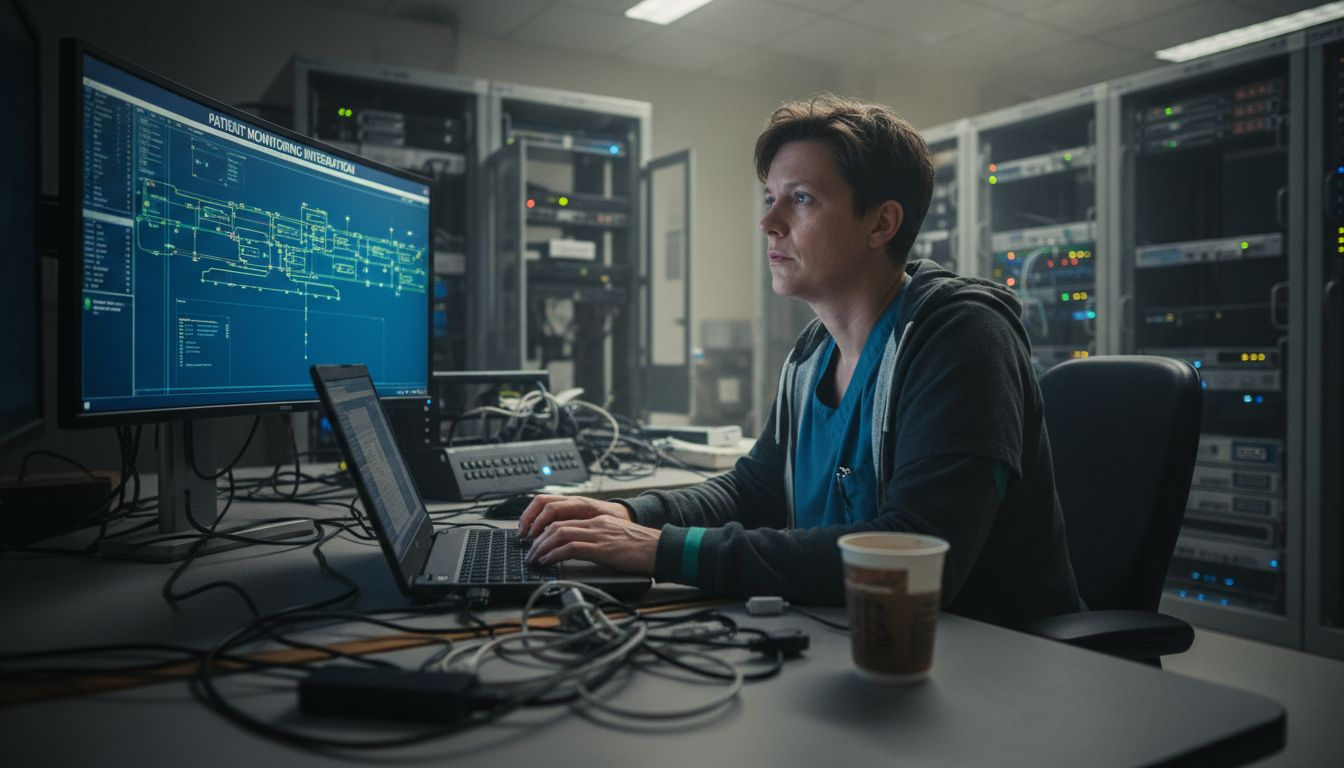
Successful hospital system integration demands comprehensive technical infrastructure that supports standardized data exchange formats. Modern home medical monitoring solutions increasingly leverage application programming interfaces (APIs) and health information exchange protocols like FHIR (Fast Healthcare Interoperability Resources) to facilitate smooth data transfer. These technical frameworks allow disparate medical devices and software platforms to communicate effectively, creating a unified ecosystem of patient health information. By implementing intelligent data routing, automated alert systems, and comprehensive analytics dashboards, healthcare organizations can transform fragmented monitoring approaches into cohesive, patient-centered care strategies.
Pro tip: Conduct regular interoperability testing and establish clear data governance policies to ensure smooth integration between home medical monitoring devices and hospital information systems.
Legal, Regulatory, and Reimbursement Requirements
Home medical monitoring technologies operate within a complex legal and regulatory landscape that demands rigorous compliance and strategic navigation. Regulatory frameworks for digital health devices have evolved to balance innovation with patient safety, creating sophisticated mechanisms for premarket authorization and ongoing device evaluation. These regulatory approaches enable healthcare organizations to implement cutting-edge monitoring technologies while maintaining stringent quality and performance standards.
Privacy protection represents a critical legal consideration in home medical monitoring systems. Healthcare providers must navigate multiple compliance requirements, with HIPAA serving as the primary regulatory standard for patient data protection. This involves implementing comprehensive security protocols that safeguard patient information during transmission, storage, and access. Multi-factor authentication, end-to-end encryption, and granular access controls are essential components of a robust legal compliance strategy. Healthcare organizations must develop detailed documentation demonstrating how their home medical monitoring systems meet federal and state privacy regulations, including precise tracking of data access, transmission, and potential breaches.
Reimbursement for home medical monitoring services has become increasingly sophisticated, with Medicare, Medicaid, and private insurance providers developing specific billing codes and payment models. Current procedural terminology (CPT) codes now explicitly cover remote patient monitoring services, allowing healthcare providers to receive appropriate compensation for these innovative care delivery methods. These reimbursement frameworks typically require detailed documentation of patient interactions, monitoring frequency, and clinical interventions, creating a structured approach that validates the clinical and economic value of home medical monitoring technologies.
Pro tip: Develop a comprehensive compliance checklist that maps device features against regulatory requirements and maintains an audit trail for potential reimbursement documentation.
Operational Risks and Best Practices
Home medical monitoring technologies introduce complex operational risks that demand strategic mitigation and comprehensive planning. Medical device deployment in home environments presents unique challenges requiring healthcare organizations to develop robust risk management protocols. These risks span technological vulnerabilities, user interaction complexities, and potential patient safety concerns that necessitate proactive and multilayered intervention strategies.
Cybersecurity represents a critical operational risk domain for home medical monitoring systems. Healthcare organizations must implement sophisticated security frameworks that protect sensitive patient data while maintaining seamless technological functionality. This involves developing advanced encryption protocols, implementing multi-factor authentication mechanisms, and creating granular access control systems. Potential vulnerabilities include unauthorized device access, data transmission breaches, and potential manipulation of medical monitoring systems, requiring continuous monitoring and rapid response capabilities.
Effective risk management demands comprehensive staff training, patient education, and systematic device validation processes. Healthcare providers must develop detailed operational protocols that address potential technological failures, user interaction challenges, and unexpected medical monitoring discrepancies. This includes creating clear communication channels between patients, caregivers, and healthcare professionals, establishing emergency response procedures, and maintaining rigorous documentation of device performance and potential incident reporting. Technical teams must regularly conduct vulnerability assessments, simulate potential failure scenarios, and develop adaptive response strategies that ensure consistent patient safety and data integrity.
Pro tip: Implement a quarterly comprehensive risk assessment protocol that includes penetration testing, user interaction analysis, and systematic device performance evaluation.
Cost Implications and Values Compared to Alternatives
Home medical monitoring technologies present a transformative economic model that challenges traditional healthcare delivery approaches. Remote patient monitoring strategies demonstrate significant potential for reducing overall healthcare expenditures through proactive management of chronic conditions and minimizing expensive hospital interventions. By enabling continuous patient tracking and early intervention, these technologies can substantially decrease emergency room visits, hospital readmissions, and extended inpatient stays.
The financial implications extend beyond direct medical cost reductions, encompassing broader healthcare system efficiencies. Advanced home monitoring solutions can decrease per-patient care costs by enabling more precise, targeted interventions that prevent complicated medical scenarios. Healthcare organizations can realize substantial savings through reduced administrative overhead, optimized resource allocation, and decreased patient transportation expenses. Moreover, these technologies support a shift from reactive to preventative care models, which inherently generate long-term economic benefits by addressing potential health complications before they escalate into more expensive treatment scenarios.
Comprehensive cost-benefit analyses reveal that home medical monitoring technologies offer substantial economic advantages across multiple healthcare domains. By integrating intelligent data analytics, predictive health modeling, and continuous patient tracking, these systems create value through improved patient outcomes, reduced healthcare system burden, and more efficient resource utilization. The economic model extends beyond immediate cost savings, encompassing improved quality of life, decreased long-term medical complications, and enhanced patient engagement in personal health management. Healthcare providers can expect not just financial benefits, but also improved patient satisfaction and more personalized care delivery approaches.
Compare traditional hospital care with home medical monitoring for cost and care efficiency:
| Criteria | Hospital-Based Care | Home Medical Monitoring |
|---|---|---|
| Cost Structure | Higher per-visit costs | Reduced total care expenses |
| Intervention Timing | Reactive to patient admissions | Proactive, continuous surveillance |
| Patient Engagement | Limited outside appointments | Ongoing self-management support |
| Resource Utilization | Intensive staff and infrastructure | Optimized staff and automated platforms |
Pro tip: Develop a standardized economic impact assessment framework that quantifies both direct and indirect cost savings from implementing home medical monitoring technologies.
Enhance Home Medical Monitoring with Smart Patient Logistics
The article highlights the critical need for seamless integration between home medical monitoring and hospital systems to ensure real-time data sharing, efficient patient care, and reduced operational risks. Key challenges include managing complex workflows, coordinating multiple healthcare stakeholders, and optimizing resource use to deliver proactive and personalized monitoring. These demands often lead to delays, administrative burden, and fragmented communication that can impact patient outcomes.
VectorCare offers a comprehensive digital platform specifically designed to address these pain points by streamlining patient logistics across healthcare providers, payers, and emergency services. Our AI-driven dispatching and real-time updates enable smoother coordination of home health services, durable medical equipment delivery, and patient transportation. By automating scheduling and vendor management while supporting secure communication, VectorCare empowers healthcare organizations to effectively integrate home medical monitoring with hospital workflows, enhancing care continuity and lowering operational costs.
Discover how VectorCare’s scalable solutions and user-friendly tools can transform your home medical monitoring strategies into cohesive, patient-centered experiences. Learn more at VectorCare and explore how our platform complements advanced monitoring technologies to improve healthcare outcomes.
Ready to revolutionize care coordination and logistics in your organization
Take the next step today by visiting VectorCare and see how our all-in-one platform can help you reduce delays, automate complex workflows, and provide superior patient care.
Frequently Asked Questions
What is home medical monitoring?
Home medical monitoring refers to advanced healthcare solutions that allow patients to receive comprehensive medical care from home, utilizing technologies like artificial intelligence and remote patient monitoring to track health metrics and provide ongoing support.
How do home medical monitoring devices work?
Home medical monitoring devices use various technologies, such as wearable sensors and mobile applications, to continuously collect vital health data, such as heart rate and blood pressure, which is then transmitted to healthcare providers for analysis and intervention.
What are the main benefits of using home medical monitoring?
The main benefits of home medical monitoring include reduced hospital readmissions, proactive health management, improved patient engagement, and cost savings for both patients and healthcare systems through early interventions and decreased reliance on hospital visits.
What types of conditions can home medical monitoring address?
Home medical monitoring can effectively support a variety of conditions, including chronic diseases like diabetes and heart conditions. Devices can track vital signs, manage medication adherence, and monitor respiratory health, providing comprehensive oversight tailored to individual patient needs.