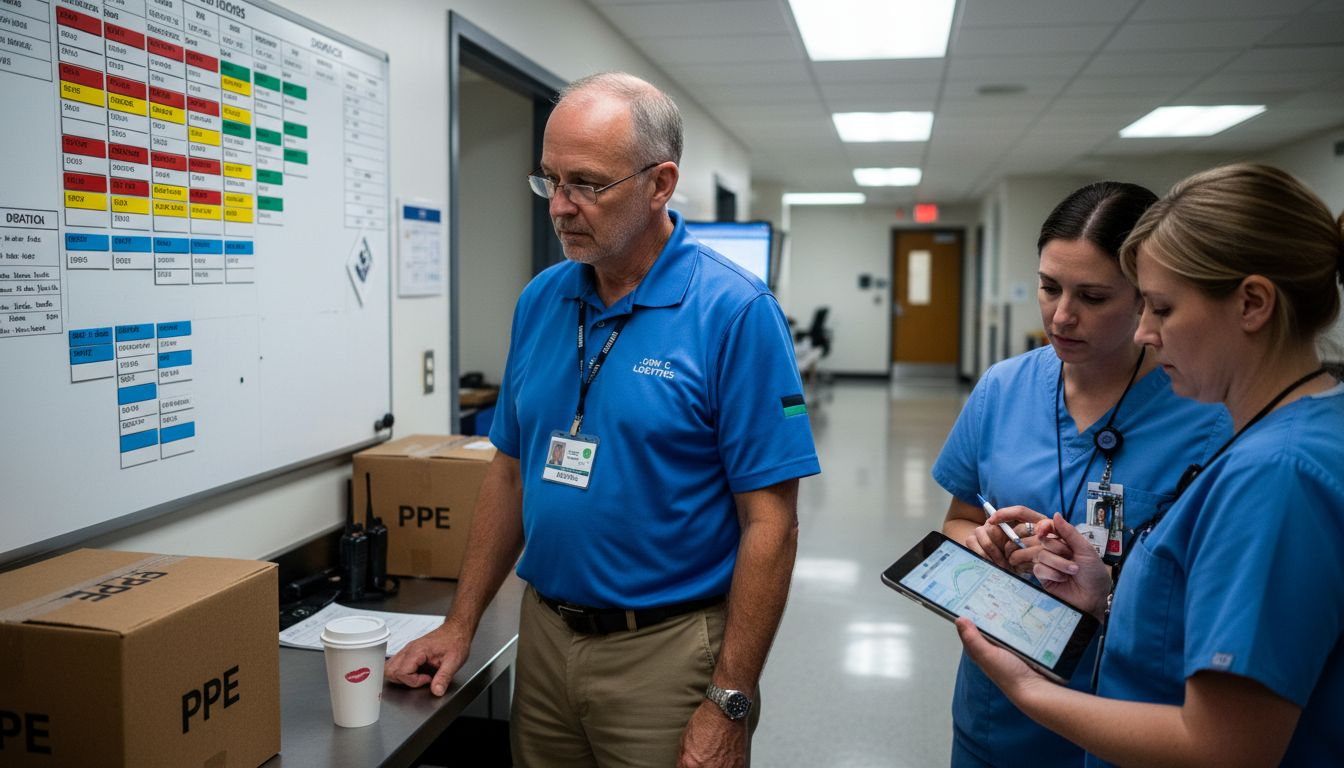
Home Health Monitoring Systems: Improving Care Coordination
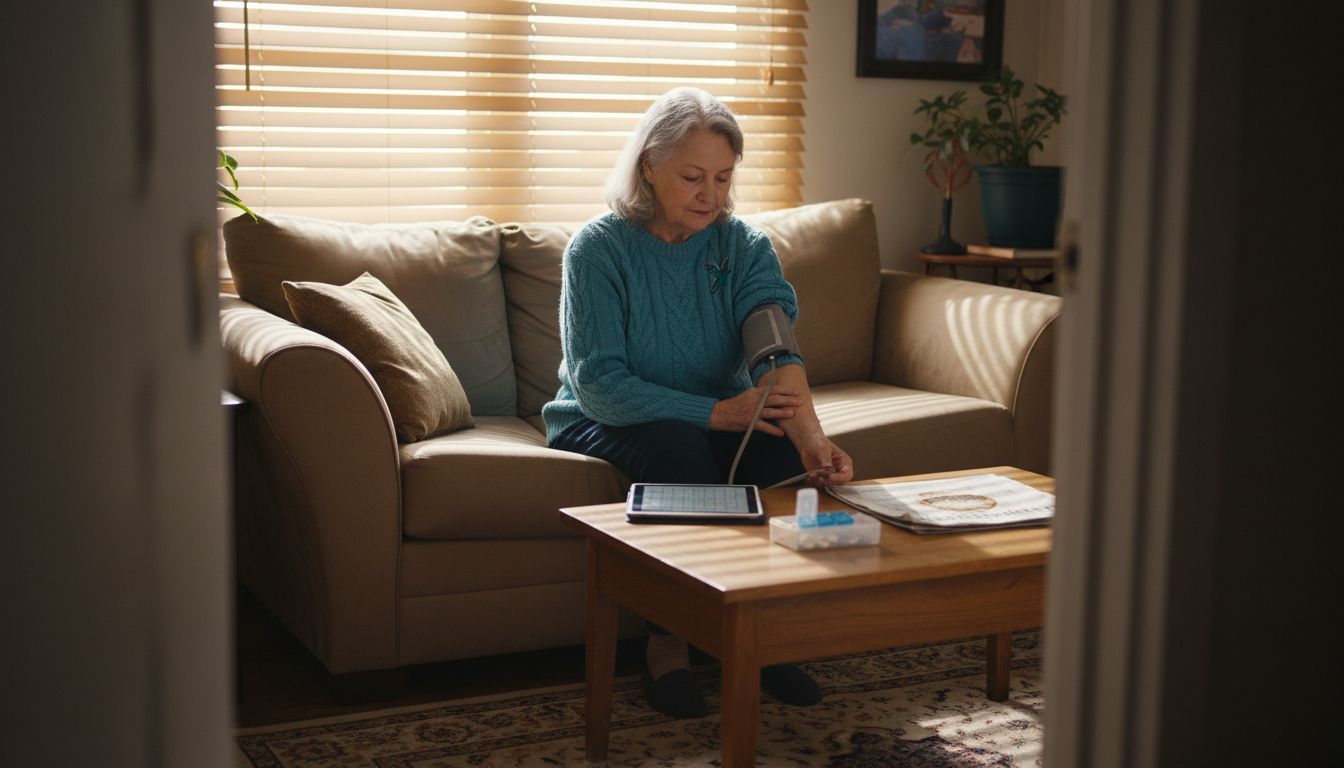
Managing patient care outside traditional settings often brings logistical hurdles for American home health agencies. As the demand for real-time information and efficient oversight grows, the focus turns to solutions that improve both clinical outcomes and financial stability. Home health monitoring systems now offer a powerful approach, supporting agencies with automated vital sign tracking, secure communication, and the real opportunity to decrease unnecessary hospitalizations and costs.
Table of Contents
- What Is A Home Health Monitoring System?
- Types Of Home Health Monitoring Technologies
- Key Features And Integration Workflows
- Legal And Compliance Requirements In The U.S.
- Risks, Costs, And Strategic Implementation
Key Takeaways
| Point | Details |
|---|---|
| Home Health Monitoring Systems Enhance Care | These systems enable real-time tracking of patient health metrics, allowing for better management of chronic conditions and reducing hospitalizations. |
| Wide Range of Technologies Available | Various monitoring technologies such as wearables, implantables, and remote diagnostics are available to meet diverse patient health needs. |
| Legal Compliance Is Crucial | Organizations must adhere to HIPAA, FDA standards, and telehealth regulations to ensure patient privacy and safety in monitoring. |
| Strategic Implementation Improves Outcomes | Careful planning, including staff training and phased deployment, can address technological risks and enhance patient engagement while reducing costs. |
What Is a Home Health Monitoring System?
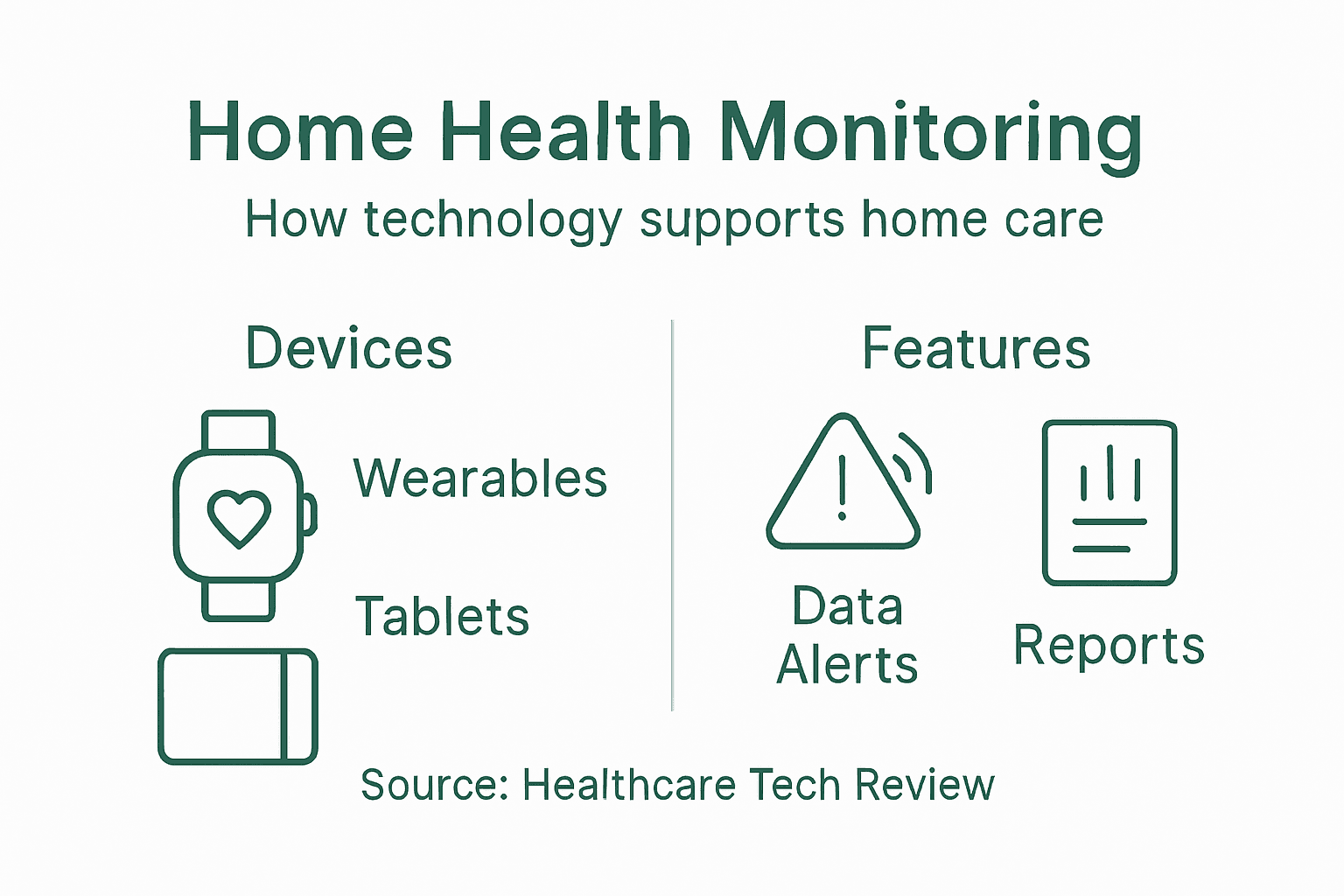
A home health monitoring system is a comprehensive digital platform that enables continuous remote tracking of patients’ health metrics and vital signs outside traditional clinical settings. These advanced technological solutions empower healthcare providers to monitor patient conditions in real-time, using connected medical devices and digital interfaces.
The core functionality of home health monitoring systems revolves around several key features:
- Automatic data transmission from patient devices to healthcare providers
- Continuous tracking of critical health indicators like:
- Blood pressure
- Body temperature
- Blood oxygen levels
- Weight fluctuations
- Instant alerts for potential health risks or significant changes
- Secure digital communication channels between patients and clinicians
These systems represent a transformative approach to healthcare delivery, particularly for patients managing chronic conditions or requiring consistent medical oversight. By enabling remote patient monitoring technologies, healthcare organizations can significantly reduce hospitalization rates and provide more personalized, proactive care.
The technological infrastructure typically includes digital devices like tablets, smartphone applications, and specialized medical monitoring equipment that seamlessly collect and transmit patient health data. This approach not only improves patient outcomes but also reduces healthcare costs by minimizing unnecessary hospital admissions and enabling early intervention.
Pro tip: Select home health monitoring systems that offer robust data encryption and seamless integration with existing electronic health record platforms to ensure comprehensive and secure patient care management.
Types of Home Health Monitoring Technologies
Home health monitoring technologies have evolved dramatically, offering sophisticated solutions for tracking patient health across various medical conditions. Diagnostic devices now cover an extensive range of health monitoring needs, from chronic disease management to preventive care interventions.
The primary types of home health monitoring technologies include:
- Wearable Monitoring Devices:
- Continuous glucose monitors (CGMs)
- Smartwatches with heart rate tracking
- Fitness bands with health metrics
- Implantable Medical Technologies:
- Cardiac monitoring devices
- Insulin pumps
- Neurostimulation implants
- Remote Diagnostic Equipment:
- Blood pressure monitors
- Pulse oximeters
- Digital thermometers
- Sleep apnea monitoring systems
Home automation systems for elderly and disabled individuals represent another critical category of health monitoring technologies. These systems integrate sensors and wireless networks to provide comprehensive health tracking, emergency assistance, and safety monitoring for vulnerable populations.
Advanced monitoring technologies now enable real-time data transmission, allowing healthcare providers to receive instant updates about patient health status, potential risks, and necessary interventions. This technological approach transforms traditional healthcare delivery by enabling proactive, personalized medical support.
Pro tip: When selecting home health monitoring technologies, prioritize systems with robust data encryption, seamless interoperability, and user-friendly interfaces to ensure maximum patient engagement and data security.
Key Features and Integration Workflows
Home health monitoring systems are transforming healthcare delivery through sophisticated patient engagement and data transmission workflows. These advanced platforms enable comprehensive care coordination by integrating multiple technological and communication channels to support both patients and healthcare providers.
Key features of modern home health monitoring systems include:
- Patient Interaction Components:
- Daily health status tracking
- Medication reminder systems
- Self-management educational resources
- Interactive symptom reporting interfaces
- Provider-Facing Capabilities:
- Real-time data visualization
- Automated care plan adjustments
- Risk stratification algorithms
- Integrated alert management
- Technical Integration Elements:
- Electronic health record (EHR) synchronization
- Secure data transmission protocols
- Multi-device compatibility
- Cloud-based data storage
The integration workflows typically follow a cyclical process of data collection, analysis, intervention, and continuous monitoring. Remote blood pressure monitoring programs demonstrate how interconnected technologies streamline clinical decision-making, reducing traditional office visit requirements and enabling more personalized healthcare approaches.
These systems create a dynamic, responsive healthcare ecosystem where patient data flows seamlessly between monitoring devices, digital platforms, and clinical management tools. The result is a more proactive, efficient approach to healthcare that prioritizes early intervention and personalized patient support.
Pro tip: Implement comprehensive staff training programs to ensure smooth technological adoption and maximize the potential of home health monitoring integration workflows.
Legal and Compliance Requirements in the U.S.
Home health monitoring systems in the United States must navigate a complex landscape of legal and regulatory requirements that ensure patient privacy, data security, and quality of care. Healthcare administrators must carefully understand and implement comprehensive compliance strategies across multiple regulatory domains.
Key legal compliance areas include:
- Data Privacy Regulations:
- HIPAA compliance
- Patient health information protection
- Secure data transmission protocols
- Consent management frameworks
- Medical Device Standards:
- FDA device approval processes
- Safety and efficacy requirements
- Software modification guidelines
- Performance monitoring protocols
- Telehealth Legal Framework:
- Interstate licensing requirements
- Prescribing regulations
- Reimbursement policy compliance
- Medicare and Medicaid billing rules
Medical device regulatory guidance plays a critical role in establishing operational standards for home health monitoring technologies. The FDA provides comprehensive frameworks that define acceptable modifications, safety criteria, and performance expectations for remote monitoring equipment.
Healthcare organizations must develop robust internal compliance programs that continuously adapt to evolving regulatory landscapes. This requires ongoing staff training, regular audits, and proactive risk management strategies to maintain legal and ethical standards in patient monitoring technologies.
Here is a summary of major U.S. compliance domains for home health monitoring technologies:
| Compliance Area | Core Requirement | Key Impact on Organizations |
|---|---|---|
| Data Privacy | HIPAA, consent protocols | Safeguards patient confidentiality |
| Device Standards | FDA approval, performance audits | Ensures safety of medical equipment |
| Telehealth Regulations | Licensing, reimbursement policies | Maintains legal care delivery and billing |
Pro tip: Develop a dedicated compliance team that conducts quarterly reviews of regulatory changes and updates monitoring system protocols to ensure continuous alignment with federal and state requirements.
Risks, Costs, and Strategic Implementation
Home health monitoring systems represent a complex technological investment that requires careful strategic planning and risk management. Healthcare organizations must navigate multiple challenges to successfully implement these transformative technologies while maintaining patient safety and operational efficiency.
Key strategic considerations include:
- Technology Risk Factors:
- Authentication vulnerabilities
- Data transmission reliability
- Power consumption challenges
- Hardware and software integration complexity
- Financial Investment Analysis:
- Initial implementation costs
- Ongoing operational expenses
- Potential cost savings from reduced hospitalizations
- Long-term return on investment calculations
- Implementation Strategy Components:
- Comprehensive staff training
- Phased deployment approaches
- Continuous system performance monitoring
- Regular technology assessment and upgrades
Economic analyses of home monitoring systems reveal significant potential for cost reduction through preventive care models. By shifting from reactive to proactive healthcare interventions, organizations can create substantial financial and clinical benefits.
Successful implementation demands a holistic approach that balances technological capabilities, financial constraints, and patient care objectives. Healthcare administrators must develop flexible strategies that can adapt to evolving regulatory requirements and technological advancements.
The table below compares the strategic considerations for successful home health monitoring implementation:
| Strategic Factor | Challenge | Benefit to Healthcare Management |
|---|---|---|
| Technology Risk | System integration, data reliability | Enhanced patient safety |
| Financial Investment | Upfront costs, ROI calculation | Long-term savings via prevention |
| Staff Training | Adoption barriers, ongoing education | Smoother deployment, higher engagement |
Pro tip: Conduct a comprehensive pilot program with a select patient group to validate system effectiveness, identify potential challenges, and develop targeted implementation strategies before full-scale deployment.
Enhance Care Coordination with VectorCare’s Integrated Healthcare Logistics
Managing home health monitoring data involves complex challenges such as real-time communication, patient engagement, and secure data transmission. The article highlights key pain points including the need for seamless integration of monitoring systems with healthcare workflows to reduce delays and improve outcomes. VectorCare’s comprehensive digital platform addresses these challenges by optimizing patient logistics through automated scheduling, AI-driven dispatching, and secure vendor management. This enables healthcare providers to coordinate home health services efficiently and respond promptly to patient needs.
Discover how VectorCare can transform your home health monitoring efforts by streamlining care coordination and enhancing operational efficiency. Act now to reduce administrative burdens, lower operational costs, and improve patient safety with a solution designed for today’s healthcare demands. Learn more at VectorCare and start advancing your patient care coordination today.
Frequently Asked Questions
What is a home health monitoring system?
A home health monitoring system is a digital platform that allows remote tracking of patients’ health metrics and vital signs outside traditional healthcare settings. It enables healthcare providers to monitor patients in real-time using connected devices.
What types of technologies are used in home health monitoring systems?
Home health monitoring technologies include wearable devices like continuous glucose monitors and fitness bands, implantable medical technologies such as insulin pumps, and remote diagnostic equipment like blood pressure monitors and digital thermometers.
What are the key features of home health monitoring systems?
Key features include automatic data transmission, continuous tracking of critical health indicators, instant alerts for health risks, and secure communication channels between patients and healthcare providers.
What legal compliance requirements do home health monitoring systems need to meet?
Home health monitoring systems must comply with data privacy regulations (like HIPAA), medical device standards (including FDA approval), and telehealth legal frameworks, which cover licensing and reimbursement policies.
Recommended
- 3 Ways to Improve Patient Satisfaction with Remote Patient Monitoring | VectorCare
- Understanding Health Home Care Coordination
- Remote Monitoring in Healthcare: 2025 Trends and Best Practices
- Home Health Logistics Made Easy | Dispatch, Track & Coordinate Care
- Personalized Fertility Care: Transforming Outcomes for Women 35+