Healthcare Provider Scheduling Software Impact

Nearly 40% of American hospitals report daily scheduling challenges that drain resources and disrupt patient flow. For healthcare administrators leading mid-sized facilities, every delayed appointment and double-booked slot adds to operational costs and staff frustration. Understanding how integrated scheduling software works can reveal new strategies to tackle these issues, balance staffing needs, and deliver reliable access for patients and providers alike.
Table of Contents
- What Is Healthcare Provider Scheduling Software?
- Types of Healthcare Scheduling Solutions Explained
- Key Features and Workflow Optimization Capabilities
- Integration With EHR, Billing, and Logistics Tools
- Compliance, Data Security, and Patient Privacy
- Cost Factors, ROI, and Avoiding Common Pitfalls
Key Takeaways
| Point | Details |
|---|---|
| Healthcare Provider Scheduling Software Enhances Efficiency | This software streamlines patient appointment management and reduces administrative tasks, improving operational efficiency. |
| Integration with EMR Systems is Vital | Solutions should offer strong integration capabilities with electronic medical record systems for optimal data management and workflow. |
| Consider Scalability and Compliance | Evaluate systems based on their ability to scale with organizational needs and maintain compliance with regulations like HIPAA. |
| Focus on ROI and Cost Factors | Analyze long-term financial impacts and potential savings when investing in healthcare scheduling software for informed decision-making. |
What Is Healthcare Provider Scheduling Software?
Healthcare provider scheduling software represents a transformative digital technology designed to streamline and optimize patient appointment management and staff coordination within medical organizations. This sophisticated solution goes far beyond traditional paper-based scheduling methods, offering comprehensive digital workflow management that dramatically enhances operational efficiency.
At its core, healthcare scheduling software functions as an integrated digital platform that automates complex administrative tasks. The system enables healthcare organizations to centralize appointment booking, track patient interactions, manage provider availability, and reduce manual data entry errors. Key capabilities include real-time slot management, automatic patient reminders, resource allocation tracking, and seamless integration with electronic medical record (EMR) systems.
The primary objectives of healthcare provider scheduling software revolve around three critical dimensions: operational efficiency, patient experience, and administrative cost reduction. By digitizing scheduling processes, medical facilities can minimize scheduling conflicts, reduce no-show rates, optimize provider workloads, and create more predictable patient flow patterns. Advanced systems also incorporate intelligent features like waitlist management, multi-location coordination, and customizable scheduling rules that adapt to unique organizational workflows.
Pro tip: When evaluating healthcare scheduling software, prioritize solutions that offer robust EMR integration and demonstrate scalability across different medical department requirements.
Types of Healthcare Scheduling Solutions Explained
Healthcare scheduling solutions encompass a diverse range of digital platforms designed to meet the complex operational needs of medical organizations. Comprehensive healthcare scheduling tools vary significantly in their deployment, functionality, and target healthcare settings, offering tailored solutions for different organizational requirements.
Patient-Centric Scheduling Systems represent one primary category, focusing specifically on appointment management and patient flow optimization. These solutions typically include features like online booking portals, automated appointment reminders, waitlist management, and real-time availability tracking. They are particularly valuable for outpatient clinics, private practices, and specialty medical centers seeking to streamline patient interactions and reduce administrative overhead.
Staff Management Scheduling Platforms constitute another critical category, emphasizing workforce coordination and operational efficiency. These systems enable complex shift scheduling, track staff credentials, manage time-off requests, and ensure appropriate staffing levels across different departments. Advanced platforms offer role-based access controls, integration with payroll systems, and comprehensive reporting tools that help healthcare administrators optimize workforce allocation and compliance.
Enterprise-Level Scheduling Solutions represent the most sophisticated tier of healthcare scheduling technology. These comprehensive systems are designed for large hospital networks, multi-location healthcare systems, and complex medical organizations. They provide robust features including cross-departmental scheduling, telehealth coordination, advanced analytics, HIPAA-compliant communication channels, and seamless integration with electronic medical record (EMR) systems.
Pro tip: When selecting a healthcare scheduling solution, carefully evaluate the system’s scalability, integration capabilities, and specific features that align with your organization’s unique operational workflows and patient management requirements.
Here’s a summary of major categories of healthcare scheduling solutions and their strategic business impacts:
| Solution Type | Primary Purpose | Typical Use Case | Strategic Impact |
|---|---|---|---|
| Patient-Centric Systems | Streamline patient bookings | Outpatient clinics, private practices | Improve patient flow and satisfaction |
| Staff Management Platforms | Optimize workforce scheduling | Hospitals, multi-department centers | Increase staff productivity and compliance |
| Enterprise-Level Solutions | Coordinate across large systems | Hospital networks, multi-site organizations | Enhance scalability and data-driven decision-making |
Key Features and Workflow Optimization Capabilities
Workflow optimization in healthcare scheduling software represents a transformative approach to enhancing operational efficiency and patient care delivery. Advanced healthcare scheduling systems dramatically improve organizational performance through intelligent digital capabilities, enabling medical providers to streamline complex administrative processes and maximize resource utilization.

Core workflow optimization features include dynamic scheduling mechanisms that intelligently allocate provider resources, manage patient appointments, and reduce operational bottlenecks. These sophisticated platforms incorporate multiple strategic capabilities such as automated appointment reminders, real-time schedule updates, and seamless integration with electronic medical record (EMR) systems. By implementing intelligent scheduling algorithms, healthcare organizations can significantly reduce patient wait times, minimize no-show rates, and create more predictable clinical workflows.
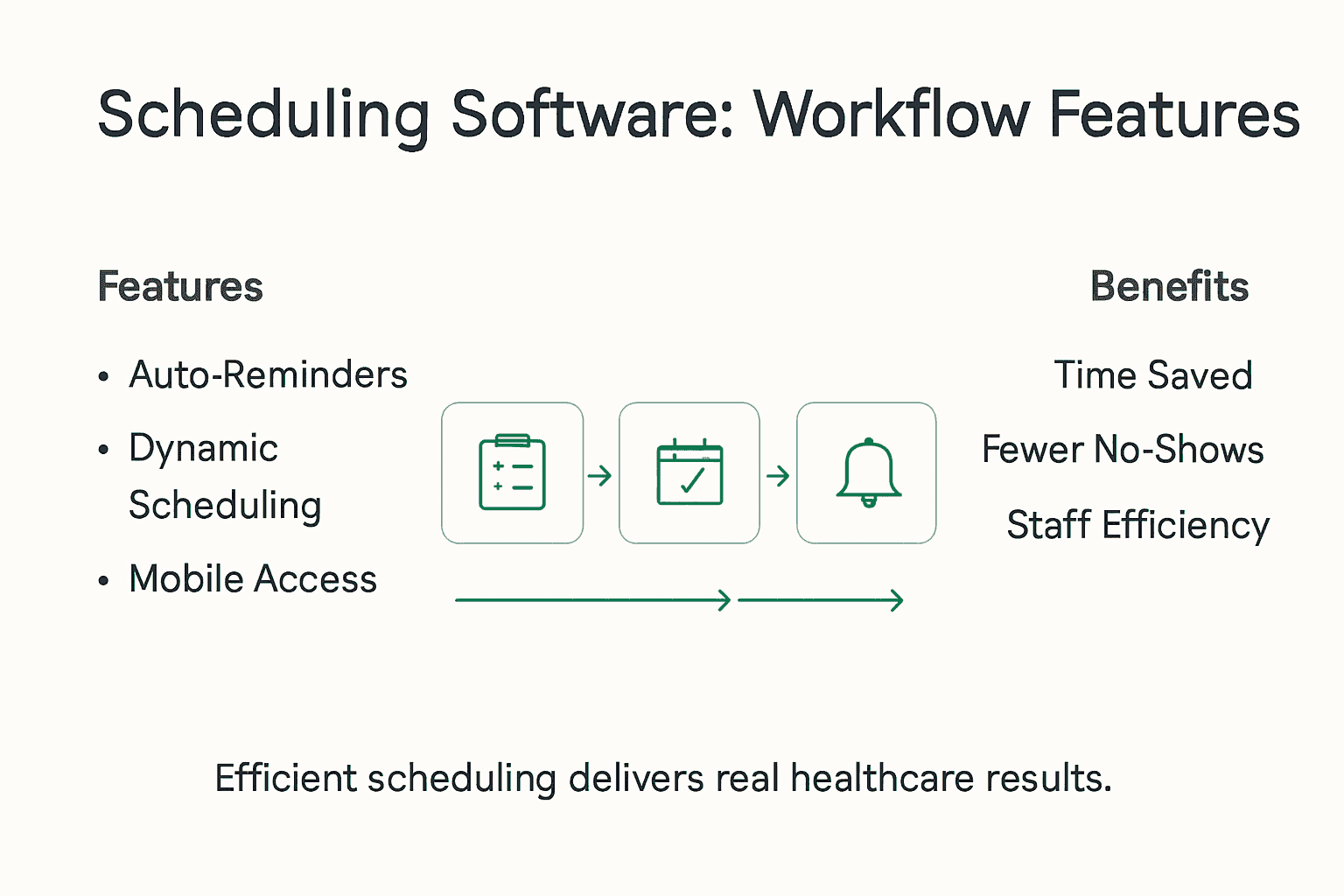
The most advanced scheduling solutions go beyond basic appointment management, offering comprehensive workflow optimization tools. These include predictive analytics for anticipating staffing needs, mobile accessibility for providers and patients, role-based access controls, and automated waiting list management. Such features enable healthcare administrators to make data-driven decisions, optimize staff allocation, and improve overall patient engagement. Research indicates that digital scheduling technologies can potentially reduce patient wait times by up to 30%, representing a substantial improvement in operational efficiency and patient satisfaction.
Enterprise-level scheduling platforms further enhance workflow capabilities by providing cross-departmental coordination, telehealth integration, and comprehensive reporting tools. These systems support complex healthcare environments by offering flexible, scalable solutions that adapt to varying organizational requirements and specialized medical service needs.
Pro tip: When evaluating healthcare scheduling software, prioritize solutions with robust integration capabilities, mobile accessibility, and advanced analytics to maximize workflow optimization and operational efficiency.
Consider these key workflow optimization features and their organizational benefits:
| Feature | How It Works | Business Benefit |
|---|---|---|
| Automated Reminders | Sends notifications to patients | Reduces no-shows, boosts efficiency |
| Predictive Analytics | Anticipates staffing needs | Ensures optimal workforce allocation |
| Mobile Accessibility | Access schedules on devices | Improves flexibility for staff and patients |
| Real-Time Schedule Updates | Immediate changes reflect system-wide | Enables responsive operations and fewer errors |
Integration With EHR, Billing, and Logistics Tools
Electronic health record (EHR) integration represents a critical technological advancement in healthcare scheduling software, transforming how medical organizations manage patient information and operational workflows. With 96% of U.S. hospitals utilizing EHRs, seamless software integration has become a fundamental requirement for modern healthcare systems, enabling comprehensive data management and streamlined patient care processes.
The integration of scheduling software with EHR, billing, and logistics tools creates a unified digital ecosystem that dramatically reduces administrative complexity. This interconnected approach allows for bidirectional data synchronization, ensuring that patient records, appointment histories, insurance information, and billing details remain consistently updated across multiple platforms. Healthcare providers can now access comprehensive patient information in real-time, eliminating duplicate data entry and minimizing the potential for human error.
Advanced integration capabilities extend beyond simple data sharing, offering sophisticated features that enhance operational efficiency. These include automated appointment reminders linked directly to patient records, intelligent resource allocation based on historical utilization data, and seamless communication between different healthcare departments. By connecting scheduling systems with billing platforms, organizations can streamline revenue cycle management, reduce claims processing time, and improve overall financial performance.
Enterprise-level integration solutions provide additional layers of functionality, supporting complex healthcare environments through flexible APIs, standardized data exchange protocols, and comprehensive compliance frameworks. These systems can effortlessly connect multiple software platforms, enabling healthcare organizations to create customized technological ecosystems that adapt to their specific operational requirements.
Pro tip: Prioritize healthcare scheduling solutions that offer robust, standards-based integration capabilities, particularly those supporting FHIR (Fast Healthcare Interoperability Resources) protocols, to ensure maximum system compatibility and future scalability.
Compliance, Data Security, and Patient Privacy
Healthcare data protection has become increasingly complex in the digital age, requiring robust technological and procedural safeguards. The U.S. Department of Health and Human Services has heightened its focus on cyber threats and updated compliance standards, making continuous process reviews and best practice adoption critical for protecting sensitive health information.
Compliance in healthcare scheduling software demands comprehensive strategies addressing multiple regulatory requirements. These include HIPAA regulations, which mandate strict protocols for patient data handling, encryption, controlled information disclosure, and access management. Modern scheduling platforms must implement sophisticated security mechanisms such as multi-factor authentication, end-to-end data encryption, secure user role assignments, and detailed audit trails that track every interaction with patient information.
The most advanced healthcare scheduling solutions integrate multiple layers of data protection, combining technological safeguards with systematic compliance frameworks. These systems utilize advanced encryption protocols, anonymization techniques for data analysis, and granular access controls that ensure only authorized personnel can view specific patient information. By implementing intelligent risk management strategies, healthcare organizations can mitigate potential data breaches while maintaining operational efficiency and patient trust.
Enterprise-level compliance platforms go beyond basic security measures, offering comprehensive risk assessment tools, real-time threat monitoring, and automated compliance reporting. These solutions help healthcare providers navigate the complex landscape of regulatory requirements, providing continuous monitoring and adaptive security protocols that evolve with emerging technological and legal challenges.
Pro tip: Conduct quarterly comprehensive security audits of your healthcare scheduling software, focusing on access logs, encryption standards, and potential vulnerability points to ensure ongoing regulatory compliance and data protection.
Cost Factors, ROI, and Avoiding Common Pitfalls
Healthcare scheduling software investments require comprehensive financial analysis beyond simple price comparisons. Long-term financial strategies reveal complex cost considerations that extend far beyond initial implementation expenses, demanding strategic approaches to maximize organizational value and operational efficiency.
Typical cost factors encompass multiple dimensions, including licensing fees, implementation expenses, staff training requirements, and ongoing maintenance costs. Advanced healthcare organizations must carefully evaluate direct and indirect financial impacts, considering potential savings from reduced administrative overhead, minimized patient no-shows, and improved workforce utilization. Critical financial metrics include calculating potential returns through decreased scheduling errors, enhanced staff productivity, and more efficient resource allocation.
The most sophisticated healthcare scheduling platforms offer nuanced ROI models that extend beyond traditional cost-benefit analyses. These systems provide comprehensive performance tracking, enabling organizations to measure tangible financial gains through detailed analytics on appointment utilization, staff scheduling efficiency, and patient engagement metrics. By implementing intelligent tracking mechanisms, healthcare providers can demonstrate precise financial improvements, including reduced overtime expenses, decreased administrative workload, and enhanced overall operational performance.
Enterprise-level scheduling solutions introduce advanced financial risk mitigation strategies, helping organizations avoid common implementation pitfalls. These approaches include thorough workflow analysis, phased rollout methodologies, comprehensive staff training programs, and continuous performance monitoring. Successful implementations require careful change management, stakeholder engagement, and flexible technological frameworks that can adapt to evolving organizational needs.
Pro tip: Develop a comprehensive financial benchmarking strategy that tracks both direct cost savings and indirect operational improvements when evaluating healthcare scheduling software investments.
Unlock Seamless Healthcare Scheduling and Logistics with VectorCare
The challenges highlighted in the article around healthcare provider scheduling software reveal the critical need to optimize workflows, integrate systems like EHR and billing, and maintain strict compliance with data security standards. Healthcare organizations constantly face pressure to reduce no-shows, improve patient engagement, and streamline staff management while keeping costs under control. VectorCare’s comprehensive digital platform directly addresses these pain points by offering AI-driven scheduling optimization, real-time updates, and a secure, integrated environment that supports everything from patient transportation to home health service coordination.
With VectorCare, healthcare providers can transform logistical complexities into smooth, automated processes that reduce delays and administrative burdens. The platform’s robust features like vendor management and data insights enable smarter decision-making and improved patient outcomes. Experience how your organization can benefit from scalable solutions designed specifically to meet the demands of modern healthcare operations.
Take the next step toward efficiency and improved care coordination today.
Ready to eliminate scheduling headaches and enhance patient logistics? Visit VectorCare to explore how our integrated platform can revolutionize your healthcare workflows now. Discover our tools for scheduling optimization and unlock the power of seamless patient logistics with VectorCare’s comprehensive solutions. Your journey to operational excellence starts here.
Frequently Asked Questions
What is healthcare provider scheduling software?
Healthcare provider scheduling software is a digital solution that streamlines patient appointment management and staff coordination in medical organizations. It automates administrative tasks, centralizes appointment booking, and reduces manual errors, ultimately enhancing operational efficiency and patient experience.
How does healthcare scheduling software improve patient flow?
Healthcare scheduling software improves patient flow by minimizing scheduling conflicts, reducing no-show rates, and optimizing provider workloads. Features like real-time slot management and automated patient reminders help create predictable appointment patterns, leading to better overall patient experiences.
What types of healthcare scheduling solutions are available?
There are several types of healthcare scheduling solutions, including patient-centric scheduling systems that focus on appointment management, staff management scheduling platforms that optimize workforce scheduling, and enterprise-level solutions designed for large healthcare organizations with complex needs.
What are the key features to look for in healthcare scheduling software?
Key features to consider include automated appointment reminders, predictive analytics for staffing needs, mobile accessibility, real-time schedule updates, and robust integration with electronic medical record (EMR) systems to enhance workflow optimization and operational efficiency.