Essential emergency preparedness tips for EMS professionals
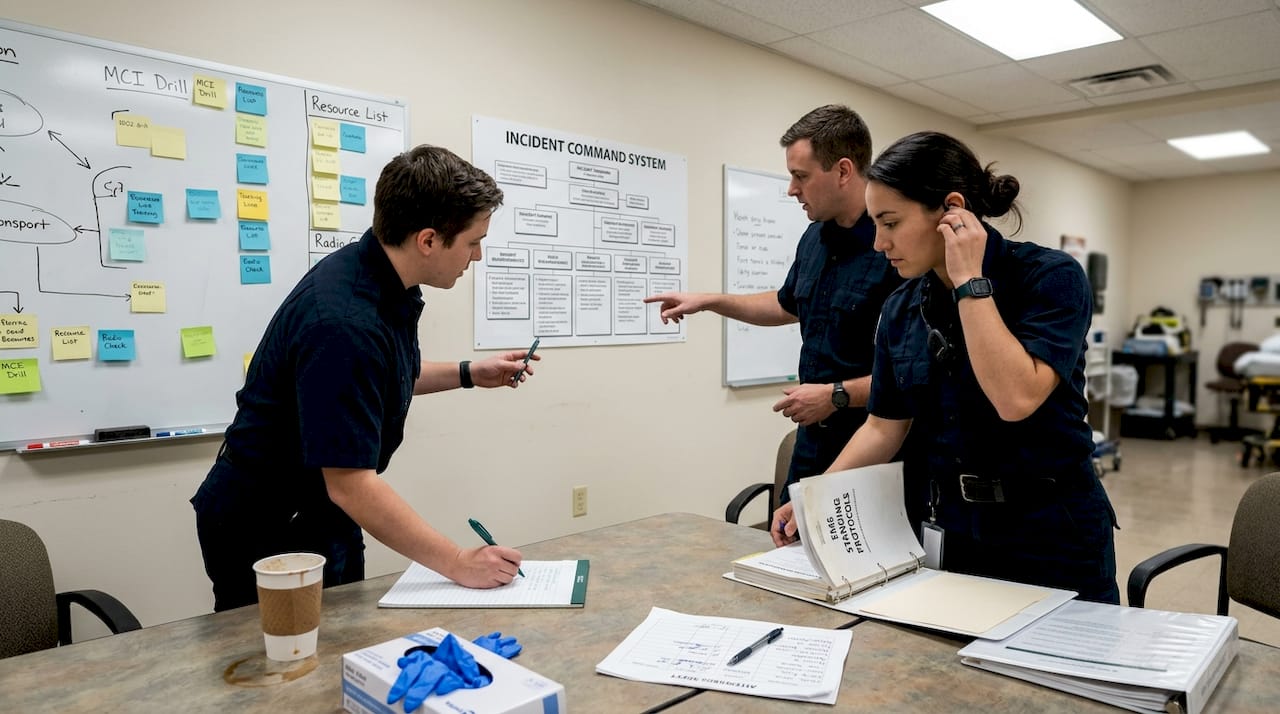
Emergency medical services professionals face unpredictable, high-stakes scenarios every shift, from multi-vehicle crashes to mass casualty incidents. The difference between chaos and coordinated care often hinges on preparedness. Effective emergency readiness means more than stocking supplies; it requires structured command systems, continuous training, and agile logistics that adapt to evolving threats. This guide delivers actionable tips to strengthen your response protocols, sharpen triage skills, and optimize resource coordination. Whether you manage a small rural service or a metropolitan agency, these strategies will help you respond faster, save more lives, and maintain operational resilience when seconds count.
Table of Contents
- Key takeaways
- Understanding the NIMS and ICS frameworks for EMS coordination
- Training and drills: Maintaining readiness and triage accuracy
- Implementing mass casualty triage and logistical management
- Preparing for edge cases: CBRNE, extreme weather, and special populations
- Discover VectorCare’s solutions for EMS readiness and patient logistics
- Frequently asked questions
Key Takeaways
| Point | Details |
|---|---|
| Adopt NIMS ICS framework | Use standardized incident command structures across EMS to ensure consistent roles, language, and coordination during any incident. |
| Preassign ICS roles | Preallocate incident command positions within the agency and rotate staff through roles during drills to speed decision making during real incidents. |
| Ongoing triage training | Continuously train EMS teams with regular drills and FEMA ICS courses to maintain triage accuracy and readiness. |
| Interagency coordination | Coordinate with fire, law enforcement, hospitals, and public health under unified command to ensure seamless resource sharing during complex incidents. |
| Validated triage systems | Employ trusted triage frameworks and logistical planning to sustain patient flow and resource distribution in mass casualty events. |
Understanding the NIMS and ICS frameworks for EMS coordination
The National Incident Management System (NIMS) and Incident Command System (ICS) provide the backbone for effective emergency response across all levels of government and private sector partners. NIMS required for federal grants and ICS scalable for all incident sizes, making these frameworks non-negotiable for modern EMS operations. NIMS establishes a consistent nationwide template for managing incidents, while ICS offers a flexible organizational structure that expands or contracts based on event complexity.
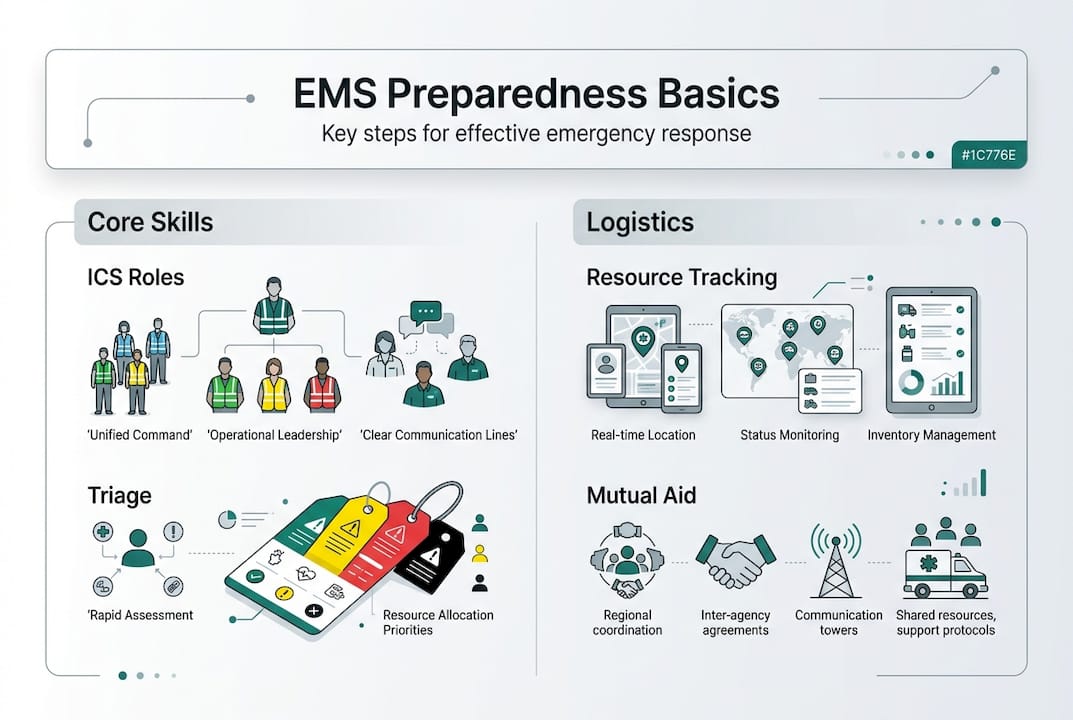
Key ICS roles include the Incident Commander, who holds ultimate authority and decision-making power; the Operations Chief, who manages tactical field activities; and the Logistics Chief, who secures resources, facilities, and support services. Additional positions like Planning Chief and Finance Chief activate as incidents grow. This scalability allows a single-vehicle accident to use the same command principles as a multi-agency disaster response, ensuring everyone speaks the same operational language.
Multi-agency coordination becomes seamless when all responders understand ICS. Fire, law enforcement, hospital systems, and public health agencies can integrate under unified command without confusion over authority or communication channels. This interoperability proves critical during mutual aid scenarios, where external resources arrive unfamiliar with local geography but fluent in ICS protocols. Federal grant programs often mandate NIMS compliance, incentivizing agencies to adopt these standards and participate in regional training exercises.
Pro Tip: Pre-assign ICS roles within your agency and conduct quarterly tabletop exercises simulating different incident types. Familiarity with command structures before an emergency eliminates hesitation and accelerates decision-making when real incidents unfold. Rotate personnel through different ICS positions during drills to build depth and cross-functional understanding across your team.
For healthcare facilities coordinating with EMS, understanding these frameworks enhances healthcare facility emergency preparedness by aligning hospital incident management with field operations. Explore comprehensive EMS incident management system resources to deepen your command structure knowledge and implementation strategies.
Training and drills: Maintaining readiness and triage accuracy
Continuous training separates prepared EMS teams from those caught off guard. Triage accuracy declines without regular training, with studies showing significant skill degradation within months of initial certification. FEMA recommends ICS-100 to ICS-400 courses as foundational education, progressing from basic concepts to complex, multi-jurisdictional incident management. ICS-100 covers fundamental principles, ICS-200 addresses single-resource management, ICS-300 tackles multi-agency coordination, and ICS-400 focuses on area command and executive leadership during major events.
Full-scale exercises and simulations provide the most realistic training environment, testing communication systems, resource deployment, and inter-agency coordination under pressure. These drills reveal gaps in equipment, protocols, or staffing that remain invisible during routine operations. Simulations should mirror your jurisdiction’s most likely threats: urban mass shootings, rural wildfires, industrial chemical releases, or seasonal flooding. Incorporating volunteer actors as patients adds realism and stress, forcing providers to practice triage decisions with incomplete information and time constraints.
Designing recurring training programs requires intentional planning:
- Assess your agency’s specific risks and historical incident patterns to prioritize training scenarios
- Schedule quarterly drills alternating between tabletop discussions and full-scale field exercises
- Incorporate after-action reviews immediately following each drill to capture lessons while fresh
- Rotate personnel through different ICS roles to build versatility and prevent single points of failure
- Partner with neighboring agencies for multi-jurisdictional exercises that test mutual aid agreements
- Track individual training records to ensure all personnel meet certification requirements and refresh courses on schedule
As one emergency management expert observed:
Disaster readiness surveys consistently reveal that agencies conducting realistic, full-scale exercises at least twice annually demonstrate measurably faster response times and fewer coordination errors during actual emergencies compared to those relying solely on classroom instruction.
Triage skills demand particular attention because accuracy directly impacts survival rates. The triage training study demonstrates how providers lose proficiency in patient sorting algorithms without hands-on practice every few months. Refresher courses should include both mass casualty scenarios and individual patient assessments to maintain the full spectrum of decision-making skills.
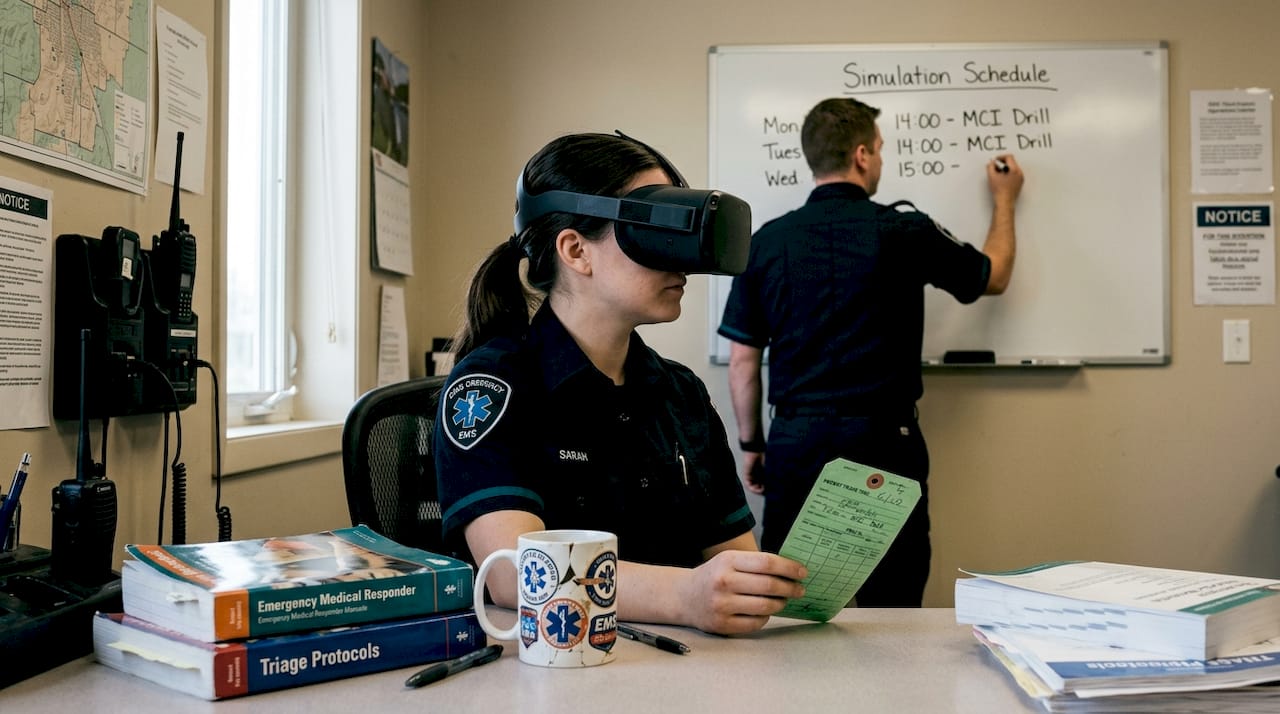
Modern EMS training technology trends leverage virtual reality, mobile apps, and adaptive learning platforms to supplement live drills. These tools allow personnel to practice triage decisions during downtime between calls, reinforcing muscle memory and decision trees without requiring full crew availability or extensive setup.
Implementing mass casualty triage and logistical management
Mass casualty incidents demand rapid, systematic patient sorting to maximize survival across the largest number of victims. The Simple Triage and Rapid Treatment (START) system and its modified version (mSTaRT) represent the gold standard for initial triage. Supply-guided triage outperforms nearest-hospital approach, with verified systems like START and mSTaRT enabling faster, more accurate patient categorization. These methods use a two-pass approach: the first pass quickly tags patients by severity using respiratory rate, perfusion, and mental status; the second pass provides more detailed assessment and initiates treatment.
| Triage System | Primary Use | Speed | Complexity | Special Features |
|---|---|---|---|---|
| START | Adult mass casualties | Very fast (30 seconds per patient) | Low | Focuses on RPM: Respiration, Perfusion, Mental status |
| mSTaRT | Pediatric and adult incidents | Fast (45 seconds per patient) | Low | Adjusts respiratory thresholds for children |
| Traditional color-coded | Smaller incidents, more time available | Moderate (2-3 minutes per patient) | Medium | Allows detailed secondary assessment |
Logistical management separates functional mass casualty responses from overwhelmed systems. Resource typing standardizes how agencies describe and request specific capabilities, ensuring a request for “Type 1 ambulance” means the same thing across jurisdictions. Mutual aid agreements, particularly the Emergency Management Assistance Compact (EMAC), formalize interstate support with pre-negotiated liability protections and reimbursement procedures. These agreements activate when local resources reach capacity, providing a legal and operational framework for accepting external help.
Staging areas prevent the common pitfall of resource convergence, where well-meaning responders flood the incident scene and create gridlock. Designated staging zones allow incoming units to check in, receive assignments, and deploy systematically rather than self-dispatching. Key logistical considerations include:
- Shift rotations to prevent responder fatigue during extended operations
- PPE supplies sufficient for multiple equipment changes per provider
- Food, water, and rest areas for personnel working 12 to 24 hour shifts
- Equipment maintenance and refueling stations away from active treatment zones
- Communication redundancy using radio, cellular, and satellite systems
- Documentation processes that capture patient tracking without slowing care delivery
Pro Tip: Pre-establish mutual aid memorandums of understanding with neighboring agencies and designate staging zones in your response plans before incidents occur. Conduct joint exercises that practice activation procedures, ensuring everyone understands how to request and receive aid without bureaucratic delays during actual emergencies.
Modern EMS logistics software streamlines resource tracking, dispatch coordination, and real-time status updates across multiple agencies. Digital platforms eliminate radio congestion and provide incident commanders with dashboard visibility into available assets, deployed units, and resource gaps. Additional EMS incident management system tools integrate with hospital capacity systems, enabling transport decisions based on receiving facility capabilities rather than geographic proximity alone.
Preparing for edge cases: CBRNE, extreme weather, and special populations
Chemical, biological, radiological, nuclear, and explosive (CBRNE) incidents represent low-frequency, high-consequence scenarios requiring specialized preparation. OSHA and NAEMT guidelines for PPE mandate specific protection levels based on threat type, with Level A suits for unknown vapor hazards and Level C for known contaminants with adequate respiratory protection. Decontamination protocols must account for both gross decontamination in the warm zone and technical decontamination before hospital transport, preventing secondary contamination of transport vehicles and receiving facilities.
Special populations demand tailored response protocols:
- Pediatric patients require weight-based medication dosing, specialized equipment sizing, and family reunification procedures
- Elderly individuals often present with multiple comorbidities, polypharmacy complications, and communication challenges
- Non-English speakers need language access services and culturally appropriate care approaches
- Individuals with disabilities may require assistive devices, service animals, and accessible evacuation methods
- Behavioral health patients need crisis intervention training and coordination with mental health resources
Climate resilience has emerged as a critical preparedness domain as extreme weather events increase in frequency and intensity. Extreme heat protocols address hydration, cooling stations, and recognition of heat-related illness. Flood response requires swift water rescue capabilities, waterborne disease prevention, and electrical hazard awareness. Wildfire preparedness includes smoke inhalation treatment, evacuation route planning, and coordination with forestry agencies. Each climate threat demands specific training, equipment, and inter-agency partnerships.
Pro Tip: Conduct scenario-specific training sessions quarterly, rotating through different edge case types to maintain proficiency across the full threat spectrum. Stock pre-assembled PPE kits for CBRNE response, pediatric care, and extreme weather operations, ensuring rapid deployment without scrambling for specialized equipment during an incident.
Expanding EMS roles through mobile integrated healthcare programs builds community resilience by identifying vulnerable populations before emergencies strike. These initiatives connect high-risk individuals with preventive services, reducing emergency call volume and improving outcomes when disasters do occur. Comprehensive NAEMT preparedness resources provide evidence-based guidance, training curricula, and policy templates for addressing special populations and uncommon threats.
Discover VectorCare’s solutions for EMS readiness and patient logistics
Implementing the preparedness strategies outlined in this guide requires robust technology infrastructure that connects dispatch, field operations, and receiving facilities in real time. VectorCare’s platform delivers the coordination tools EMS agencies need to execute complex incident management with precision and efficiency.
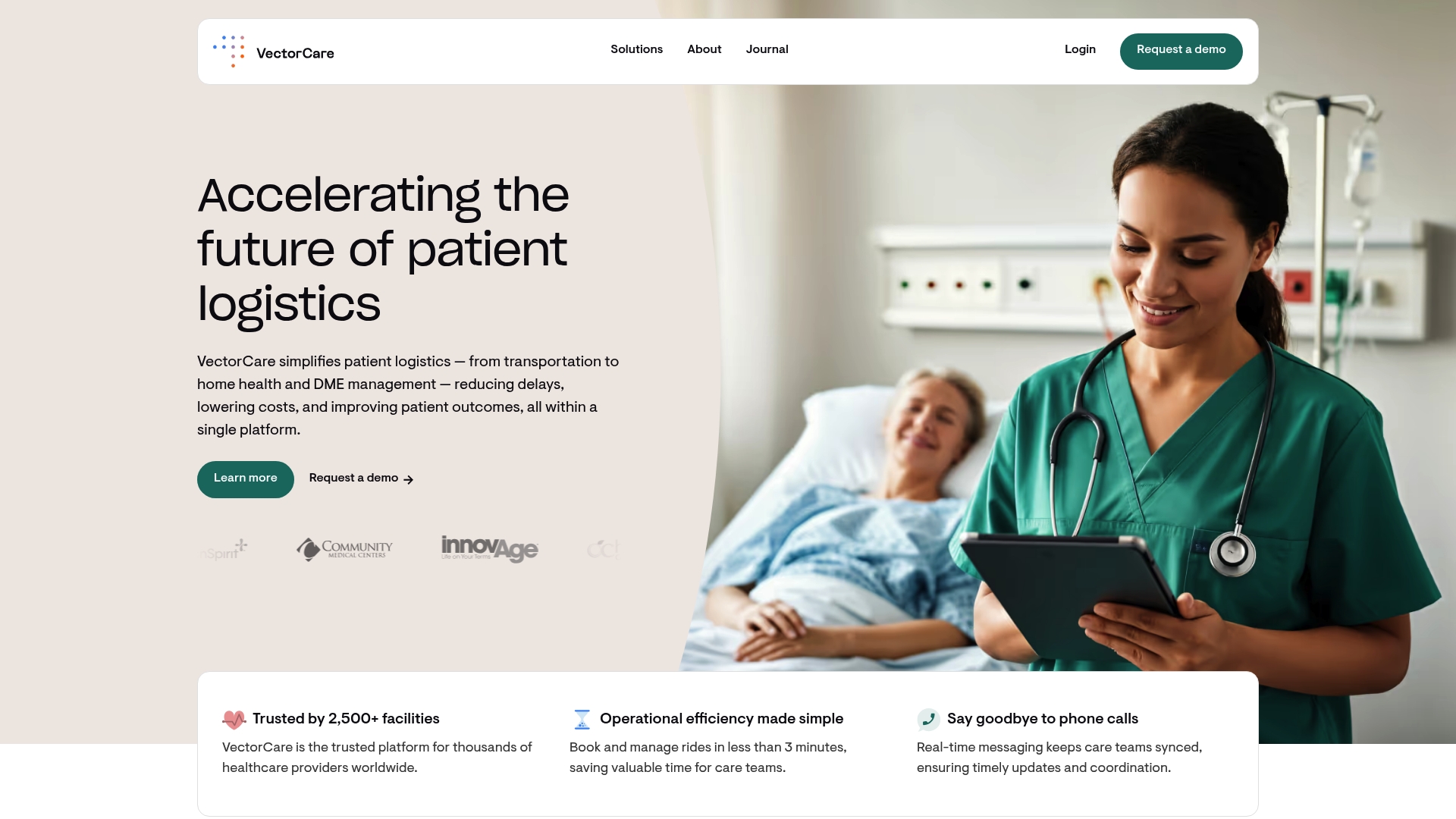
Our dispatch and coordination software streamlines mutual aid requests, tracks resource deployment across jurisdictions, and provides incident commanders with live visibility into unit status and patient flow. Key features supporting EMS readiness include:
- AI-driven dispatching that optimizes unit assignments based on location, capabilities, and availability
- Real-time tracking of ambulances, personnel, and equipment across multi-agency responses
- Integrated communication tools that reduce radio congestion and document decision trails
- Resource typing and inventory management aligned with NIMS standards
- Data analytics revealing response time trends, resource utilization patterns, and training gaps
Explore our non emergency transportation guide to understand how coordinated logistics extend beyond emergencies into routine patient movement. Compare leading platforms in our healthcare logistics software comparison to identify the best fit for your operational needs. Discover how forward-thinking agencies are transforming operations by positioning ambulance providers as patient logistics centers, expanding their role in community health beyond traditional emergency response.
Frequently asked questions
What is the Incident Command System (ICS) and why does it matter for EMS?
ICS is a standardized organizational structure for managing emergency incidents of any size or complexity. It establishes clear command hierarchy, defined roles, and consistent communication protocols that enable seamless coordination across multiple agencies. For EMS, ICS eliminates confusion during multi-jurisdictional responses and ensures resources deploy efficiently rather than duplicating efforts or leaving gaps. Regular ICS training prepares personnel to step into command roles confidently when incidents escalate beyond routine operations. Learn more about aligning hospital and field operations through healthcare facility emergency preparedness guide strategies.
How often should EMS professionals participate in trainings and drills?
EMS personnel should complete ICS refresher courses annually at minimum, with full-scale exercises conducted at least twice per year to maintain operational readiness. Triage skills require quarterly practice to prevent accuracy degradation, particularly for mass casualty scenarios that occur infrequently. Agencies should vary drill scenarios to cover the full range of potential threats specific to their jurisdiction, from traffic incidents to natural disasters. Documentation of training participation ensures compliance with federal grant requirements and identifies personnel needing additional education.
What logistical considerations are essential for mass casualty incident management?
Mutual aid agreements and resource typing enable agencies to request and receive specific capabilities from neighboring jurisdictions without ambiguity. Staging areas prevent resource convergence at the incident scene, allowing systematic deployment based on incident commander priorities rather than self-dispatching chaos. Shift rotations, PPE supplies, food, water, and rest facilities must be planned in advance to sustain operations beyond the initial response phase. Communication redundancy using multiple systems ensures coordination continues even when primary channels fail or become overloaded.
How can EMS prepare for uncommon emergencies like CBRNE or extreme weather?
Specialized PPE and decontamination protocols form the foundation of CBRNE readiness, with pre-assembled kits enabling rapid deployment without scrambling for equipment. Scenario-specific training sessions conducted quarterly maintain proficiency in low-frequency, high-consequence events that personnel may never encounter during routine operations. Vulnerable populations require tailored protocols addressing pediatric dosing, elderly care, language barriers, and disability accommodations. Climate resilience planning incorporates extreme heat, flood, and wildfire response capabilities based on regional threat profiles, with inter-agency partnerships formalized before disasters strike.
Recommended
- Fire & EMS Logistics Software | Improve Response & Patient Transfers
- How to Prepare Your Healthcare Facility for the Unexpected | VectorCare
- How to Leverage VectorCare to Evacuate Patients 4x Faster in an Emergency | VectorCare
- Re-imagining EMS & NEMT after COVID-19: The Comprehensive Guide | VectorCare
- Bandages & Gauze - Medical Supplies - Pharmacy | Mybestpharmacy.net | Online Pharmacy