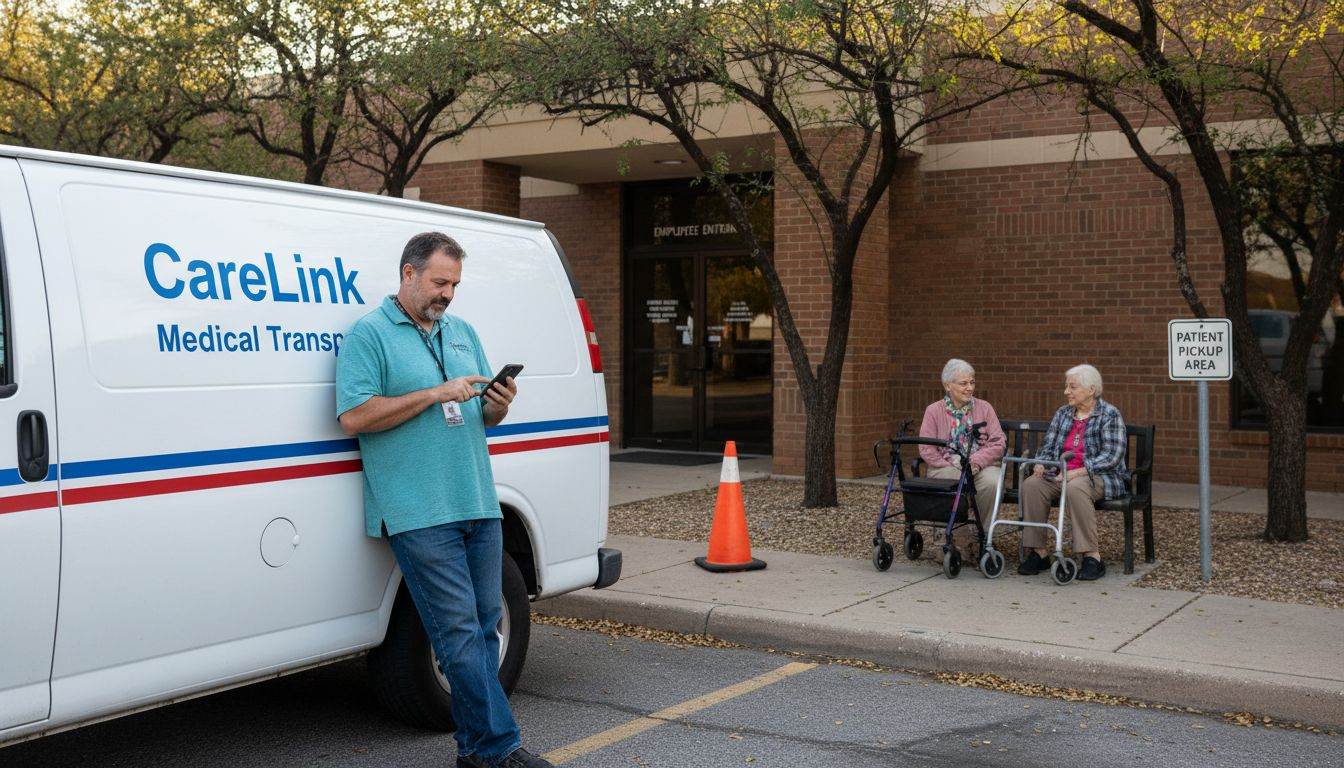
Enhance patient experience through optimized logistics
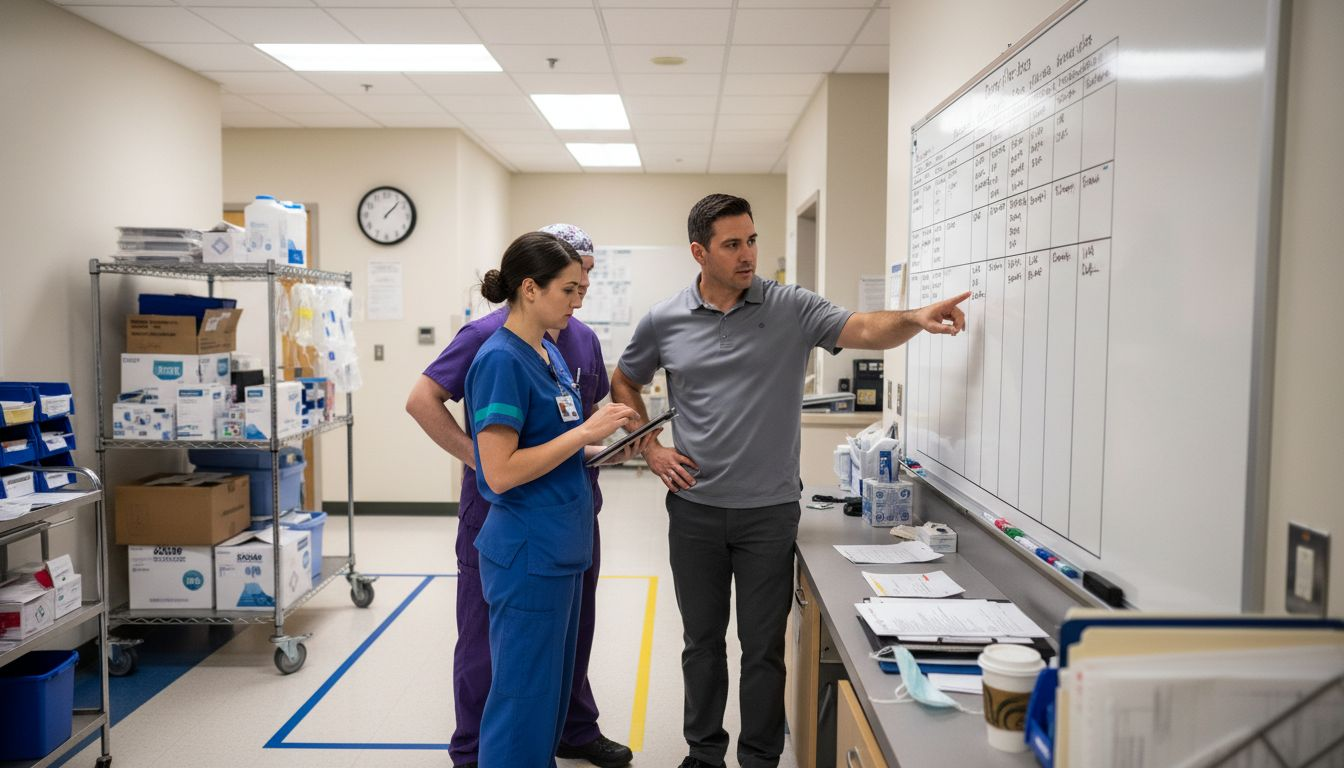
Streamlining patient transport can reduce hospital length of stay by up to 20%. For healthcare administrators striving to improve care delivery and control costs, this statistic reveals how patient logistics directly influence operational success. This guide equips you with actionable strategies and technology insights to optimize patient logistics, enhance satisfaction, and drive measurable efficiency gains in your healthcare facility.
Table of Contents
- Understanding Patient Logistics In Healthcare
- How Patient Logistics Impact Care Delivery And Outcomes
- Leveraging Technology To Enhance Patient Logistics
- Common Misconceptions About Healthcare Patient Logistics
- Frameworks And Comparative Evaluation Of Patient Logistics Platforms
- Practical Steps For Healthcare Administrators To Optimize Patient Logistics
- Summary: Driving Patient Experience Improvement Through Optimized Logistics
- Improve Your Hospital’s Patient Logistics With VectorCare
- Frequently Asked Questions
Key takeaways
| Point | Details |
|---|---|
| Patient logistics encompasses transport, scheduling, and equipment coordination that directly impacts care quality and patient satisfaction. | |
| Inefficient logistics cause longer hospital stays, higher readmission rates, and increased operational costs. | |
| AI-powered automation platforms streamline scheduling, improve real-time communication, and reduce administrative burden. | |
| Common misconceptions about implementation costs and complexity prevent many organizations from adopting proven digital solutions. | |
| Successful optimization requires stepwise implementation with clearly defined KPIs and multidisciplinary team engagement. |
Understanding patient logistics in healthcare
Patient logistics refers to the comprehensive coordination of patient transport, appointment scheduling, and durable medical equipment (DME) delivery across the care continuum. This operational framework ensures patients receive timely access to services, diagnostics, treatments, and post-acute care resources. The scope extends far beyond simple ambulance dispatch to include vendor management, communication protocols, and data-driven resource allocation.
Three core components define effective patient logistics:
- Patient transport coordination: Managing non-emergency medical transportation, interfacility transfers, and discharge rides
- Appointment scheduling optimization: Coordinating diagnostic tests, specialist consultations, and procedure timelines
- DME delivery management: Ensuring timely provision of wheelchairs, oxygen equipment, and home medical devices
Fragmented communication between stakeholders (transport teams, providers, payers) creates bottlenecks that cascade through the entire care delivery system. When transport coordinators lack real-time visibility into equipment availability or appointment status, delays multiply exponentially. These gaps in information flow directly compromise patient experience and operational efficiency.
Integrated logistics systems address these challenges by creating unified communication channels. Digital platforms enable care teams to track patient movement, anticipate resource needs, and proactively resolve scheduling conflicts. This patient logistics transformation represents a fundamental shift from reactive problem solving to predictive workflow management.
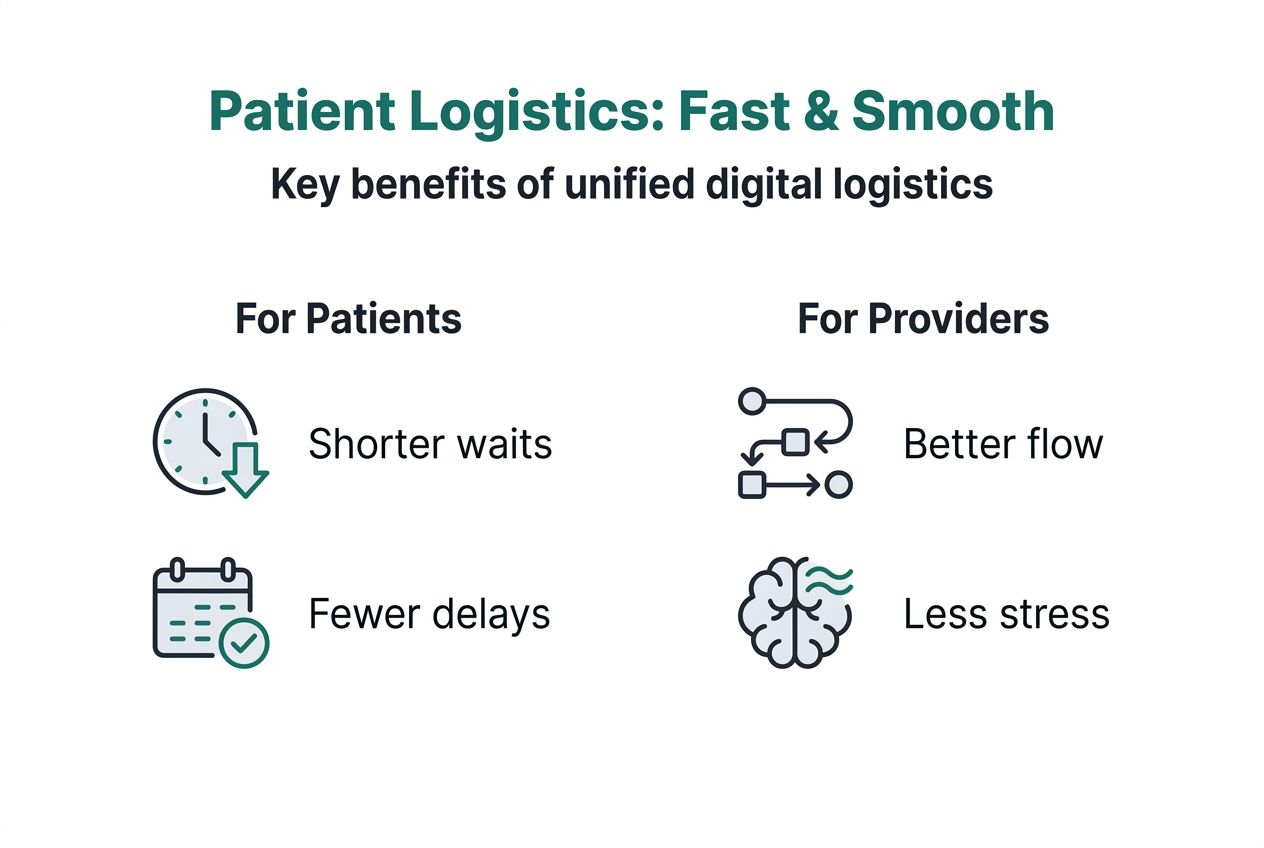
Healthcare organizations that prioritize logistics integration see improvements in patient flow, staff productivity, and care coordination. The foundation lies in recognizing logistics as a strategic function rather than an administrative afterthought.
How patient logistics impact care delivery and outcomes
Transport delays create ripple effects throughout hospital operations. When discharge transport arrives late, beds remain occupied longer, preventing admissions from the emergency department and delaying elective procedures. This bottleneck increases average length of stay and drives up costs through inefficient resource utilization.

Research demonstrates that hospitals with efficient patient transport see 15-20% reduction in average length of stay. This improvement translates directly to financial performance through increased bed turnover and reduced holding costs. More importantly, patients experience less waiting time and smoother transitions between care settings.
Key impacts of logistics efficiency include:
- Reduced readmission rates: Timely DME delivery and follow-up appointment coordination prevent gaps in post-discharge care
- Lower operational costs: Automated scheduling reduces administrative overhead and eliminates redundant communication
- Improved patient satisfaction: Predictable transport timing and clear communication elevate the entire care experience
- Enhanced staff productivity: Streamlined workflows free clinical teams to focus on direct patient care rather than logistics coordination
Patient satisfaction scores directly correlate with logistics performance. When patients receive clear information about transport timing, experience minimal waiting, and encounter coordinated handoffs between departments, their overall perception of care quality improves measurably. These patient satisfaction strategies demonstrate how operational excellence drives loyalty and positive reputation.
“Integrated logistics don’t just move patients faster. They create a seamless care experience that patients remember and value long after discharge.”
Financial leaders recognize that logistics optimization offers one of the highest return investments in healthcare operations. Unlike capital-intensive infrastructure projects, digital logistics platforms deliver rapid improvements with minimal disruption to existing workflows.
Leveraging technology to enhance patient logistics
Artificial intelligence transforms patient logistics from manual coordination into predictive, automated workflows. AI algorithms analyze historical patterns to forecast transport demand, optimize dispatch routes, and identify potential delays before they occur. This proactive approach prevents bottlenecks rather than simply reacting to them.
Automation reduces the administrative burden that drains staff time and introduces errors. Digital platforms automatically notify relevant stakeholders when patient status changes, eliminating phone tag and fragmented communication. Real-time dashboards provide visibility into transport locations, equipment availability, and appointment schedules across the entire care network.
Technology delivers measurable logistics improvements through:
- AI-powered dispatch optimization: Algorithms match patients with appropriate transport resources based on acuity, distance, and timing requirements
- Automated communication workflows: Platforms send status updates to patients, families, and care teams without manual intervention
- Integrated scheduling systems: Digital calendars synchronize appointments across departments and external vendors
- Data analytics dashboards: Real-time reporting identifies performance trends and opportunities for continuous improvement
Pro Tip: Prioritize platforms with no-code configuration capabilities that allow your team to customize workflows without technical expertise or vendor dependency.
Organizations following integrated logistics frameworks report sustained 10-20% improvements in patient satisfaction over 2 years. This durability separates transformative solutions from temporary fixes. The key lies in choosing platforms that support continuous optimization through data feedback loops.
Technology enhancing appointment logistics creates value that extends beyond immediate operational metrics. Staff morale improves when tedious coordination tasks disappear, allowing professionals to apply their skills to higher-value activities. The intangible ROI of transforming patient care logistics includes reduced burnout, improved retention, and enhanced organizational culture.
Successful technology adoption requires selecting platforms designed specifically for healthcare’s unique compliance, security, and workflow requirements. Generic project management tools lack the specialized features needed to manage patient logistics effectively.
Common misconceptions about healthcare patient logistics
Many administrators believe patient logistics optimization focuses solely on transport scheduling. This narrow view misses the comprehensive coordination required across equipment delivery, appointment timing, and multi-stakeholder communication. Effective logistics integrate all these elements into unified workflows that support seamless care delivery.
Another persistent myth suggests technology adoption requires massive capital investment and disruptive implementation timelines. Modern cloud-based platforms deploy rapidly with minimal infrastructure changes. Phased rollouts allow organizations to prove value in targeted areas before expanding systemwide.
Key misconceptions that hinder progress:
- “Logistics improvements require replacing existing systems”: Integration-friendly platforms work alongside current EMRs and scheduling tools without full replacement
- “Only large health systems benefit from logistics technology”: Scalable solutions deliver proportional value for organizations of all sizes
- “Implementation disrupts daily operations”: User-friendly interfaces and comprehensive training minimize workflow interruption
- “Automation eliminates human judgment”: Technology augments decision-making by providing better information, not replacing clinical expertise
The assumption that patient logistics scope is limited prevents strategic investment in comprehensive solutions. Understanding patient logistics fundamentals reveals how transport, scheduling, equipment, and communication form interconnected systems. Optimizing one element without addressing others delivers incomplete results.
Cost concerns often stem from comparing outdated implementation models against modern SaaS platforms. Today’s solutions offer subscription pricing that aligns costs with usage, eliminating large upfront capital requirements. Return on investment typically appears within months through reduced administrative overhead and improved throughput.
Addressing these myths opens pathways for administrators to explore solutions they might have previously dismissed. Clear understanding of current technology capabilities and implementation approaches enables informed decision-making based on actual organizational needs rather than outdated assumptions.
Frameworks and comparative evaluation of patient logistics platforms
Selecting the right patient logistics platform requires evaluating capabilities against your organization’s specific workflow requirements and strategic objectives. Key criteria for assessment include integration flexibility, AI features, user experience design, communication tools, and total cost of ownership.
Essential platform evaluation criteria:
- System integration: APIs and pre-built connectors for EMRs, billing systems, and transport vendors
- AI and automation: Predictive scheduling, intelligent dispatch, and workflow optimization capabilities
- Usability: Intuitive interfaces requiring minimal training for diverse user groups
- Communication features: Automated notifications, real-time tracking, and multi-channel messaging
- Cost structure: Transparent pricing models that scale with organizational growth
- Vendor support: Implementation assistance, ongoing training, and responsive technical support
| Feature | VectorCare Platform | Conventional Approaches |
|---|---|---|
| AI-powered dispatch | Real-time optimization | Manual coordination |
| Multi-stakeholder integration | Unified platform | Fragmented systems |
| No-code customization | Built-in workflow builder | Requires IT development |
| Vendor management | Centralized oversight | Separate contracts |
| Data analytics | Comprehensive dashboards | Limited reporting |
| Implementation timeline | 4-8 weeks | 6-12 months |
Best practice frameworks emphasize continuous data insights, automation, and multi-stakeholder coordination to improve patient experience sustainably. These principles separate platforms that deliver lasting value from those offering temporary efficiency gains.
Comparing healthcare logistics solutions reveals significant variation in feature maturity and implementation complexity. Leading platforms prioritize interoperability, allowing organizations to maintain existing vendor relationships while gaining centralized visibility and control.
Pro Tip: Test platforms with pilot programs in specific departments or patient populations before committing to organization-wide deployment.
Agnostic software benefits include flexibility to work with preferred transport vendors, equipment suppliers, and scheduling systems. This approach prevents vendor lock-in while maximizing return on existing technology investments.
No-code platforms accelerate adoption by empowering operational staff to configure workflows without technical expertise. This accessibility reduces dependency on IT resources and enables rapid iteration based on frontline feedback. Organizations achieve faster time-to-value and greater user satisfaction when staff can shape tools to match their actual work patterns.
Practical steps for healthcare administrators to optimize patient logistics
Successful logistics transformation begins with comprehensive assessment of current workflows, pain points, and performance metrics. Map patient journeys from admission through discharge to identify coordination gaps, communication breakdowns, and resource bottlenecks. Engage frontline staff who understand daily operational challenges and can provide insight into root causes.
Implementation roadmap:
- Assess current state: Document existing workflows, identify bottlenecks, and establish baseline performance metrics for transport wait times, scheduling efficiency, and patient satisfaction
- Define objectives: Set specific, measurable goals for improvement in key areas such as length of stay reduction, cost savings, and satisfaction score increases
- Select technology: Evaluate platforms based on integration capabilities, AI features, usability, and alignment with organizational needs and budget constraints
- Plan phased rollout: Start with high-impact departments or patient populations to demonstrate value and refine processes before expanding
- Train stakeholders: Provide comprehensive education for all users including transport teams, schedulers, clinicians, and administrative staff
- Monitor KPIs: Track defined metrics continuously and use data insights to drive ongoing optimization and workflow refinement
Pro Tip: Form a multidisciplinary implementation team including operations, clinical leadership, IT, and frontline staff to ensure diverse perspectives and build organizational buy-in.
Choosing AI-enabled, integrated digital platforms focuses on solutions that automate routine tasks while supporting human decision-making. Prioritize user-friendly interfaces that reduce training requirements and encourage adoption. Scalability ensures platforms grow with your organization rather than requiring replacement as needs evolve.
Patient scheduling best practices emphasize real-time visibility, automated reminders, and flexible rescheduling capabilities. These features reduce no-show rates, optimize resource utilization, and improve patient convenience.
Key performance indicators should align with strategic objectives. Transport wait times measure operational efficiency. Patient satisfaction scores tied to logistics reveal experience impact. Administrative overhead reduction demonstrates productivity gains. Length of stay changes indicate broader care delivery improvements. Cost per transport tracks financial performance.
Maximizing efficiencies through better patient logistics requires viewing optimization as an ongoing journey rather than a one-time project. Regular review of performance data, staff feedback sessions, and process audits identify opportunities for continuous improvement.
Engaging stakeholders early builds support and surfaces potential obstacles before they derail implementation. Clinical champions who advocate for change accelerate adoption and help colleagues navigate workflow transitions. Executive sponsorship ensures adequate resources and organizational priority.
Summary: driving patient experience improvement through optimized logistics
Efficient patient logistics form the operational foundation for exceptional care delivery. By reducing transport delays, streamlining appointment coordination, and ensuring timely equipment availability, healthcare organizations create smoother patient journeys that elevate satisfaction and outcomes.
Key insights for transformation:
- Technology-driven platforms enable real-time coordination and automation that manual processes cannot match
- AI optimization reduces administrative burden while improving decision quality through data-driven insights
- Dispelling implementation myths removes barriers to adopting proven digital solutions
- Stepwise, data-informed deployment fosters sustainable improvements with measurable ROI
- Starting with thorough assessment and appropriate platform selection sets the stage for long-term success
The connection between logistics efficiency and patient experience is direct and measurable. Organizations that prioritize this operational element gain competitive advantages through higher satisfaction scores, lower costs, and improved clinical outcomes. Technology serves as the enabler, but strategic commitment to continuous improvement drives lasting transformation.
Healthcare administrators face increasing pressure to do more with less while maintaining quality. Patient logistics optimization offers a high-impact pathway to achieving these seemingly contradictory goals. The tools, frameworks, and best practices exist today to begin this journey.
Improve your hospital’s patient logistics with VectorCare
Transforming patient logistics requires platforms built specifically for healthcare’s unique complexity and compliance requirements. VectorCare delivers AI-powered scheduling, real-time communication, and integrated logistics management designed to reduce administrative burden and improve patient satisfaction scores.
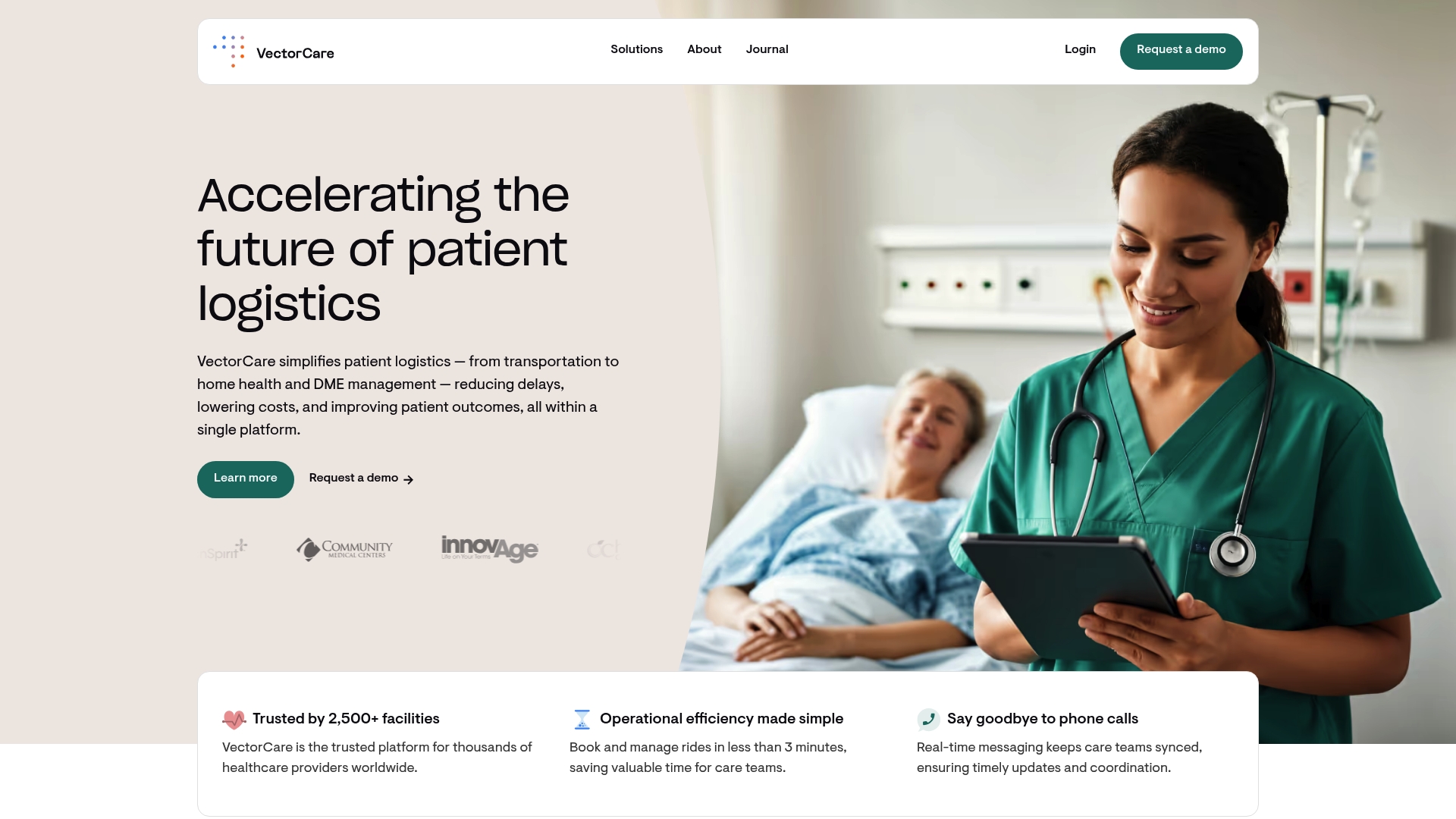
The platform’s user-friendly, no-code workflows enable rapid deployment without disrupting existing operations. Healthcare organizations using VectorCare report measurable improvements in transport efficiency, cost reduction, and patient experience metrics. Expert comparisons of healthcare logistics solutions consistently highlight VectorCare’s comprehensive capabilities and scalability.
Whether you’re optimizing non-emergency transportation or coordinating complex discharge logistics, VectorCare provides the tools and insights to elevate your operational performance. The platform’s integration flexibility works with your existing systems while providing centralized visibility and control.
Frequently asked questions
What is healthcare patient logistics and why does it matter?
Healthcare patient logistics encompasses the coordination of patient transport, appointment scheduling, and medical equipment delivery throughout the care continuum. This operational framework directly impacts care quality by ensuring patients receive timely access to services, reducing delays that compromise outcomes. Efficient logistics improve patient satisfaction, lower costs through better resource utilization, and enable smoother care transitions. Organizations that excel at logistics coordination create competitive advantages through operational excellence and superior patient experiences.
How does AI improve patient logistics in hospitals?
AI optimizes resource allocation by analyzing patterns to predict demand, prevent bottlenecks, and automatically match patients with appropriate transport and scheduling options. Machine learning algorithms identify potential delays before they occur, enabling proactive resolution. Automation eliminates manual coordination tasks, reducing errors and freeing staff for higher-value activities. Real-time adjustments based on changing conditions ensure optimal efficiency across departments and external vendors.
What are the main challenges in implementing patient logistics technology?
Fragmented communication between departments and vendors creates coordination difficulties that technology must overcome through integration. Resistance to change among staff accustomed to manual processes requires comprehensive training and change management. Organizations often underestimate integration complexity and timeline requirements, leading to implementation delays. Successful adoption demands phased rollouts, strong executive sponsorship, multidisciplinary team engagement, and selection of user-friendly platforms that minimize disruption.
Which key metrics should hospitals track to measure patient logistics effectiveness?
Track patient transport wait times from request to arrival as a primary efficiency indicator. Monitor average length of stay trends to assess logistics impact on overall throughput. Measure patient satisfaction scores specifically related to transport, scheduling, and equipment delivery experiences. Calculate administrative overhead reduction through time saved on coordination tasks. Track cost per transport and total logistics spending to evaluate financial performance and identify optimization opportunities.