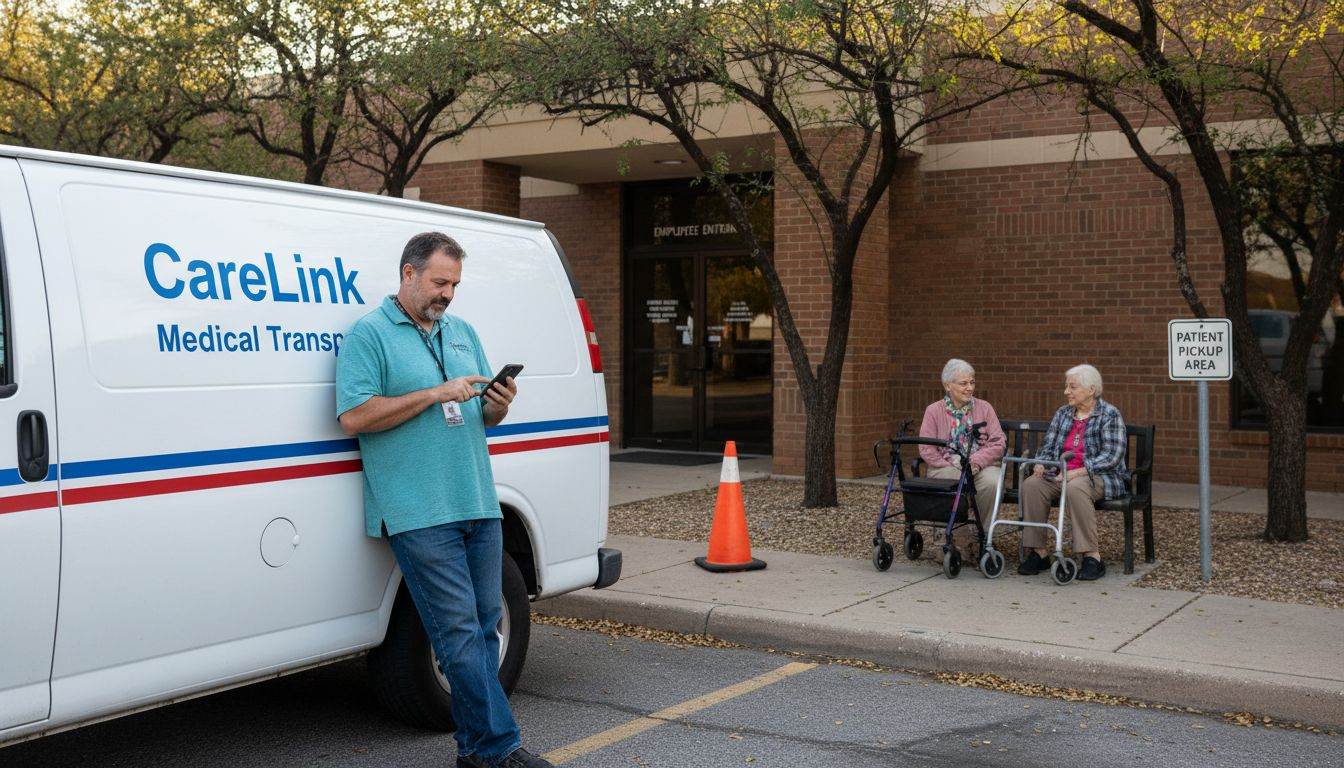
Elements of Patient-Centered Care for Hospitals

Improving patient outcomes often depends on how well a hospital adapts its logistics and care coordination to truly reflect patient-centered values. For many administrators across the United States, the challenge lies in shifting systems from provider-centric routines to a model prioritizing both compassion and collaboration. Embracing the eight core principles outlined by the Picker Institute delivers actionable strategies for building a more responsive, empathetic, and holistic approach to care that serves every patient’s unique journey.
Table of Contents
- Defining Patient-Centered Care in Hospitals
- Eight Essential Principles for Quality Care
- Coordinating Care Through Digital Logistics
- Roles and Responsibilities for Care Teams
- Overcoming Common Implementation Barriers
Key Takeaways
| Point | Details |
|---|---|
| Holistic Patient Needs | Patient-centered care prioritizes the overall well-being of patients, considering emotional, social, and personal dimensions alongside medical treatment. |
| Shared Decision-Making | Collaboration between patients, families, and healthcare providers is essential for effective treatment, emphasizing mutual respect and involvement in care decisions. |
| Utilization of Digital Tools | Digital health technologies and electronic health records are critical for enhancing care coordination, patient monitoring, and communication between healthcare professionals. |
| Overcoming Barriers | Successful implementation of patient-centered care involves addressing organizational challenges through strategic planning, continuous education, and clear goal-setting. |
Defining Patient-Centered Care in Hospitals
Patient-centered care represents a transformative approach in healthcare that fundamentally shifts traditional medical service delivery. Patient-centered models prioritize holistic patient experiences by considering not just medical symptoms, but also emotional, social, and personal dimensions of care.
At its core, patient-centered care is a collaborative partnership between healthcare providers, patients, and their families. This approach recognizes that effective treatment extends beyond clinical interventions, encompassing respect for patient preferences, emotional support, and shared decision-making. Healthcare systems must systematically redesign processes to align with patient needs and perspectives, moving away from provider-centric traditional models.
The Picker Institute identified eight fundamental principles that define patient-centered care, including:
Here’s a summary contrasting traditional care with patient-centered care:
| Aspect | Traditional Care Approach | Patient-Centered Care |
|---|---|---|
| Primary Focus | Disease and treatment | Patient needs and values |
| Decision-Making | Provider-driven decisions | Shared with patients |
| Communication Style | One-way, provider to patient | Two-way, collaborative |
| Family Involvement | Minimal or optional | Actively encouraged |
| Emotional Support | Not prioritized | Central to care model |
- Respect for patient preferences and values
- Emotional support addressing patient anxieties
- Clear, transparent communication
- Coordination of care across different providers
- Physical comfort and environment considerations
- Family involvement in care processes
- Continuous access to care
- Timely response to patient needs
Pro tip: Implement regular patient feedback mechanisms to continuously refine and improve your patient-centered care strategies.
Eight Essential Principles for Quality Care
The eight essential principles of patient-centered care represent a comprehensive framework for transforming healthcare delivery. Patient-centered care principles provide hospitals with a structured approach to creating more meaningful, compassionate, and effective patient experiences.

These principles, developed by the Picker Institute and endorsed by leading healthcare organizations, go far beyond traditional medical treatment. They emphasize a holistic approach that integrates patient preferences and cultural considerations into every aspect of care delivery. The principles are designed to create a more responsive, respectful, and patient-focused healthcare environment.
The core eight principles include:
- Respect for Patient Preferences: Honoring individual patient values, needs, and expressed desires
- Emotional Support: Addressing patient anxieties and providing compassionate care
- Physical Comfort: Ensuring patient comfort and managing pain effectively
- Information and Communication: Providing clear, transparent, and comprehensive information
- Continuity of Care: Ensuring smooth transitions and coordinated care across different providers
- Family and Caregiver Involvement: Recognizing the crucial role of support networks
- Access to Care: Providing timely and convenient healthcare services
- Holistic Treatment: Considering patient’s complete physical, emotional, and social well-being
Pro tip: Develop systematic training programs that help healthcare staff internalize these principles and integrate them into daily patient interactions.
Coordinating Care Through Digital Logistics
Digital technologies have dramatically transformed patient care coordination, creating unprecedented opportunities for seamless healthcare delivery. Digital health technologies enable real-time patient monitoring and provide healthcare providers with comprehensive insights into patient needs and treatment progress.
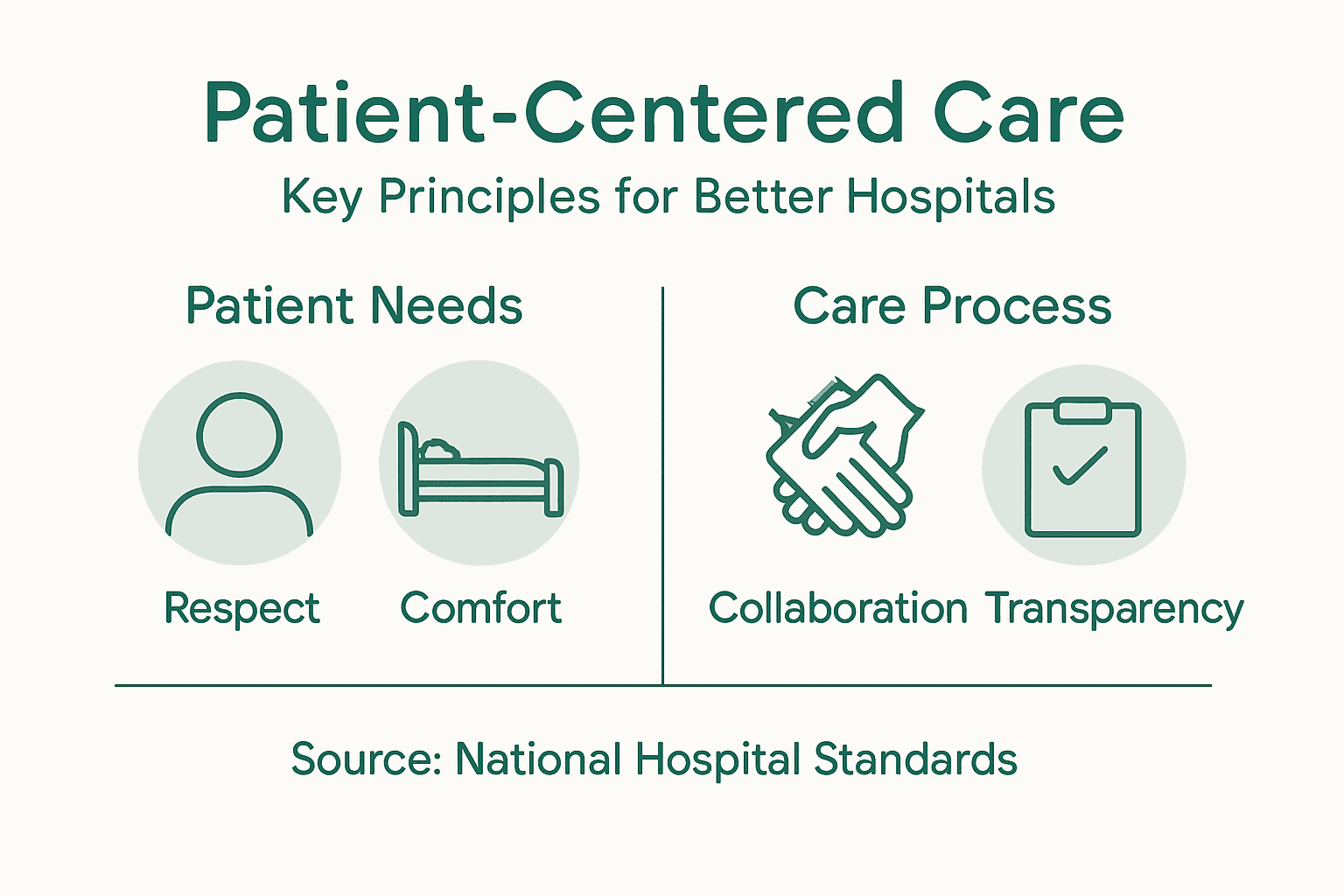
Electronic health records (EHRs) represent a critical backbone of modern digital care coordination. EHR systems integrate patient goals and contextual data into clinical workflows, allowing healthcare providers to create more personalized and responsive treatment approaches. These digital platforms facilitate communication, reduce administrative burden, and ensure continuity of care across different healthcare settings.
Key components of effective digital care logistics include:
This table outlines common digital care tools and their impact on patient-centered care:
| Tool | Main Function | Benefit for Patients |
|---|---|---|
| Electronic Health Record | Aggregates and shares data | Improves care coordination |
| Patient Portals | Provides access to health info | Encourages patient engagement |
| Automated Scheduling | Manages appointments | Reduces wait times |
| Secure Messaging | Enables direct provider contact | Enhances communication trust |
| Predictive Analytics | Identifies health risks early | Supports proactive care |
- Interoperable Technology: Ensuring seamless data exchange between different healthcare systems
- Real-Time Tracking: Monitoring patient progress and treatment effectiveness
- Comprehensive Data Integration: Combining clinical, personal, and contextual patient information
- Secure Communication Channels: Enabling confidential information sharing
- Patient Portal Access: Empowering patients with direct engagement in their healthcare journey
- Automated Scheduling: Streamlining appointment and follow-up coordination
- Predictive Analytics: Identifying potential health risks and intervention opportunities
Pro tip: Regularly audit and update digital infrastructure to ensure maximum compatibility, security, and patient-centered functionality.
Roles and Responsibilities for Care Teams
Patient-centered care requires a comprehensive, collaborative approach that demands clear understanding of each team member’s unique contributions. Healthcare professionals must define their roles precisely to ensure seamless, coordinated patient experiences across multiple care domains.
Hospital care teams typically comprise multiple specialized professionals, including physicians, nurses, pharmacists, therapists, social workers, and support staff. Collaborative hospital teams deliver holistic patient care by integrating their unique expertise and maintaining open communication channels. Each team member brings specialized skills that contribute to comprehensive patient treatment, prevention, and recovery strategies.
Key responsibilities for effective care team collaboration include:
- Transparent Communication: Sharing critical patient information across disciplines
- Mutual Respect: Acknowledging each professional’s unique expertise and limitations
- Shared Accountability: Collectively ensuring optimal patient outcomes
- Role Clarity: Understanding individual and team responsibilities
- Continuous Learning: Staying updated on interdisciplinary best practices
- Patient Advocacy: Prioritizing patient needs and preferences
- Efficient Information Sharing: Utilizing electronic health records and communication technologies
Pro tip: Implement regular interdisciplinary team meetings to foster communication, align goals, and enhance collaborative patient care strategies.
Overcoming Common Implementation Barriers
Implementing patient-centered care requires strategic navigation of complex organizational challenges across multiple levels of healthcare delivery. Effective implementation strategies address barriers systematically, recognizing that obstacles exist at clinician, patient, and administrative levels.
Barriers to patient-centered care manifest through institutional constraints, communication challenges, and cultural resistance within healthcare systems. Nurse-patient interaction dynamics significantly impact care delivery, highlighting the need for comprehensive organizational support and targeted interventions.
Key strategies for overcoming implementation barriers include:
- Clear Goal Setting: Establishing precise, measurable patient-centered care objectives
- Physician Champion Engagement: Identifying and empowering influential clinical leaders
- Standardized Workflow Integration: Embedding patient-centered principles into existing processes
- Continuous Education: Providing comprehensive training for healthcare professionals
- Data-Driven Approach: Using patient-reported outcomes to measure and improve care
- Cultural Transformation: Developing organizational commitment to patient-centered principles
- Communication Enhancement: Creating robust feedback mechanisms
Pro tip: Develop a phased implementation plan with pilot programs that allow incremental testing and refinement of patient-centered care strategies.
Transform Patient-Centered Care Into Action with Seamless Logistics
Delivering truly patient-centered care calls for more than empathy and clear communication. It demands effective coordination of complex patient logistics that can often hinder smooth care delivery. From personalized scheduling to secure communication and real-time updates, healthcare teams face challenges in maintaining timely access, continuous care, and integrating patient preferences across multiple touchpoints. VectorCare’s comprehensive digital platform is designed to address these exact pain points by streamlining patient transportation, home health services, and medical equipment delivery with automation and AI-driven dispatching.
Empower your healthcare team to overcome common barriers in patient-centered care by optimizing workflows and enhancing collaboration through VectorCare. Our platform’s tools enable transparent communication, reduce operational delays, and support proactive management that aligns perfectly with patient-centered care principles discussed in the article. Discover how your organization can improve patient outcomes, reduce costs, and embrace digital logistics today at VectorCare. Ready to make patient-centered care a reality? Explore our solutions and see the difference at VectorCare now.
Frequently Asked Questions
What is patient-centered care?
Patient-centered care is a transformative approach in healthcare that focuses on the holistic experience of patients, addressing not just their medical symptoms but also their emotional, social, and personal dimensions of care.
What are the essential principles of patient-centered care?
The eight essential principles include respect for patient preferences, emotional support, physical comfort, information and communication, continuity of care, family involvement, access to care, and holistic treatment.
How does technology support patient-centered care?
Digital technologies, such as electronic health records (EHRs) and patient portals, enable real-time communication, comprehensive data integration, and enhanced care coordination, ultimately improving patient engagement and experience.
What challenges do hospitals face when implementing patient-centered care?
Common challenges include institutional constraints, communication barriers, cultural resistance, and the need for comprehensive training for healthcare professionals to adopt patient-centered practices.