Complex Care Coordination: Improving Patient Outcomes

Over 40 percent of American adults manage more than one chronic condition, making care coordination a top priority for both patients and providers. Effective complex care coordination can mean the difference between fragmented treatments and a truly connected healthcare journey. This article highlights how a strategic, patient-focused approach can help American healthcare systems deliver safer, more seamless care while supporting each individual’s unique health needs.
Table of Contents
- Defining Complex Care Coordination In Healthcare
- Key Components And Processes Explained
- Stakeholder Roles In Coordinated Care Systems
- Technology And Automation Advancing Logistics
- Financial, Legal, And Compliance Considerations
- Common Barriers And Solutions For Implementation
Key Takeaways
| Point | Details |
|---|---|
| Holistic Care Approach | Complex care coordination requires a holistic understanding of patient health, integrating various medical and personal needs for comprehensive treatment. |
| Interdisciplinary Collaboration | Effective care coordination relies on strong communication and collaboration among all healthcare stakeholders, including patients, providers, and caregivers. |
| Technology Integration | Advanced technology solutions are essential for enhancing communication, streamlining care processes, and improving patient outcomes in complex care settings. |
| Compliance and Risk Management | Healthcare organizations must navigate financial and legal complexities, ensuring adherence to regulations while optimizing resources and reducing costs. |
Defining Complex Care Coordination in Healthcare
Complex care coordination represents a strategic approach to healthcare delivery that transcends traditional medical interactions. At its core, this process involves systematically organizing patient care activities and communication across multiple healthcare providers and systems. Care coordination ensures that patients’ needs and preferences are known and communicated at the right time to the right people, facilitating comprehensive and patient-centered treatment.
Healthcare professionals understand that modern medical treatment requires sophisticated collaboration. Complex care coordination goes beyond simple referrals or isolated medical interventions. It demands deliberate communication strategies, interdisciplinary collaboration, and a holistic view of patient health. This approach recognizes that patients often interact with multiple specialists, healthcare settings, and support systems simultaneously.
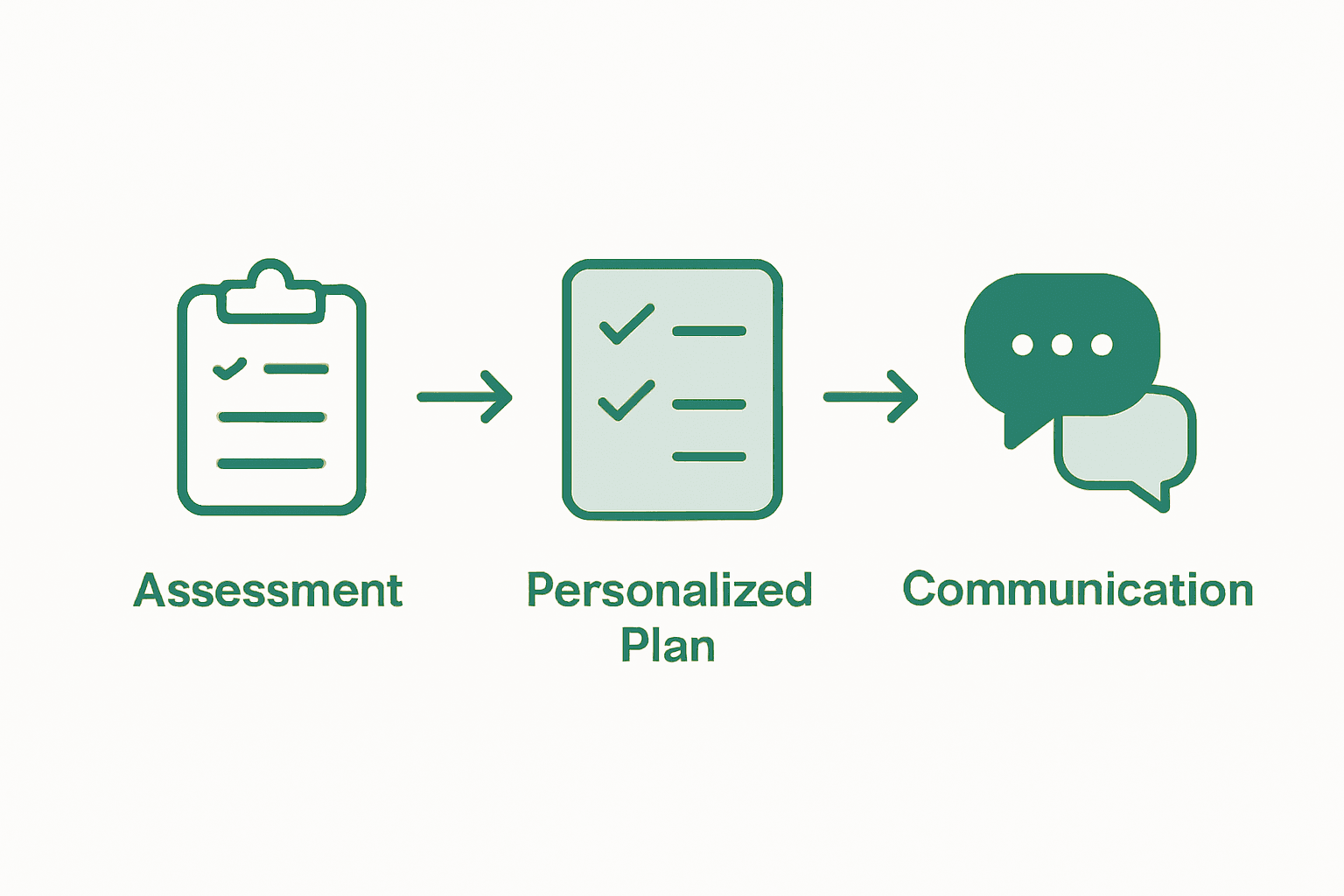
The key components of complex care coordination include comprehensive patient assessment, personalized care planning, continuous communication between providers, and proactive management of patient transitions. These elements work together to create a seamless healthcare experience that addresses not just immediate medical needs, but also long-term health outcomes. Deliberate organization of patient care activities between multiple participants helps facilitate appropriate delivery of health care services, ultimately improving patient safety and treatment effectiveness.
Pro Healthcare Coordination Tip: Implement a centralized communication platform that allows real-time information sharing between healthcare providers, ensuring every team member has immediate access to updated patient information and care plans.
Key Components and Processes Explained
Care coordination transforms healthcare delivery by creating comprehensive, patient-centered strategies that address complex medical needs. Developing a shared plan of care requires integrating information and services across multiple domains, including medical, social, developmental, psychological, behavioral, educational, environmental, and financial needs. This holistic approach goes far beyond traditional medical treatment, recognizing that patient health encompasses interconnected systems and individual experiences.
The critical processes of complex care coordination involve systematic communication and collaborative planning. Healthcare providers must establish robust mechanisms for information exchange, ensuring seamless transitions between different care settings and specialists. Effective care coordination facilitates critical linkages between patients, caregivers, providers, and community resources, creating an integrated support network that addresses comprehensive patient requirements.

Key strategic components include comprehensive patient assessment, personalized care planning, continuous provider communication, and proactive transition management. These elements work together to create a dynamic healthcare ecosystem that adapts to changing patient needs. Advanced care coordination models incorporate technology-enabled communication platforms, data sharing protocols, and interdisciplinary collaboration frameworks to streamline patient care processes and improve overall treatment outcomes.
Pro Healthcare Integration Tip: Create a standardized communication protocol that designates a primary care coordinator responsible for tracking patient progress, managing interdisciplinary communication, and ensuring all team members have real-time access to updated patient information and care plans.
Stakeholder Roles in Coordinated Care Systems
Care coordination demands intricate collaboration among multiple healthcare stakeholders, each playing a critical role in patient treatment and support. In coordinated care systems, key participants include primary care providers, specialists, nurses, patients, and caregivers who work together to organize patient care activities and share essential information. This collaborative approach ensures comprehensive medical attention that addresses both clinical and personal patient needs.
Each stakeholder brings unique capabilities and perspectives to the care coordination process. Primary care providers serve as central coordinators, synthesizing medical information and creating comprehensive treatment strategies. Specialists contribute advanced clinical expertise for specific medical conditions, while nurses play a crucial role in direct patient care, medication management, and communication. Patients and their families are increasingly recognized as active participants, providing critical insights into personal health preferences, treatment goals, and daily life challenges.
Collaborative efforts among these stakeholders focus on developing and implementing a shared plan of care that addresses the comprehensive needs of the patient. This approach requires transparent communication, mutual respect, and a commitment to holistic patient well-being. Advanced care coordination models now incorporate technology platforms that facilitate real-time information sharing, enabling seamless communication and ensuring that every team member has access to current patient information.
Here is a summary of key stakeholder roles and their responsibilities in coordinated care:
| Stakeholder | Primary Responsibilities | Contribution to Care Coordination |
|---|---|---|
| Primary Care Provider | Leads care planning and oversight | Integrates patient information |
| Specialist | Offers advanced clinical expertise | Manages condition-specific treatments |
| Nurse | Delivers direct care and manages meds | Ensures continuity and communication |
| Patient/Caregiver | Shares preferences and daily challenges | Enhances personalized care planning |
Pro Stakeholder Coordination Tip: Implement regular interdisciplinary team meetings that include patients and caregivers, creating a collaborative environment where all stakeholders can discuss treatment progress, share insights, and collectively adjust care strategies.
Technology and Automation Advancing Logistics
Healthcare logistics are undergoing a transformative revolution through advanced technological integration. The implementation of health information technology, such as electronic health records (EHRs), has dramatically enhanced communication and decision-making processes, enabling healthcare providers to coordinate patient care with unprecedented precision and efficiency.
Modern automation technologies are reshaping patient logistics by introducing intelligent systems that can process complex information rapidly. Emerging artificial intelligence frameworks are developing autonomous reasoning protocols that enable secure collaboration and adhere to sophisticated clinical logic, allowing healthcare systems to manage intricate patient coordination challenges more effectively. These technological advances support real-time information sharing, predictive analytics, and streamlined communication across diverse healthcare environments.
Advanced technological solutions now integrate multiple capabilities, including automated scheduling, intelligent routing, comprehensive patient tracking, and dynamic resource allocation. Machine learning algorithms can predict potential care coordination challenges, recommend optimal intervention strategies, and ensure that patient transportation and treatment workflows operate with maximum efficiency. By leveraging data-driven insights, healthcare organizations can reduce administrative burdens, minimize potential errors, and create more responsive, patient-centered care delivery systems.
Pro Technology Integration Tip: Regularly audit and update your technological infrastructure, ensuring seamless interoperability between different healthcare information systems and maintaining robust data security protocols.
Financial, Legal, and Compliance Considerations
Complex care coordination introduces intricate financial, legal, and regulatory challenges that healthcare organizations must carefully navigate. Poorly coordinated care can lead to significant financial consequences, including medication errors and preventable hospital admissions that substantially increase healthcare costs. Effective care coordination strategies are critical for reducing unnecessary healthcare expenditures and improving overall patient outcomes.
Legal compliance represents a fundamental cornerstone of modern healthcare logistics. Healthcare providers must meticulously adhere to multiple regulatory frameworks, including patient privacy protections, data management standards, and inter-organizational communication protocols. Advanced healthcare technologies now integrate with standardized interfaces like HL7/FHIR and comply with rigorous regulatory standards such as HIPAA and FDA Software as a Medical Device (SaMD) guidelines, ensuring comprehensive legal and technical compliance across complex care coordination systems.
Financial considerations extend beyond direct medical costs, encompassing comprehensive risk management, liability mitigation, and operational efficiency. Healthcare organizations must develop robust financial models that account for potential coordination challenges, implement preventative strategies to minimize unexpected expenses, and create transparent accounting mechanisms. By proactively addressing these financial dimensions, healthcare providers can optimize resource allocation, reduce administrative overhead, and create more sustainable care delivery models that benefit both patients and healthcare systems.
Pro Compliance Strategy Tip: Develop a comprehensive compliance audit protocol that includes regular reviews of technological systems, communication workflows, and regulatory alignment, ensuring continuous adaptation to evolving healthcare standards and legal requirements.
Common Barriers and Solutions for Implementation
Complex care coordination encounters numerous systemic challenges that require strategic intervention. Fragmented care delivery networks consistently contribute to higher healthcare costs and diminished patient outcomes, creating significant obstacles for healthcare providers seeking to implement comprehensive coordination strategies. These barriers often stem from communication breakdowns, technological limitations, and organizational resistance to change.
Advanced analytical approaches, such as topological data analysis, can help healthcare organizations identify systematic differences in care delivery networks, providing insights that enable more targeted intervention strategies. Key barriers typically include communication silos between different healthcare providers, inconsistent information sharing protocols, limited technological interoperability, and complex regulatory compliance requirements. Each of these challenges demands a nuanced, multifaceted approach that combines technological innovation, process redesign, and organizational culture transformation.
Successful implementation of care coordination requires a comprehensive strategy that addresses both technical and human elements. Healthcare organizations must invest in robust health information technologies, develop standardized communication protocols, create cross-functional training programs, and establish clear accountability mechanisms. This holistic approach involves breaking down institutional barriers, promoting interdisciplinary collaboration, and creating flexible systems that can adapt to evolving patient needs and technological capabilities.
The following table contrasts typical barriers to care coordination with effective solutions:
| Common Barrier | Example Scenario | Strategic Solution |
|---|---|---|
| Communication Silos | Isolated electronic records | Unified communication platforms |
| Tech Interoperability Gaps | Systems cannot share patient data | Adopt standard data exchange formats |
| Resistance to Change | Staff reluctant to adopt new protocols | Ongoing interdisciplinary training |
| Regulatory Complexity | Confusion over privacy requirements | Regular compliance audits and updates |
Pro Implementation Strategy Tip: Develop a phased implementation approach with clear milestones, pilot programs in specific departments, and continuous feedback mechanisms to incrementally build organizational capacity for complex care coordination.
Elevate Complex Care Coordination with VectorCare’s Advanced Healthcare Logistics
Complex care coordination challenges such as fragmented communication, inefficient scheduling, and lack of real-time updates can jeopardize patient outcomes and increase operational costs. The need for seamless collaboration among providers, patients, and caregivers calls for a centralized, automated platform that supports interdisciplinary teams and keeps critical patient information easily accessible. VectorCare addresses these pain points directly by offering an integrated digital solution that optimizes patient transportation, home health services, and durable medical equipment delivery through AI-driven dispatching and secure communication.
Experience the power of a unified healthcare logistics system that improves scheduling accuracy, vendor management, and compliance while reducing administrative burdens. This means fewer delays, enhanced patient safety, and substantial cost savings—exactly what complex care coordination demands. Discover how VectorCare can transform your operations and foster better collaboration among all stakeholders. Visit VectorCare’s platform for more details.
Ready to overcome the common barriers in complex care coordination and improve patient outcomes? Explore how our comprehensive platform at VectorCare can streamline your healthcare logistics today and take the first step toward more efficient and patient-centered care. Learn more at VectorCare’s main page and embrace the future of coordinated healthcare delivery now.
Frequently Asked Questions
What is complex care coordination in healthcare?
Complex care coordination is a strategic approach to organizing patient care activities and communication across multiple healthcare providers and systems, ensuring that patients’ needs and preferences are communicated and addressed effectively.
How does complex care coordination improve patient outcomes?
By fostering comprehensive communication, personalized care planning, and seamless transitions between care settings, complex care coordination helps address immediate medical needs and enhances long-term health outcomes for patients.
What are the key components of complex care coordination?
Key components include comprehensive patient assessment, personalized care planning, continuous communication among providers, and proactive management of patient transitions, all working together to ensure a patient-centered approach to care.
What challenges are associated with implementing complex care coordination?
Common challenges include communication breakdowns, technological limitations, and resistance to change among healthcare providers, which can hinder effective care coordination and ultimately impact patient outcomes.