7 Best Practices for Efficient Healthcare Dispatch

American hospitals lose millions every year to inefficient patient dispatch and poor coordination—yet most logistics managers are still relying on outdated processes. In today’s tight financial climate, finding smarter ways to move patients quickly and safely through the system directly impacts bottom lines and care quality. Discover practical, data-backed strategies that help American healthcare leaders cut costs, minimize delays, and foster seamless collaboration across teams.
Table of Contents
- Automate Scheduling to Reduce Delays
- Use Real-Time Data for Smarter Decisions
- Standardize Communication Across Teams
- Integrate Vendor Management Solutions
- Leverage AI for Route and Resource Optimization
- Ensure Compliance with Security Standards
- Analyze Dispatch Metrics for Continuous Improvement
Quick Summary
| Takeaway | Explanation |
|---|---|
| 1. Automate Scheduling | Implement intelligent scheduling software to eliminate delays and optimize resource use. |
| 2. Use Real-Time Data | Capture immediate insights to enhance decision-making and patient outcomes effectively. |
| 3. Standardize Communication | Develop unified communication protocols to reduce misinformation and improve efficiency. |
| 4. Integrate Vendor Management | Create comprehensive systems for managing service providers to streamline operations and enhance collaboration. |
| 5. Leverage AI for Optimization | Utilize AI for dynamic routing and resource allocation to improve response times and operational efficiency. |
1. Automate Scheduling to Reduce Delays
Healthcare scheduling automation represents a critical strategy for eliminating inefficiencies and reducing patient wait times. By leveraging intelligent software systems, medical facilities can transform their administrative processes and dramatically improve operational performance.
Automated scheduling goes far beyond simply plugging appointments into a digital calendar. Modern systems utilize advanced algorithms to optimize resource allocation, staff availability, and patient flow. Research demonstrates that strategic scheduling algorithms can significantly minimize delays and enhance overall healthcare delivery.
The core benefit of automation lies in its ability to process complex scheduling variables instantaneously. Traditional manual scheduling methods often involve multiple staff members, extensive paperwork, and significant potential for human error. Automated systems eliminate these bottlenecks by instantly matching patient needs with available healthcare resources, reducing scheduling conflicts and last minute cancellations.
Implementing automated scheduling requires selecting robust software that integrates seamlessly with existing electronic health record systems. Look for platforms offering real time updates, customizable workflows, and intelligent conflict resolution mechanisms. The goal is creating a scheduling ecosystem that adapts dynamically to changing healthcare demands.
Data driven scheduling platforms can analyze historical patterns to predict peak times, recommend optimal appointment windows, and balance provider workloads. This predictive capability helps medical practices proactively manage their resources and minimize unexpected delays.
Key implementation strategies include conducting thorough staff training, running parallel manual and automated systems during transition, and continuously monitoring scheduling performance metrics. Regular system audits and staff feedback will help refine the automated scheduling approach.
Pro tip: Start with a pilot program in one department to test and validate your automated scheduling system before rolling it out across your entire healthcare organization.
2. Use Real-Time Data for Smarter Decisions
Real-time data represents a revolutionary approach to healthcare dispatch that transforms decision making from reactive to proactive. By capturing and analyzing immediate information, healthcare providers can make faster, more accurate choices that directly impact patient outcomes.
Healthcare organizations leveraging real-time data management can dramatically improve their operational precision and patient care strategies. These systems provide instantaneous insights into patient location, transport needs, resource availability, and critical medical information that previously took hours or days to compile.
The power of real-time data lies in its ability to break down traditional communication barriers. Emergency services, transportation providers, medical facilities, and patient support teams can now access synchronized information instantly. This interconnected approach reduces communication delays, prevents duplicate efforts, and ensures that every stakeholder has the most current information available.
Important implementation strategies include investing in robust data integration platforms, establishing clear data sharing protocols, and training staff on effective real-time information utilization. Healthcare organizations should prioritize systems that offer secure, HIPAA compliant data transmission and intelligent filtering mechanisms to prevent information overload.
Advanced real-time data platforms can track multiple variables simultaneously such as vehicle locations, patient status, estimated arrival times, and resource allocation. These comprehensive dashboards enable dispatch managers to make dynamic adjustments, reroute resources, and optimize patient transportation in ways that were impossible with traditional manual tracking methods.
Technology solutions like GPS tracking, mobile health applications, and integrated communication systems are critical for creating a seamless real-time data ecosystem. These tools must be carefully selected to ensure compatibility with existing healthcare information systems and compliance with strict medical data protection standards.
Pro tip: Implement a phased rollout of real-time data systems, starting with one department or transportation route to test and refine your approach before full organizational deployment.
3. Standardize Communication Across Teams
Healthcare dispatch relies on seamless communication between multiple teams who play critical roles in patient transportation and care coordination. Standardizing communication practices is not just a recommended strategy its an essential requirement for delivering efficient and reliable healthcare services.
The Public Health Information Network provides a comprehensive framework for establishing consistent communication protocols across healthcare organizations. This approach eliminates information silos and ensures that every team member has access to accurate, timely information.
Standardization involves developing shared communication protocols that transcend individual team preferences. This means creating unified communication channels, establishing clear terminology, and implementing consistent documentation practices that all teams understand and follow. By reducing ambiguity and minimizing misinterpretation, healthcare organizations can dramatically improve patient care and operational efficiency.
Key components of effective communication standardization include developing comprehensive communication templates, implementing secure digital platforms that enable real time information sharing, and creating clear escalation protocols for urgent situations. Training programs should focus on teaching teams how to use these standardized communication tools effectively and consistently.
Technology plays a crucial role in communication standardization. Modern healthcare dispatch systems offer integrated communication platforms that allow multiple teams to share information securely and instantly. These systems can include features like shared dashboards, automated status updates, and standardized reporting formats that ensure everyone is working from the same information baseline.
Healthcare organizations must also address potential cultural and technological barriers to standardized communication. This involves creating a culture of collaboration, investing in user friendly communication technologies, and continuously gathering feedback from frontline staff to refine communication protocols.
Pro tip: Conduct quarterly communication protocol reviews to identify and address any emerging communication gaps or inefficiencies in your healthcare dispatch system.
4. Integrate Vendor Management Solutions
Effective vendor management is a critical component of modern healthcare dispatch that can transform operational efficiency and patient care delivery. Healthcare organizations must move beyond traditional fragmented approaches to create integrated, comprehensive vendor management systems that streamline communication and resource allocation.
Regional health information exchanges demonstrate the power of centralized vendor management platforms in coordinating complex healthcare logistics. By implementing robust vendor management solutions, healthcare providers can create a unified ecosystem that connects transportation providers, medical facilities, and support services.
The core objective of integrated vendor management is to establish transparent, accountable relationships with service providers. This means developing clear performance metrics, establishing real time communication channels, and creating standardized evaluation processes that ensure consistent quality and reliability across all vendor interactions.
Technology plays a pivotal role in modern vendor management solutions. Advanced platforms offer features like automated performance tracking, compliance monitoring, cost analysis, and predictive analytics. These tools enable healthcare dispatch teams to make data driven decisions about vendor selection, performance optimization, and resource allocation.
Successful vendor management integration requires a strategic approach that encompasses multiple dimensions. Organizations should develop comprehensive vendor onboarding protocols, create detailed service level agreements, implement regular performance reviews, and establish clear escalation procedures for addressing service issues.
Healthcare dispatch teams must also prioritize vendor diversity and resilience. This means maintaining a robust network of service providers, developing contingency plans, and creating flexible systems that can quickly adapt to changing operational requirements or unexpected disruptions.
Pro tip: Conduct annual comprehensive vendor assessments that evaluate not just performance metrics, but also technological compatibility, compliance standards, and potential for future innovation.
5. Leverage AI for Route and Resource Optimization
Artificial intelligence represents a transformative technology for healthcare dispatch, offering unprecedented capabilities in route planning and resource allocation. By integrating advanced algorithms and machine learning, healthcare organizations can dramatically improve operational efficiency and patient care delivery.
Innovative research demonstrates how AI can optimize complex routing challenges in home healthcare services, minimizing travel times and improving overall service responsiveness. These intelligent systems go beyond traditional routing methods by analyzing multiple dynamic variables simultaneously.
AI powered optimization platforms can process extensive datasets including patient locations, medical urgency, vehicle availability, traffic conditions, and service provider capabilities. This comprehensive analysis enables dispatch teams to make instantaneous decisions that maximize resource utilization and minimize response times.
Key implementation strategies involve selecting AI solutions that offer robust predictive modeling, real time data processing, and adaptive learning capabilities. The most effective systems continuously refine their routing algorithms based on historical performance data, learning from each transportation mission to improve future dispatching decisions.
Healthcare organizations should focus on AI solutions that provide transparent decision making processes. This means selecting platforms that can explain their routing recommendations, allowing human operators to understand and validate the proposed optimizations. Transparency builds trust and enables more effective human AI collaboration.
Successful AI integration requires a holistic approach that combines technological investment with comprehensive staff training. Organizations must develop workflows that leverage AI insights while maintaining human oversight and critical thinking capabilities.
Pro tip: Start with a pilot program in a specific service area to validate AI routing performance before implementing a full scale organizational deployment.
6. Ensure Compliance with Security Standards
Healthcare dispatch operations require rigorous security protocols to protect sensitive patient information and maintain regulatory compliance. Developing a comprehensive security strategy is no longer optional but a critical requirement for healthcare organizations.
Health network surveillance systems provide advanced mechanisms for monitoring and protecting patient data across complex healthcare communication networks. These sophisticated platforms ensure that every transmission of patient information meets stringent security and privacy standards.
Compliance involves multiple layers of protection including technological safeguards, staff training, and systematic organizational policies. Healthcare dispatch teams must implement encryption protocols, access controls, and comprehensive audit trails that track every interaction with patient data.
Modern security standards require more than traditional perimeter defense approaches. Organizations need to adopt zero trust security models that verify every user, device, and data request regardless of its origin. This means implementing multifactor authentication, continuous monitoring, and granular access permissions that restrict information based on specific user roles.
Technological solutions play a crucial role in maintaining security compliance. Advanced platforms offer real time threat detection, automated compliance reporting, and intelligent risk management tools that can identify potential vulnerabilities before they become significant security risks.
Staff training represents another critical component of security compliance. Regular education programs should cover topics like identifying potential security threats, understanding privacy regulations, and following proper data handling procedures. Organizations must create a culture of security awareness that empowers every team member to act as a defensive mechanism.
Pro tip: Conduct quarterly comprehensive security audits that simulate potential breach scenarios and test your organization’s incident response capabilities.
7. Analyze Dispatch Metrics for Continuous Improvement
Data driven performance analysis represents the cornerstone of modern healthcare dispatch optimization. By systematically tracking and evaluating key operational metrics, organizations can identify inefficiencies and implement targeted improvements that enhance patient care and resource utilization.
Real time location dispatch systems provide critical insights into transportation performance, enabling healthcare providers to make precise operational adjustments. These advanced analytics platforms transform raw data into actionable intelligence that drives continuous organizational improvement.
Effective metrics analysis requires tracking comprehensive performance indicators beyond traditional measurements. Healthcare dispatch teams should focus on key metrics such as average response times, vehicle utilization rates, patient transport efficiency, resource allocation effectiveness, and overall system reliability.
Implementing a robust metrics analysis strategy involves selecting sophisticated analytics platforms that offer real time dashboards, customizable reporting, and intelligent trend identification. These systems should provide visual representations of performance data that make complex information easily understandable for decision makers.
Advanced analytics platforms can help organizations benchmark their performance against industry standards, identify emerging operational trends, and predict potential future challenges. By understanding historical performance patterns, dispatch teams can develop proactive strategies that anticipate and mitigate potential service disruptions.
Successful metrics analysis requires a culture of continuous learning and improvement. Organizations must create feedback loops that translate analytical insights into tangible operational changes, ensuring that data drives meaningful transformation rather than becoming a passive reporting exercise.
Pro tip: Establish a quarterly performance review process that brings together dispatch managers, data analysts, and frontline staff to collaboratively interpret metrics and develop targeted improvement strategies.
Below is a comprehensive table summarizing the main strategies discussed throughout the article focusing on healthcare automation, real-time data, communication, vendor management, AI optimization, security compliance, and dispatch metrics.
| Strategy | Implementation | Expected Results |
|---|---|---|
| Automate Scheduling | Use intelligent software systems; Integrate with EHRs; Conduct staff training | Reduced patient wait times; Increased operational efficiency |
| Use Real-Time Data | Invest in robust data platforms; Train staff on data utilization | Improved decision making; Faster, more accurate patient care |
| Standardize Communication | Develop shared communication protocols; Implement secure digital platforms | Efficient team coordination; Reduced communication errors |
| Integrate Vendor Management | Develop clear performance metrics; Use automated platforms | Streamlined communication; Better resource allocation |
| Leverage AI for Optimization | Select AI solutions with predictive modeling; Train staff for AI collaboration | Enhanced route planning; Improved resource utilization |
| Ensure Compliance with Security Standards | Implement encryption and access controls; Conduct regular audits | Protection of sensitive information; Regulatory compliance |
| Analyze Dispatch Metrics | Use advanced analytics platforms; Create feedback loops | Continuous operational improvement; Enhanced patient care |
Transform Healthcare Dispatch Efficiency with VectorCare
The challenges outlined in “7 Best Practices for Efficient Healthcare Dispatch” highlight common pain points like reducing delays, optimizing scheduling, standardizing communication, and ensuring compliance. Healthcare organizations striving to enhance patient outcomes need solutions that combine automation, real-time data, and AI-driven routing to overcome these hurdles. VectorCare’s comprehensive platform is tailored to meet these exact needs by seamlessly integrating scheduling optimization, vendor management, and secure communication into one unified system.
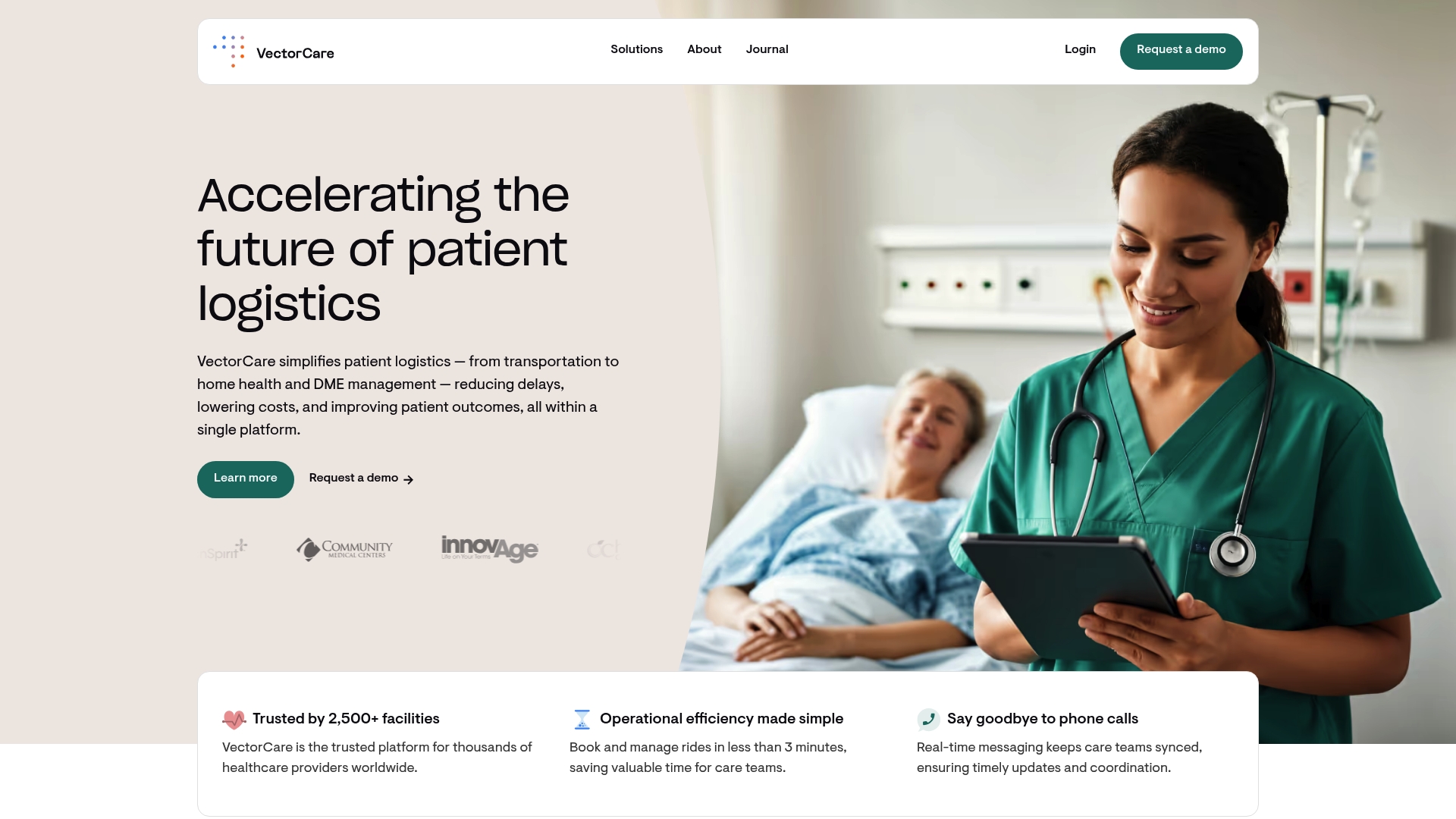
Ready to eliminate inefficiencies and transform your healthcare dispatch operations today Explore how VectorCare empowers providers, payers, and emergency services to deliver faster, smarter, and more reliable patient transportation. Discover the future of healthcare logistics now by visiting VectorCare. Don’t wait to make every patient interaction smoother and every resource decision smarter with our proven digital platform optimized for modern healthcare demands.
Frequently Asked Questions
How can automated scheduling improve healthcare dispatch?
Automated scheduling can enhance healthcare dispatch by eliminating inefficiencies and reducing patient wait times. Implement intelligent software systems to match patient needs with available resources, aiming to reduce delays by up to 30% during peak hours.
What metrics should I track to improve healthcare dispatch performance?
Tracking key metrics such as average response times, vehicle utilization rates, and patient transport efficiency is essential for improving healthcare dispatch. Implement a metrics analysis strategy that includes quarterly performance reviews to identify areas for development and achieve targeted improvements.
How do I ensure staff are effectively trained on new technology for healthcare dispatch?
To ensure staff are effectively trained, develop comprehensive training programs focused on using new technology and standardized communication protocols. Conduct training sessions before implementing new systems and allow for ongoing feedback to refine training approaches.
What steps should I take to standardize communication across dispatch teams?
Start by creating unified communication channels and shared documentation practices that all teams understand. Implement regular training and quarterly reviews of communication protocols to ensure clarity and consistency across all dispatch teams.
How can I utilize real-time data for better decision-making in healthcare dispatch?
To use real-time data for decision-making, invest in a robust data integration platform that allows instant access to patient location and transport needs. Analyze this data regularly to make informed adjustments that enhance operational precision and improve patient outcomes.
What are the best practices for integrating vendor management solutions in healthcare dispatch?
Establish clear performance metrics and real-time communication channels with service providers to ensure effective vendor management. Conduct annual assessments of vendor performance and technology compatibility to foster strong, accountable relationships that facilitate efficient dispatch operations.
Recommended
- 5 Reasons to Improve Healthcare Dispatching | VectorCare
- 7 Best Healthcare Scheduling Software for Smooth Operations
- Patient Flow Barriers: Impact to Hospital Efficiency and Patient Outcomes | VectorCare
- Hospital Patient Logistics Platform | Streamline Discharge & Coordination
- Fire Suppression System Downtown Houston TX - Reliable Fire Protection