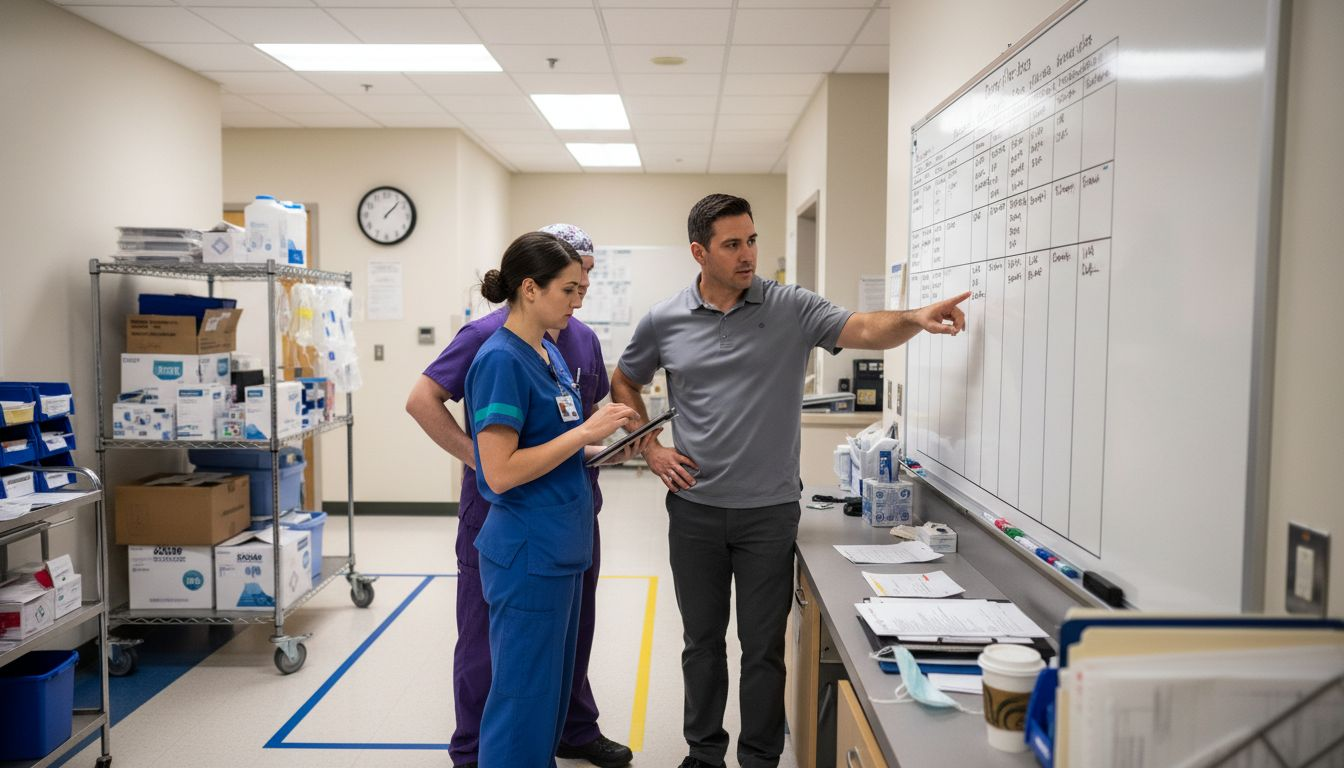
Automating patient logistics: a 2026 hospital guide

Hospital patient transport delays cost facilities millions annually while frustrating staff and patients alike. Manual scheduling creates errors, staff idle time, and compliance headaches that reduce satisfaction scores. Automation transforms these inefficiencies into streamlined workflows that cut wait times by 30% while improving care delivery. This guide walks you through preparing, implementing, and optimizing automated patient logistics systems that deliver measurable operational improvements.
Table of Contents
- Understanding The Patient Logistics Challenge In Hospitals
- Preparing Your Hospital For Patient Logistics Automation
- Executing Automation: Technologies And Best Practices
- Verifying Impact And Continuous Improvement In Automated Patient Logistics
- Explore VectorCare Patient Logistics Solutions
Key takeaways
| Point | Details |
|---|---|
| Wait time reduction | Automation reduces patient wait times by up to 30% through optimized scheduling and dispatch. |
| Scheduling accuracy | Digital platforms cut scheduling errors by 30%, boosting on-time arrivals and resource utilization. |
| Robot optimization | Autonomous Mobile Robots streamline staff workflows and optimize hospital logistics operations. |
| Dashboard benefits | Integrated dashboards improve patient safety and operational efficiency with real-time alerts. |
| Compliance impact | Effective compliance management reduces transport delays by 40% through regulatory coordination. |
Understanding the patient logistics challenge in hospitals
Transport delays ripple through hospital operations in ways administrators feel daily. When a patient waits 45 minutes for an escort to radiology, that imaging suite sits idle, technicians lose productivity, and downstream appointments cascade into chaos. Delays in patient transport disrupt hospital operations, causing lost revenue and lower patient satisfaction scores that directly impact reimbursement rates.
Scheduling errors amplify these problems. Manual coordination across departments creates gaps where transport requests get lost, duplicated, or assigned to unavailable staff. You face situations where three escorts arrive for one patient while another waits unassigned. Compliance issues layer additional complexity, particularly when managing multi-state regulatory requirements for patient transfers and specialized transport needs.
The financial impact extends beyond direct transport costs:
- Staff overtime expenses from inefficient scheduling and last-minute coverage gaps
- Equipment underutilization when delayed patients miss scheduled procedure times
- Extended length of stay costs when discharge transport delays bed turnover
- Revenue loss from cancelled procedures due to patient transport failures
Patient satisfaction scores suffer when transport delays create anxiety and uncertainty. A patient scheduled for discharge at 10 AM who waits until 3 PM for transport home rates their entire hospital experience lower, regardless of excellent clinical care. These scores directly influence your facility’s reputation and competitive position in an increasingly consumer-driven healthcare market.
Manual patient logistics create a hidden tax on hospital efficiency, consuming staff time and generating cascading delays that touch every department and service line.
Addressing these challenges requires systematic approaches that replace manual processes with patient logistics efficiencies driven by automation technology.
Preparing your hospital for patient logistics automation
Successful automation starts with honest assessment of current workflows. Map your patient transport processes from request initiation through completion, identifying specific pain points where delays cluster. You need baseline metrics showing current performance before implementing new systems to measure improvement accurately.
Stakeholder engagement determines whether automation adoption succeeds or fails. Your transport staff, nurses, schedulers, and IT teams must understand how automation helps their daily work rather than threatens their roles. Early involvement builds buy-in and surfaces practical insights that prevent implementation mistakes.
Follow this preparation sequence:
- Document current patient transport volume, average wait times, and peak demand periods across all departments
- Identify integration requirements with existing EMR, scheduling, and communication systems
- Assess physical infrastructure including network coverage, hardware mounting locations, and charging station placement
- Establish compliance framework addressing HIPAA requirements and state-specific regulations
- Define success metrics and baseline measurements for post-implementation comparison
Technology selection requires balancing capability with compatibility. Evaluate platforms based on integration ease with your current systems rather than standalone features. A sophisticated robot fleet that cannot communicate with your EMR creates new silos instead of solving coordination problems. Prioritize vendors offering open APIs and proven integration track records with systems you already use.

Pro Tip: Create a cross-functional automation steering committee including frontline transport staff, nursing leadership, IT, compliance, and finance representatives who meet bi-weekly during planning and implementation phases.
Compliance planning cannot be an afterthought. Managing multi-state regulatory issues reduces transport delays by 40% when addressed proactively during system design. Build data privacy protections, audit trails, and regulatory reporting capabilities into your automation platform from day one. This foundation prevents costly retrofits and compliance incidents that undermine automation benefits.
Understanding healthcare automation trends helps you select technologies with staying power rather than chasing short-lived innovations. Focus on proven solutions with clear ROI rather than bleeding-edge features that lack operational track records. Your automation strategy should address patient transport while considering broader logistics including specimens, medications, and supplies that share common workflows.
HIPAA compliance requirements shape how automation platforms handle patient data, communications, and access controls. Ensure your selected technologies support encrypted communications, role-based access, and comprehensive audit logging that satisfy regulatory requirements without creating workflow friction.
Executing automation: technologies and best practices
Autonomous Mobile Robots revolutionize hospital logistics by handling routine transport tasks that consume staff hours daily. AMRs streamline workflows and optimize hospital logistics through advanced sensors that enable safe navigation in busy corridors while transporting supplies, linens, meals, and medications between departments.
Implementing AMR fleets requires careful planning:
- Install charging stations in strategic locations ensuring robots maintain operational availability during peak demand
- Configure navigation maps marking restricted zones, elevator priorities, and high-traffic areas requiring speed reductions
- Integrate AMR dispatch systems with your EMR and work order platforms for automated task assignment
- Train staff on robot interaction protocols including emergency stops and manual override procedures
Pneumatic tube systems complement AMR capabilities for time-sensitive small item transport. TransLogic pneumatic tube systems enable thousands of cross-campus transactions daily, moving lab specimens, medications, and documents at speeds impossible with human transport. Modern systems use RFID tracking and automated routing that integrates with laboratory and pharmacy information systems for complete chain of custody documentation.
Digital dashboards transform patient logistics visibility. Real-time alerts enhance patient safety and operational efficiency by surfacing transport delays, staffing gaps, and equipment availability issues before they cascade into broader problems. Your transport coordinators see the entire operation on unified screens rather than juggling multiple systems and phone calls.
This comparison shows key automation technology capabilities:
| Technology | Primary Use | Integration Requirement | Typical ROI Period |
|---|---|---|---|
| AMRs | Supply and linen transport | Elevator controls, EMR | 18-24 months |
| Pneumatic tubes | Specimens and medications | Lab/pharmacy systems | 12-18 months |
| Digital dashboards | Scheduling and coordination | EMR, communication platforms | 6-12 months |
| Smart badges | Staff location and tasks | WiFi infrastructure, EMR | 12-15 months |
Maximizing patient logistics optimization requires integrating these technologies into cohesive workflows rather than deploying isolated solutions. When your AMR fleet communicates with dispatch dashboards and pneumatic tube systems share status with laboratory workflows, you create multiplicative efficiency gains that exceed individual technology benefits.
Pro Tip: Start automation deployment in a single department or patient tower to validate workflows and build staff confidence before hospital-wide rollout, then scale based on proven results and refined procedures.
Leveraging agnostic software benefits allows your automation platform to work with multiple vendors and legacy systems without forcing wholesale replacements. This flexibility reduces implementation costs and timeline while preserving investments in existing infrastructure that still delivers value.
Exploring comprehensive healthcare logistics software options reveals how integrated platforms coordinate diverse transport needs through unified interfaces that simplify complex operations. The best solutions handle patient transport, supply chain logistics, and equipment management through common workflows that reduce training burden and operational complexity.
Verifying impact and continuous improvement in automated patient logistics
Measuring automation success requires tracking specific metrics that connect to operational and financial outcomes. Monitor average length of stay changes, emergency department boarding duration, and procedure schedule adherence rates that reflect patient flow improvements. Patient flow interventions reduce hospital length of stay by over 60% and emergency department boarding by 90% when implemented systematically with proper measurement frameworks.
Key performance indicators should include:
- Average patient transport wait time from request to arrival
- Percentage of on-time arrivals for scheduled procedures and appointments
- Staff overtime hours attributed to transport coordination and coverage gaps
- Equipment utilization rates for imaging, procedural, and diagnostic services
- Patient satisfaction scores specifically related to transport and discharge experiences
Scheduling accuracy improvements deliver measurable benefits quickly. Digital platforms reduce scheduling errors by 30%, improving resource utilization and reducing the coordination burden on nursing staff who previously managed transport requests through phone calls and manual tracking.
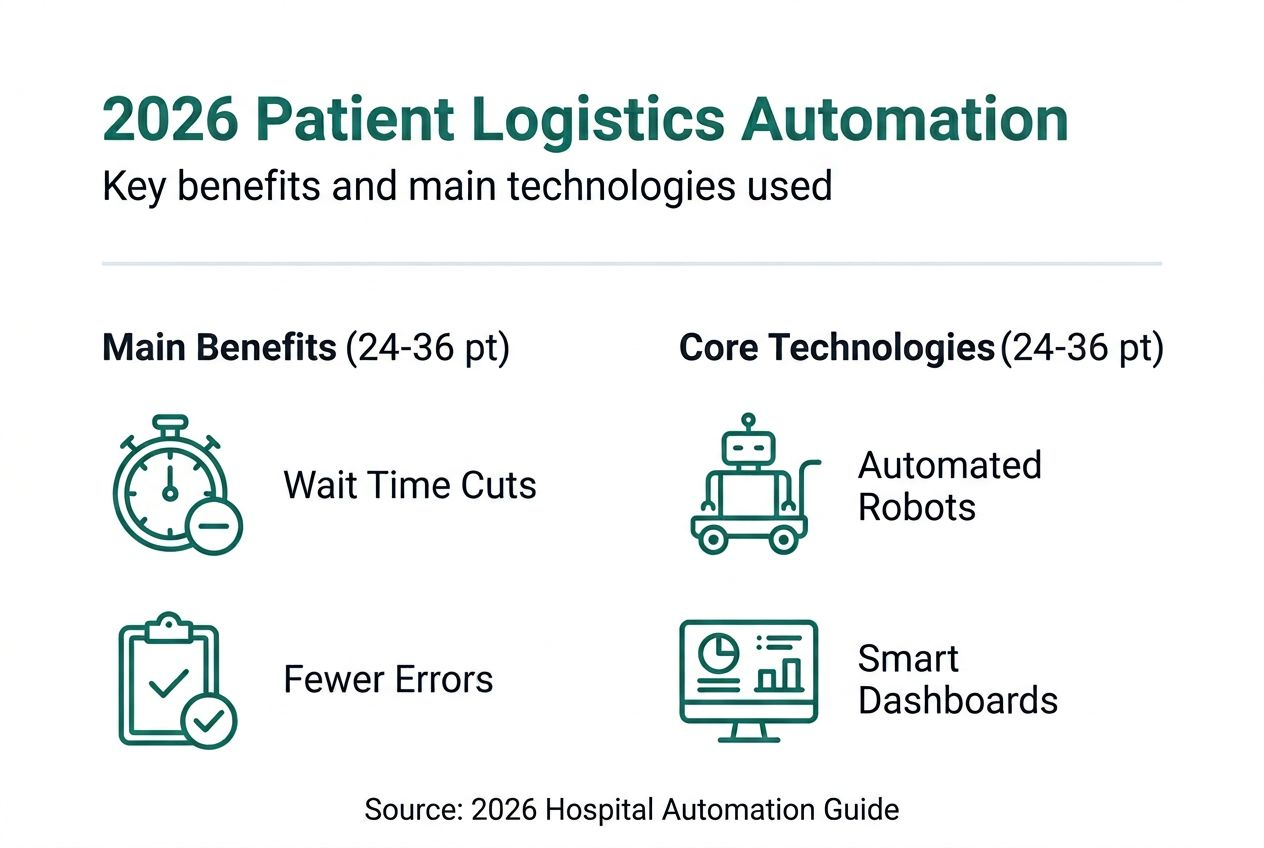
Bottleneck identification guides continuous improvement efforts. Your dashboard analytics reveal patterns showing which departments generate excessive transport requests, which time periods experience capacity constraints, and which patient types require specialized handling that standard workflows cannot accommodate. Use these insights to adjust staffing levels, modify scheduling algorithms, and refine automation rules that govern task assignment.
Staff feedback provides qualitative insights that quantitative metrics miss. Conduct regular focus groups with transport staff, nurses, and schedulers to understand how automation affects their daily workflows. You will discover workarounds people create when systems do not match operational realities, revealing opportunities for configuration adjustments that improve adoption and effectiveness.
Iterative optimization treats automation as an evolving capability rather than a one-time implementation. Schedule quarterly reviews examining performance trends, technology utilization, and emerging needs that your current configuration does not address. Healthcare operations change constantly through new service lines, facility expansions, and regulatory requirements that demand automation platform adjustments.
Strategies for reducing patient wait times extend beyond technology to encompass workflow redesign, staff training, and culture change that automation enables but does not automatically create. Your continuous improvement process should balance technology optimization with human factors that determine whether automation delivers theoretical capabilities or actual operational benefits.
Explore VectorCare patient logistics solutions
Hospitals implementing the automation strategies outlined above need platforms that integrate seamlessly with existing systems while delivering measurable efficiency improvements. VectorCare provides comprehensive patient logistics automation that optimizes transport scheduling, vendor coordination, and real-time tracking through AI-driven dispatch and no-code workflow configuration.
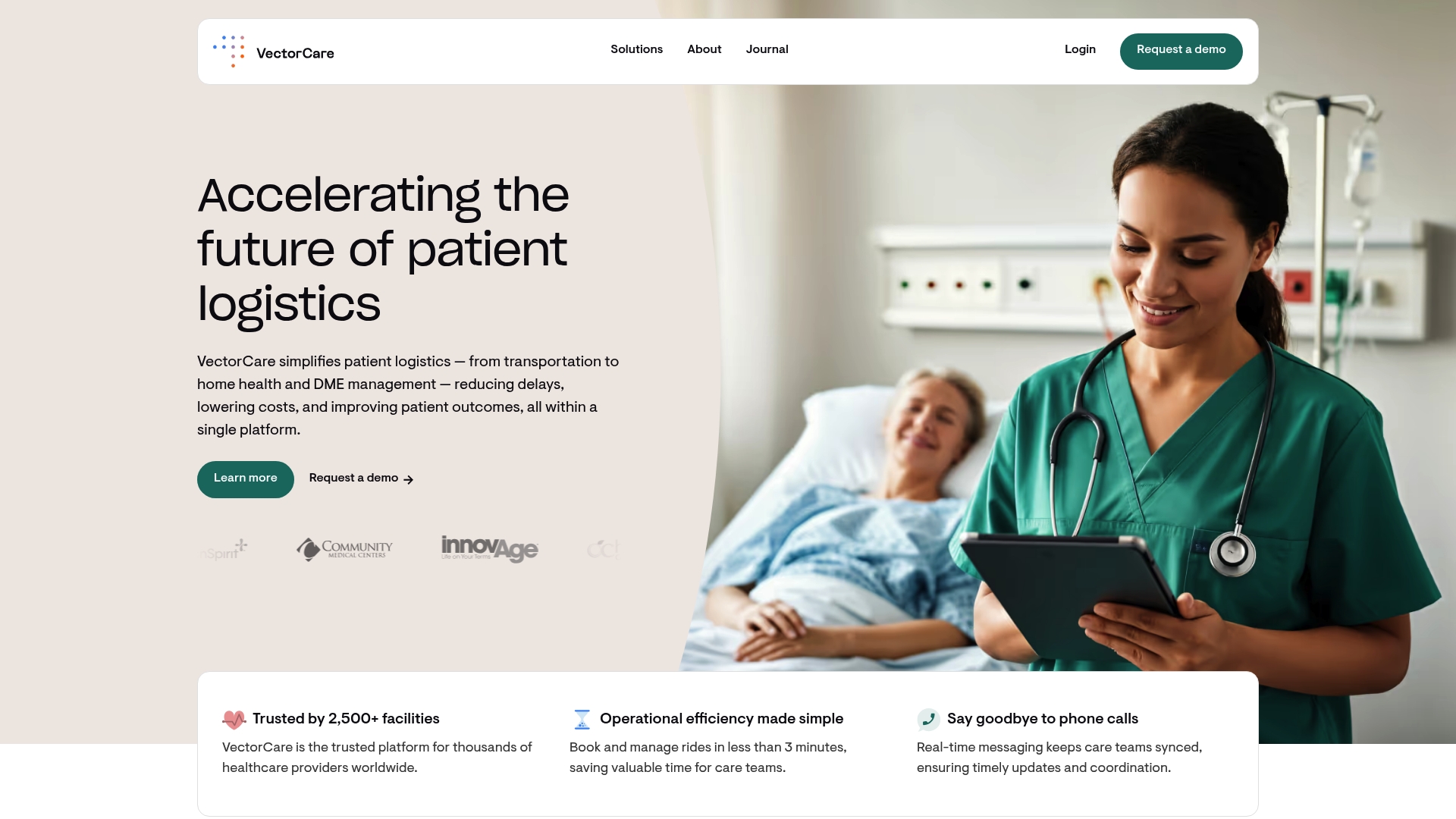
Their platform addresses the complete patient logistics spectrum from non-emergency medical transport to discharge coordination, helping you reduce wait times and improve satisfaction scores. The non emergency transportation guide offers detailed insights into optimizing this critical service line, while resources on patient transport satisfaction scores help you measure and improve the patient experience systematically. Explore their hospital patient logistics platform to see how automation transforms operations at facilities similar to yours.
FAQ
How does automating patient logistics reduce hospital costs?
Automation reduces idle staff time by optimizing assignments and eliminating manual coordination overhead that consumes productive hours. Enhanced scheduling accuracy lowers costly delays that cascade through departments, reducing overtime expenses and improving equipment utilization rates that directly impact your bottom line.
What technologies are commonly used in automated patient transport?
AMRs use advanced sensors to navigate hospital corridors autonomously, transporting supplies and materials without human intervention. Pneumatic tube systems enable rapid document and specimen transport across campus through automated routing. Digital dashboards provide real-time alerts, patient tracking, and workflow visibility that enhance coordination and response times.
How can hospitals ensure compliance when automating patient logistics?
Plan automation implementations with HIPAA compliance as a foundational requirement, ensuring data privacy protections and audit trails are built into platform architecture. Manage multi-state regulatory requirements proactively through compliance frameworks that address jurisdiction-specific transport rules and licensing requirements before they create operational delays.
What ROI timeline should hospitals expect from patient logistics automation?
Most hospitals see measurable improvements in transport wait times and scheduling accuracy within 90 days of full deployment. Complete ROI typically occurs within 12 to 24 months depending on facility size, automation scope, and baseline inefficiency levels, with digital dashboard solutions often delivering fastest returns.
How does automation affect hospital transport staff roles?
Automation shifts staff focus from routine coordination tasks to exception handling and patient interaction that requires human judgment and compassion. Transport teams become more effective by handling complex cases while automated systems manage standard requests, often improving job satisfaction by eliminating frustrating administrative burdens.
Recommended
- Hospital Patient Logistics Platform | Streamline Discharge & Coordination
- VectorCare - Patient Logistics Platform for Healthcare
- Automation in Healthcare Administration: Benefits and Trends for 2025
- Streamlining Hospital Workflows for Optimal Efficiency
- Best Practices for Automating Your Security Questionnaires Response Process (1/3)
- Personal training checklist 2026: streamline success | TrainingPro